Furniture Legs and Preventing Scratches on Marble
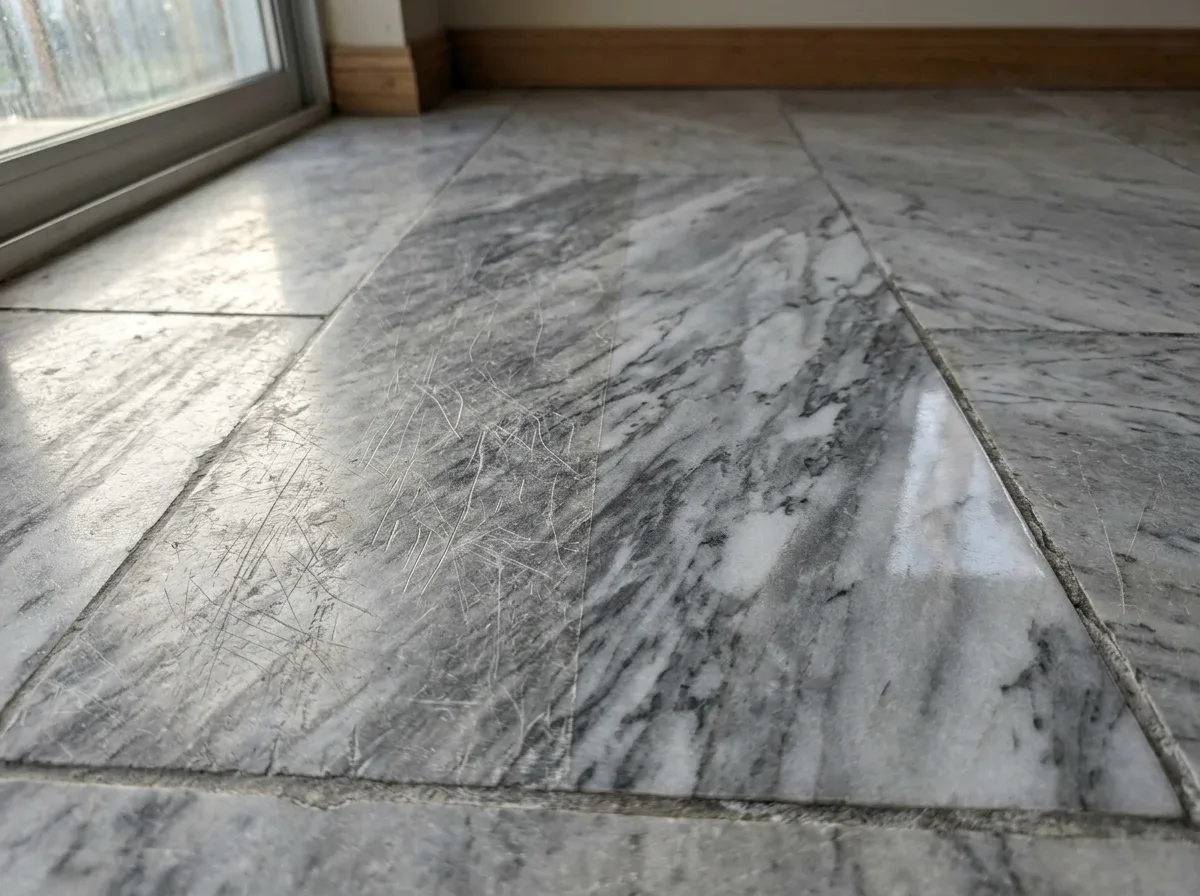
In short: On a marble floor that looks spotless after polishing, the first scratches most often come from chair and table legs.
The right protectors and a few small habits keep the floor shiny for a long time. In this article, we explain how to prevent furniture-related scratches.
Where Do Scratches Come From?
Most scratches on marble occur when moving furniture touches the stone directly or with grit trapped underneath.
- Chair legs: Chairs that are pulled and pushed many times a day are the most frequently moved furniture and leave arc-shaped scratches around the table.
- Metal legs and screw heads: Metal legs that have lost their protectors and protruding screw heads touch the stone directly and can leave a deep scratch with just one drag.
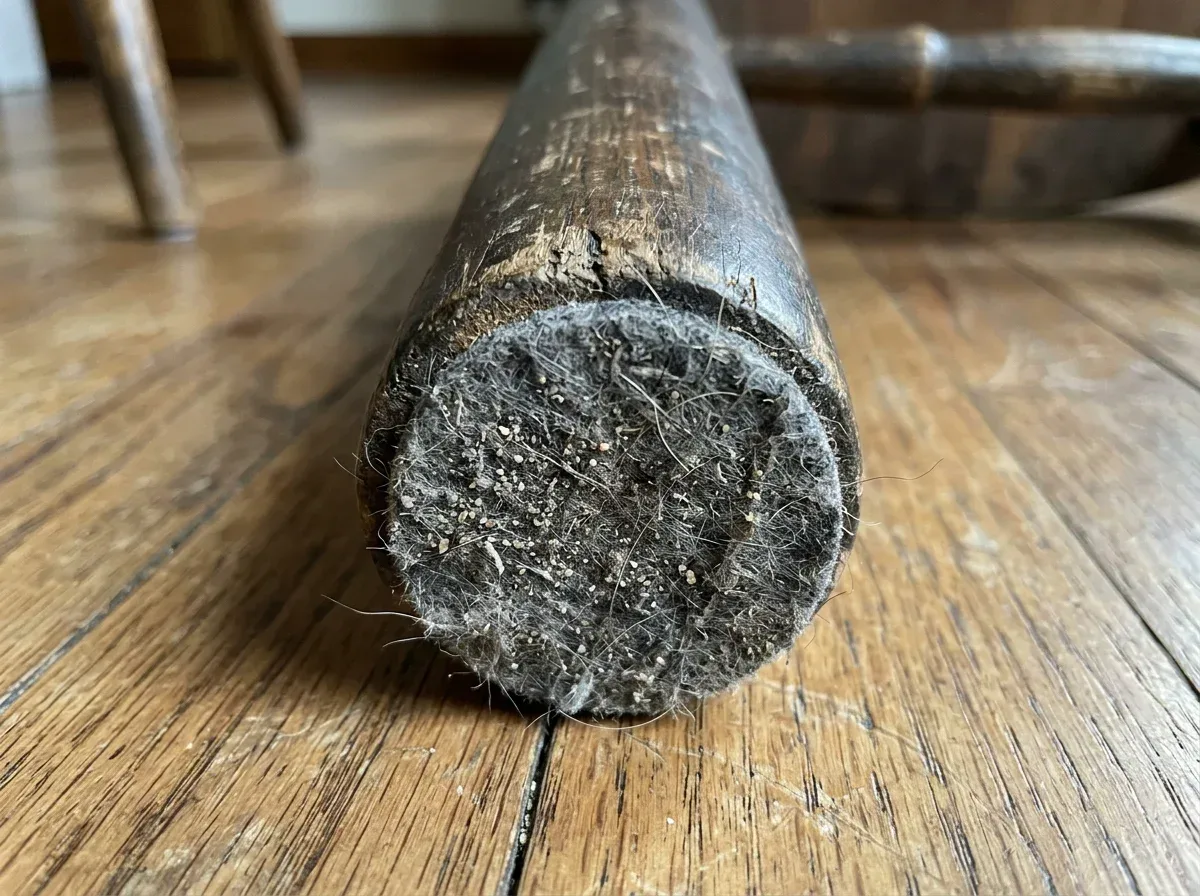
- Grit under the legs: Even with felt pads, grains of sand trapped underneath act like sandpaper; every time the furniture is moved, it leaves fine lines on the glossy surface.
- Chairs with wheels: Because the hard plastic wheels on office chairs keep rolling over the same area, they gradually leave noticeable dull marks and scratches.
- Dragging heavy furniture: When heavy furniture such as a wardrobe, sofa or dining table is dragged, the weight is concentrated on a small contact surface and creates long, deep scratches.

Types of Protectors
The right protector placed between the furniture and the stone transfers the friction to a soft surface and greatly reduces scratching.
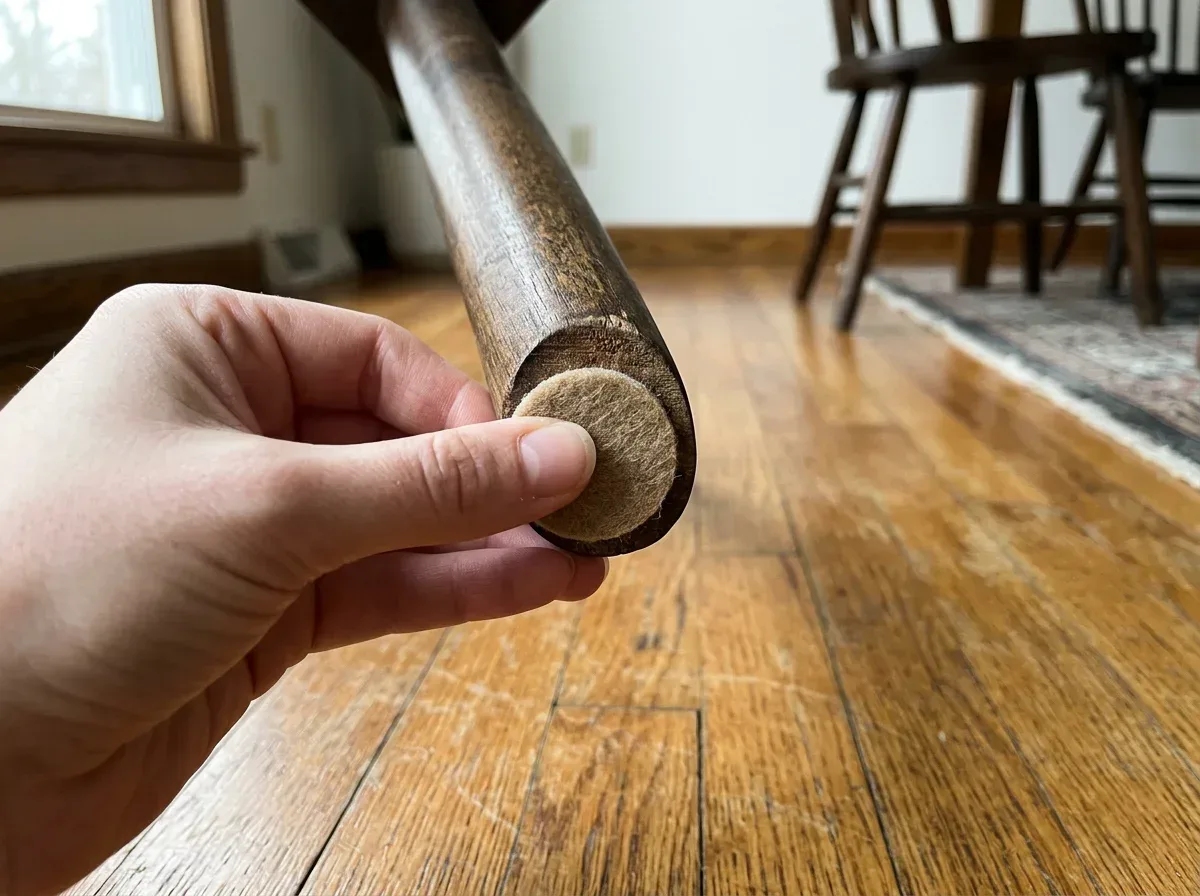
- Felt: This is the most common solution for chair and table legs; it wears down and collects dirt over time, so it should be replaced regularly.
- Silicone and plastic caps: These protectors wrap around the leg, do not fall off easily, and prevent metal legs from touching the stone directly.
- Soft casters: Using casters with a soft coating instead of hard wheels on office chairs prevents the wheel that keeps turning in the same spot from scratching the marble.
- Rugs and carpets: In places where furniture moves the most, such as the dining table and the work area, a rug or carpet completely eliminates direct contact with the stone.
Correct Use
Whether protectors work depends on choosing them correctly and checking them regularly.
- Choose felt that matches the leg size: The edge of felt that is larger than the leg lifts over time and collects grit, while felt that is too small leaves the edge of the leg exposed and lets it touch the stone.
- Check the underside of the felt: Look under the felt once a month; if sand and hair have built up, clean or replace it, otherwise the felt will start to scratch the floor.
- Check the protectors on metal legs: If the cap or felt on a metal leg falls off and the furniture keeps being used unnoticed, the leg scratches the stone directly.
- Lift heavy furniture when moving it: Carrying heavy furniture by lifting rather than dragging prevents the weight from rubbing on a small point of the stone and creating a deep scratch.
Moving and Furniture Assembly
Moving and assembly days are when the most scratches can appear in a short time, and precautions need to be taken beforehand.
- Cover the floor with sheets: During a move, protective covers shield the floor from boxes being set down, dragged items, and grit brought in on shoes.
- Do not put tools on the floor: When assembling furniture, hammers, screwdrivers and screws set directly on the stone can leave impact marks and scratches; keep them on a cover or in a box.
- Wait for the impregnating sealer to dry: Waiting for the impregnating sealer to dry before placing furniture on a freshly polished floor prevents the protective layer from being crushed and leaving marks.
Protection by Furniture Type
| Furniture | Recommended protection | Check frequency |
|---|---|---|
| Dining chair | Quality felt or silicone cap | Once a month |
| Table | Felt | Every few months |
| Office chair | Soft casters or a mat under the chair | Once a month |
| Armchair and sofa | Wide felt or plastic feet | Every few months |
| Cabinet and sideboard | Felt pads: lift furniture into place instead of dragging it | When Moving Furniture |
Choosing Felt Pads
The quality of felt pads on the market varies widely. Thin pads with weak adhesive fall off or wear down quickly; pads with lifted edges pick up sand and hair and start scratching the floor. Thick, tightly woven felts with strong adhesive, or screw-on felt-based glides, last longer. On chairs with metal legs, silicone caps that wrap around the leg last longer than felt and also keep the edge of the leg from touching the stone.
Daily Habits
How long the shine lasts after honing depends directly on how the furniture is used every day.
- Lift the chair slightly: Lifting the chair slightly when you pull it out reduces friction of the legs on the stone and the arc-shaped scratches that build up around the table.
- Sweep the floor regularly: On a floor that is swept regularly, sand does not get trapped under the felt and turn it into a source of scratches.
- Put a pad under the rug: If a rug is laid under the table, place a non-slip pad suitable for stone under it; a sliding rug can also leave wear marks on the surface.
- Carry furniture with two people: When rearranging furniture, if two people lift and carry it, the weight does not drag on the floor and the risk of corner impacts is also reduced.
Recommendations After Honing in Alanya
In homes in Alanya where we do honing and polishing, we recommend replacing the felt pads before the furniture is put back and placing heavy furniture by lifting it rather than dragging it. In rental holiday homes, checking the chair and table felts at the start of each season prevents most of the scratches caused by guest turnover. We remove any fine scratches that do occur with local polishing.
If Scratches Have Formed

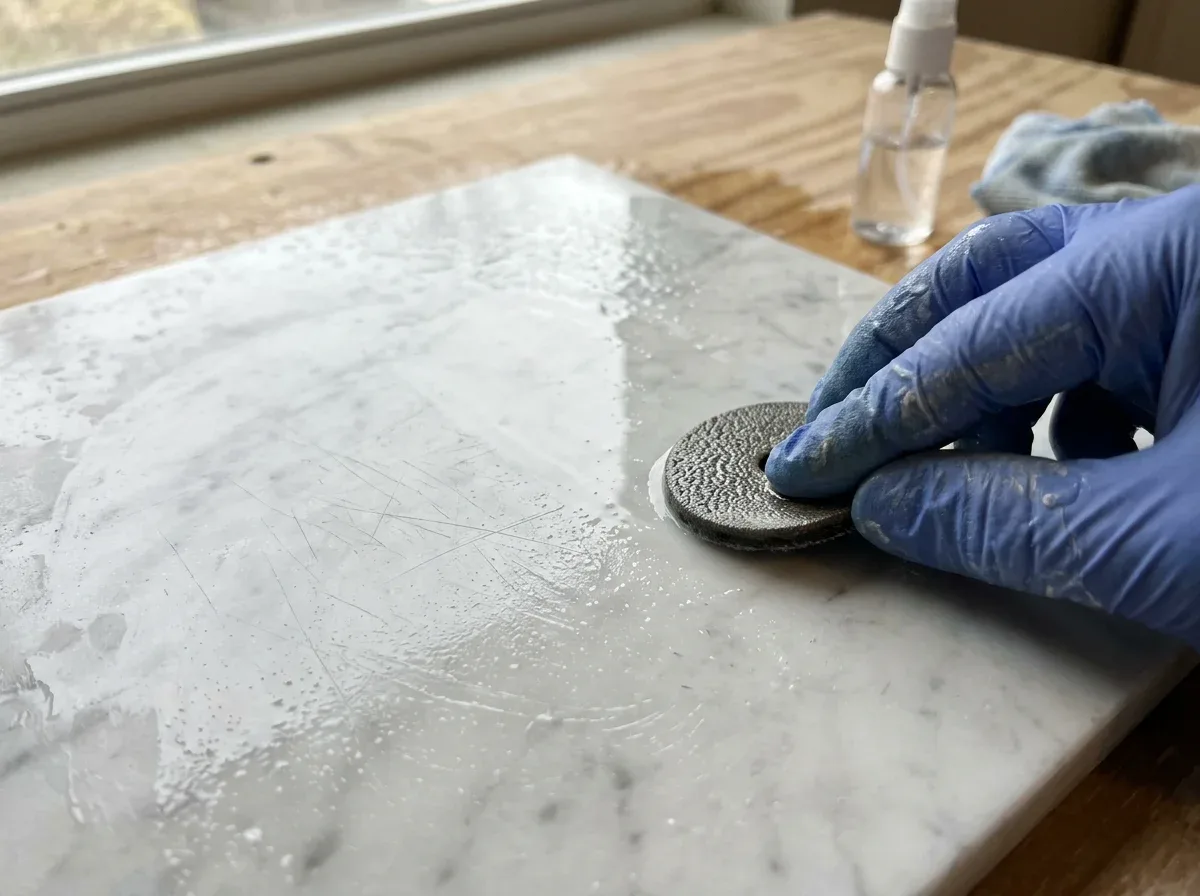
- Fine scratches: Removed with localized polishing.
- Deep scratches: Require fine-grade grinding.
Our Scratch and Stain Removal Service in Alanya

We remove scratches, acid marks and stains that have penetrated marble, granite and travertine surfaces using honing, poultice or spot repair, depending on the type of damage. We never start work without identifying the source of the stain.
We tell you honestly, on site, which stains can be removed and which are permanent. Explore our Scratch Removal service.
The first enemy of a freshly polished marble floor is usually a dining chair. A few liras' worth of felt pads can protect a polishing job worth thousands of liras for a long time.
Frequently Asked Questions
01How often should felt pads be replaced?
02What do you recommend for an office chair?
03Does a rug damage marble?
04When can we put the furniture back after honing?
05Can felt pads be washed when they get dirty?
06Can furniture scratches be removed by polishing?
Related Articles
- The First 48 Hours After Honing: What to Watch for on Marble Floors
- Types of Scratches and Stains on Marble: Which Ones Can Honing Remove?
- Entrance Areas and Doormats: Stopping Wear at the Door
- Post-Honing Maintenance Schedule: Daily, Weekly, Yearly
- Care and Cleaning of Natural Stone: Basic Rules for Marble, Granite and Travertine