Post-Polishing Maintenance Schedule: Daily, Weekly, Yearly
In short: After honing and polishing, your floor is at its best.
Keeping this look for a long time doesn't take complicated work; the right products and small regular habits are enough. In this article we share a practical maintenance schedule.
The First Days
In the days right after honing, the stone and the protective sealer are still sensitive; small mistakes made during this period can leave marks for a long time.
- Observe the drying time: Observe the sealer's drying time; walking on it before the product has cured in the pores, or contact with water, can cause staining and loss of protection.
- Do not use a wet mop: In the first days, do not wipe the floor with a wet mop; if necessary, dust it with a dry microfiber cloth so that moisture can also escape freely from within the stone.
- Lift furniture into place: Place furniture with its felt pads and by lifting it; sand under a dragged item easily scratches the freshly polished surface.

Daily
The purpose of daily maintenance is to remove the sand and debris that reduce shine the most, without damaging the surface.
- Dust and sand removal: A dry microfiber cloth or a soft broom is the easiest way to remove sand carried in on shoes; remaining sand creates micro-scratches on the glossy surface as people walk on it.
- Wipe up spills immediately: Acidic drinks in particular etch the surface of marble in a short time; a spill wiped up right away can be cleaned without leaving a dull mark.
- Shake out the doormat: The doormat at the entrance only keeps trapping sand while it is clean; a full mat carries the sand back inside.
Weekly
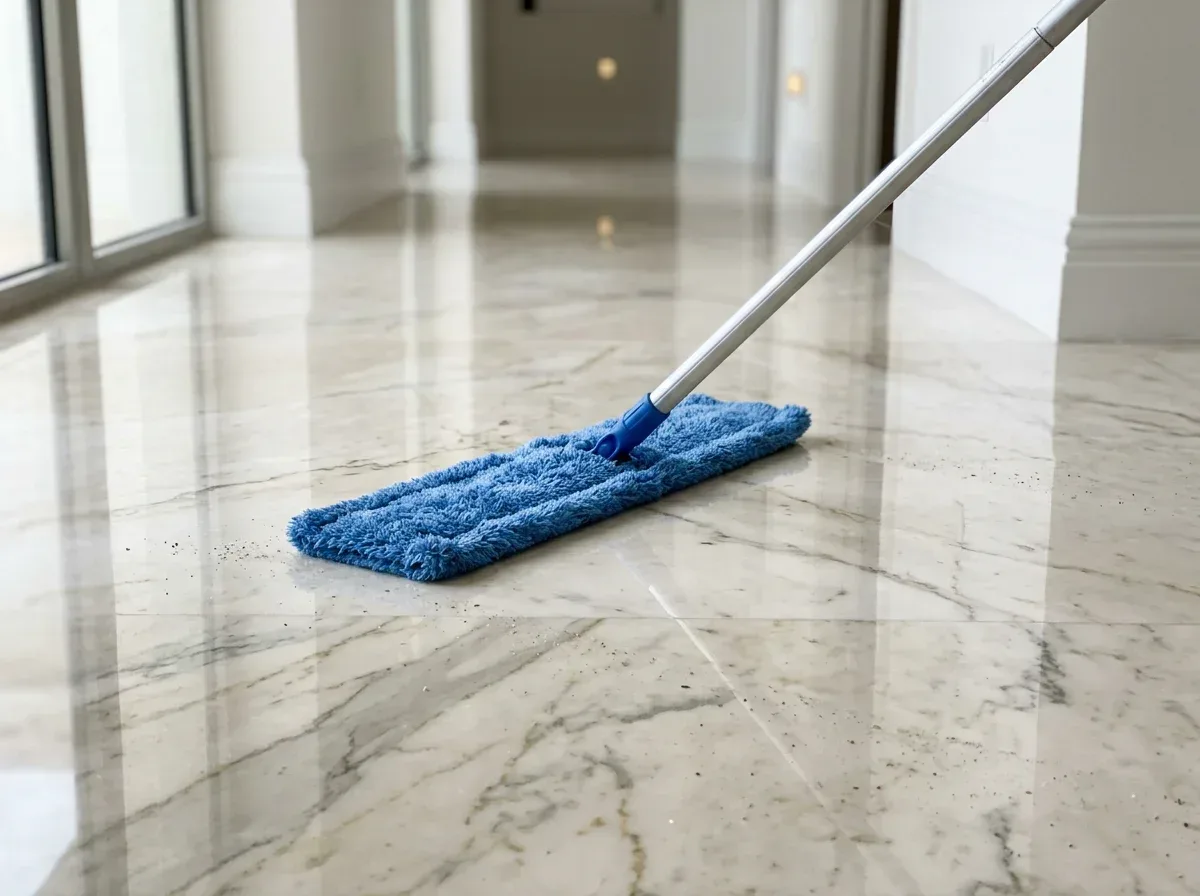
Weekly wet cleaning is done to remove dirt that dry cleaning cannot pick up, without damaging the stone and the sealer.
- Damp mop with pH-neutral cleaner: A pH-neutral product suitable for stone does not etch the surface or damage the sealer; when the mop is damp rather than wet, water does not pool on the floor.
- Change the mop water often: Dirty water spreads the sand and dust you have collected back onto the floor; clean water cleans better and leaves no marks.
- Leave the floor dry: Water left after mopping can leave water stains and limescale marks; the floor is dried quickly with a dry cloth or by ventilating.
Monthly
In monthly maintenance, overlooked corners and small problems are dealt with and prevented from growing.
- Corners and under furniture: Dust and dirt that build up in corners, along walls and under furniture are skipped in daily cleaning; monthly cleaning prevents darkening.
- Check the felt pads: A worn or missing felt pad lets the furniture leg rub directly against the stone; sand stuck to the felt will also scratch the floor if it isn't cleaned.
- Stain check: If new stains are treated early, they are removed before they penetrate the stone; a stain left to sit can deepen and require a poultice.
Every Six Months
A check done every six months shows whether the sealer is still working and where the shine has faded.
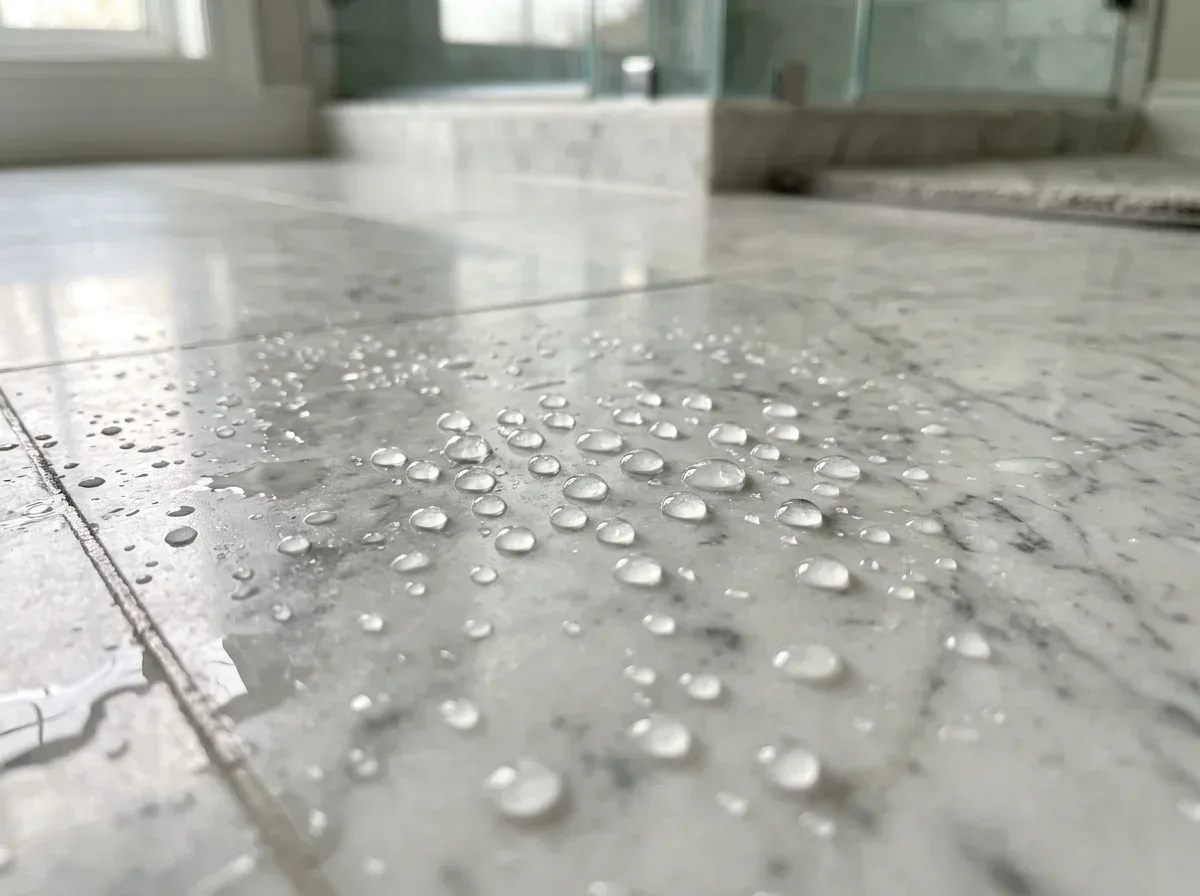
- Drop test: The sealer is checked with a drop test: does the water still bead up? If the water is absorbed quickly and leaves a dark mark, the protection has weakened.
- Shine check: In high-traffic areas (entrance, hallway, kitchen), the shine is checked; if dulling is noticed early, only that area is refreshed.
Annual
Annual maintenance aims to restore, on site and by area, the protection and shine the floor has lost during the year.
- Sealer renewal: If the drop test shows weakening, the sealer is renewed; this way water, oil and colored liquids cannot easily penetrate the stone again.
- Maintenance polishing: Maintenance polishing in areas that are starting to dull removes fine scratches and brings walking paths back to the same shine as the edges.
- Grout check: Cracked, loose or darkened joints are spotted and repaired before water and dirt can travel through the joint beneath the slab.
Every Few Years
With proper daily care, the floor looks good for a long time; but depending on use, a more comprehensive renewal may be needed every few years. Noticeable dulling along walking paths, an increase in fine scratches or spreading acid marks are signs of this need. Most of the time it is not necessary to hone the entire floor from scratch; honing and polishing that start at fine grits, followed by sealer renewal, are enough to bring the floor back to how it looked on day one.
What to Avoid
The things that ruin shine fastest are often the wrong cleaning products and habits.
- Acidic products: Vinegar, lemon and limescale removers chemically etch the surface of marble; even a single use can leave a dull, permanent mark.
- Detergents with polishing agents: Although film-leaving products look shiny for a short time, the layer gets dirty and builds up, over time covering the stone's own shine and making the surface slippery.
- Abrasive sponges and powders: Abrasive sponge surfaces and scouring powders cause fine scratches on a polished surface; the wiped area looks duller than its surroundings.
- Leaving water standing for a long time: Water left on the floor is absorbed into the stone, leaving limescale marks and rings; on light-colored marble it can also cause yellowing.
Calendar Summary
| Frequency | What to Do |
|---|---|
| First days | Observe the sealer's drying time, no wet cleaning |
| Daily | Dry dusting, deal with spills immediately |
| Weekly | Damp cleaning with a pH-neutral product |
| Monthly | Check corners and edges, felt pads and stains |
| Every six months | Drop test, gloss check |
| Annual | Sealer renewal, maintenance polishing, grout joint check |
| Every few years | Light grinding and polishing |
Adjusting the Frequency to the Space
This calendar is designed for an average home. In heavily used areas, such as holiday rentals, hotel lobbies, stores and homes close to the beach, checks need to be done more often. In rarely used bedrooms and guest rooms, the intervals can be longer. The type of stone also matters: granite needs polishing less often, while travertine and soft marbles need to be checked more frequently.
Maintenance Support in Alanya
At the end of every grinding and polishing job we do in Alanya, we leave homeowners and businesses a written maintenance note similar to this calendar. If requested, we schedule annual inspection visits, assess the condition of the floor with a drop test and gloss check, and carry out any necessary maintenance polishing or sealer renewal.
Differences by Property Type

- Holiday home: Comprehensive cleaning at the opening and closing of the season.
- Hotels and businesses: More frequent maintenance polishing.
- Bathrooms and wet areas: More frequent sealer checks.
Our Natural Stone Cleaning Service in Alanya

Instead of acidic and abrasive products, we deep clean natural stone surfaces with pH-neutral products suited to the stone. We also prepare regular maintenance plans for hotels, villas, and housing complex management companies.
We also explain the daily maintenance products and methods that are suitable for your stone. Discover our Eco-Friendly Cleaning service.
Natural Stone Care and Cleaning
You can watch one of our team's on-site projects in the video below.
With use, scratches accumulate and the shine fades. In this case, light refinishing and polishing are often enough instead of a full grinding. The more regularly the floor is maintained, the longer the need for re-grinding is delayed. — Expert Note
Frequently Asked Questions
01When is maintenance polishing needed?
02Does the sealer need to be renewed every year?
03Which cleaner should I use?
04When is re-honing needed?
05What happens if I don't follow the maintenance schedule?
06How long does an annual maintenance visit take?
Related Articles
- The First 48 Hours After Polishing: What to Watch For on Marble Floors
- The Water Drop Test After Impregnation: Is the Protection Working?
- Choosing a Detergent for Natural Stone: What Does pH-Neutral Mean?
- How Often Should Marble Be Honed and Polished?
- Care and Cleaning of Natural Stones: Basic Rules for Marble, Granite, and Travertine