Antalya Travertine: The Stone Beneath the City
In short: Visitors to Antalya will notice that the city descends to the sea in sheer cliffs.
Travertine lies beneath these cliffs and much of the city. The region's relationship with travertine also explains why we see this stone so often. In this article, we explain Antalya travertine in plain language.
How Is Travertine Formed?
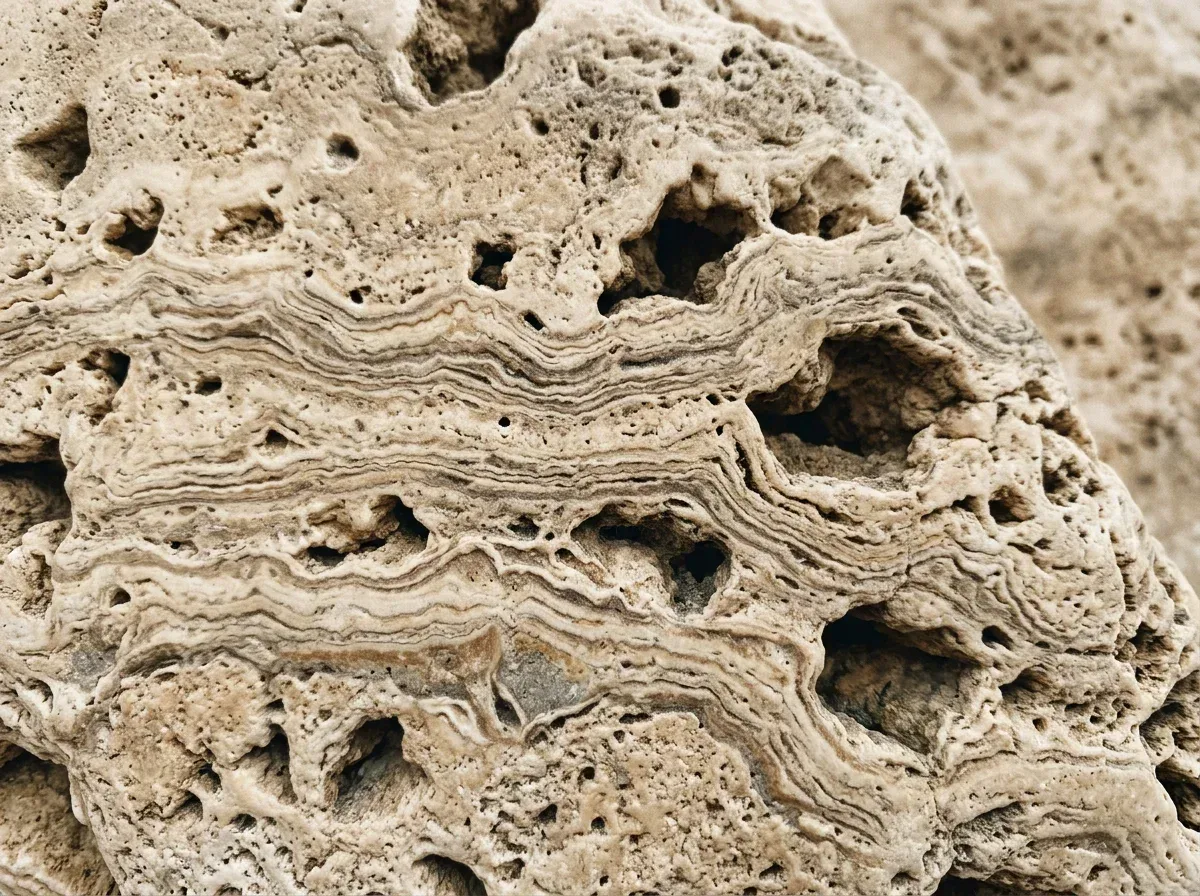
Groundwater passing through limestone terrain dissolves calcium carbonate. When this water emerges at the surface as a spring, the calcium carbonate it contains precipitates as pressure and temperature change. These precipitated layers harden over time and form travertine. Plant remains and gas bubbles leave the typical voids inside the stone.
The Antalya Travertine Plateau
Antalya and its surroundings have abundant spring waters fed by the limestone terrain of the Taurus Mountains. Over long geological periods, the travertine deposited by these waters has formed a broad plateau. The city's cliffs that drop sharply to the sea are also part of this formation.
Some of the waterfalls in the region are places where water pours over the travertine surface into the sea or onto lower ground.
Properties of Travertine
Formed by the precipitation of spring waters, travertine owes both its appearance and its maintenance needs to the way it forms.
- Porous and cavernous structure: Plant traces and gas bubbles left during precipitation create voids in the stone; these voids need filling and readily let in water and dirt.
- Warm tones: Beige, cream, yellowish and brown tones are seen; depending on the minerals carried by the water, colors can vary from slab to slab even within the same quarry.
- Easy to work: Travertine's relatively soft structure makes it easy to cut, hone and give different surface finishes; this has made it widespread as a building stone.
- Sensitive to acids: Because it is made of calcium carbonate, acids such as lemon, vinegar and limescale removers dissolve the surface; the shine is lost and dull stains remain.

Use in the Region
Travertine has been used as a building stone in the region since antiquity. Today in Antalya and Alanya it is found in:
- Villa and hotel floors: Thanks to its warm tones and cool texture, it is often used in living rooms, lobbies and corridors; it is long-lasting when its pores are kept filled and impregnated.
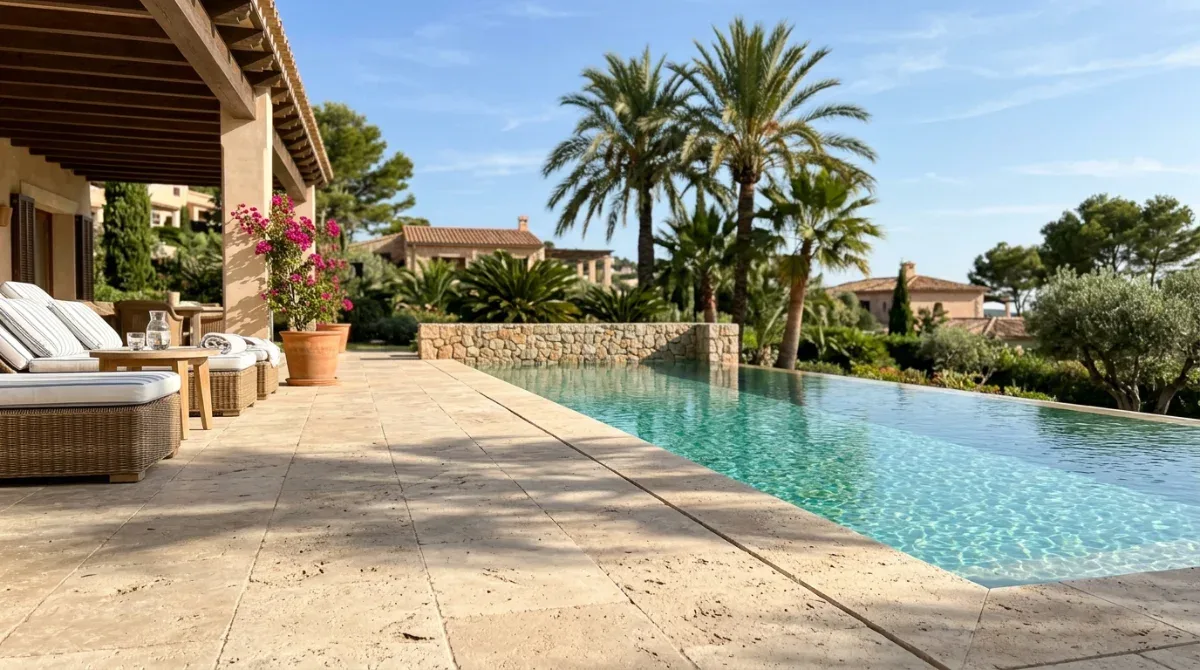
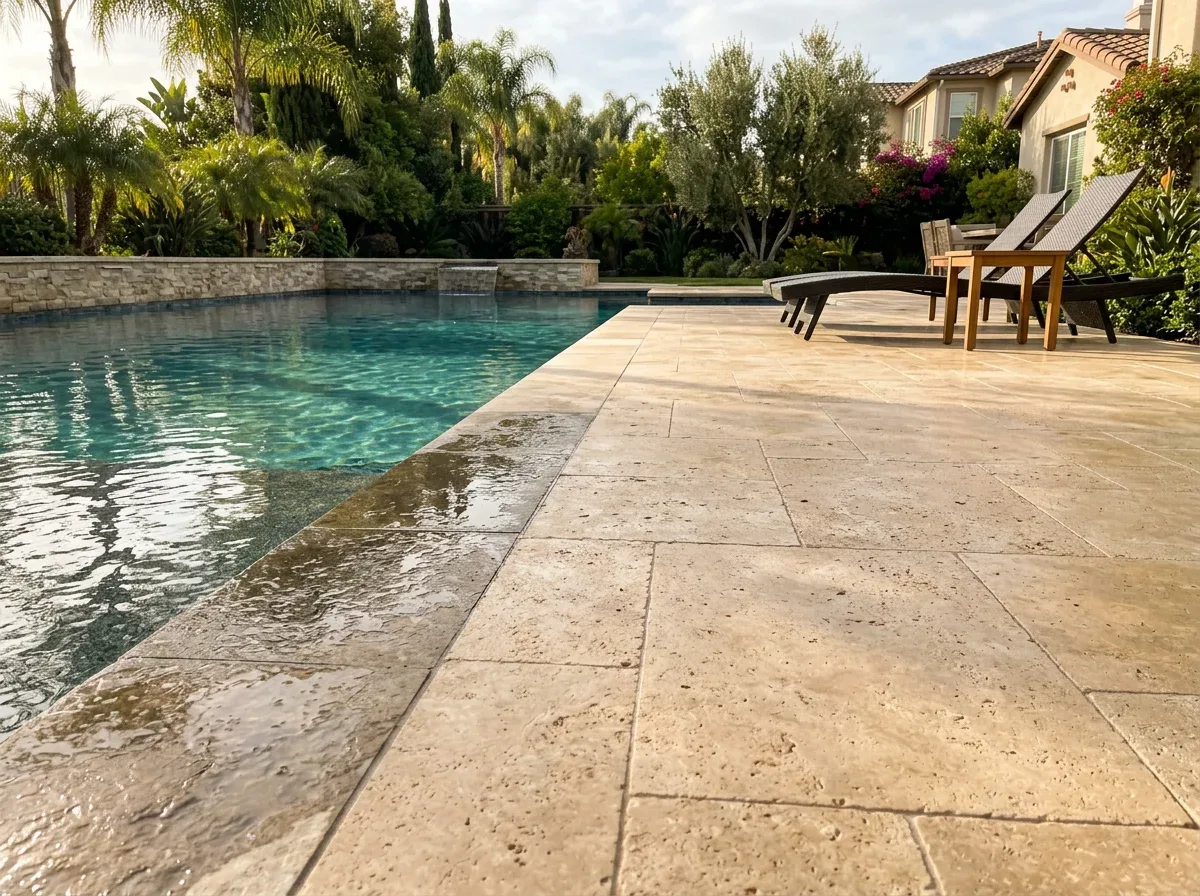
- Pool surrounds: It is preferred around pools for its light tones and natural roughness; however, pool water and salt can build up in the pores.
- Facades and garden walls: It stands out on exterior walls with its natural look; on surfaces exposed to sea air, salt and algae buildup can change its color over time.
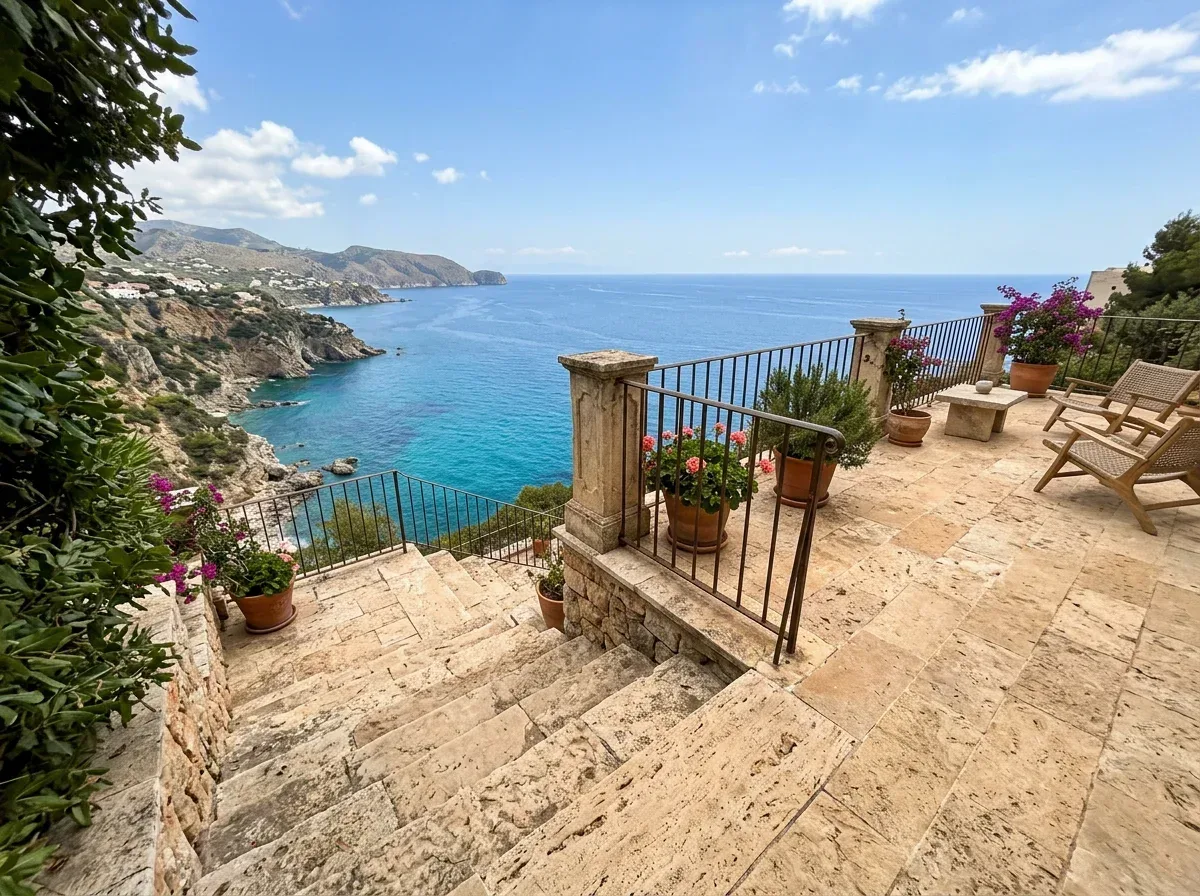
- Stairs and steps: It is used on interior and exterior stairs; on outdoor steps, a honed or brushed finish rather than a polished one reduces slipping when wet.
Travertine is frequently encountered in all of these areas. (The travertine used is not always local; travertine from other regions of Türkiye is also common.)
Travertine Types and Finishes
| Finish | Appearance | Common use |
|---|---|---|
| Filled and polished | Glossy, pores closed | Interior floors |
| Filled and honed | Matte, smooth | Bathroom, kitchen, interiors |
| Unfilled and honed | Matte, pores open | Rustic interiors and exteriors |
| Brushed | Textured, natural | Terrace, pool surround |
| Tumbled | Rounded edges, rustic | Courtyard, garden path, pool surround |
Difference Between Travertine and Marble
Travertine and marble are often confused because both are made of calcium carbonate, and commercially travertine is often classed in the marble group. However, they form differently: marble is a metamorphic stone formed when limestone recrystallizes underground under high heat and pressure, whereas travertine is a sedimentary stone deposited by spring waters. This is why travertine is more porous and cavernous, while marble is denser and crystalline. In terms of maintenance, both are sensitive to acids, but travertine's pores require more attention for filling and impregnation.
Protecting Travertine in the Region
The lifespan of travertine largely depends on caring for its pores, using the right cleaning products and choosing a finish suited to where it is used.
- Keep the pores filled: Have open voids filled in time; dirt and water fill the pores left open, edges chip, and the floor looks speckled and neglected.
- Avoid acidic cleaners: Acidic products dissolve calcium carbonate and leave dull marks on the surface; use pH-neutral cleaners suitable for natural stone instead.
- Use a breathable impregnator: Indoors and outdoors, a vapor-permeable impregnator reduces the penetration of water and stains while allowing moisture inside the stone to escape.
- Clean outdoor areas regularly: Regularly remove algae, salt and limescale buildup from outdoor surfaces; the longer it sits, the deeper it settles into the pores, darkening the stone and wearing down the surface.
- Choose the finish according to where it will be used: In wet areas, choose a honed or brushed finish; polished travertine looks great indoors but becomes noticeably slippery when wet.
Travertine in Alanya
Travertine is very common on the floors, pool surroundings and terraces of villas, hotels and housing complexes in Alanya. In our travertine honing and polishing work, we take the stone's porous structure into account and plan the filling, honing and impregnation steps together; depending on where it will be used, we recommend a honed, brushed or glossy finish.
Why This Knowledge Matters for Maintenance

Knowing how travertine forms also explains how to maintain it:
- Because it is porous, it needs impregnation;
- Because it is sensitive to acid, acidic cleaners must not be used;
- Its voids can open up over time, so filling is required.
Our Travertine Grinding and Honing Service in Alanya

We grind travertine floors that have open pores, have darkened or have worn down, and fill the voids with color-matched filler. For outdoor areas such as pool surrounds, terraces and gardens, we apply honed or brushed finishes that prioritize slip resistance over shine.
After grinding, we also recommend a suitable impregnating sealer to protect the travertine against stains. Learn more about our Travertine Grinding service.
Travertine is a stone born from the region's soil and water. Caring for it means getting to know it and treating it according to its pores, its sensitivity to acid, and the climate.
Frequently Asked Questions
01Is all travertine in Antalya local?
02Is travertine marble?
03Is travertine suitable for outdoor use?
04Why does travertine have holes?
05Can travertine be honed and polished?
06Which is more durable, travertine or marble?
Related Articles
- The Formation and History of Travertine: Stone Born from Spring Water
- Polished, Honed, and Brushed Travertine: Which Finish to Use Where
- Pits and Open Pores in Travertine Flooring
- Stone in Alanya's Historic Structures: The Castle, Kızıl Kule, and the Shipyard
- The Formation and History of Marble: A Journey from Limestone to Palaces