Stone in Alanya's Historic Structures: The Castle, the Red Tower and the Shipyard
In short: Alanya's landmarks, the Castle, the Red Tower (Kızıl Kule) and the Shipyard (Tersane), have stood on the seashore for centuries.
These structures are like an open-air museum for seeing how stone ages in the Mediterranean climate and salty air. In this article, we look at them through the eyes of a stonemason.
Note: This article is a general introduction. Conservation and restoration work on historic structures is carried out only with the permission of the authorized institutions and by expert teams.
Alanya Castle
The castle was built on a rocky peninsula that extends into the sea. The walls were largely built with locally sourced stone. The rock itself and the walls are almost intertwined; the natural rock was used as part of the defense.
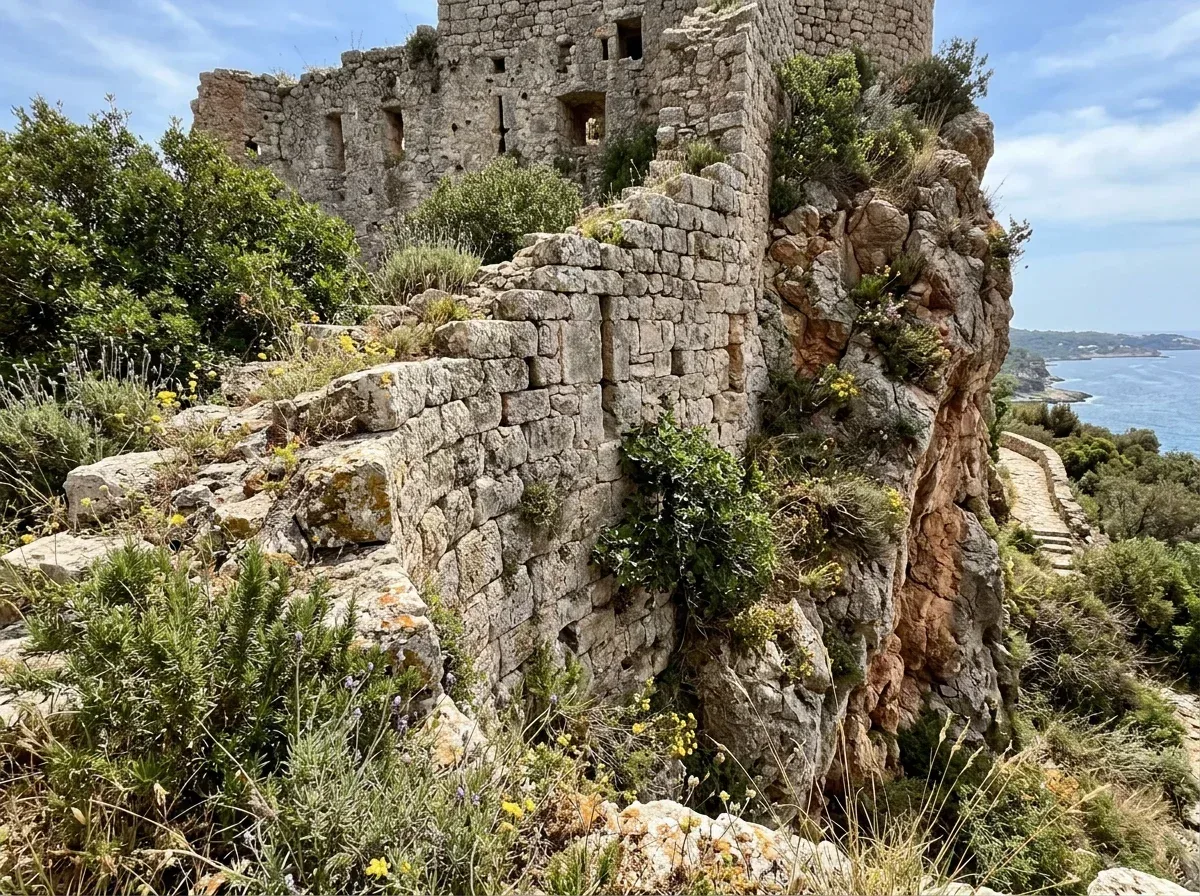
During the Seljuk period, especially in the 13th century under Sultan Alaeddin Keykubad, the castle was largely reorganized and expanded.
Red Tower (Kızıl Kule)
The Red Tower was built in the 13th century during the reign of the Seljuk Sultan Alaeddin Keykubad to protect the harbor and the shipyard. The lower sections of the octagonal tower are built of stone, while the upper sections are built of red brick; it takes its name from these red bricks. The combined use of stone and brick shows how materials share load and weather conditions: the lower sections, which bear the heavy load and the effects of the sea, are made of stone, while the upper sections, which needed to be lighter, are made of brick.
Shipyard (Tersane)
The Shipyard, which also dates from the Seljuk period, consists of arched bays opening onto the sea. This structure, where ships were built and repaired, is a historic building in direct contact with seawater.
A Century-Long Aging of Stone
Looking at these structures, you can see how stone ages on the seashore:
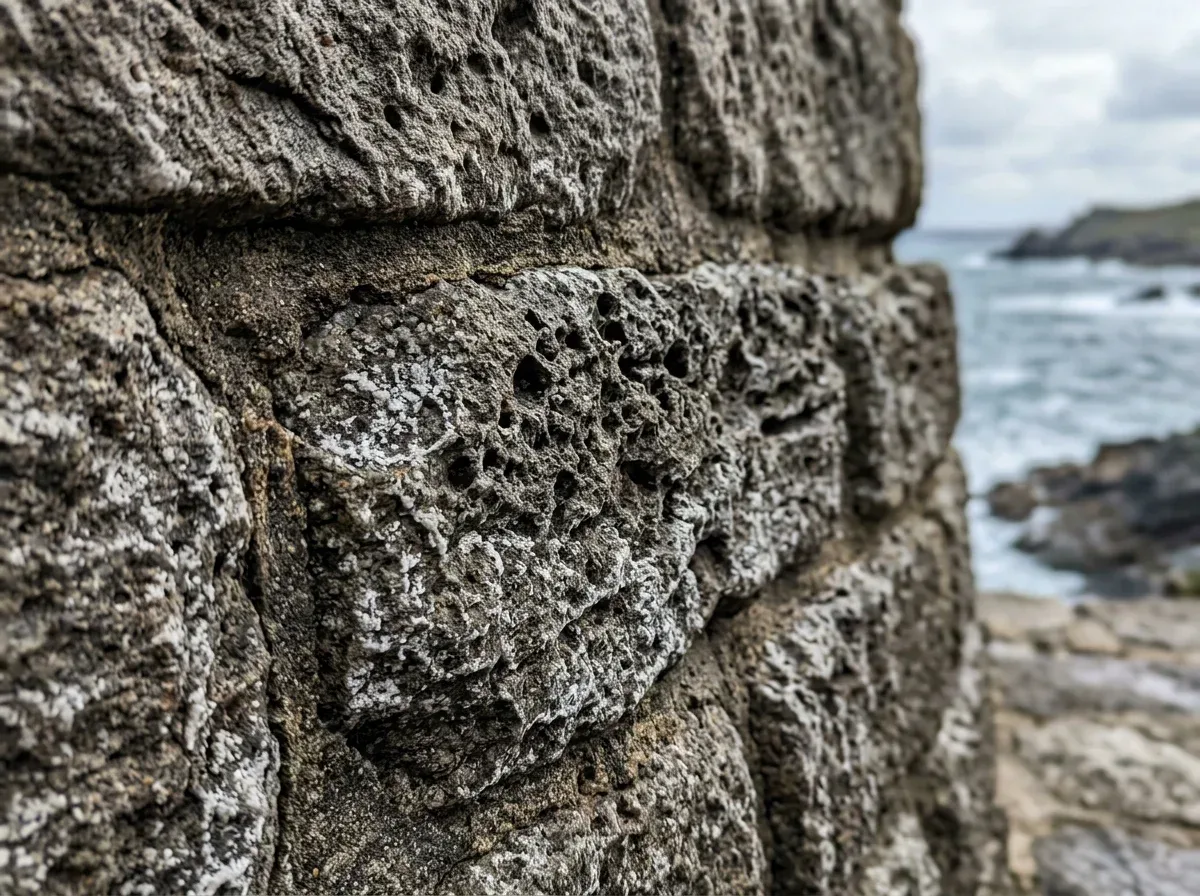
- Salt and wind: Salt from the sea crystallizes in the pores, and the wind constantly erodes the surface; over time, roughness and small cavities form in the stone.
- Rain: Rain falling over centuries slowly dissolves and washes the stone's surface; sharp edges soften and the color changes over time.
- Sun: Surfaces constantly exposed to the strong Mediterranean sun lighten in tone; the color difference between sunlit and shaded faces becomes pronounced.
- Plants and moss: Because moisture stays for a long time in joints and on shaded surfaces, moss and plants take hold; roots can loosen the joints and separate the stones.

The same effects can be seen on a smaller scale today in the exterior stones of villas and hotels in Alanya.
Summary of the Three Structures
| Structure | Period | Prominent material | Effects the stone faces |
|---|---|---|---|
| Alanya Castle | Largely reorganized during the Seljuk period | Local stone, natural rock | Wind, sun, rain |
| Red Tower (Kızıl Kule) | 13th century, Seljuk | Stone at the bottom, red brick on top | Sea air, salt |
| Shipyard (Tersane) | 13th century, Seljuk | Stone arched bays | Direct contact with seawater |
Lessons for Today's Buildings
These historic structures clearly show that the greatest enemies of stone on the seashore are salt, constant moisture and neglected joints. The travertine, marble and granite used around pools, on terraces and on façades of modern villas, hotels and housing complexes in Alanya are exposed to the same effects, only over a shorter time and on a smaller scale. Regular cleaning, keeping the joints well maintained, preventing water from accumulating on the stone, and breathable impregnating treatments are the most effective ways to extend the life of today's stone surfaces.
Look at the Stone When You Visit
When touring the Castle, the Red Tower and the Shipyard, you can easily see how stone ages on the seashore by looking at a few points.
- Sea-facing sides: On the sides facing the sea, notice the cavities opened by salt and wind; compared with sheltered sides, you can see how big the difference is.
- Shaded walls: On walls in the shade, see how moss and plants settle into the joints; this greenery is noticeable where moisture lingers for a long time.
- Where stone meets brick: Where stone and brick meet, observe how the two materials age differently; under the same weather conditions, one wears and changes color differently from the other.
- Walkways: On the walkways, look at how foot traffic has polished the stone; the steps of centuries have smoothed and burnished the places where they trod.
Working with Stone in Alanya
Alanya's historic structures are unique examples showing how stone has been used and how it has aged in the region over the centuries. In our daily work, we apply maintenance methods suited to sea air, sun and limescale-laden water so that marble, travertine and granite surfaces in modern buildings last longer in this climate. We would also like to remind you that conservation work on historic structures is carried out only by authorized institutions and expert restoration teams.
What Does It Teach Us About Stone Care Today?

- Sea air ages every stone over time; regular maintenance slows this process.
- Joints are where water enters the stone; they must be kept in good condition.
- It is important for stone to be able to breathe outdoors.
Our Marble Grinding Service in Alanya

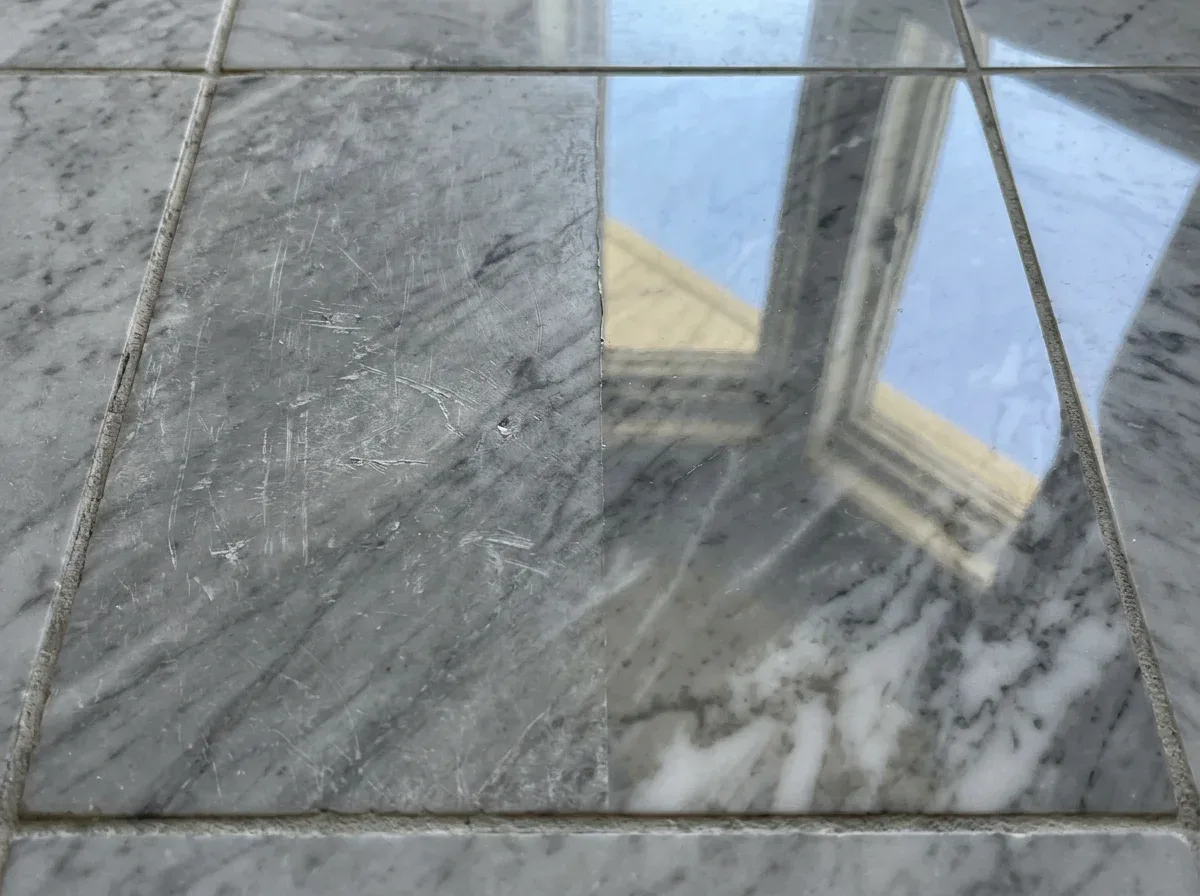
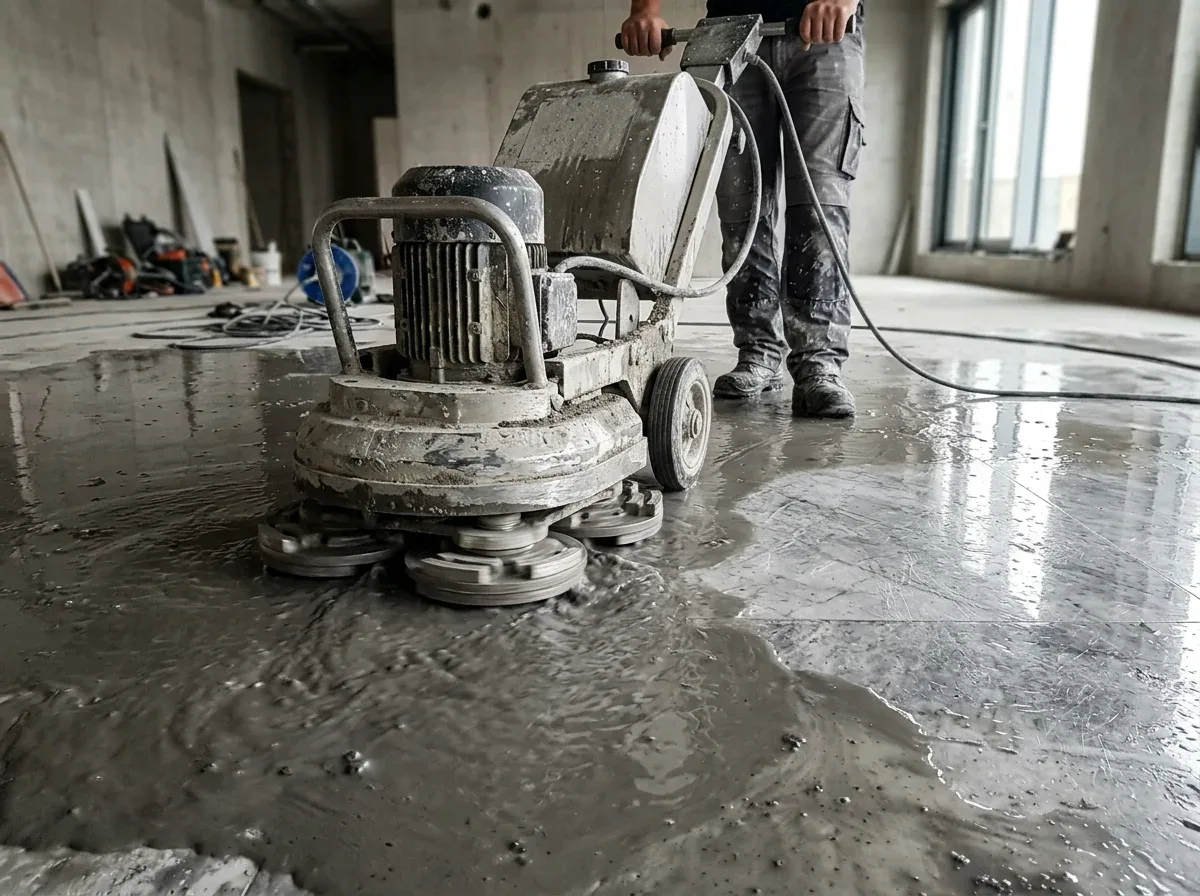
We restore marble floors that have become dull, scratched, or developed uneven levels between slabs, using wet grinding that keeps dust down. We choose every stage, from coarse grinding to polishing, according to the type of stone, and if needed we also repair cracks and joints as part of the same job.
We inspect your floor on site and tell you clearly whether it needs grinding or just polishing. Explore our Marble Grinding service.
This is an octagonal tower built during the Seljuk period to protect the harbor. It takes its name from the reddish bricks used in its upper sections. The use of stone in the lower sections and brick in the upper sections is noteworthy. — Expert Note
Frequently Asked Questions
01Do you clean stone on historic buildings?
02Why does the Red Tower look red?
03What stone are the castle walls made of?
04Are these structures open to visitors?
05When was the Red Tower built?
06Does the travertine in my home age like the stone in these structures?
Related Articles
- How Does Alanya's Maritime Climate Affect Natural Stone?
- Marble and Travertine Floors in Old Buildings in Alanya
- Antalya Travertine: The Stone Beneath the City
- The Formation and History of Marble: A Journey from Limestone to Palaces
- The Formation and History of Granite: From Magma to Kitchen Countertops