Marble, Granite and Travertine: Maintenance Difficulty Compared
In short: When choosing natural stone for a home, villa or hotel, you need to look not only at appearance but also at how much maintenance it will require over the years.
Marble, granite and travertine behave very differently in terms of scratching, acid, stains and restoration. In this article, we compare the three stones side by side.
The Big Picture
| Marble | Granite | Travertine | |
|---|---|---|---|
| Hardness | Medium | High | Medium-low |
| Scratching | Medium | Low | Medium-high |
| Acid sensitivity | High | Low | High |
| Stain absorption | Medium, depending on type | Low-medium, depending on type | High (sealing is essential) |
| Pores / voids | Low | Very few | Noticeable |
| Slip resistance (polished) | Low | Low | Low |
| Restoration by honing | Easy | Laborious | Medium (filling may be required) |
| Daily maintenance | Medium | Easy | Medium-difficult |
Marble
Strengths: Elegant and warm appearance, easy to hone and re-polish, and high gloss with crystallization.
Weaknesses: Sensitive to acids; lemon, vinegar and descalers leave marks. It can be scratched by sand and dust.
Maintenance summary: pH-neutral cleaning, avoiding acidic products, doormats and slippers. When it dulls, it is easily refreshed.
Best suited for: Living rooms, bedrooms and lobbies; areas where regular maintenance is possible.

Granite
Strengths: Very hard and resistant to scratches and abrasion, and largely unaffected by acids. Ideal for kitchen countertops and high-traffic areas.
Weaknesses: Some light-colored granites can absorb oil and water. When scratched or dulled, honing is long and laborious.
Maintenance summary: Daily maintenance is very easy; an occasional drop test and, if necessary, sealing.
Best suited for: Kitchen countertops, stairs, entrances, outdoor areas and businesses that want low maintenance.

Travertine
Strengths: Its warm tones, natural texture and harmony with Mediterranean architecture. It looks beautiful in honed, brushed and antiqued finishes.
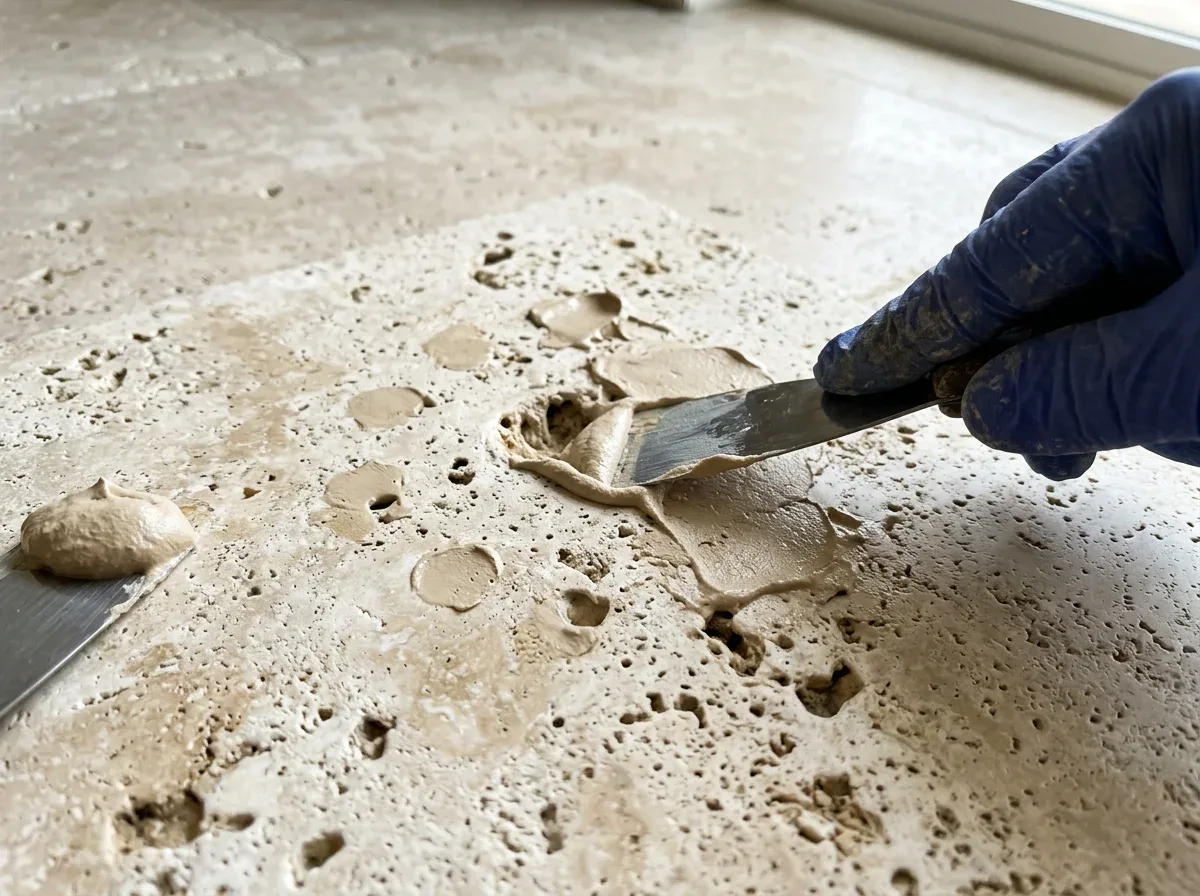
Weaknesses: Because of its porous structure it holds dirt and stains, and fillers fall out over time. It is sensitive to acids.
Maintenance summary: Sealing is almost essential; checking the pore fillers, pH-neutral cleaning, and monitoring for algae and limescale outdoors.
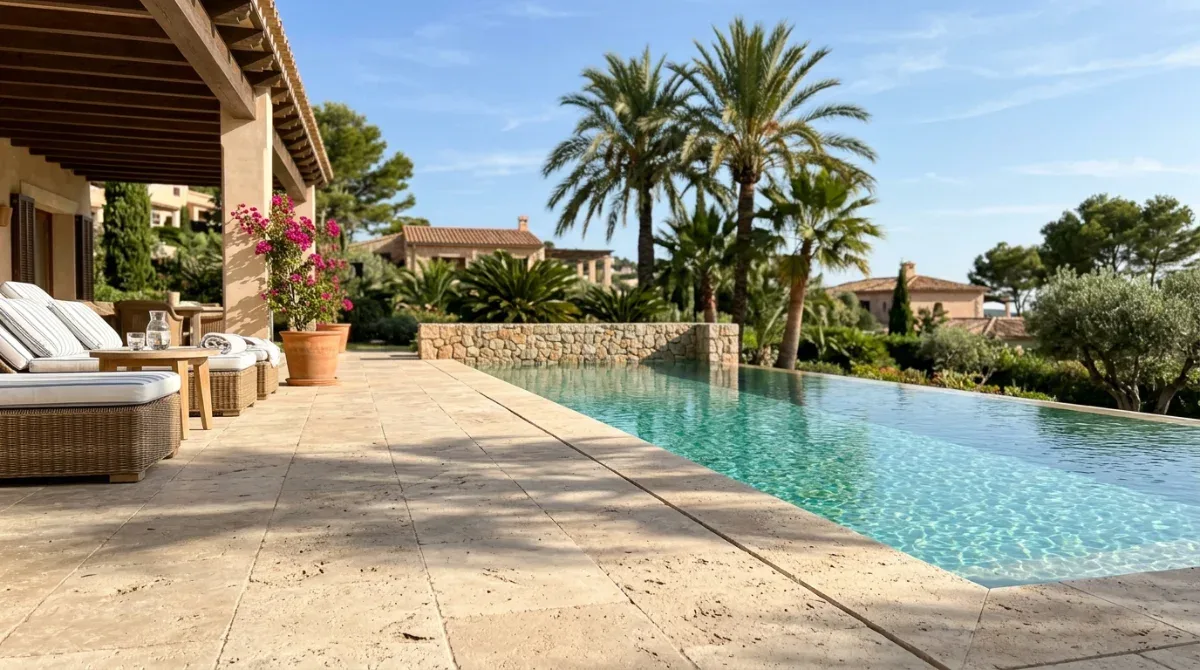
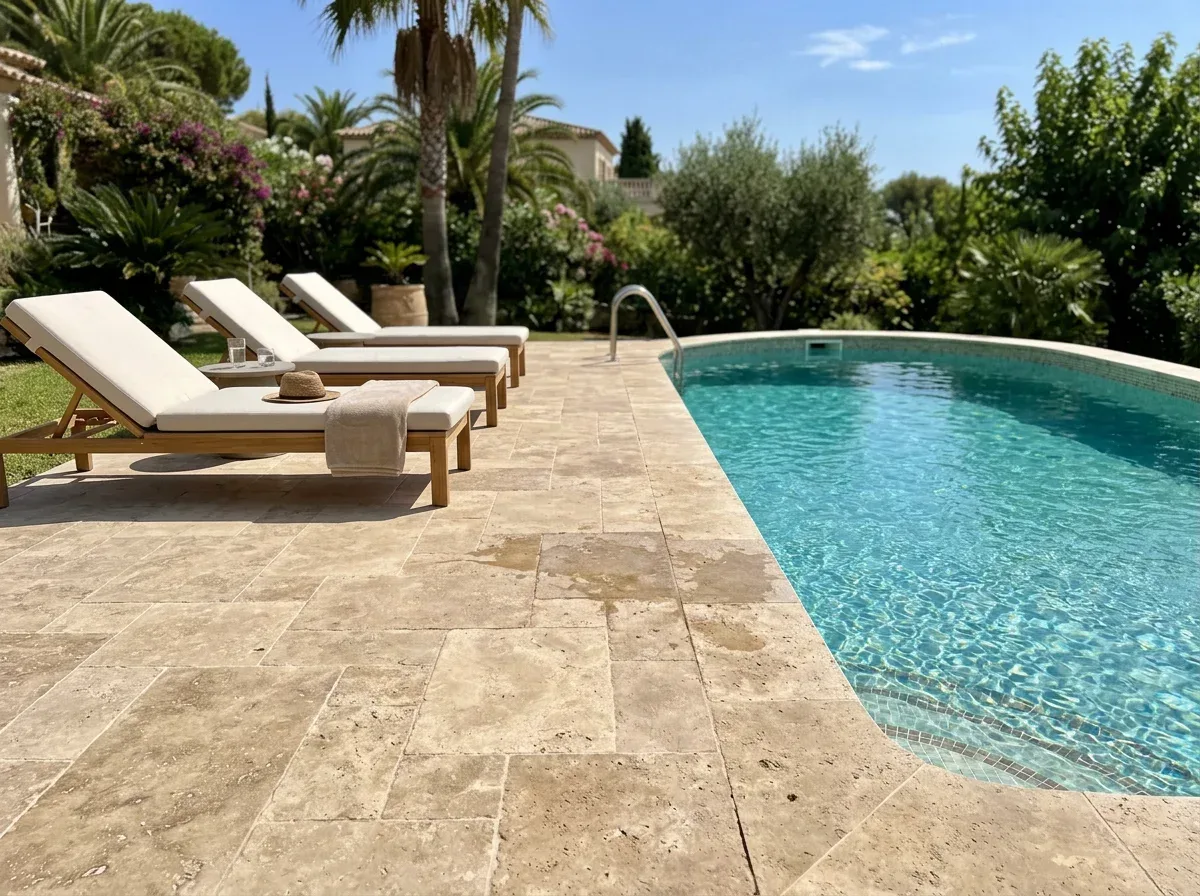
Best suited for: Villas, terraces and pool surrounds; users who want a natural, rustic look and can set aside time for maintenance.
Surface Choice Changes Maintenance
The same stone requires different maintenance with different finishes:
- Polished: The most elegant, but scratches and acid marks show up the most; as soon as the gloss is damaged it is noticeable in the light, and it needs to be refreshed more often.
- Honed: The matte, silky surface hides fine scratches and light acid marks, which makes maintenance easier in daily use.
- Brushed and antiqued: Hides wear and is slip-resistant; however, the recesses of the textured surface hold a little more dirt and may require a brush when cleaning.
For example, honed marble in a kitchen causes far less maintenance trouble than polished marble.
In Terms of Maintenance Cost
What determines long-term maintenance cost is as much where and how the stone is used as the stone itself. Granite requires the least effort in daily maintenance, but once it has dulled and been scratched, honing takes much longer than for marble. Marble needs refreshing more often, but each refresh is short and easy. Travertine, because of sealing, pore filling and monitoring for algae and limescale outdoors, is the stone that needs the most regular attention. The right surface choice and a good doormat system noticeably reduce maintenance costs for all three stones.
Questions to Ask When Choosing Stone
Choosing the right stone starts with thinking in advance about how the space will be used and how much maintenance you can realistically provide.
- Is the area wet or dry? In areas that stay wet all the time, porous stones hold more dirt and limescale, and polished surfaces become slippery.
- Outdoor shoes or slippers? Sand carried in on outdoor shoes quickly scratches soft stones; for entrances and high-traffic areas, a harder stone may be preferable.
- Possibility of acidic spills: In areas such as kitchens where lemon, vinegar or wine may be spilled, marble and travertine stain easily; granite is far less affected by acids.
- Time and budget for maintenance: If you cannot set aside time for regular tasks such as impregnating, filling and refreshing, it makes sense to choose a stone and finish that require less maintenance.
- Desired look: Your choice of a glossy, matte or textured finish determines both the appearance and how much of a problem scratches, acid marks and slipperiness will be.
Three Stones in Alanya Conditions
In Alanya, strong sun, sea air, hard water and sand carried in from the beach affect all three stones in different ways. Granite is the stone that causes the fewest problems outdoors and on kitchen countertops; although marble is very popular indoors, it dulls quickly at entrances because of sand; travertine is indispensable around pools and on terraces, but impregnation and filling maintenance must not be neglected. During our site surveys, we recommend a realistic maintenance plan based on the type of stone on your floor and how it is used.
Recommendations by Area of Use

- Kitchen countertop: Granite (lowest maintenance), honed marble (requires more care).
- Bathroom floor: Honed marble or travertine (sealed), granite.
- Living room: Marble or polished travertine.
- Terrace and pool surround: Brushed or antiqued travertine, flamed granite.
- High-traffic commercial area: Granite or crystallized marble.
Our Travertine Grinding and Honing Service in Alanya

We grind travertine floors that have open pores, have darkened, or are worn, and fill the voids with color-matched filler. For outdoor areas such as pool surrounds, terraces, and gardens, we apply honed or brushed finishes that prioritize slip resistance over shine.
After grinding, we also recommend a suitable impregnating sealer to protect the travertine against stains. Explore our Travertine Grinding service.
There is no such thing as low-maintenance stone; there is only stone used in the right place. Granite in the kitchen, marble in the living room, travertine in the courtyard: each causes the least trouble in its proper place.
Frequently Asked Questions
01Which stone requires the least maintenance?
02Is travertine really that problematic?
03Shouldn't marble be used in the kitchen?
04Which is easier to restore?
05Can granite also be ground and polished?
06How often should travertine impregnation be renewed?
Related Articles
- Granite or Marble? Differences in Polishing and Maintenance
- Why Does Travertine Flooring Wear Down and Lose Its Shine?
- Care and Cleaning of Natural Stones: Basic Rules for Marble, Granite, and Travertine
- What Is Honing? Advantages of a Honed Matte Finish
- The Formation and History of Marble: A Journey from Limestone to Palaces