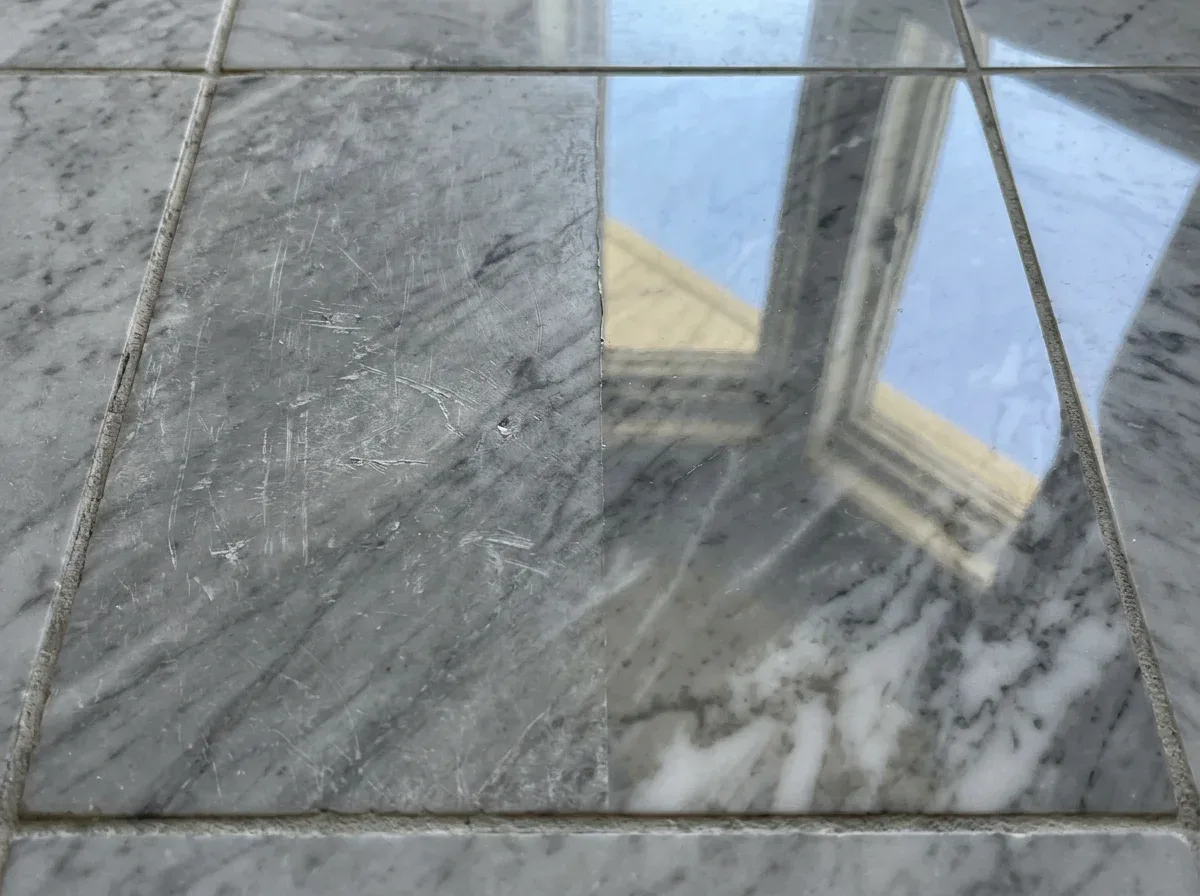
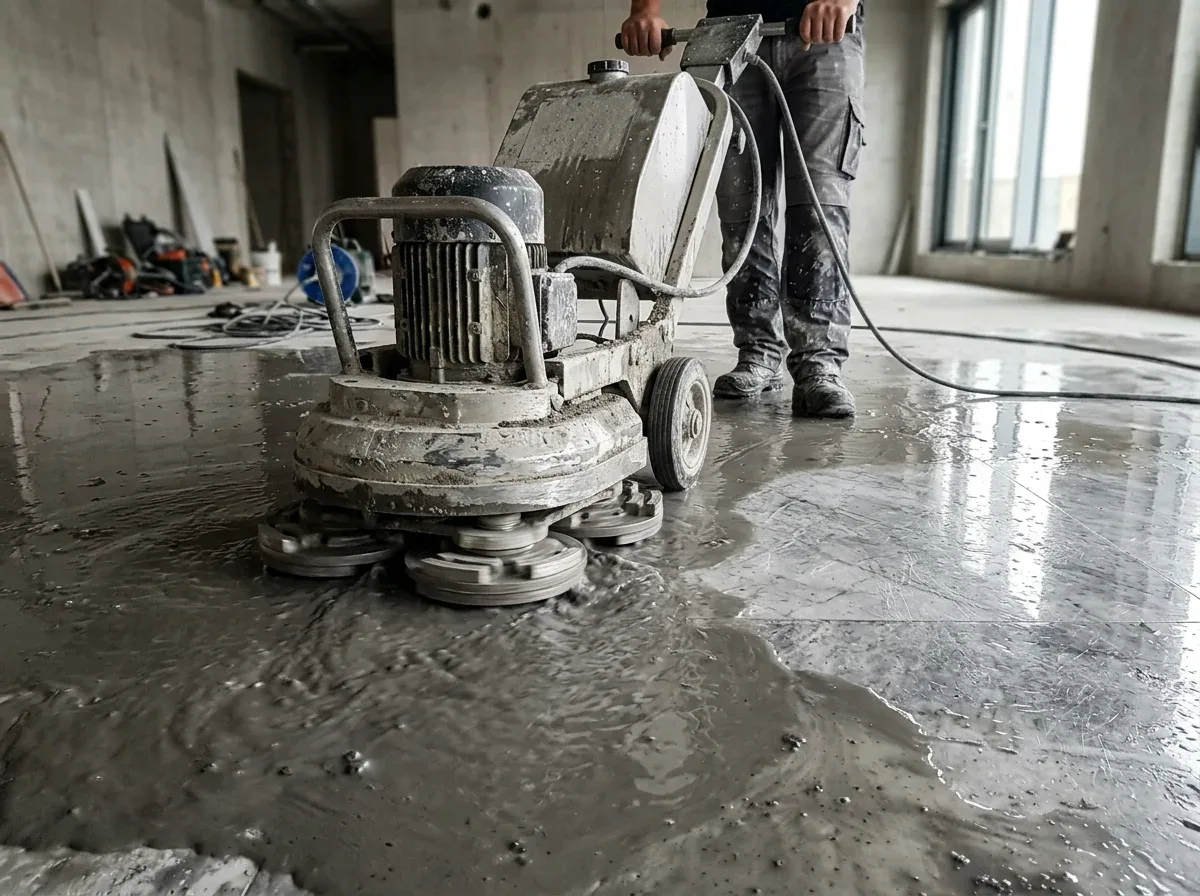
Floor Problems in Alanya by Building Type
In short: In Alanya you will find many different building types side by side: from old apartment blocks in the city center to new residences in Mahmutlar and Kargıcak, from villas in Bektaş and Tepe to hotels along the coast.
The floors of each building type face their own particular problems. In this article we summarize the floor problems we encounter most often by building type.
Old Apartment Buildings
Typical floors: Mosaic tile, terrazzo, local marble, old travertine.
Common problems:
- Dulled staircases and entrance halls: Years of foot traffic along the same path, plus sand carried in from the street, take away the shine in common areas; dirt also settles into the scratches.
- Worn stair nosings: The front edge of a step bears the most load; over time it rounds off, crumbles or breaks, reducing safety on the staircase.
- Old polish layers: Polishes and varnishes applied in the past for shine turn yellow, hold dirt and become slippery; these layers must be removed before honing.
- Hollow tiles: With older bonding techniques, voids remain beneath the slab; it sounds hollow when stepped on and carries a risk of cracking or breaking over time.
- Mismatched patches: During renovations, broken areas are filled with stones of a different tone and texture; these patches stand out on the floor and are treated separately during honing.
Key needs: Honing, stair repair, polish removal, hollow tile repair.

New Residences and Housing Complexes
Typical floors: Ceramic and porcelain tile inside apartments, marble and granite in common areas, travertine or granite around pools, concrete in indoor car parks.
Common problems:
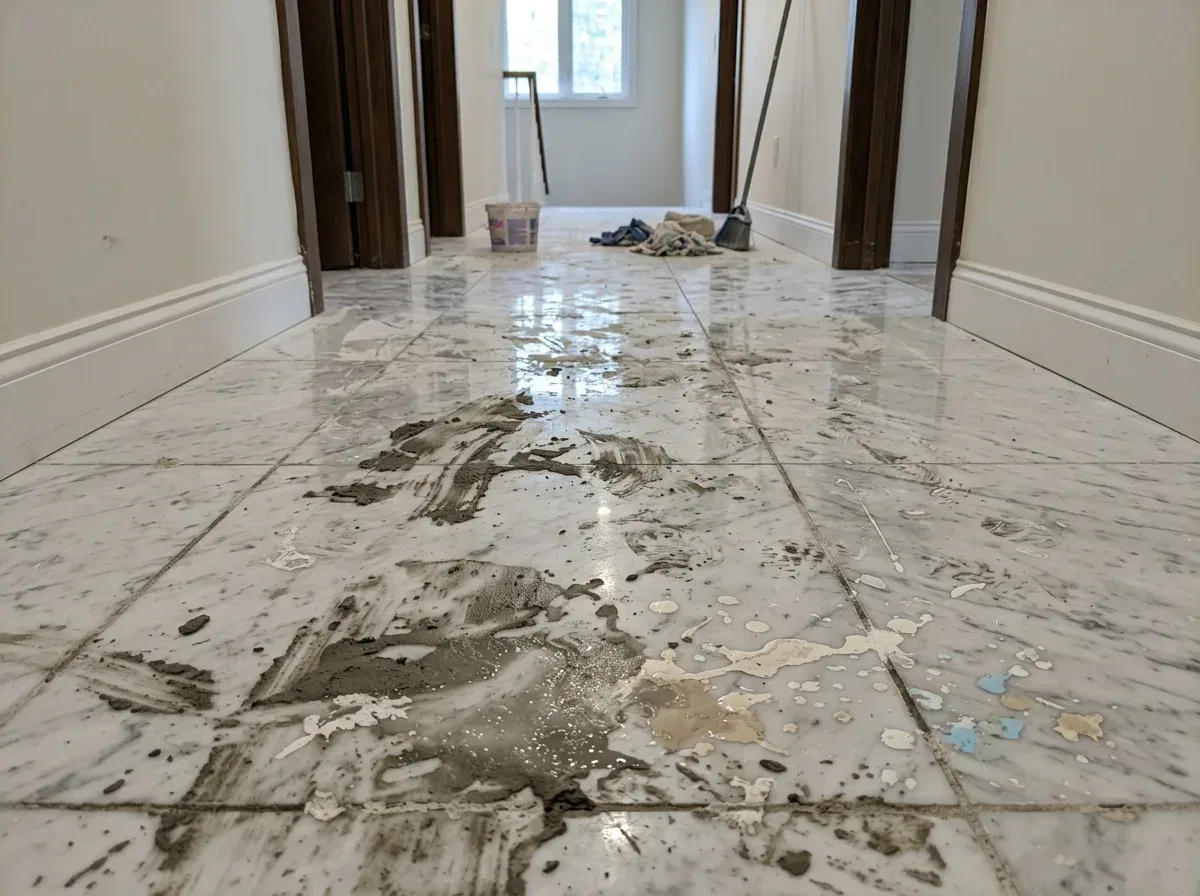
- Construction residue: Mortar, paint and grout residue dries on the new floor and, if cleaned with the wrong chemical, damages the stone surface.
- Level differences in new marble: During installation, slabs may not sit at the same height; edges that catch the foot and waviness visible in the light are corrected with the first honing.
- Limescale and slipperiness around the pool: As splashed pool water evaporates, it leaves white limescale marks; a wet and dirty surface also becomes slippery when walking barefoot.
- Dust, oil and tire marks in the car park: Indoor car park concrete begins to dust under vehicle traffic, dripping oil seeps into the pores, and tire marks build up at turning points.
- Move-in damage: In new complexes with successive moves, furniture scraping, dropped heavy items and sand scratch or break the floors in corridors and in front of elevators.
Key needs: Post-construction cleaning, first honing, pool surround maintenance, car park concrete honing.
Detached Villas
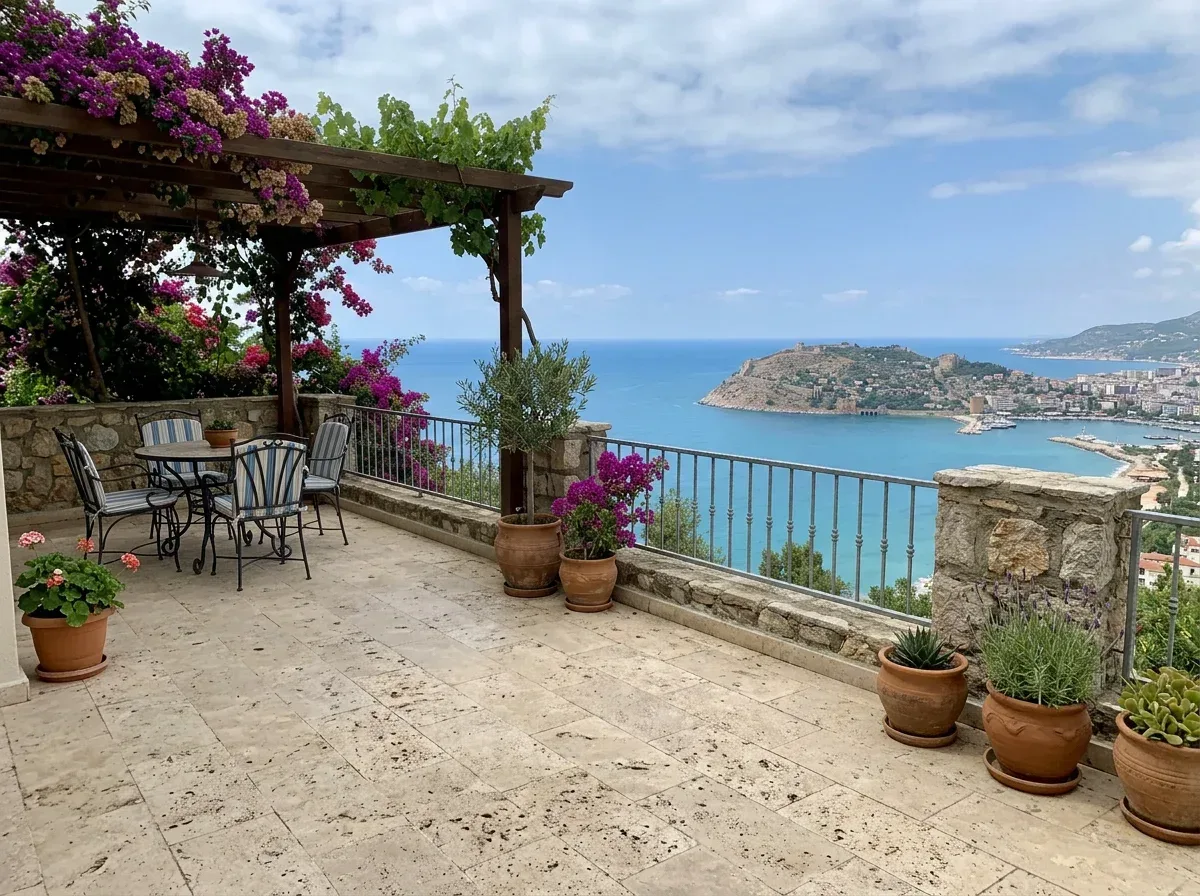
Typical floors: Travertine, marble, granite; large terraces, garden paths, pool surrounds.
Common problems:
- Opened travertine pores: The fillers in travertine fall out over time, and dirt and water fill the exposed voids; the floor starts to look speckled, dirty and neglected.
- Algae, limescale and salt: On terraces and around pools, shade, irrigation and pool water keep the stone constantly wet; this is why algae, limescale marks and salt efflorescence are common.
- Slipperiness on outdoor steps: Polished or algae-covered outdoor steps become dangerous when wet; a non-slip surface treatment is preferred for these steps.
- Yellowing old polishes: Film-forming polishes applied outdoors turn yellow in the sun and peel off in flakes; the natural color of the stone disappears beneath this layer.
- Moisture and mold: Villas left closed for months build up stale air and moisture; mold and dark stains form on the floor, in the joints and under furniture.
Key needs: Travertine filling and honing, outdoor surface finishing (brushing, honing), impregnation, pre-season maintenance.
Hotels
Typical floors: Marble in the lobby, marble or granite in the restaurant, marble bathrooms in the rooms, marble and travertine in the spa, travertine around the pool, concrete in service areas.
Common problems:
- Dulling along the lobby walkway: On the route from the entrance to the reception and elevators, heavy traffic and sand take away the shine; a dull path becomes visible on the floor.
- Suitcase wheel marks: Suitcases with hard wheels, together with the sand they carry, leave fine lines and dark marks on the marble.
- Oil and acid stains in the restaurant: Spilled oil seeps into the stone's pores, while acidic drinks such as lemon, vinegar and wine etch the marble surface, leaving dull rings.
- Limescale and acid damage in bathrooms: Limescale from hard water builds up, and descaling cleaning products wear down the marble surface, permanently removing its shine.
- Mineral buildup and slipperiness in the spa: Constant moisture and steam form a mineral layer on the stone; this layer makes the wet floor slippery and fades the color.
- Salt and algae around the pool: Pool water and sea air leave salt behind, and algae grows in shaded corners; both wear down the surface of travertine.
Key needs: Comprehensive pre-season maintenance, regular shine renewal, housekeeping training.
Commercial Premises: Shops, Restaurants, Offices
Typical floors: Marble, granite, polished concrete, ceramic.
Common problems:
- Sand and wear at entrances: Sand carried in on customers' shoes acts like sandpaper over the first few meters of the entrance, and this area is the first to lose its shine.
- Grease in restaurant kitchens: Grease constantly builds up on kitchen floors, works into the pores, darkens the floor and makes it slippery; a normal mop does not remove it completely.
- Loss of shine in showrooms: Floors kept glossy for a display-window effect quickly dull with footprints and scratches; that is why regular renewal is often needed.
Key needs: Honing and renewal planned for nights or closed days.
Warehouses, Garages and Workshops
Typical floors: Concrete.
Common problems: Dusting, oil stains, cracks and broken joints.
Key needs: Concrete honing, hardener, joint repair.
Summary by Building Type
| Building type | Most common problem | Priority work |
|---|---|---|
| Old apartment building | Dullness, old polish, hollow tiles | Polish removal, repair, honing |
| New residence | Construction debris, level differences | Post-construction cleaning, first honing |
| Villa | Opened pores, algae, slipperiness | Filling, brushing, impregnation |
| Hotel | Walkways, limescale, grease | Pre-season maintenance, renewal |
| Commercial premises | Entrance wear, loss of shine | Night honing and renewal |
| Warehouse, garage | Dusting, oil | Concrete honing, hardener |
Differences by Area
In buildings along Alanya's coastline the effect of sand and salt is more pronounced, whereas in villas in higher and inland areas such as Tepe, Bektaş and Oba, moisture, algae and cracks caused by outdoor temperature differences stand out. In areas with heavy new construction such as Mahmutlar, Kestel and Avsallar, post-construction cleaning and first honing of newly laid floors are in high demand. In the city center, the mosaic and marble floors of old apartment buildings predominate.
What Do We Look at During the Survey?
During the survey, we assess not only the floor's current appearance but also its history, its use and the time available for the work.
- Building age and floor type: The age of the building determines the stone used and the installation technique, while the floor type determines which abrasive and method will be used for honing.
- Interior, exterior and wet areas: A glossy surface may be suitable indoors; in outdoor and wet areas, a non-slip surface and water-resistant protection are chosen.
- Level differences, hollow tiles and stains: Height differences between slabs, slabs that sound hollow, cracks and stains directly change the scope of the work and the need for repair.
- Previous treatments: If polish, crystallization or impregnation has been applied, we first identify what it is; some layers must be removed before honing.
- Usage intensity and timing: How heavily the floor is used determines the choice of surface, and the available hours of the business or residents determine the work schedule.
With this information, we prepare a realistic scope of work and schedule for each building type.
The Common Denominator: Sand, Humidity and Sun

Whatever the building type in Alanya, three factors stand out:
- Sea sand: Accelerates wear at entrances and on terraces.
- Humidity: Mold and stains in closed-up homes, bathrooms and basements.
- Sun: Discoloration and yellowing of the polish on outdoor stone and in front of glass façades.
Our Marble Grinding Service in Alanya

We restore marble floors that have become dull, scratched, or uneven between slabs using wet grinding, which keeps dust under control. From coarse grinding through to polishing, we choose each stage according to the type of stone, and if needed we repair cracks and joints as part of the same job.
We inspect your floor on site and tell you plainly whether it needs grinding or just polishing. Explore our Marble Grinding service.
The same marble faces entirely different problems in an apartment entrance, on a villa terrace and in a hotel lobby. The right solution starts with understanding not only the stone, but also the building and how it is used.
Frequently Asked Questions
01Why do you need honing in a new apartment?
02What should you pay most attention to in a villa?
03When should floor maintenance be done in a hotel?
04Can the floor of an old apartment building be saved?
05When should honing be done in a newly built residence?
06Can work be carried out in all blocks of the complex at the same time?
Related Articles
- Marble and Travertine Floors in Old Buildings in Alanya
- Natural Stone Care in Villas and Holiday Homes: Protecting Stone by the Sea
- Floor Care for Common Areas in Housing Complexes and Apartment Buildings
- Beach Sand and Shoes: The Duo That Quietly Wears Down Stone Floors
- How Does Alanya's Maritime Climate Affect Natural Stone?