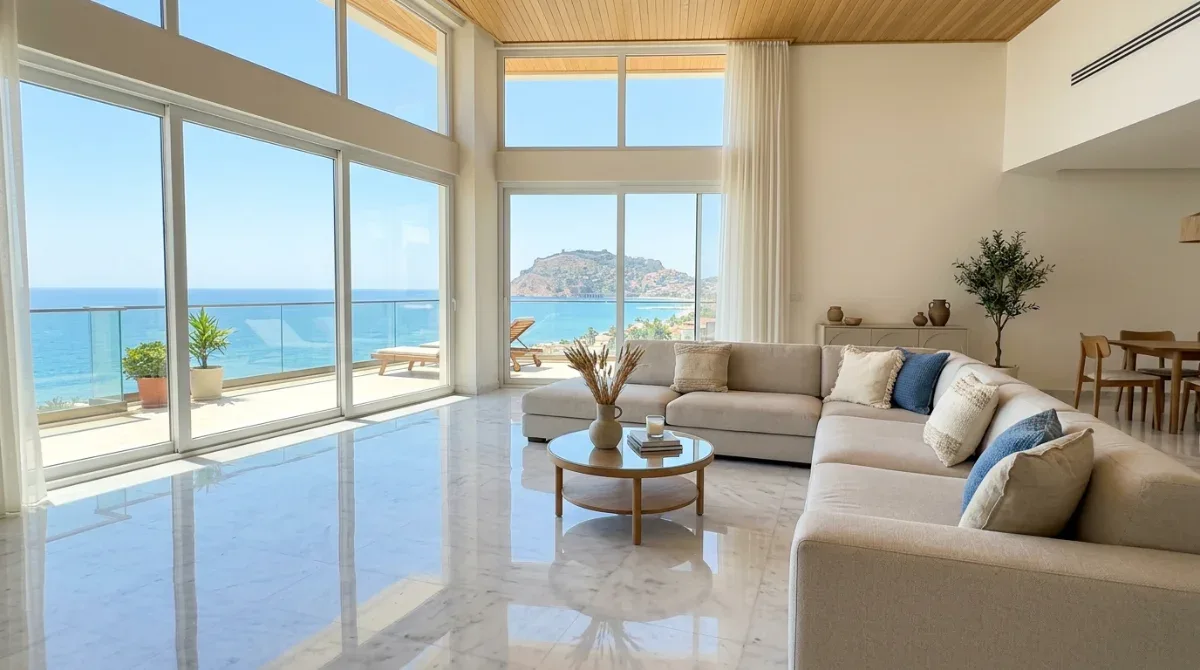
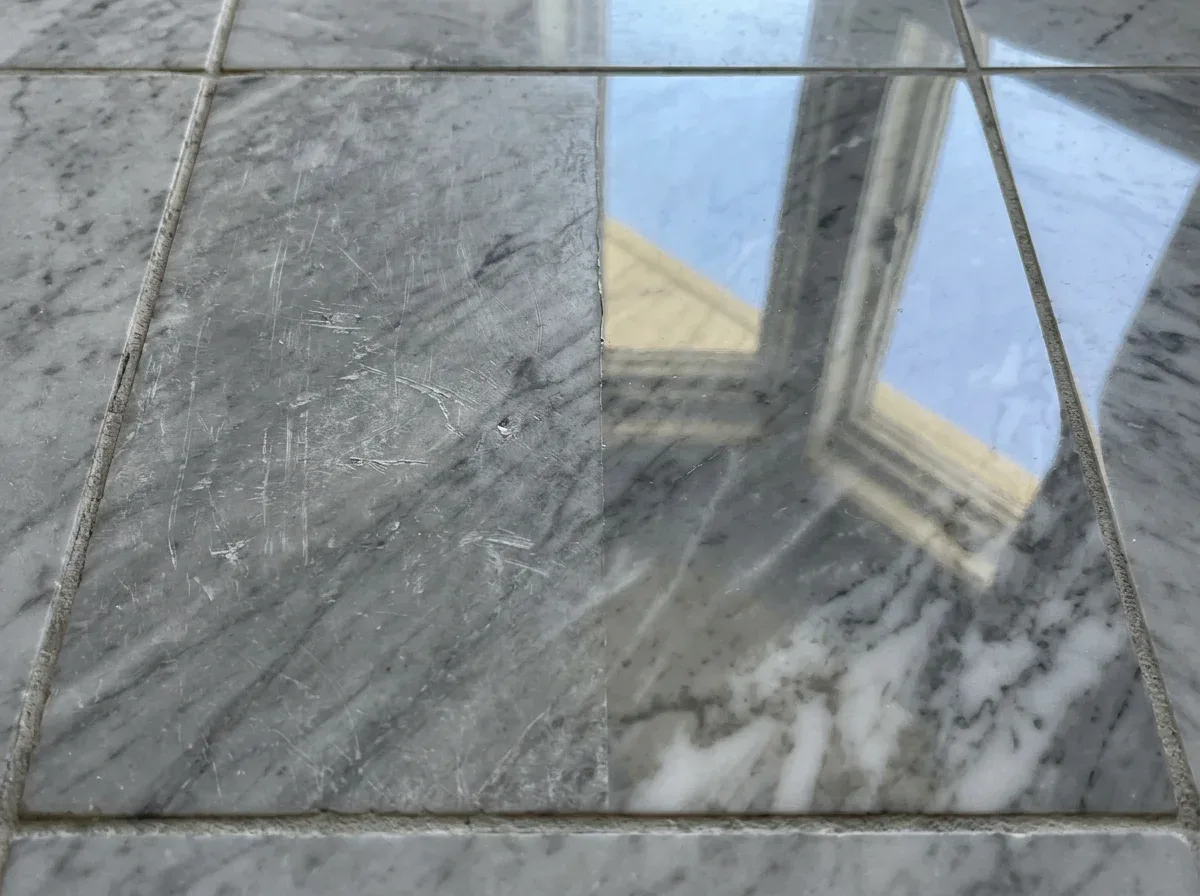
Water Pooling on Balcony and Terrace Stone Paving
In short: Puddles that stay on your balcony or terrace for hours after rain are not just a cosmetic problem.
Standing water penetrates the stone, damages the grout joints, leaves algae and salt marks, and makes the floor slippery. In this article, we explain the causes of water pooling and how to fix it.
Why Does Water Pool?
Insufficient or Reverse Slope
The floor of a balcony or terrace must slope enough to carry water to the drain or toward the outer edge. If the slope was done wrongly during installation, or not done at all, water collects at the low points.
Clogged Drains
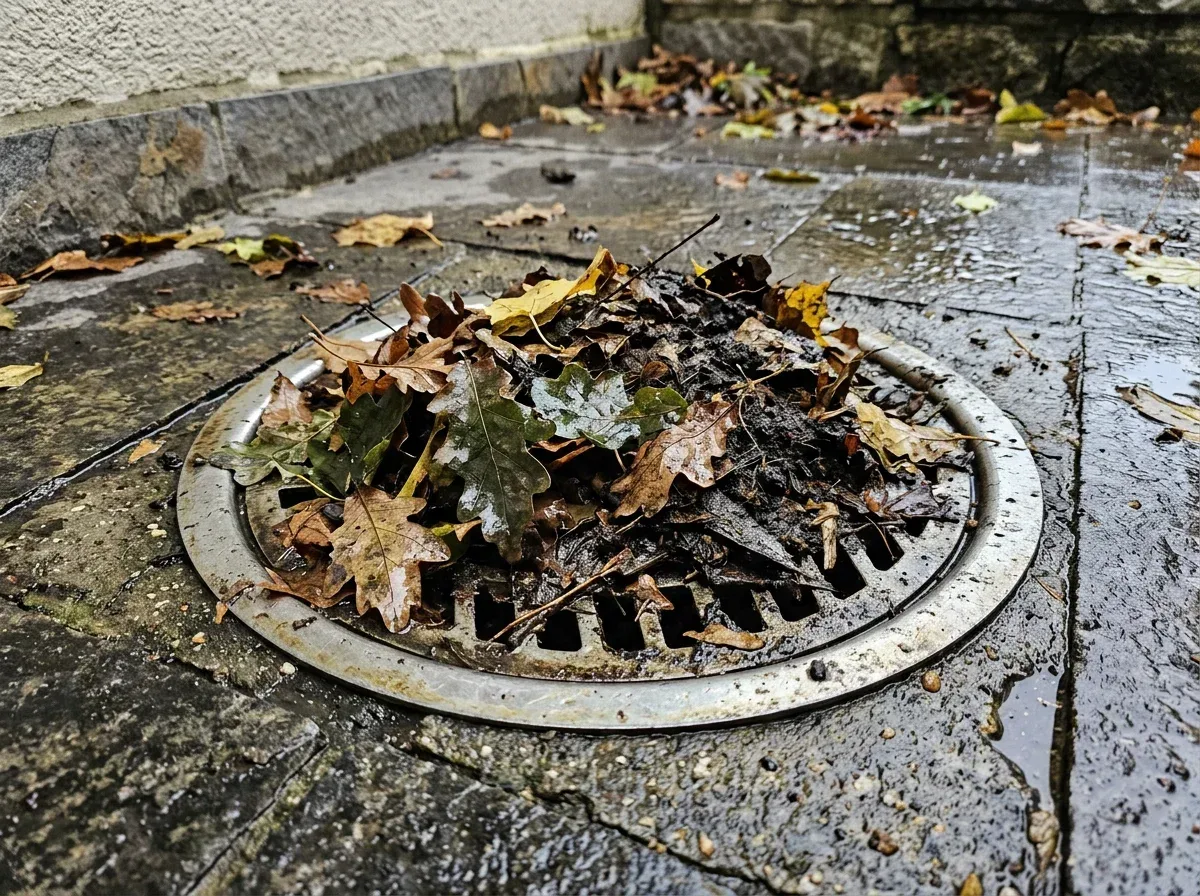
Leaves, soil, sand and debris clog drains. This is especially common in autumn and during storms.
Settled Tiles
Tiles that have lost their support underneath or have settled form depressions and hold water.
Planters and Furniture
Planters, furniture with legs and floor cushions can block the flow of water.
What Does Standing Water Do?
Water that stays on a balcony for hours affects not only the surface, but also the grout joints, the area beneath the tiles and even the ceiling of the floor below.
- Dark damp stains: Stone absorbs water, and places where water stays for a long time look darker than their surroundings; when this happens repeatedly, these stains do not fully disappear even after drying.
- Algae and slipperiness: A green layer forms in areas that are constantly wet; especially in shaded corners, this layer makes the surface slippery and dangerous.
- Efflorescence and limescale marks: As water evaporates, the minerals in it remain on the stone; white rings, crusty marks and fluffy salt deposits appear.
- Grout deterioration: When grout joints constantly absorb water, they crack, crumble and become hollow; open joints in turn become a new path for water to get under the tiles.
- Water seeping to the floor below: If the waterproofing is weak, standing water leaks down through the floor and appears on the ceiling below as stains, bubbling or peeling paint.
- Tile loosening: Water entering through the joints reaches the underside of the tiles and weakens the adhesive; over time the tiles shift, sound hollow and may break.

Solution Steps
1. Simple Checks
Part of the water pooling problem can be reduced or completely solved with simple tasks that the homeowner can do without needing an expert.
- Unclog the drains: Open the drains and clean the grates; a drain clogged with leaves, soil and sand holds water even on the best-sloped floor.
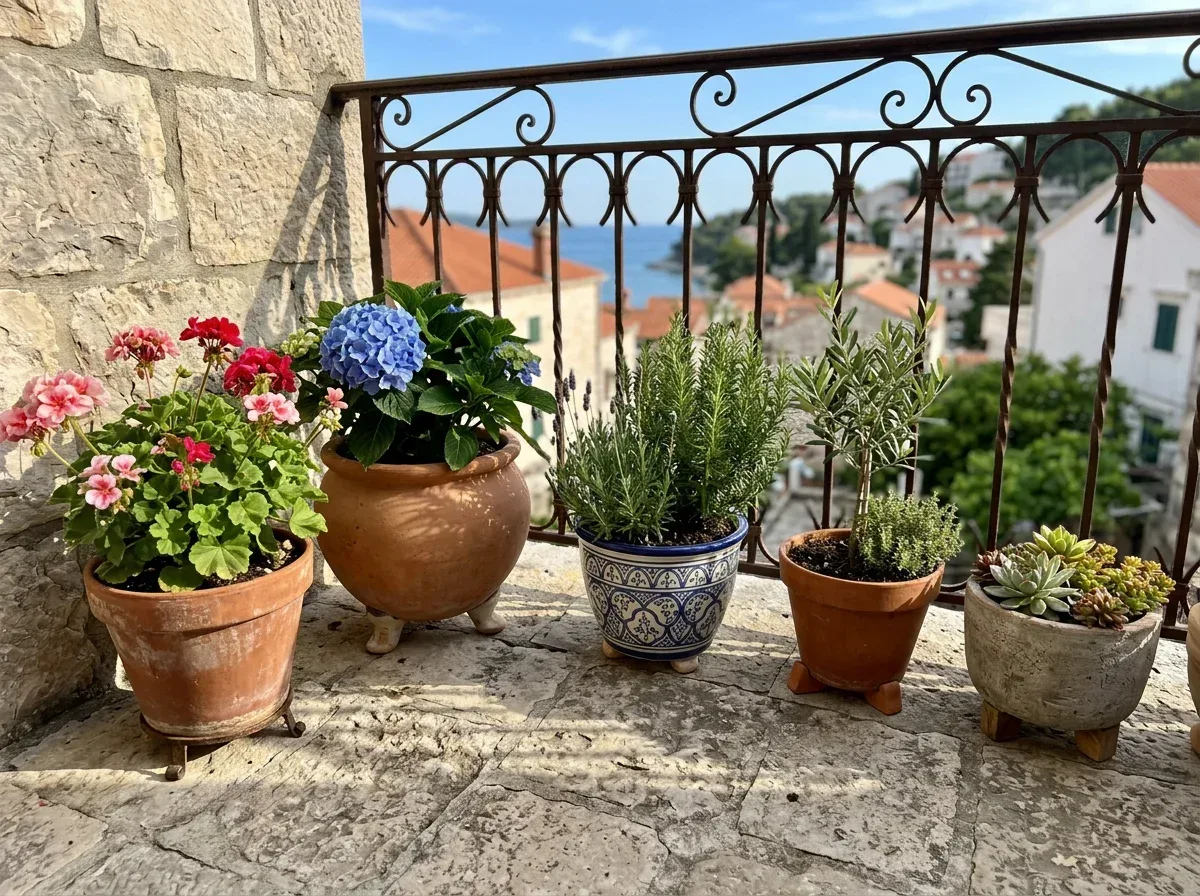
- Raise planters on feet: Planters sitting directly on the floor block the flow of water and leave dampness underneath; on feet, water runs off unobstructed.
- Photograph where water collects: After rain, photograph the spots where water collects; this record makes it easier to tell whether the problem comes from the drain, settled tiles or the slope.
2. Grout Repair
Cracked, hollow or algae-covered joints are the easiest path for water to reach the underside of the tiles. These joints are scraped out, cleaned and refilled with a grout material suitable for outdoor use, with low water absorption and sufficient flexibility. Grout repair alone does not solve a slope problem, but it largely prevents water from getting under the stone and the tiles from loosening.
3. Correcting Settled Tiles
Tiles that have settled and formed depressions can be lifted and relaid at the correct level.
4. Slope Problem
If the overall slope is wrong, the problem cannot be solved with a surface treatment. Small local depressions can be corrected; but if the slope of the entire terrace is wrong, the floor may need to be rebuilt. In this case, it is best for the installer and a waterproofing specialist to assess it together.
5. Cleaning and Surface
Algae, salt and limescale marks are cleaned; on slippery surfaces, brushing or honing can be done.
6. Impregnation
A breathable impregnating sealer suitable for outdoor use reduces water penetration into the stone.
Summary of Solutions by Cause
| Cause | How can you tell? | Solution | Who does it? |
|---|---|---|---|
| Clogged drain | Water collects around the drain | Drain cleaning | Homeowner / maintenance |
| Planters and objects | Water pools in front of objects | Using feet and risers | Homeowner |
| Damaged grout | Gaps in the grout, algae | Regrouting | Stone installer |
| Settled slab | Dip in a single slab | Lifting and re-laying | Stone installer |
| Overall slope error | Water remains over a large area | Re-laying the floor | Installer and waterproofing specialist |
A Simple Observation After Rain
The easiest way to understand why water is pooling is to observe the balcony or terrace one or two hours after the rain stops. If water collects only around the drain, the problem is most likely a clogged drain. If a small pond forms in the middle of a single slab, that slab has settled. If water remains at the foot of the wall or in front of the terrace door, it may indicate that the slope was built in the wrong direction. These photos make it easier for the installer and the waterproofing specialist to make a correct diagnosis.
Pre-Winter Check
A short check carried out before the winter rains begin lets you catch the problems that cause water pooling before the damage grows.
- Clean the drains and grates: Clean all drains and grates; sand and debris that have built up over the summer will block the water from flowing away in the first heavy rain.
- Watch the drains near trees: Drains near deciduous trees clog very quickly in autumn; check these drains more often.
- Check the grout: Look for cracks and gaps in the grout; grout repaired before winter prevents water from seeping under the slabs.
- Ask about the ceiling below: Ask the neighbor downstairs whether there is a new stain on their ceiling; this is the earliest sign that water has penetrated the waterproofing and passed through.
- Check the impregnation: Check the impregnation with a drop test; if water soaks into the stone immediately, the protection has weakened and renewing it before winter may be worth considering.
Balconies and Terraces in Alanya
Because winter rainfall in Alanya can be heavy in a short time, water pooling is common on balconies and terraces with weak slopes and drains. In buildings close to the sea, the pooled water also brings salt and limescale marks with it. In our work, we carry out regrouting, correction of settled slabs, algae and limescale cleaning, brushing of slippery surfaces, and impregnation; when we see an overall slope or waterproofing problem, we state it clearly and recommend getting an expert opinion.
Does Honing Correct Slope?

No. Honing evens out level differences on the surface but does not change the overall slope of the floor. On the contrary, care must be taken during honing so as not to disturb the slope.
Our Marble Grinding Service in Alanya

We restore marble floors that have become dull, scratched, or uneven between slabs using wet grinding that keeps dust under control. We choose every stage, from coarse grinding to polishing, according to the type of stone, and if needed we repair cracks and joints as part of the same job.
We inspect your floor on site and tell you clearly whether it needs grinding or just polishing. Explore our Marble Grinding service.
Cracked and hollowed-out joints are renewed with a material suitable for outdoor use. This reduces water seeping beneath the slab. — Expert Note