The Effects of Air Conditioner Condensation and Humidity on Marble
In short: In Alanya, air conditioners almost never turn off in summer.
Water leaking from the AC drain, condensation on chilled marble floors, and high outdoor humidity can cause stains, slipperiness, and grout problems in floors without anyone noticing. In this article we explain these effects and simple precautions.
AC Drain Water
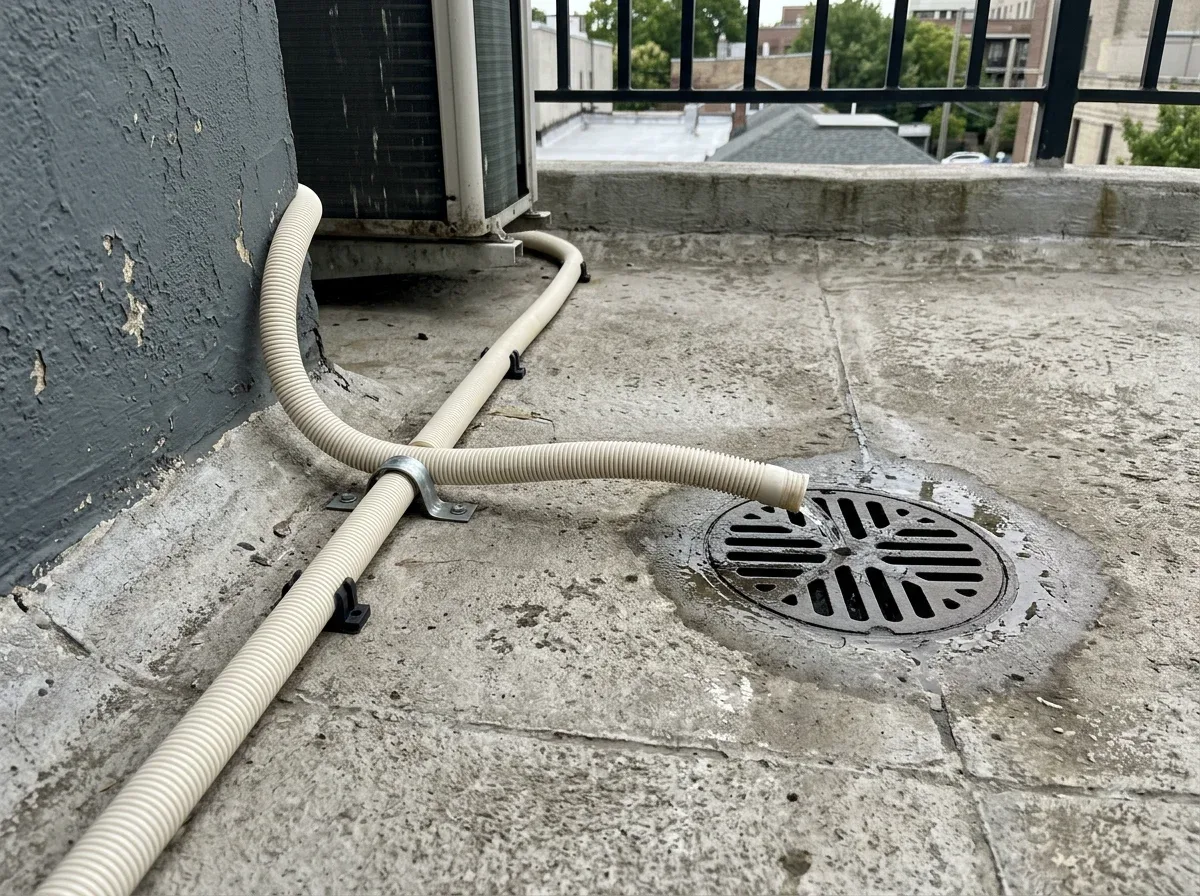
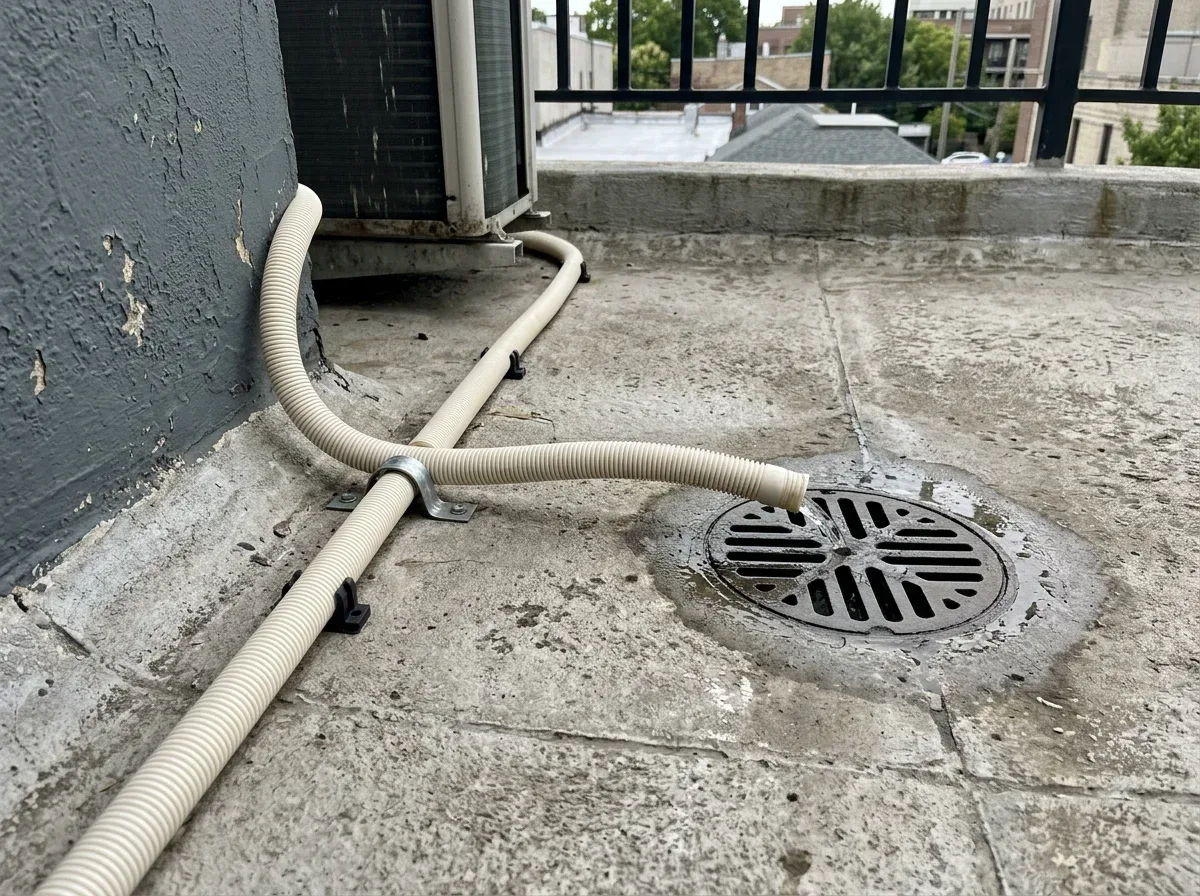
As an air conditioner cools, it condenses moisture from the air and discharges this water through the drain hose. In Alanya's hot and humid summers, a split AC unit can produce liters of water a day. If the hose is routed incorrectly, clogged, or its end is left directly on the stone, the following problems arise:
- Water drips onto the base of walls and the balcony: Water from a clogged or incorrectly routed hose drips under the indoor unit, onto the base of the walls, or onto the balcony, wetting the same spot over and over.
- Dark moisture stains: Stone that stays constantly wet absorbs water and darkens; as long as the moisture source is not cut off, the stain never gets a chance to dry and lighten.
- Grout deterioration and mold: Constant moisture softens the grout and empties the joints; mold can start in wet, unventilated grout lines.
- Limescale and algae buildup: On balconies and terraces, limescale is left behind as water evaporates at the dripping point, and algae take hold in shaded areas that stay constantly wet.
Sign: Constant wetness, dark stains, or white limescale marks at a specific spot at the base of the wall under the AC or on the balcony.
Precaution: The drain hose should be checked, directed to a drain or a suitable spot, and cleaned regularly.
Condensation on the Floor
Marble and granite are materials that conduct heat well and stay cool for a long time. When the door of a room cooled by an air conditioner is opened to the humid, hot outdoor air, a thin film of water can form on the cold floor. This is seen most often in the following places:
- In front of balcony doors: When the balcony door is opened, hot and humid outdoor air meets the stone chilled by the AC and leaves a thin film of water in front of the door.
- Hotel and store entrances: At entrances that open and close frequently, outdoor air constantly comes in; when condensation on the cold floor combines with heavy foot traffic, the risk of slipping increases.
- Transitions from a hot terrace to an air-conditioned lounge: At thresholds leading from a hot terrace into an air-conditioned lounge, the temperature difference is at its highest and the floor can stay wet for a short time.
In these spots, the floor can be wet and slippery for a short time.
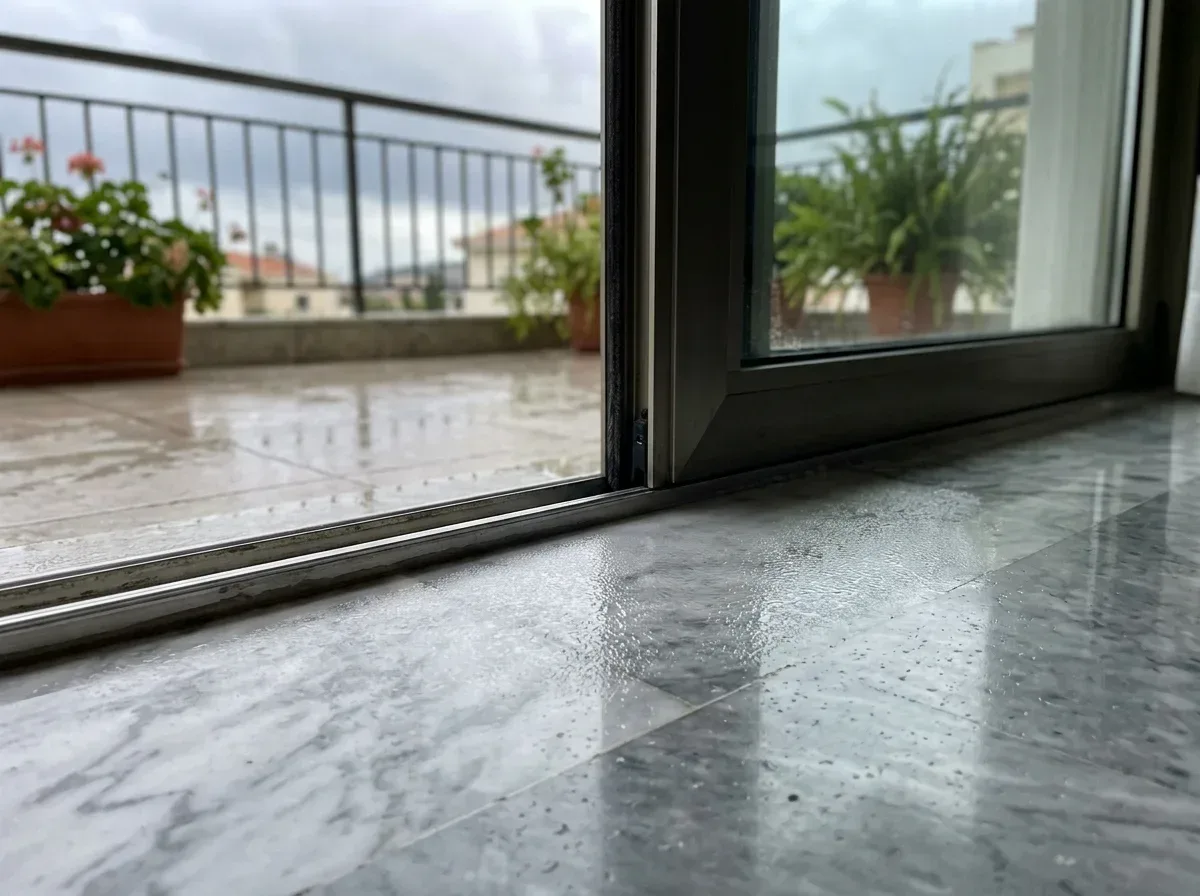
Precaution: Avoid leaving doors open for long, and consider absorbent mats at transition points and honing on polished surfaces.
Closed and Humid Homes
During periods when the AC is switched off and the home stays closed for a long time:
- Moisture buildup in the bathroom and kitchen: In a closed, unventilated home, moisture in the bathroom and kitchen cannot escape; the stone and grout stay damp for a long time.
- Mold in the grout: Grout that stays constantly damp and unventilated creates a suitable environment for mold to start; darkened grout may eventually need to be renewed.
- Stains behind rugs and furniture: Because air does not circulate under rugs and behind furniture, moisture gets trapped in the stone and forms dark stains.
- Damp smell: A damp smell in a closed home is a sign that moisture has built up in the stone, grout, and fabrics and that ventilation is insufficient.
Precaution: Regular ventilation, a dehumidifier if necessary, and not letting rugs sit tightly against the floor.
Effects of Moisture on Stone
Moisture does not harm marble in just one way; stains, mineral marks, grout deterioration, and slipperiness appear as different results.
- Dark stains: They form when the stone absorbs water; they lighten when dry, but if the stone stays constantly wet, they give the impression of a permanent stain.
- Limescale and salt marks: As water evaporates, the minerals in it remain on the surface and leave white rings or dusty marks, especially on dark stones.
- Grout deterioration and mold: Constant moisture softens the grout and empties the joints; mold starts in the emptied joints and water seeps beneath the slabs.
- Slipperiness: On a wet polished surface, a thin film of water forms under the foot and traction decreases noticeably.
- Dirt in porous stones: Along with moisture, dirt is also carried into the stone; in porous stones such as travertine, this dirt cannot be wiped off the surface.

Summary of Signs and Precautions
| Sign | Probable cause | Precaution |
|---|---|---|
| Dark stain under the AC | Drain leak | Check the hose, route it to a drain |
| Limescale and algae at a single point on the balcony | Dripping drain water | Extending the hose to the drain, cleaning |
| Slipperiness in front of the balcony door | Condensation on the cold floor | Door discipline, absorbent mat, honing |
| Darkening of the grout joints | Constant moisture | Ventilation, grout renewal |
| Damp smell | Closed-up home, moisture buildup | Regular ventilation, dehumidification |
Cleaning Dark Moisture Stains
A dark stain on stone that stays constantly wet is most often caused only by the water inside the stone; once the source of moisture is cut off and the stone dries for a few days, it lightens on its own. If the stain remains even after drying, it may be dirt or minerals carried into the stone along with the water. In that case, a poultice suited to the type of stain is applied. Limescale marks at the dripping point are removed with acid-free products or light polishing. Cleaning done without resolving the source gives the same result again in a short time.
Start-of-Season Air Conditioner Check
A short air conditioner check at the start of summer catches the problem at its source before moisture stains and limescale buildup form on the stone.
- Check the end of the hose: The end of the drain hose should run into a drain or a suitable discharge point, not onto the stone or the balcony.
- Look for kinks and blockages: A kinked or blocked hose cannot carry the water; the water flows back and drips from under the indoor unit onto the wall and floor.
- Look for signs of moisture: A dark stain or white limescale mark on the wall and floor beneath the indoor unit is an early sign of a drainage problem.
- Have the drain line cleaned: Having the drain line cleaned during air conditioner maintenance prevents it from clogging mid-season and dripping water onto the stone.
Moisture and Marble in Alanya
In Alanya, high humidity and long-running air conditioners in the summer months cause stains, limescale and slipperiness on marble and travertine, especially in front of balcony doors and on balconies where outdoor units are located. In our polishing and maintenance work, we check such spots separately, leave the areas in front of doors honed if necessary, and make recommendations for resolving the source of the stain.
What to Do?

When marble has been damaged by air conditioner condensation, the source of the moisture is stopped before any cleaning begins; that is why the order of the steps matters.
- Find the source: First, determine whether the water is coming from the drain hose, from the condensation point, or from a plumbing leak.
- Stop the moisture: The hose is repaired or rerouted and the leak is fixed; if water keeps coming, any later cleaning is wasted.
- Dry the stone completely: If you treat the stone before the moisture inside it has come out, the stains return and the impregnating sealer does not penetrate the stone properly.
- Clean off limescale and stains: Once the stone is dry, any remaining limescale and stain marks are removed with acid-free products suited to the stone or, where necessary, with a poultice.
- Check the grout joints: Joints that have softened or emptied out from moisture carry water under the stone; such joints are cleaned out and renewed.
- Do the drop test: If water dropped on the surface quickly leaves a dark mark, the stone is absorbing water, and impregnating sealer is applied as the final step.
Our Marble Grinding Service in Alanya

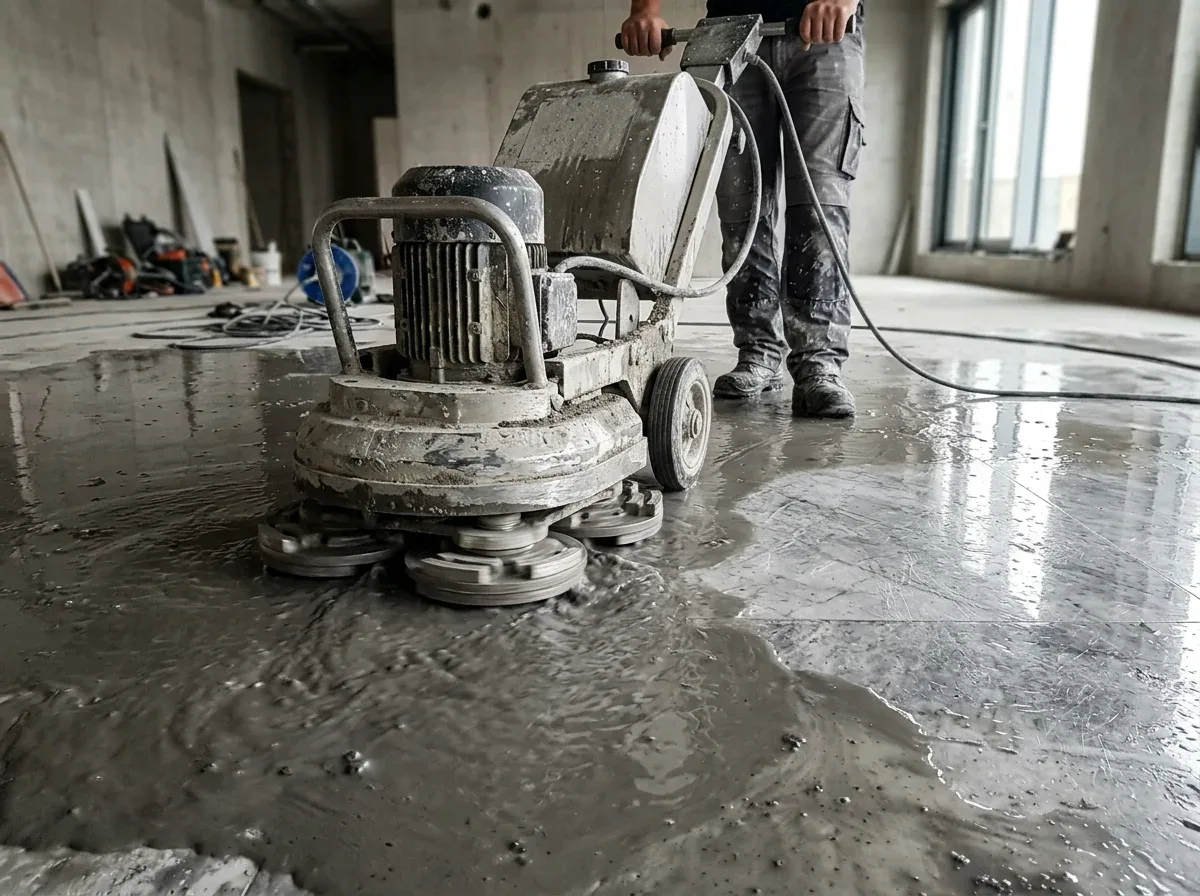
We restore marble floors that have gone dull, become scratched, or developed height differences between slabs, using wet grinding that keeps dust down. From coarse grinding to polishing, we choose each stage according to the type of stone and, if needed, repair cracks and joints as part of the same job.
We inspect your floor on site and tell you plainly whether it needs grinding or just polishing. Explore our Marble Grinding service.
Air conditioners condense the moisture in the air, and this water is drained outside through a hose. If the hose becomes clogged, comes loose, or is routed to the wrong place: — Expert Note