Salt Efflorescence on Balconies and Terraces
In short: Are white, powdery or crusty stains appearing on the stones or joints of your balcony or terrace?
This is often not dirt but a condition called "salt bloom" (efflorescence). The reason it comes back after you wipe it away is that the source is beneath the stone. In this article, we explain the cause and the lasting solution.
What Is Salt Bloom?
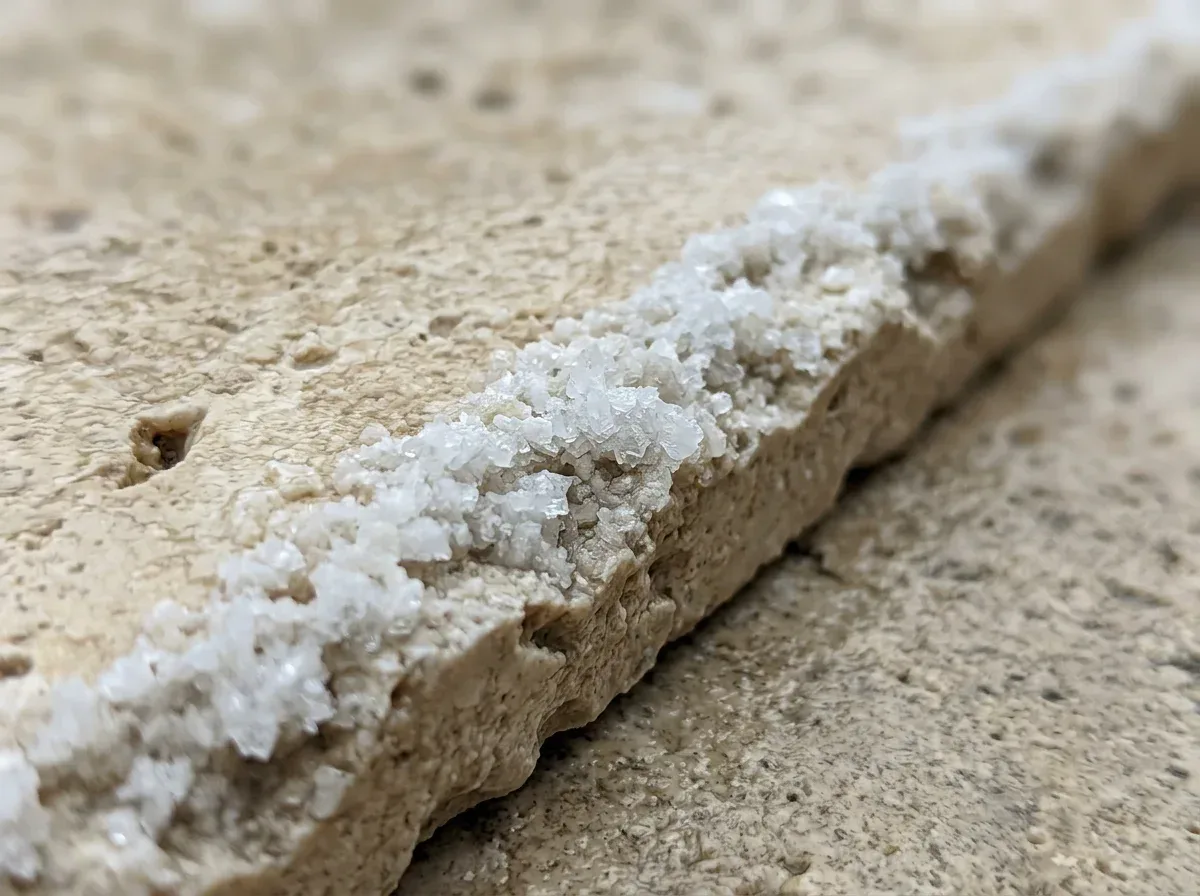
Stone, joint mortar, screed and concrete contain water-soluble salts. As water passes through these materials, it dissolves the salts and carries them to the surface. When the water evaporates at the surface, the salts are left behind as crystals. The result:
- Powdery or crusty marks: Fresh salt looks like a white powder that can be wiped off with a finger; over time it builds up in layers and turns into a hard, crusty deposit that is not easy to remove.
- Joints and tile edges: Because water reaches the surface most easily through joints and tile edges, the marks usually concentrate there and in places where water collects.
- Increase after rain and watering: Water that enters the stone after rain or watering carries new salts; as the water evaporates, the marks become more visible in dry periods.
What Causes It?
Moisture Underneath
If there is a problem with the screed or waterproofing beneath the balcony or terrace, water stays underneath and continually carries salt to the surface.
Insufficient Slope
If water does not flow toward the drain and stays on the surface or in the joints, it penetrates into the stone.
Newly Laid Flooring
In new flooring, excess salts in the mortar and screed can come to the surface in the first months. This may decrease over time.
Sea Air
In buildings close to the coast, salty air and seawater carried by the wind also contribute to salt buildup on the surface.
Watering and Plant Pots
Water overflowing from under plant pots and irrigation systems are constant sources of moisture.
Why Is It Harmful?
Salt bloom is not just a white stain; as it recurs, it wears down the surface and joints of the stone from within.
- It spoils the appearance: White marks cover the color of the stone and make the floor look dirty; as they are cleaned and return, the balcony constantly looks neglected.
- Flaking and crumbling: As salt crystals grow in the pores of the stone, they put pressure on the pore walls; this can cause flaking and crumbling on the surface.
- It weakens the joints: Salt also crystallizes inside the joint mortar; over time the joint loosens, crumbles and lets water seep beneath the tiles.
Cleaning
Salt marks are cleaned starting with the gentlest method; wet and harsh treatment is applied only when the previous steps are not enough.
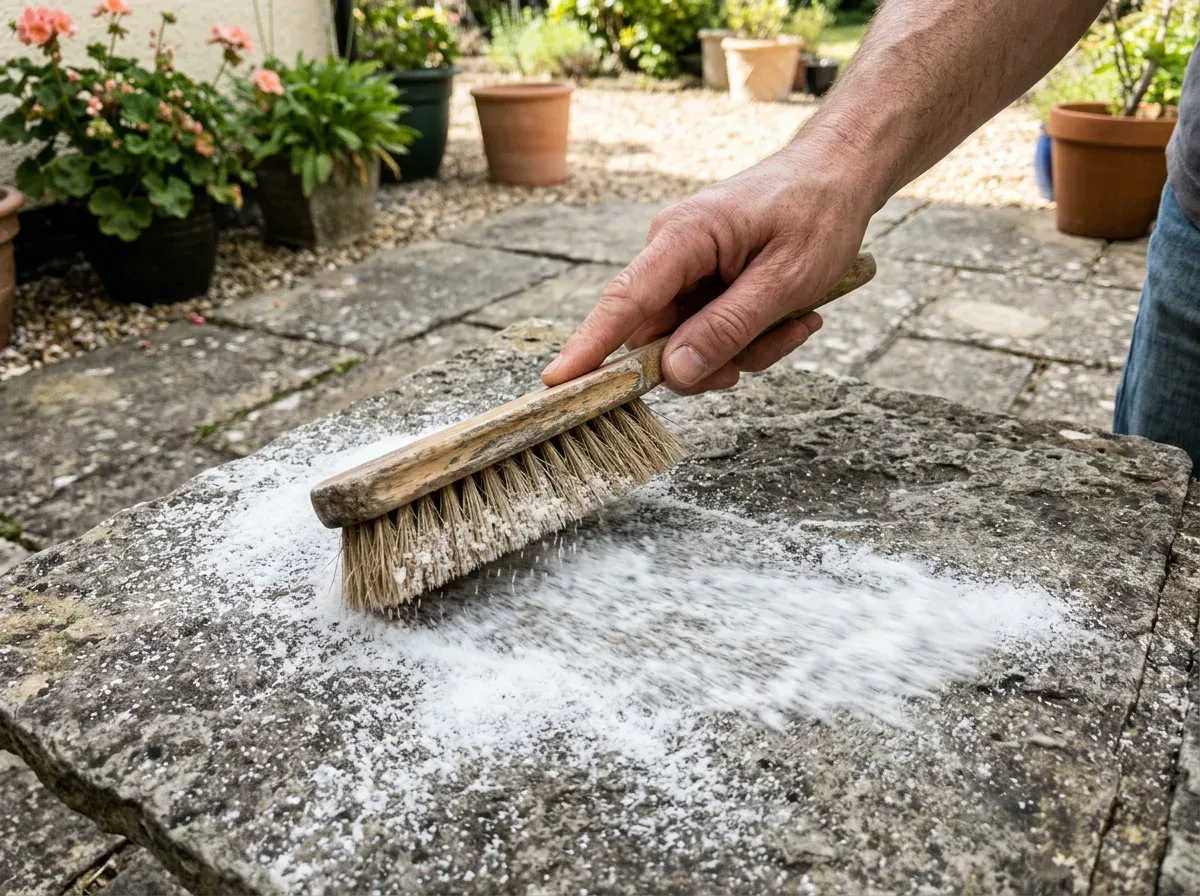
- Dry brush: Powdery salts should first be removed with a dry, soft brush; wet cleaning can dissolve the salt again and send it back into the stone.
- Cleaning with a little water: Marks remaining after dry brushing are cleaned with a little water and dried immediately, so the water does not soak into the stone and carry new salt.
- Crusty deposits: Finally, hard salt crusts are removed with products suitable for the stone and, if necessary, a light mechanical method; acidic products are not used at this stage either.
Warning: Cleaning salt marks with acid is a common mistake. Marble, travertine and limestone are damaged by acid; the joints are also ruined.

Solution by Source
| Source | How can you tell? | Solution |
|---|---|---|
| New flooring | In the first months, gradually decreasing | Regular cleaning with a dry brush, waiting |
| Insufficient slope | In areas with standing water | Slope correction, drainage improvement |
| Insulation problem | Constantly recurring, ceiling stain on the floor below | Insulation repair |
| Plant pots and watering | Rings around pots | Use of saucers and feet, watering routine |
| Sea air | In coastal buildings, a thin layer overall | Regular rinsing with fresh water and drying, then impregnation |
Protection After Cleaning
Once the salt traces have been cleaned and the stone is completely dry, a breathable impregnation can be applied. Impregnation reduces the amount of water entering the stone through the surface; however, if there is a moisture source underneath, non-breathable or film-forming products must never be used. These products trap moisture inside the stone, the salt then crystallizes just beneath the surface, and flaking accelerates. In flaking and crumbling areas, the loose layer is removed first, and filling and light honing are carried out if necessary.
To Prevent It
The way to prevent salt efflorescence is to reduce the water that enters the stone and stays inside it.
- Place pots on feet: Place pots on feet or risers rather than directly on the stone; water overflowing from underneath then won't become a constant source of moisture and salt.
- Clean drains regularly: Clean balcony and terrace drains regularly; water standing in a clogged drain seeps into the stone and joints.
- Check the irrigation: Make sure irrigation systems are not wetting the stone; water reaching the stone every day from a sprinkler or drip line constantly carries salt to the surface.
- Have the slope checked: Note the spots where water pools and have the slope checked; as long as water does not drain and stays standing, cleaning will not give lasting results.
- Consult a waterproofing specialist: If there are stains on the ceiling of the floor below, consult a waterproofing specialist; if the problem lies in the screed or waterproofing underneath, surface treatments alone will not solve it.
Salt Efflorescence in Alanya
In Alanya, we encounter salt efflorescence very often on balconies and terraces close to the sea; the salt in the sea air and the moisture of the rainy winter season accelerate this process. During our on-site inspection, we first identify the source, and we state this clearly in cases caused by waterproofing or slope issues. Where the source has been resolved or the problem is only superficial, we carry out salt cleaning, light honing if necessary, and breathable impregnation.
Permanent Solution: Cutting Off the Water

Salt efflorescence will keep coming back as long as water is present. For a lasting solution:
- Checking the waterproofing: Water seeping in from below or from the sides carries salt to the surface of the stone; if the waterproofing has failed, efflorescence returns even after it is cleaned.
- Slope and drains: In areas where water pools instead of flowing to the drain, the stone stays constantly wet, and as it dries the salt accumulates at these spots.
- Open joints: Water entering through emptied joints reaches the underside of the slab; once the joints are renewed, the water path beneath the stone is closed.
- Flower pots and watering: Water that collects under pots and water spilled onto the stone while watering are common sources of salt stains; pot feet and proper watering direction reduce this.
- Breathable impregnation: It reduces water entry from above while allowing moisture below to evaporate, so the salt is not trapped inside the stone.
Impregnation reduces water entering from above, but it does not stop moisture rising from below. Breathable products allow moisture from below to evaporate; non-breathable coatings, on the other hand, can trap salt inside the stone and cause more serious damage.
Our Marble Grinding Service in Alanya

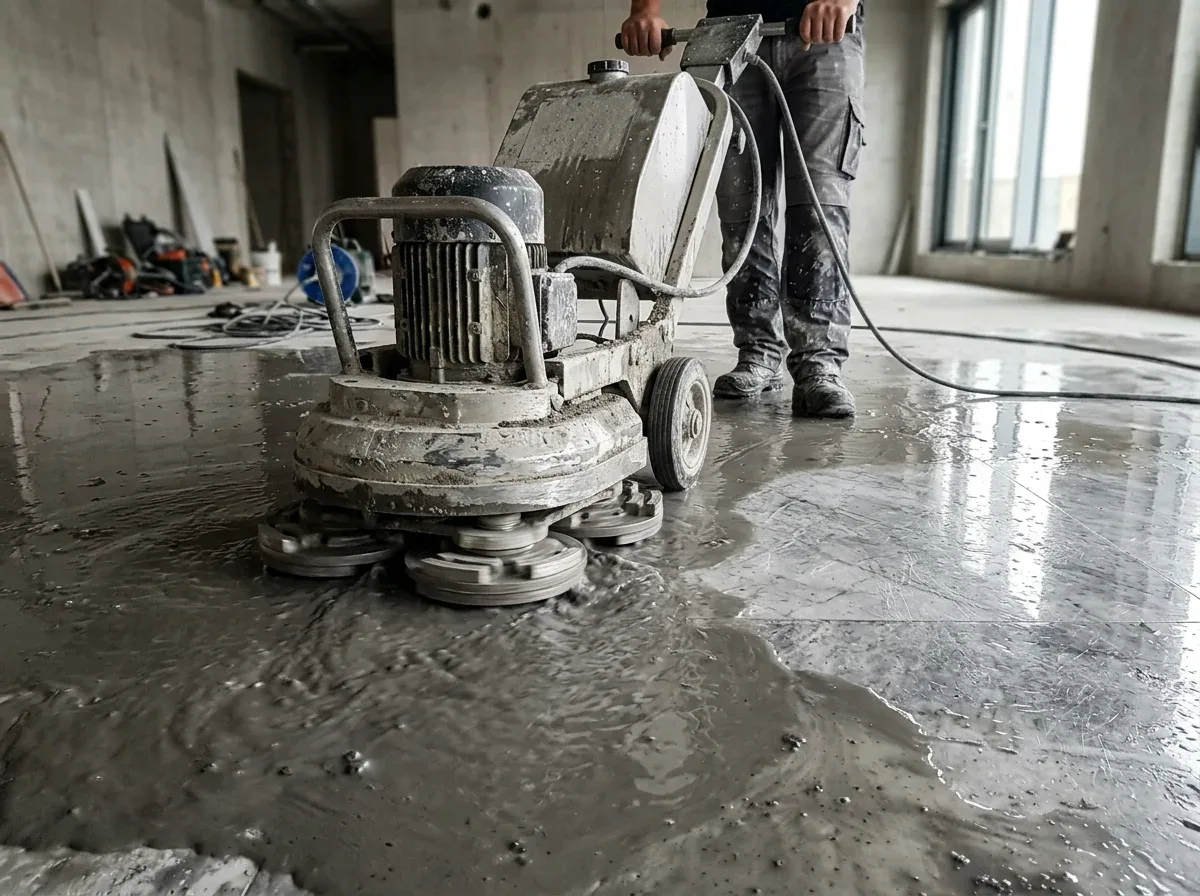
We restore marble floors that have become dull, scratched, or uneven between slabs using wet grinding, which keeps dust under control. From coarse grinding to polishing, we choose each stage according to the type of stone and, if needed, carry out crack and joint repairs as part of the same job.
We inspect your floor on site and tell you clearly whether it needs grinding or just polishing. Explore our Marble Grinding service.
Wiping away a white stain is easy; the real work is finding the water that carries it up from beneath the stone. Any cleaning done without addressing the source is only temporary.