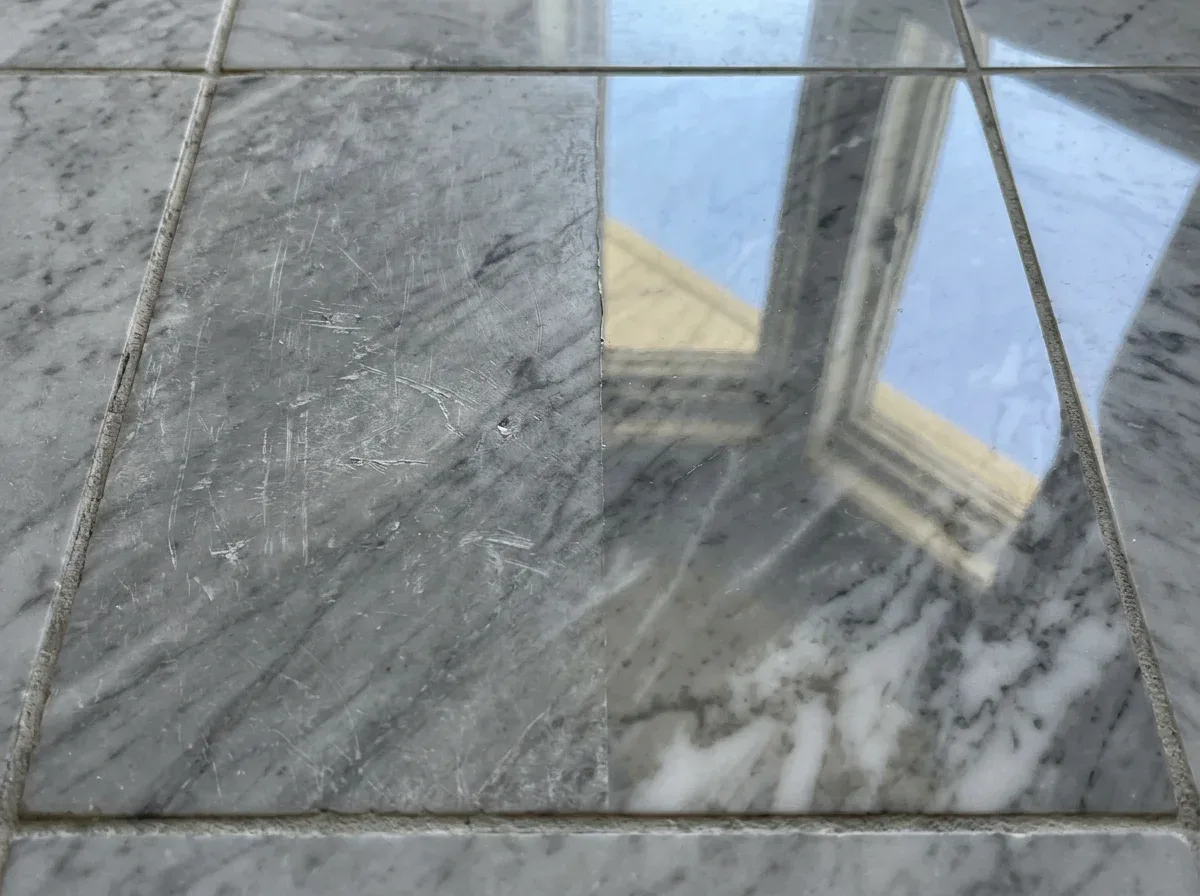
Sea Sand and Shoes: The Duo That Quietly Wears Down Stone Floors
In short: In Alanya, sand carried all summer from the beach into homes and from hotels into rooms is the sneakiest enemy of stone floors.
Tiny grains that are hard to see with the naked eye act like sandpaper with every step and quietly dull the floor. In this article, we explain what sand does to stone and how you can prevent it.
Why Is Sand So Effective?
A large part of sea sand consists of quartz grains. Quartz is much harder than marble and travertine. A grain of sand stuck under a shoe sole or carried in on flip-flops leaves a fine scratch on the stone's surface when stepped on.
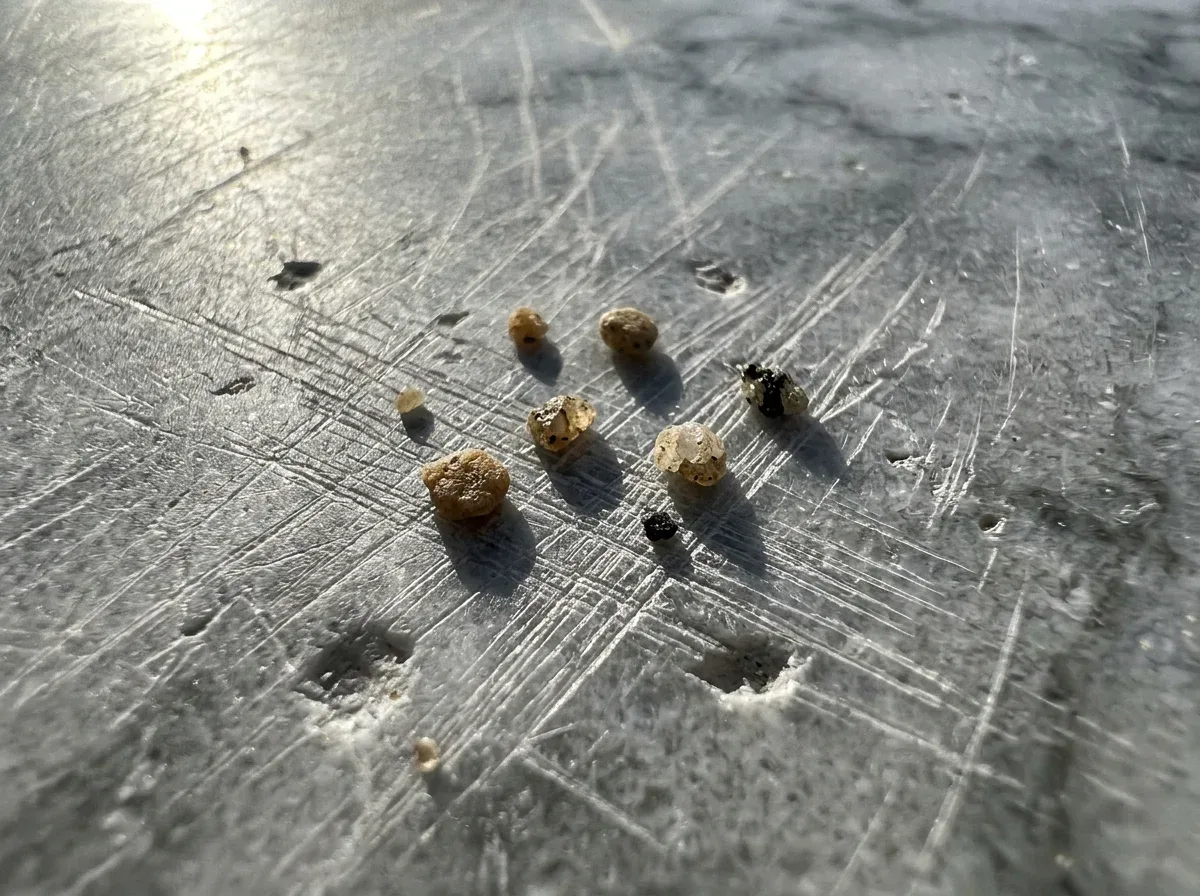
A single scratch is invisible. But after thousands of steps and thousands of grains, countless micro-scratches form on the surface; light scatters and the floor becomes dull. Doorways are affected first, then hallways and walking paths.
Where Is It Seen Most?
Sand-related wear starts mostly at the points where people pass from outside to inside and carry sand on their shoes.
- Entrances close to the beach: At the entrances of homes and hotels near the beach, sand carried on shoes accumulates on the first stones stepped on, and dulling is seen here first.
- Terrace and balcony transitions: At the points where you move inside from a terrace or balcony, sand coming from outdoors constantly scratches the first few meters of the interior floor.
- Pool area transitions: When moving indoors from the pool area, sand sticking to wet feet rubs against the stone and leaves wear along the walking line.
- Lobbies and elevator fronts: In hotel lobbies and in front of elevators, heavy traffic constantly grinds sand against the stone; these areas can become dull in a short time.
- Holiday rentals: In holiday rentals, the entrance and kitchen are the places guests walk through directly on returning from the beach, so they are the most affected by sand.
Stopping Sand at the Door
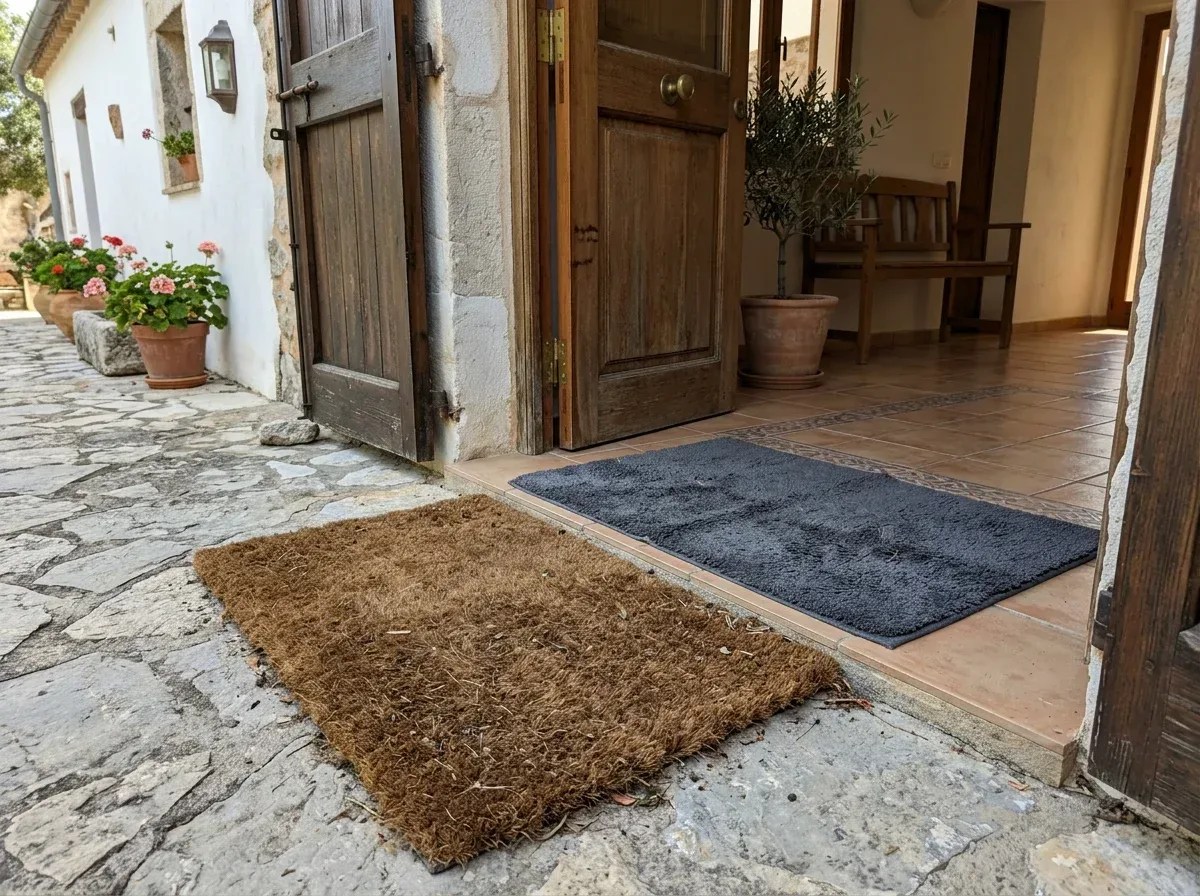
Two-Stage Doormat
Using two different doormats in succession keeps most of the sand at the door before it reaches the stone floor.
- Outer mat: It has a coarse, brush-like surface; it catches most of the sand on shoes and is laid on the outside of the door.
- Inner mat: It is absorbent and fine-textured; it removes the remaining sand and moisture that got past the outer mat, so the shoe reaches the floor clean.
Foot Shower and Shoe Rack
The most effective way to leave sand outside the home after the beach is to remove it from feet and shoes at the entrance.
- Foot shower: A foot shower in the garden or at the terrace entrance after the beach washes off the sand sticking to feet and flip-flops before it comes inside.
- Shoe rack and slippers: Changing shoes and slippers at the door prevents the sand carried by outdoor shoes from reaching the interior floor.
These two simple measures greatly reduce the amount of sand entering the home.
Cleaning the Mats
A mat full of sand starts to spread sand instead of trapping it. Mats should be shaken out and washed regularly.
Cleaning During Sandy Season
The order and frequency of cleaning during the sandy season directly determine how much the stone gets scratched.
- Dry first: Always remove sand with a dry mop or broom before using a wet mop. A wet mop drags sand across the floor.
- Frequent but light: Going over the floor with a dry mop several times a day during the sandy season is more effective than a deep clean once a week.
- Vacuum cleaner: Use vacuum cleaners with soft heads suitable for stone floors; their wheels must be clean, otherwise sand stuck to the wheels will scratch the surface.
- Cleaning the mop head: A sandy mop head scratches the floor; it should be washed regularly and worn heads should be replaced.

If Dulling Has Begun
Sand-related dulling is often superficial. Instead of a full polishing, refreshing the shine with fine grit stages may be enough. This refresh done at the end of summer lets you go through winter with a protected floor.
Effect of Sand by Stone Type
| Stone | Resistance to sand | Observed effect |
|---|---|---|
| Polished marble | Medium | Rapid dulling at entrances, fine scratches |
| Honed marble | Medium | The same wear, but much less noticeable |
| Travertine | Medium-low | Dulling, sand build-up in the pores |
| Granite | High | Unaffected for a long time |
| Polished concrete | Depends on the hardener | Gradual dulling at entrances |
Practical Solutions for Rental Homes
In rental holiday homes, it is hard to change guests' habits when they return from the beach, so the solution needs to be built into the layout of the home. Placing a foot shower and a sand brush at the garden or terrace entrance, laying outdoor and indoor mats on both sides of the door, keeping a few pairs of slippers at the entrance, and reminding guests of the house rules with a short note all help a great deal. Leaving written instructions for the cleaning team to dry-mop first and then damp-clean at every guest changeover also reduces the effect of sand significantly.
End-of-Summer Checklist
A short check at the end of summer lets you spot the wear caused by sand early and prepare the floor for winter.
- Wash the mats: Wash or replace the mats; a mat full of sand starts spreading the sand across the floor instead of trapping it.
- Check for dulling: Check for dulling at entrances and in corridors by looking against the light; dull streaks along walking paths are easy to see from this angle.
- Renew the mop heads: Wash the mop heads and replace worn ones; a head with sand trapped inside scratches the stone again with every cleaning.
- Plan a gloss refresh: If necessary, plan a gloss refresh along the walking paths; surface dulling can often be corrected in fine steps without a full grinding and polishing.
- Check the impregnation: Check the impregnation with a drop test; if water is absorbed quickly, the protection has weakened and may need to be renewed.
Dealing with Sand in Alanya
Alanya's long beaches and homes within walking distance of the shore make it inevitable that sand is carried indoors. That is why, in the homes and hotels where we do grinding and polishing, we recommend a suitable mat system for the entrances and, at the end of the season, refresh only the walking paths so there is no need to regrind the entire floor. For homes very close to the beach, we also offer a honed finish at the entrances as an option.
Is a Honed Finish the Right Solution?

A honed (matte) finish shows the fine scratches left by sand far less than a polished surface does. In entrances with sand and heavy foot traffic, choosing a honed finish can be a practical solution.
Our Marble Grinding Service in Alanya

We restore marble floors that have become dull, scratched, or developed uneven levels between slabs using wet grinding, which keeps dust under control. We choose every stage, from coarse grinding to polishing, according to the type of stone, and if needed we also repair cracks and joints as part of the same job.
We inspect your floor on site and tell you clearly whether it needs grinding or just polishing. Explore our Marble Grinding service.
It is important that mats are long enough; mats long enough for one or two steps are much more effective. — Expert Note