Cleaning Tire Marks and Brake Marks on Parking Lot Floors
In short: One of the most noticeable stains on the floors of indoor car parks and garages is black tire marks.
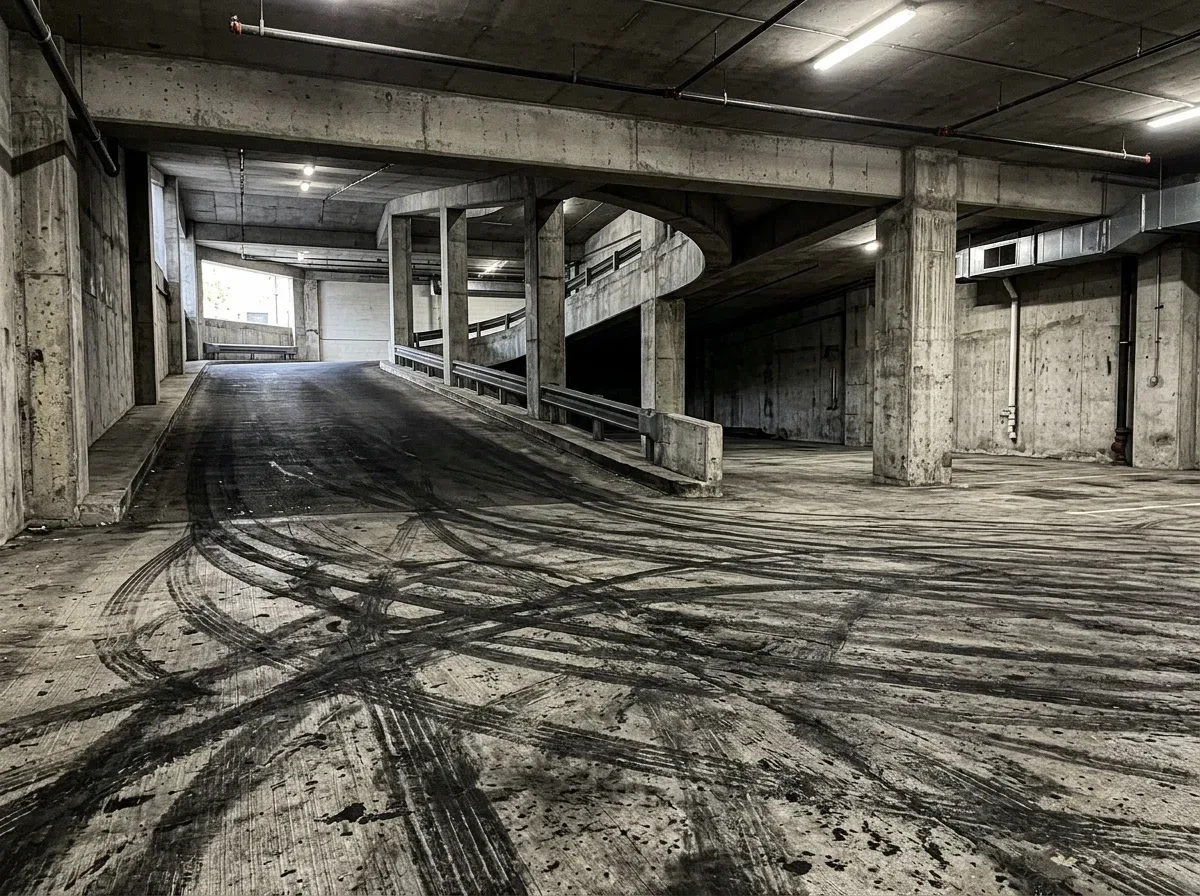
Floors gradually become covered in marks, especially at turning points, ramp entrances and parking spaces. In this article, we explain why tire marks form and how they are cleaned.
Why Do Tire Marks Form?
Tire Wear and Heat
When a vehicle turns, brakes or accelerates, the tire rubs against the floor. The heat of the friction tears small particles from the tire surface, and these particles stick to the floor.
Plasticizers
Some oily substances inside tires can transfer to the floor in the heat. New tires and hot weather in particular leave more marks.
Rough and Porous Floors
Rough or dusting concrete holds tire particles more easily. Hardened and ground concrete holds fewer marks and is easier to clean.
Where Do Tire Marks Accumulate?
Tire marks are not distributed evenly across the floor; they concentrate at points where vehicles turn, brake, and slow down and speed up.
- Ramp entrances and exits: Vehicles accelerate when entering a ramp and brake when leaving it; these sudden speed changes are the moments when the tire rubs against the floor the most.
- Tight turning points: In sharp turns the tire slides sideways on the floor and friction heat increases, so marks build up in curved streaks.
- Parking space entrances: Maneuvers made while parking and turning the steering wheel while stationary leave dark, dense marks at the mouth of the parking space.
- Around columns: Drivers slow down and maneuver sharply when passing columns; at the base of columns, the marks gradually form a distinct ring.
- Barriers and entry-exit points: Every vehicle that stops at a barrier and pulls away again leaves braking and starting marks; if traffic is heavy, this area becomes the fastest-soiling spot.

Cleaning Methods
Light Marks
Fresh marks that remain on the surface can usually be removed easily with a cleaner that does not damage concrete and machine washing.
- Alkaline cleaners: Alkaline tire mark removers suitable for concrete soften tire particles and oily substances, making it easier for them to come off the surface.
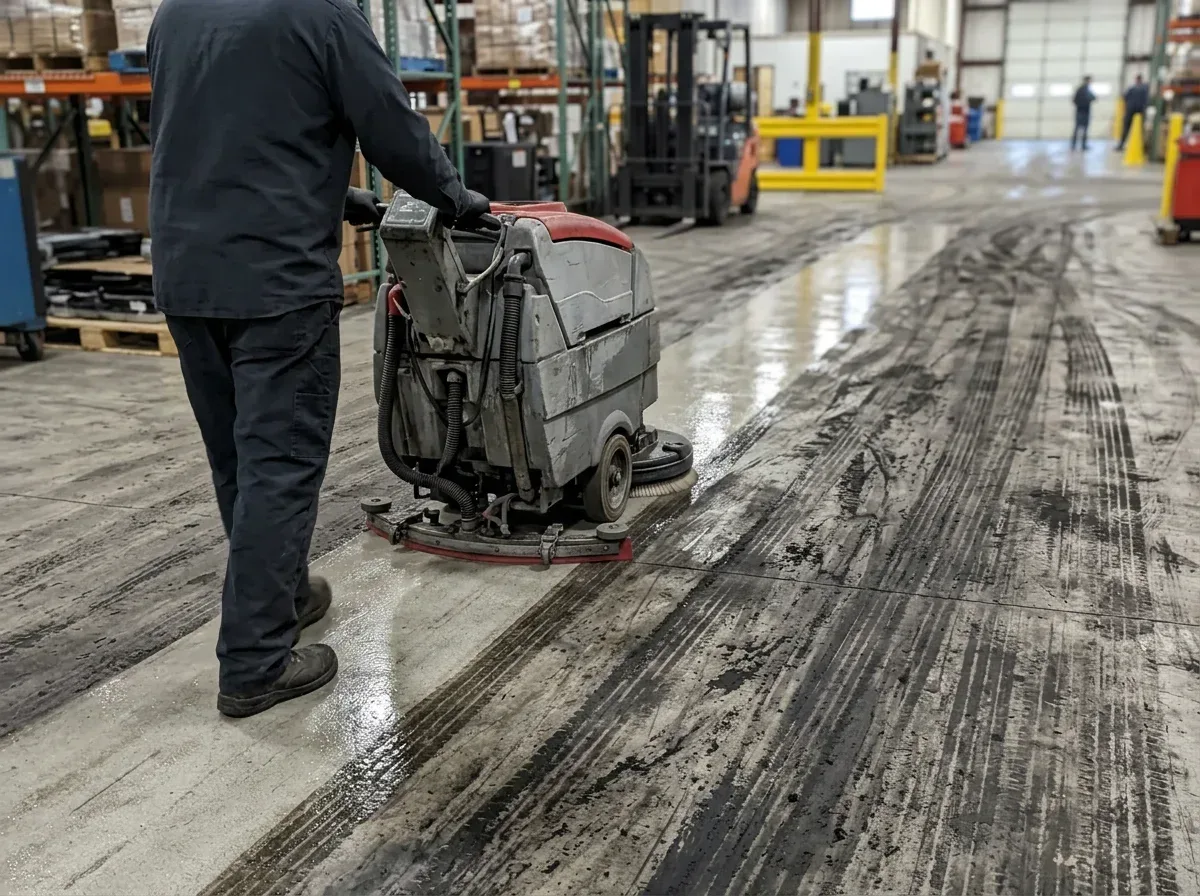
- Scrubbing floor washing machine: Rotating brushes mechanically scrape off the loosened marks and collect the dirty water; large car park areas are cleaned much faster than with manual brushing.
- Rinsing and drying: Cleaner residue that is not rinsed with plenty of water leaves the floor slippery and with a layer that holds new dirt; the floor is then dried and opened to traffic.
Set-in Marks
Because marks that have built up over a long time cling to the concrete surface, they are removed by increasing the cleaner's contact time and mechanical force.
- Letting the cleaner sit: When the product stays on the mark for a certain time, it penetrates and softens the set-in rubber layer; brushing immediately often only clears the surface.
- Repeated brushing: Cleaning done in several passes with a hard brush or a scrubbing machine thins out dark marks layer by layer that do not come off in a single pass.
- Hot water and suitable pressure: Hot water loosens the oily substances in the rubber; if the pressure is kept at a level that will not etch the concrete, the marks come off the surface without damage.
Permanent Marks
Marks that have accumulated for years and penetrated the pores of the concrete may not come off completely with cleaning. In this case, concrete grinding removes the top layer that carries the marks.
The Advantage of Grinding
Concrete grinding and hardener application provide three important benefits for a car park floor.
- Removes existing marks: Grinding removes the top concrete layer carrying marks that have penetrated the pores for years and cannot be removed by cleaning, giving the floor a uniform appearance.
- New marks adhere less: The hardener fills the pores of the concrete and densifies the surface; because the roughness that tire particles would cling to is reduced, new marks do not settle into the floor.
- Makes cleaning easier: On a dense, non-dusting surface, dirt stays on the surface; sweeping and machine washing give results with less product and in less time.
Ramps, however, are not polished; slip resistance is preserved.
Points to Watch Out For
In tire mark cleaning, the wrong product or careless application can harm the floor, the lines and the surroundings more than the marks themselves.
- Avoid harsh chemicals: Solvent-based and harsh chemicals can damage painted parking lines and epoxy coatings; testing on a small area first prevents surprises.
- Do not use acidic products: Acidic products corrode concrete; they are not suitable for tire marks, and moreover they roughen the surface, causing it to hold more marks later.
- Check the wastewater: Chemical wastewater must not be poured into drains or into nature; the environment is protected by collecting the wash water with a machine and disposing of it properly.
- Mark off the area: The area must be marked off and vehicle traffic redirected during cleaning; wet floors and chemicals create a risk of slipping and of hitting workers.
Approach by Floor Type
| Floor | Cleaning | Permanent marks |
|---|---|---|
| Raw concrete | Alkaline cleaner, scrubbing machine | Concrete grinding and hardener |
| Ground, hardened concrete | Easy; regular machine washing | Local light grinding |
| Epoxy coating | Solvent-free product suitable for the coating | Coating repair or renewal |
| Painted floor | Mild products, careful brushing | Repainting or switching to grinding |
Parking Garage Maintenance Plan
Regular, staged maintenance removes tire marks before they set in and postpones the need for heavy cleaning or grinding.
- Weekly: Dust and sand are cleaned with a sweeping machine; sand left on the floor acts like sandpaper under tires and wears down the surface.
- Monthly: Ramps and turning points are washed with a scrubbing machine; the areas with the heaviest marks are cleaned before the marks set in.
- Seasonal: The entire floor is washed and checked for oil stains; oil noticed before it soaks into the concrete is much easier to remove.
- Every few years: If necessary, light grinding and stain-protector renewal are carried out; worn strips are refreshed and the floor becomes easy to clean again.
Slip Resistance and Safety
Tire marks and the oil stuck to them can create a slippery surface on ramps, especially in rainy weather when vehicles enter with wet tires. That is why cleaning is important not only for appearance but also for safety. Ramps are not polished; if grinding is needed, the surface is left at a coarse grit, and anti-slip grooves are cut if necessary. The area should be marked off during cleaning and a wet floor warning posted.
Parking Garage Cleaning in Alanya
In Alanya, tire and brake marks are among the problems we encounter most often in the indoor parking garages of hotels, housing complexes and shopping centers. High summer temperatures cause tires to leave more marks on the floor. For light marks we use machine cleaning, and for marks that have built up over years we apply concrete grinding and hardener, turning the garage into a floor that is both clean and easier to maintain. We plan the work for the hours when the garage is least used, section by section.
Maintenance Recommendation

- Regular machine cleaning that prioritizes high-traffic turning points,
- Early treatment of new marks (before they set in),
- Annual deep cleaning and polishing when needed.
Our Natural Stone Cleaning Service in Alanya

Instead of acidic and abrasive products, we deep clean natural stone surfaces with pH-neutral products suited to the stone. We also prepare regular maintenance plans for hotels, villas, and residential complex management companies.
We also explain which daily maintenance products and methods are right for your stone. Explore our Eco-Friendly Cleaning service.
Tire marks in a car park are inevitable; but hardened and polished concrete keeps the marks on the surface and releases them with a single machine wash.