Water Pooling on Parking Lot Floors and Its Effects
In short: On rainy days, the water carried in by vehicles, rain entering through the ramp and washing water form puddles on the car park floor.
These puddles don't just spoil the look; they wear down the concrete, create a slipping risk and spread dirt. In this article, we explain the causes of water pooling and how to fix it.
Where Does the Water Come From?
Water doesn't enter a car park in just one way; often several sources are at work at the same time.
- Water carried by vehicles: In the rain, tires, fenders and the underbody carry litres of water; after the vehicle parks, this water drips and pools in the same spot.
- Rainwater running down the ramp: If there is no grate or channel at the top of the ramp, rainwater follows the slope and flows straight into the car park.
- Washing and cleaning water: Water that isn't squeegeed away after the floor is washed can sit in low spots for days.
- Plumbing leaks and condensation: Small leaks in pipes running through the ceiling and condensation forming on cold pipes keep the floor wet even when it isn't raining.
- Water seeping through walls and ceilings: Retaining walls with weakened waterproofing and slab joints keep leaking water even days after the rain.
Why Does It Pool?
Water getting in is not the problem by itself; the real problem is that the water can't reach the drain.
- Insufficient or reverse slope: If the floor wasn't poured with a slope toward the drain, the water stays where it is; with a reverse slope, it moves away from the drain and collects at the base of the walls.
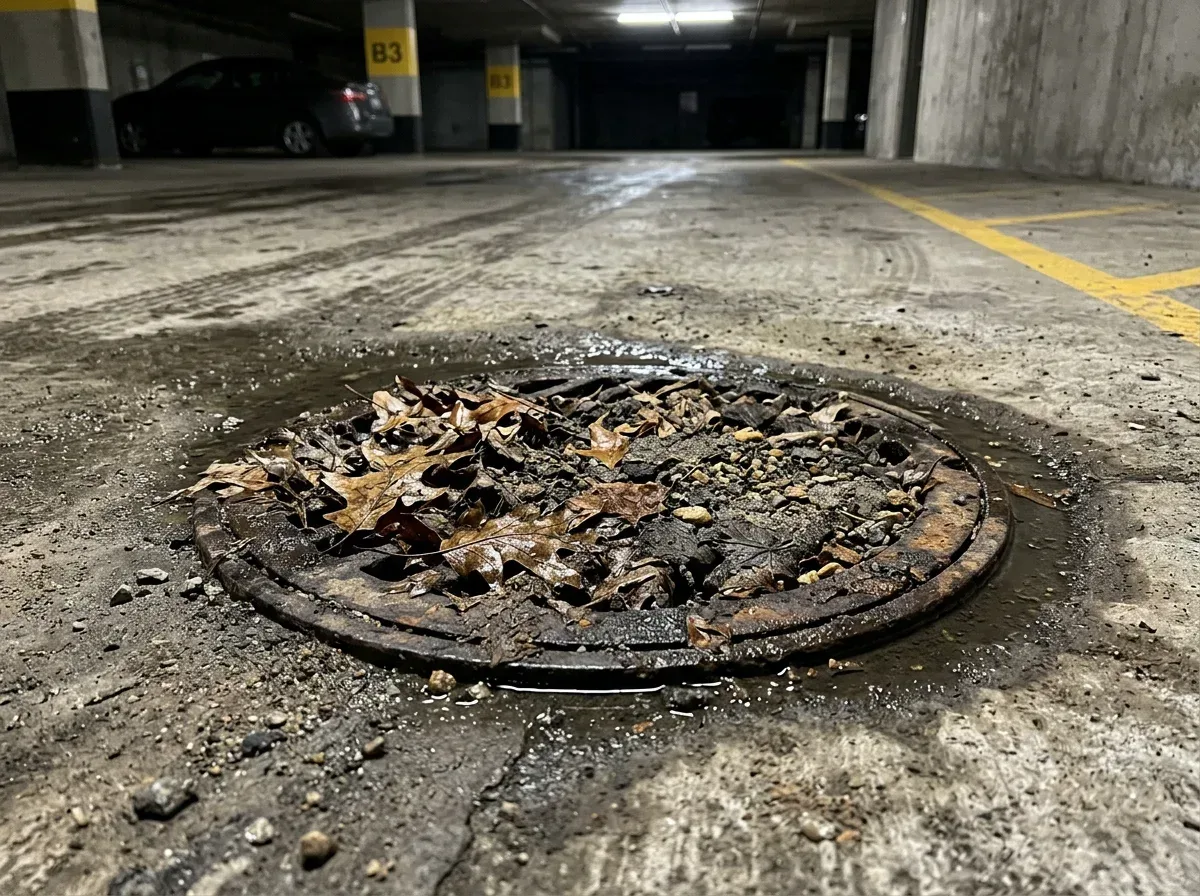
- Clogged grates and drains: Grates filled with leaves, sand and debris don't let water through; even if the slope is right, water pools around the drain.
- Pits and sunken areas in the floor: Worn, broken or settled areas act like small pools and fill up again with every rainfall.
- Too few drains: If a large area has only one drain, the water has to travel a long way and collects at every irregularity along the path.
Effects
Pooled water affects safety in the short term and the life of the concrete in the long term.
- Slipping: A wet, dirty floor increases the risk of falls, especially on walkways and in front of elevators; combined with oil stains, the surface becomes far more slippery.
- Concrete wear: The surface of concrete that stays constantly wet weakens; tires passing over it strip off this weak layer and it starts to dust.
- Dirt and mud: As the water dries, the sand and dirt in it leave ring-shaped marks on the surface; vehicles carry this dirt throughout the entire car park.
- Bad odor and algae: Algae and mold form in corners that get no airflow and stay damp for a long time; in enclosed car parks, this smell can spread up to the floors.
- Effect on reinforcement: Water seeping through cracks eventually reaches the steel inside the concrete; the rusting reinforcement expands, cracks the concrete and increases repair costs.

Solution Steps
The order matters in the solution: easy and inexpensive steps come first, then work on the floor.
- Cleaning drains and grates: This is the first and easiest step. The grates are removed, the sand and leaves inside are cleared, and the line is tested with water; a significant portion of the puddles disappears with this step alone.
- Eliminating leak sources: Work done on the floor won't last unless pipe leaks in the ceiling and wall seepage are repaired; first the source of the water is cut off.
- Repairing pits: Pits where water collects and broken-off areas are filled with repair mortar and brought to the same level as their surroundings.
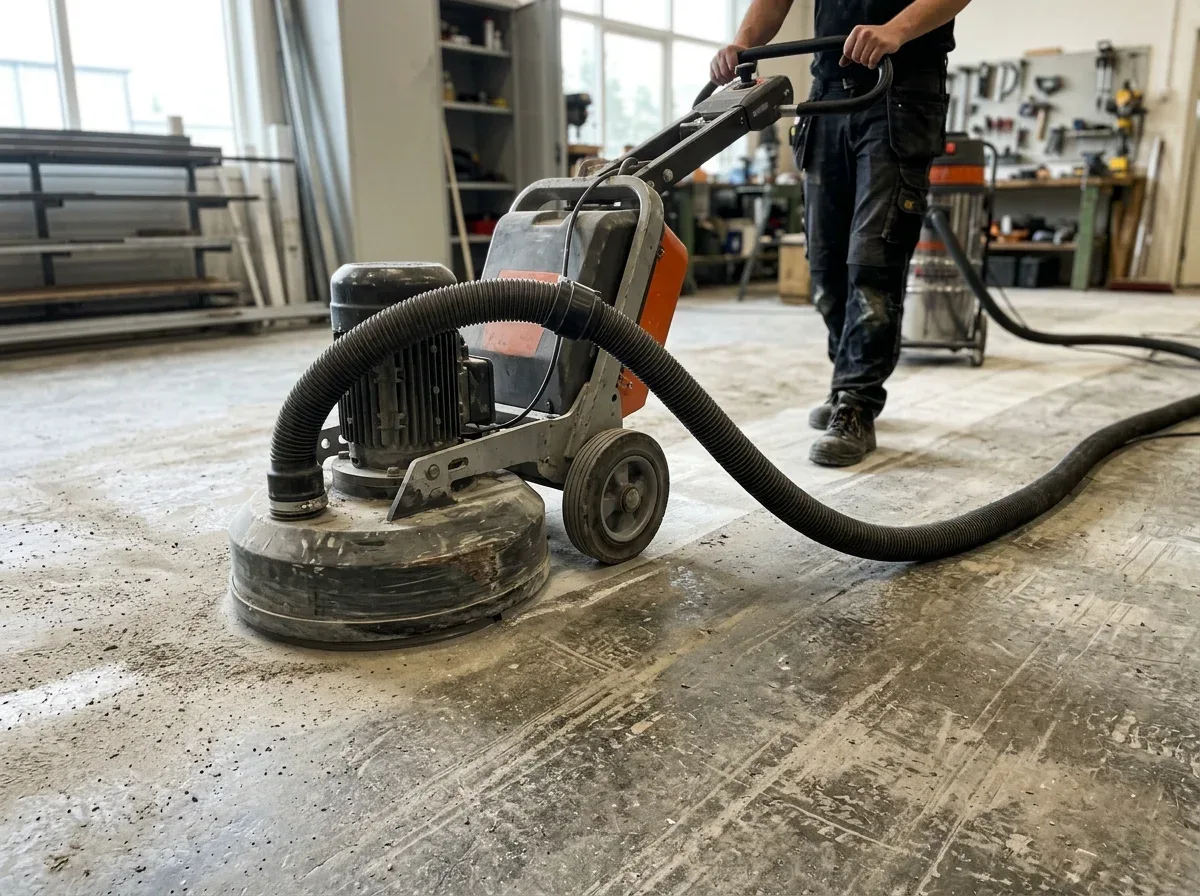
- Grinding: Some small level irregularities can be reduced by grinding; high spots are removed so the water flows to the drain more easily. However, a general slope problem is not solved by grinding.
- If the slope problem is major: Structural correction or additional drains may be required; this is a separate construction job and is clearly stated in the survey.
Solution by Cause
| Cause | Solution | Who does it? |
|---|---|---|
| Clogged grate and drain | Cleaning | Building maintenance team |
| Pits in the floor | Repair and grinding | Concrete grinding company |
| Minor level irregularities | Smoothing with grinding | Concrete grinding company |
| General slope defect | Structural correction, additional cost | Construction company |
| Leakage | Repair of the source | Plumbing / waterproofing specialist |
Daily Management
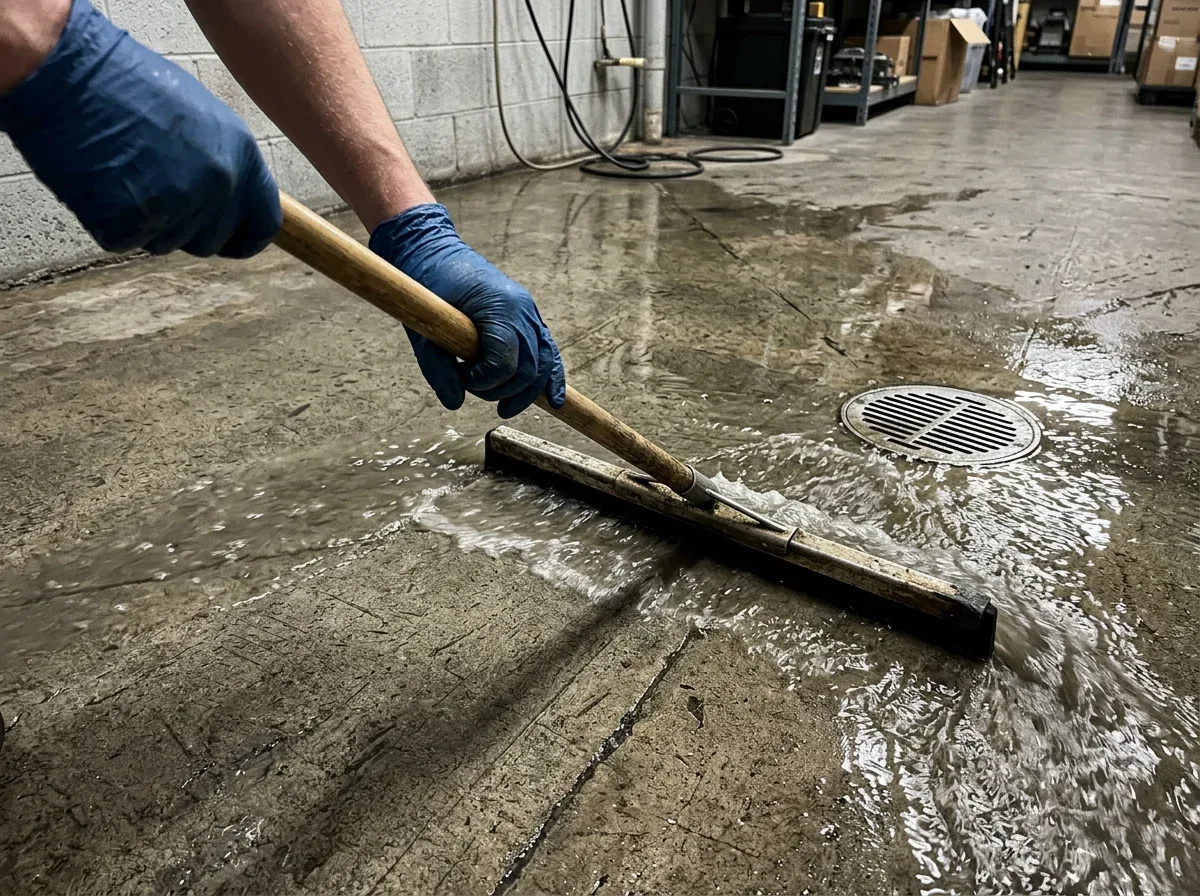
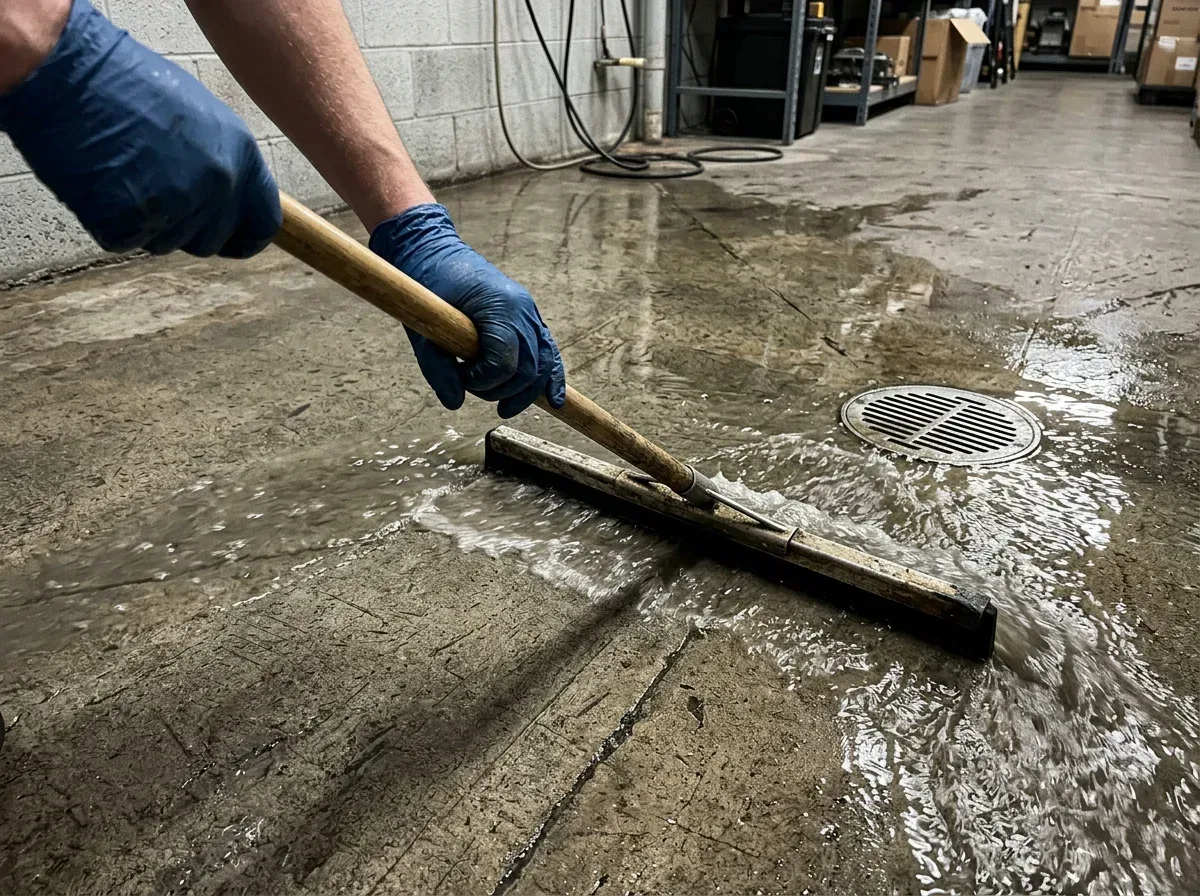
It is possible to reduce the effects of standing water until a structural solution is implemented. On rainy days, accumulated water should be pushed toward the drain with squeegees, and warning signs should be placed on walkways. Grates should be checked after every rain, and leaves and debris should be cleared. A grate or channel placed at the ramp entrance significantly reduces the amount of rainwater entering the car park.
Contribution of Grinding and Hardener
Concrete grinding does not eliminate the cause of standing water on its own, but it noticeably reduces its effects.
- Surface that absorbs less water: Concrete treated with hardener absorbs less water; even when it stays wet, its surface wears down more slowly.
- Fewer pooling points: Repaired hollows reduce water pooling points; the remaining water spreads in a thin layer and dries more quickly.
- Easy cleaning: A ground surface is easier to clean; less dirt residue remains when the water dries, and the squeegee glides smoothly over the floor.
- Safe walkways: On walkways the surface is not over-polished; by leaving a suitable texture, the risk of slipping when wet is reduced.
Car Park Water Problems in Alanya
In Alanya, heavy rainfall that builds up in a short time during the winter months makes standing water a frequent problem in housing complex and hotel car parks. In our concrete grinding work, we repair hollows where water collects, smooth out minor level irregularities by grinding, and strengthen the concrete with a hardener. For car parks with a general slope problem, we state this clearly and recommend obtaining expert advice for a structural solution.
Maintenance

- Regular sweeping and drain inspection,
- Removing standing water with a squeegee during rainy periods,
- Checking the drainage system before winter.
Our Concrete Grinding Service in Alanya

We grind concrete floors in warehouses, factories, car parks, shops and homes and strengthen them with a hardener, creating a dust-free surface that is easy to clean. Depending on the look you want, we apply a matte, satin or glossy finish.
We inspect the age and condition of your floor on site and decide on the right method together with you. Explore our Concrete Grinding service.
Water that collects in a parking lot quietly damages the ground. Keeping the drain clear and repairing potholes on time can put off a major renovation expense for years.