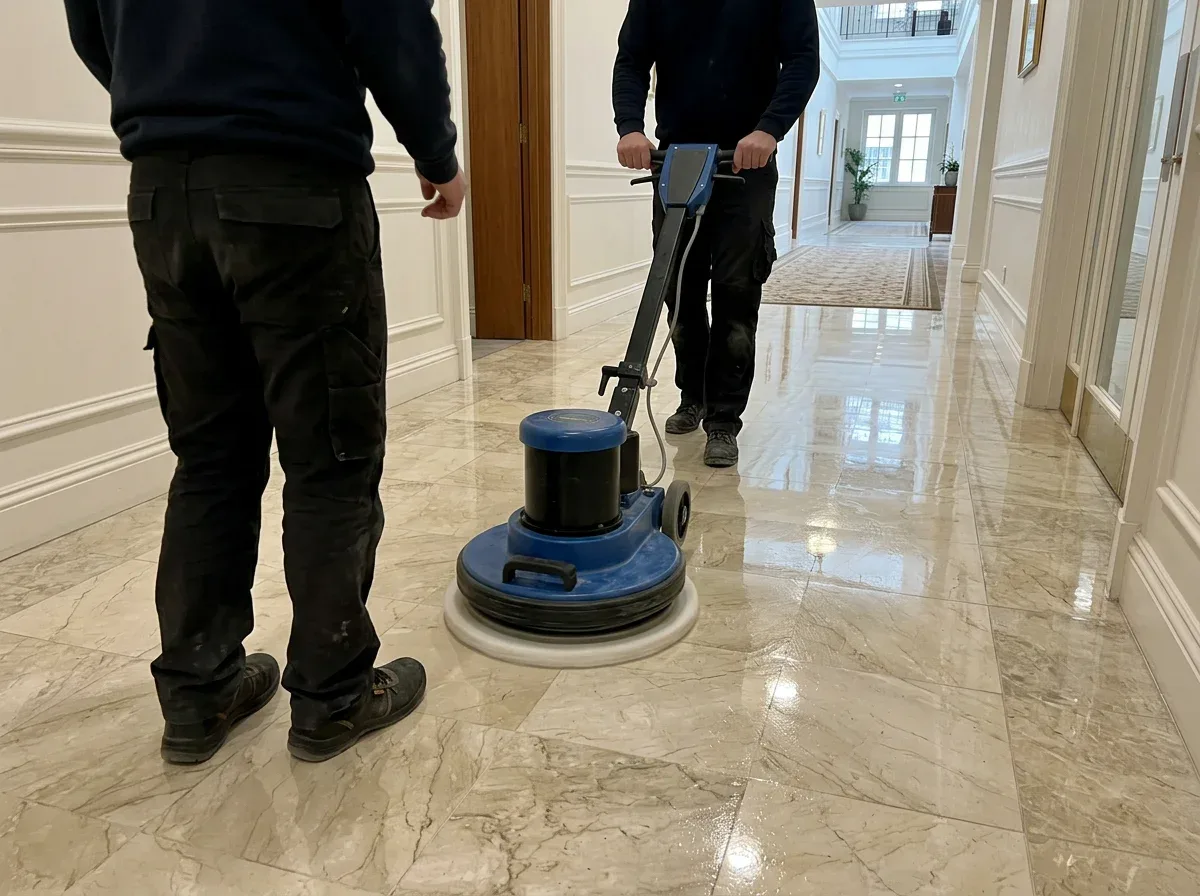
How Long Does the Shine Last After Polishing?
In short: "How long will this shine last?" is the question we hear most after polishing.
The honest answer: it depends on the floor and how it is used. A rarely used bedroom can stay glossy for years, while a busy hotel entrance may go dull along the walking path within a few months. In this article we explain the factors that determine how long the shine lasts and how to extend it.
Where Does the Shine Come From?
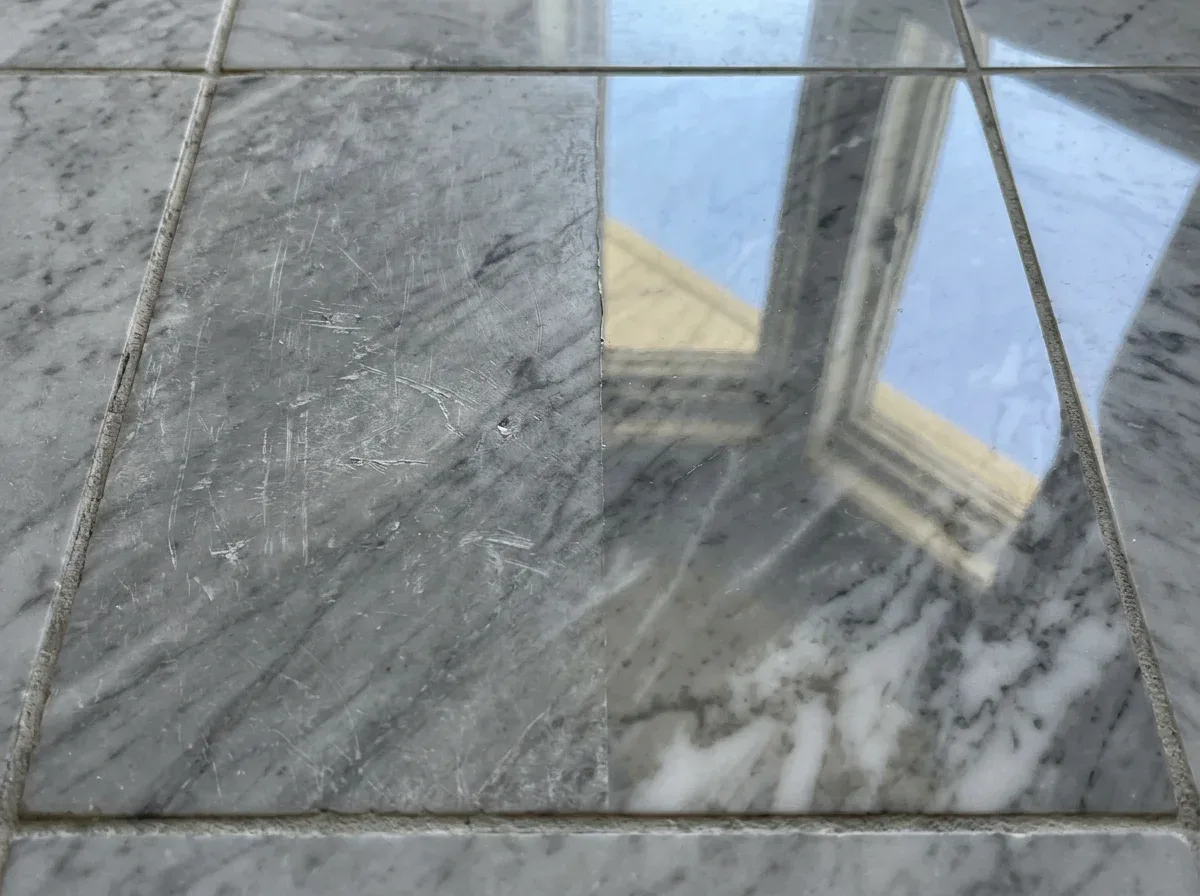
The shine after polishing comes from the stone's surface becoming smooth at a microscopic level. Light reflects evenly off this surface. Over time, sand and dust create micro-scratches on it; as the scratches increase, light scatters and the surface goes dull.
So what "ends" the shine is not time itself, but the factors that scratch the surface.
Factors That Determine How Long the Shine Lasts
Stone Type
The hardness of the stone determines how well the surface resists sand and friction, and how long the shine is preserved.
- Granite: Very hard; it is one of the stones that keeps its shine the longest, because sand and friction struggle to create micro-scratches on its surface.
- Marble: Medium hardness; with proper care it stays glossy for a long time, but sand and acidic liquids speed up dulling along walking paths.
- Travertine: Softer and porous; its shine can fade in a shorter time, so in high-traffic areas it needs to be refreshed more often.
- Polished concrete: Durable if treated with a hardener; the densified surface resists wear, while an untreated surface may turn dusty and dull over time.

Traffic
There is a big difference between a home where a few people walk each day and a lobby that hundreds of people pass through.
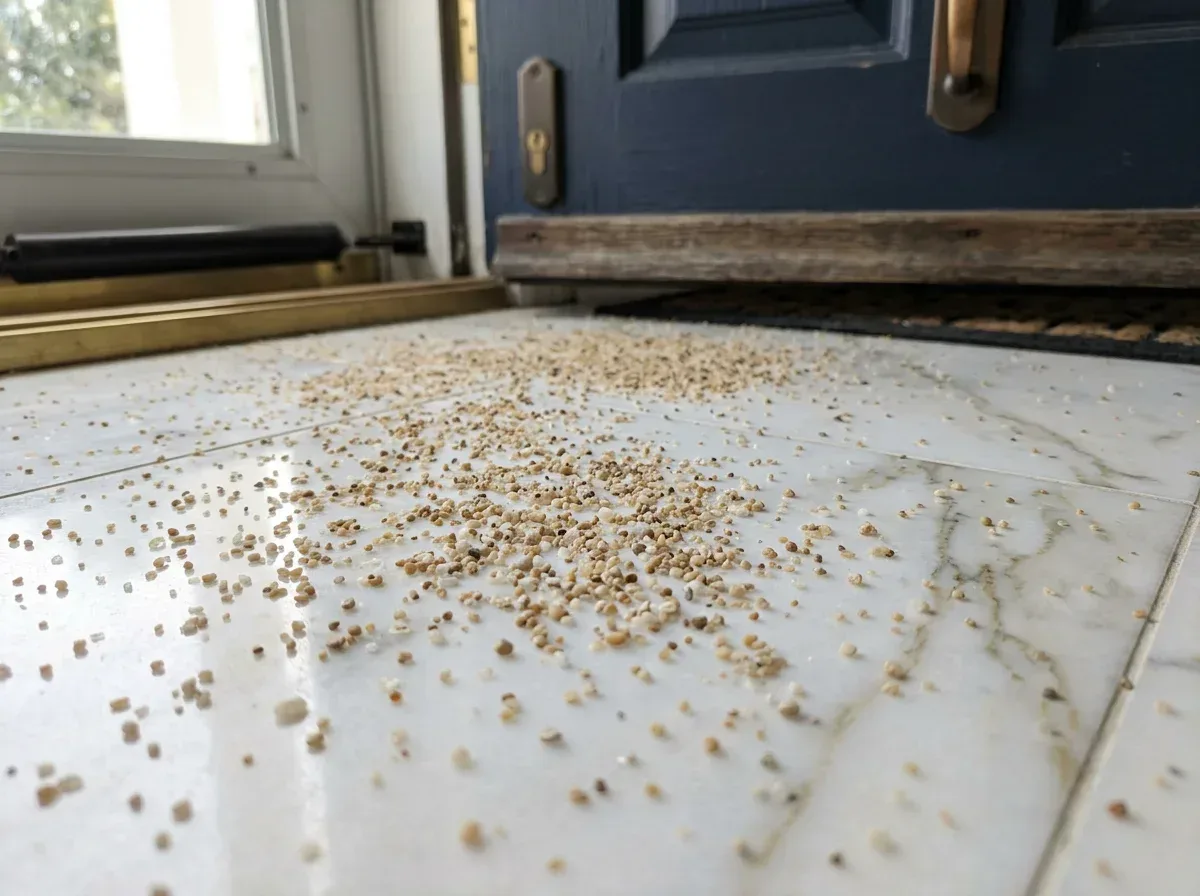
Shoes and Sand
Dulling accelerates in areas where people enter with outdoor shoes and carry in sand. In Alanya, beach sand is particularly significant in this respect.
Cleaning Products
Acidic products remove the shine chemically; abrasive products scratch it mechanically; and too much detergent leaves a film on the surface that covers the shine.
Choice of Finish
On a honed surface there is no such thing as a "loss of shine"; on a polished surface, however, every scratch is more noticeable.
Crystallization
On calcite stones such as marble and travertine, crystallization can harden the surface and extend the life of the shine.
Where Does Dulling Begin?
Dulling usually does not occur on the whole floor at the same time:
- Doorways and entrances: Sand from outside is left behind in the first steps; the grains on the soles of shoes rub and scratch the surface most here.
- Corridors and walking paths: On routes where everyone walks along the same line, wear concentrates in a single strip; the difference in shine between the edges and the middle becomes more visible over time.
- In front of the kitchen counter: People constantly stand in front of the counter, and water, oil and acidic foods are spilled there; that is why dulling starts early.
- Areas around chair legs: As chairs are pulled and pushed, the legs rub against the stone; legs without felt pads, or with sand stuck to them, leave dull rings around the table.
Edges and areas under furniture stay glossy much longer. That is why it is usually unnecessary to polish the entire floor again.
Ways to Extend the Shine
The way to extend the shine is through simple habits that keep sand and abrasive products, which scratch the surface, away from the floor.
- Doormat: Used both inside and outside the door; most of the sand is trapped here and caught before it reaches the walking paths.
- Slippers: If slippers are worn at home instead of outdoor shoes, the sand and small stones carried on the soles never reach the polished surface.
- Dry cleaning first: Dust and sand must always be removed before wet cleaning; otherwise the wet mop drags sand grains across the floor and scratches it.
- pH-neutral products: Avoid acidic and abrasive products; acid removes the shine chemically, while abrasive products scratch the surface mechanically.
- Felt pads: Felt pads stuck to furniture and chair legs reduce friction; check the pads from time to time and clean them if sand has stuck to them.
- Respond quickly to spills: If spilled liquid is wiped up right away, acid cannot etch the surface, and colored liquids are cleaned before they stain the stone.
Approximate Shine Duration by Use
| Area | Use | Refreshing needed |
|---|---|---|
| Bedroom | Light, with slippers | May not be needed for years |
| Living room and hallway (home) | Moderate | Every few years, on walkways |
| Rental holiday home | Heavy, sandy shoes | Every season or every other season |
| Shop and office | Heavy, outdoor shoes | Once a year |
| Hotel lobby | Very heavy | Every few months, on a regular schedule |
These intervals are meant to give a general idea; the mop, the cleaning product, and the type of stone significantly affect the result.
Refresh or Re-Grind?
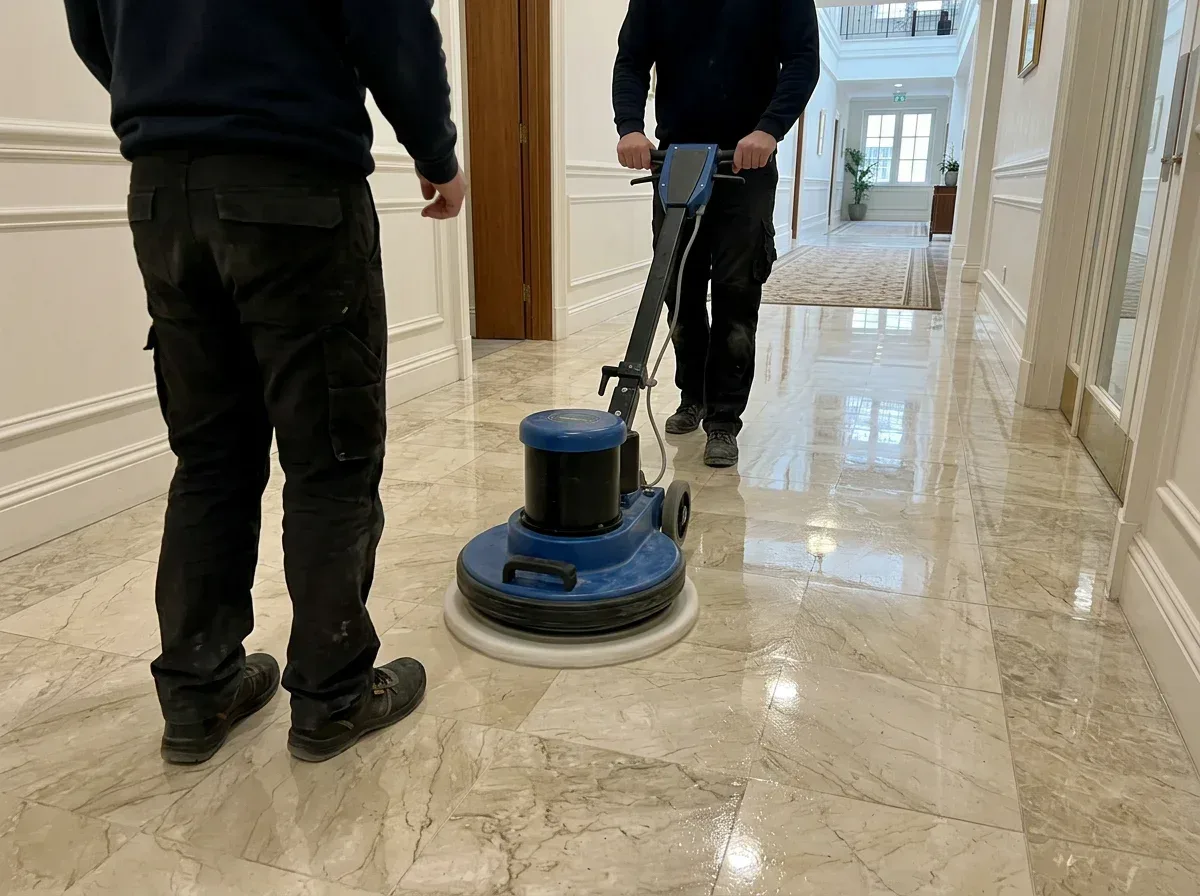
If the dullness is caused only by micro-scratches on the surface, the floor does not need to be ground from scratch; a refresh using fine grits or polishing powders restores the shine. This process is quick and removes almost no material from the stone. However, if deep scratches, acid marks, or level differences have formed, a refresh is not enough and a grinding process starting from medium grits is required. On floors that are refreshed regularly, this point is reached much later.
Maintaining Shine in Alanya
In Alanya, the fine sand carried in from the beach is the main factor causing marble floors to dull fastest. This is why we recommend a suitable mat system at the entrances of the homes and hotels where we do grinding. For hotel lobbies, we prepare a regular refresh program throughout the season, and in rental holiday homes, we refresh the walkways at the end of the season so that the entire floor does not need to be re-ground. In the video below, you can watch a marble polishing job carried out by our company.
Gloss Restoration

- It takes little time,
- It removes almost no material from the stone,
- It is more economical.
In heavily used businesses, this restoration is planned as part of regular maintenance.
Our Marble Grinding Service in Alanya

We restore marble floors that have become dull, scratched, or uneven between slabs using wet grinding that keeps dust under control. We choose every stage, from coarse grinding to polishing, according to the type of stone, and if needed we repair cracks and joints as part of the same job.
We inspect your floor on site and tell you clearly whether it needs grinding or just polishing. Explore our Marble Grinding service.
Marble Polishing Service
You can watch one of our team's on-site jobs in the video below.
When dullness begins to appear on walkways, a full grinding is not necessary. A gloss refresh carried out with fine grit stages or crystallization: — Expert Note