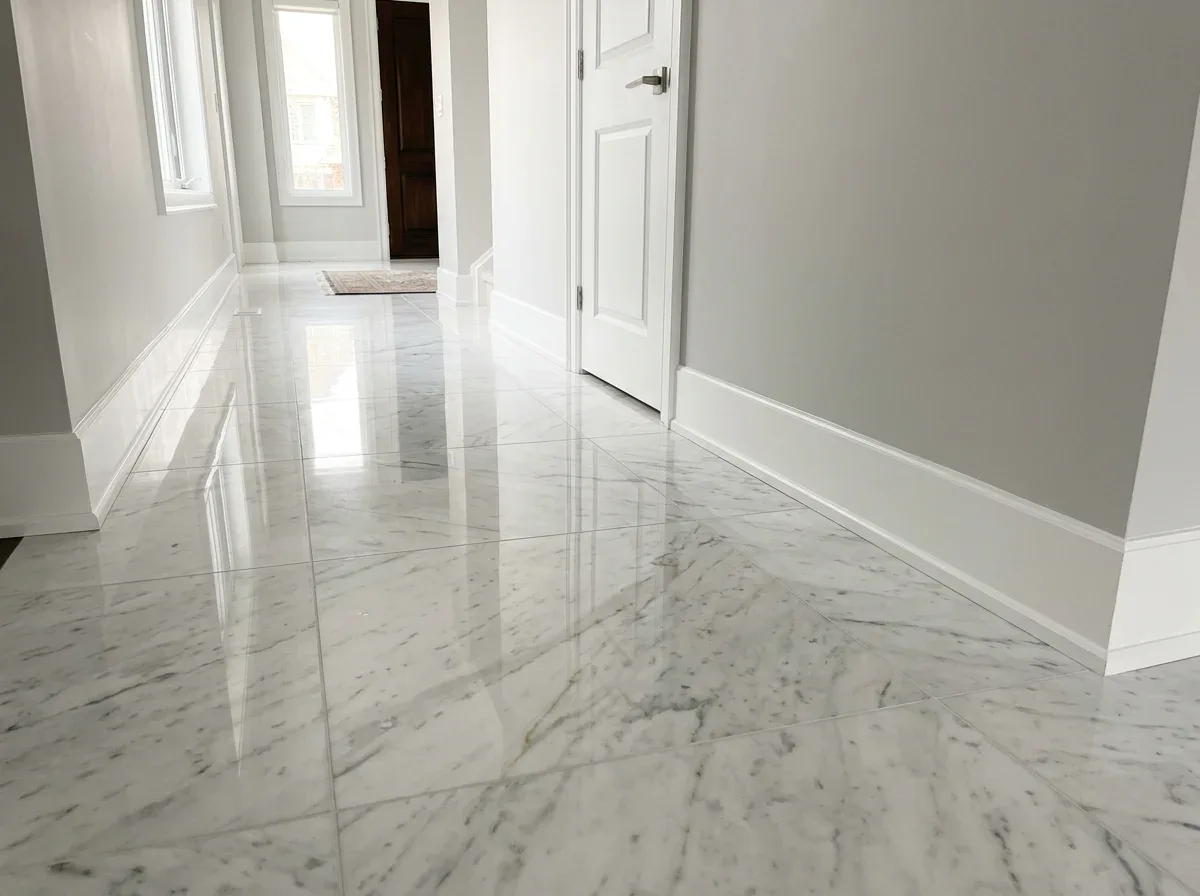
Slurry Management and Cleanup in Wet Grinding
In short: Marble and natural stone honing is usually done with water.
Water cools the abrasives and binds the dust; but as a result, stone dust and water mix to form slurry. How the slurry is managed also determines whether honing is a good job or not. In this article, we explain this topic.
Why Wet Honing?
Because water protects both the work environment and the abrasives during honing, it is often preferred for indoor stone work.
- Dust does not become airborne: The fine dust coming off the stone is bound by water and turns into slurry; it does not spread into the home, onto the furniture, or into the air.
- Abrasives stay cool: Water cools the diamond abrasives that heat up through friction; this extends their life and reduces the risk of heat burn marks on the stone.
- Uniformly processed surface: Water allows the abrasive to glide smoothly over the stone and carries the resulting dust away from the surface; this gives a more even honing result.

Dry honing is also possible; however, the wet method is common for indoor stone work.
Why Does Slurry Matter?
If honing slurry is not kept under control, it can damage other surfaces in the home, the plumbing, and neighboring rooms.
- Splashing onto surrounding surfaces: The rotating machine can splash slurry onto walls, baseboards, doors, and furniture; on unprotected surfaces it leaves marks that are hard to remove later.
- Hard marks once dry: When slurry made of stone dust and water dries, it sticks to surfaces and hardens; scrubbing is needed to clean it, and this can scratch the surface.
- Spreading to other rooms: It can be carried by shoes and hoses onto carpets, wooden parquet, and other rooms; because wood and carpet absorb slurry, the stain can become permanent.
- Seeping into joints and under doors: Liquid slurry can seep into joints and under doors; if it dries there, it leaves white deposits in the joints and dirt marks on the thresholds.
- Drain clogging: Slurry poured down the drain settles and hardens in the pipes; over time it can cause clogs in the sink, toilet, or floor drain.
Preparation and Protection
The most effective way to protect against slurry is to cover the surrounding surfaces and passageways before honing begins.
- Baseboards and wall bases: Baseboards, door frames, and wall bases are protected with tape; slurry splashed by the machine does not reach the paint and woodwork.
- Passages to neighboring rooms: Passages to neighboring rooms are sealed off; this way, slurry and water do not flow into rooms that are not being worked on and are not carried by shoes.
- Wood and carpet surfaces: Wood and carpet surfaces are covered; because these materials absorb water and stone dust, it is hard to restore them once they get dirty.
- Outlets and cables: Electrical outlets and cables are protected; in wet work, water splashes can both damage devices and create a safety risk.
During the Work
Collecting the slurry continuously during the work ensures both a clean work area and a more accurate honing result.
- Regular collection: Slurry is collected regularly before it builds up; accumulated slurry spreads, dries, and also makes it harder for the craftsman to see and check the surface.
- Adjusting the amount of water: The amount of water is adjusted as needed; too much water causes the slurry to spread and seep into joints, while too little causes the abrasive to overheat.
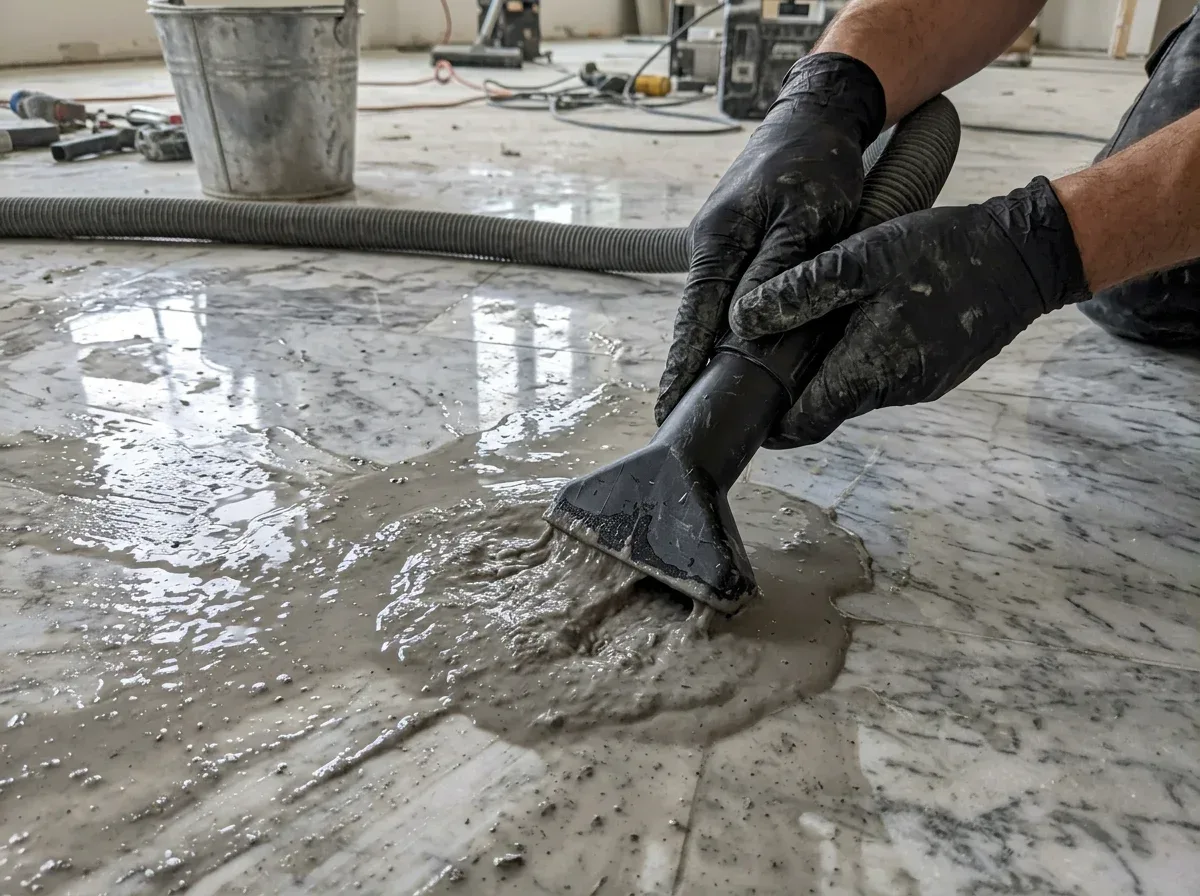
- Wet vacuum and squeegee: Wet vacuums and squeegees are used; the slurry is quickly removed from the floor and cleared away before it settles into the pores of the stone.
- Transferring to buckets: The collected slurry is transferred to buckets; it is left to settle instead of being poured down the drain, and the solid part is disposed of separately.
Where Does the Slurry Go?
Honing slurry consists of stone dust and water; although chemically harmless, it should not be poured down a drain, sink, or toilet. Slurry settles over time, hardens in the pipes, and causes clogs. The right method is to let the collected slurry settle in buckets, separate the water on top, and bag the solid part and dispose of it as construction waste. On large jobs, slurry separation equipment can be used. Outdoors as well, slurry should not be allowed to run into the garden, storm drains, or the street.
Wet vs. Dry Honing Comparison
| Topic | Wet honing | Dry honing |
|---|---|---|
| Dust | Not generated | Controlled with a suction system |
| Waste | Slurry | Dust bags |
| Abrasive life | Longer | Shorter |
| Surface visibility | Visible once the slurry is collected | Always visible |
| Common use | Marble, travertine, terrazzo | Concrete, some outdoor work |
Cleaning at Handover
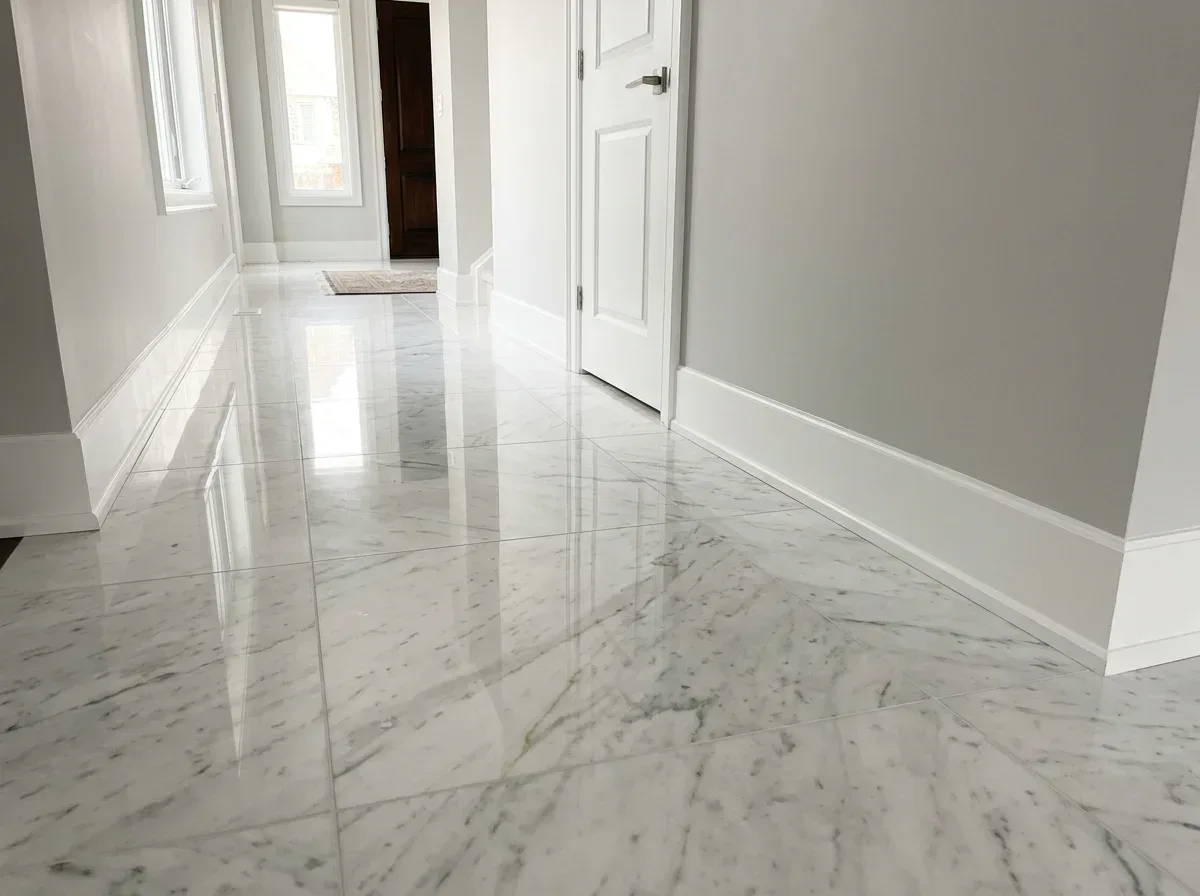
When polishing is finished, the floor is rinsed several times with clean water and dried with a vacuum; this ensures that no stone dust remains in the joints and pores. The protective tapes on the skirting boards, door frames and wall bases are removed, and any splashed slurry marks are cleaned off. Once the floor is completely dry, it is checked against the light and, if necessary, impregnated. The floor handed over to the homeowner is ready for use, with no traces of slurry or dust on it.
Check as the Homeowner
Looking at a few points at handover easily shows whether the slurry was managed properly and whether any marks remain in the home.
- Walls and skirting boards: Are there any slurry marks left on the walls and skirting boards? After the protective tapes are removed, no dried slurry marks should remain along the edges.
- Door bottoms and thresholds: Are the door bottoms and the thresholds of neighboring rooms clean? Seeping slurry collects in these spots and leaves a gray mark when it dries.
- Stone dust in the joints: Has white stone dust built up in the joints? If the floor was not rinsed enough, the dust stays in the joints and becomes noticeable once the floor dries.
- Where the slurry went: Did you ask where the slurry was taken? Slurry poured down the drain can later come back to you as a plumbing blockage.
Wet Polishing in Alanya
We carry out the vast majority of our marble and travertine polishing work in Alanya using the wet method. Before starting, we protect all surrounding surfaces, collect the slurry with a wet vacuum before it builds up, and never pour it down the drain. When the job is finished, we hand over the floor rinsed and dried, with the protection removed and the area cleaned. In the video below, you can watch a marble surface and floor restoration job carried out by our company.
Upon Completion

Once the wet polishing is finished, the job is not considered complete until the slurry and protective materials have been cleaned up.
- Rinsing and drying: Polishing slurry left on the floor dulls the surface as it dries; once the floor is rinsed with plenty of water and dried, the true appearance of the stone is revealed.
- Wiping off splashes: Slurry that has splashed onto walls and baseboards is hard to remove once it dries, so it is wiped off as soon as the work is done.
- Removing protective materials: The plastic sheeting and tape protecting doors, furniture and the base of the walls are removed; any water and slurry left underneath is cleaned up as well.
- Ready-to-use handover: After cleaning is finished, the area is left in a condition where furniture can be put back and daily use can resume immediately.
Our Marble Grinding Service in Alanya

We restore marble floors that have become dull, scratched, or uneven between slabs using wet grinding, which keeps dust under control. From coarse grinding to polishing, we choose each stage according to the type of stone and, if needed, carry out crack and joint repairs as part of the same job.
We inspect your floor on site and tell you clearly whether it needs grinding or just polishing. Explore our Marble Grinding service.
Marble Surface and Floor Restoration
Stone slurry should never be poured directly into a sink, toilet, or drain. It can settle and clog the plumbing. The slurry should be collected and disposed of properly. — Expert Note
Frequently Asked Questions
01Does wet polishing damage household items?
02Does it smell like mud?
03Does water leak into neighboring apartments?
04Who cleans up the slurry?
05Does wet polishing damage parquet?
06When does the floor dry after wet polishing?
Related Articles
- Preparing for Marble Grinding: Belongings, Dust and Duration
- Can Floor Grinding Be Done While You Are Living in the Home?
- How Is Grinding Done Along Walls and in Corners?
- Wet and Dry Methods in Concrete Grinding: How to Manage Dust
- What Is Marble Grinding and How Is It Done? A Guide for the Floors in Your Home