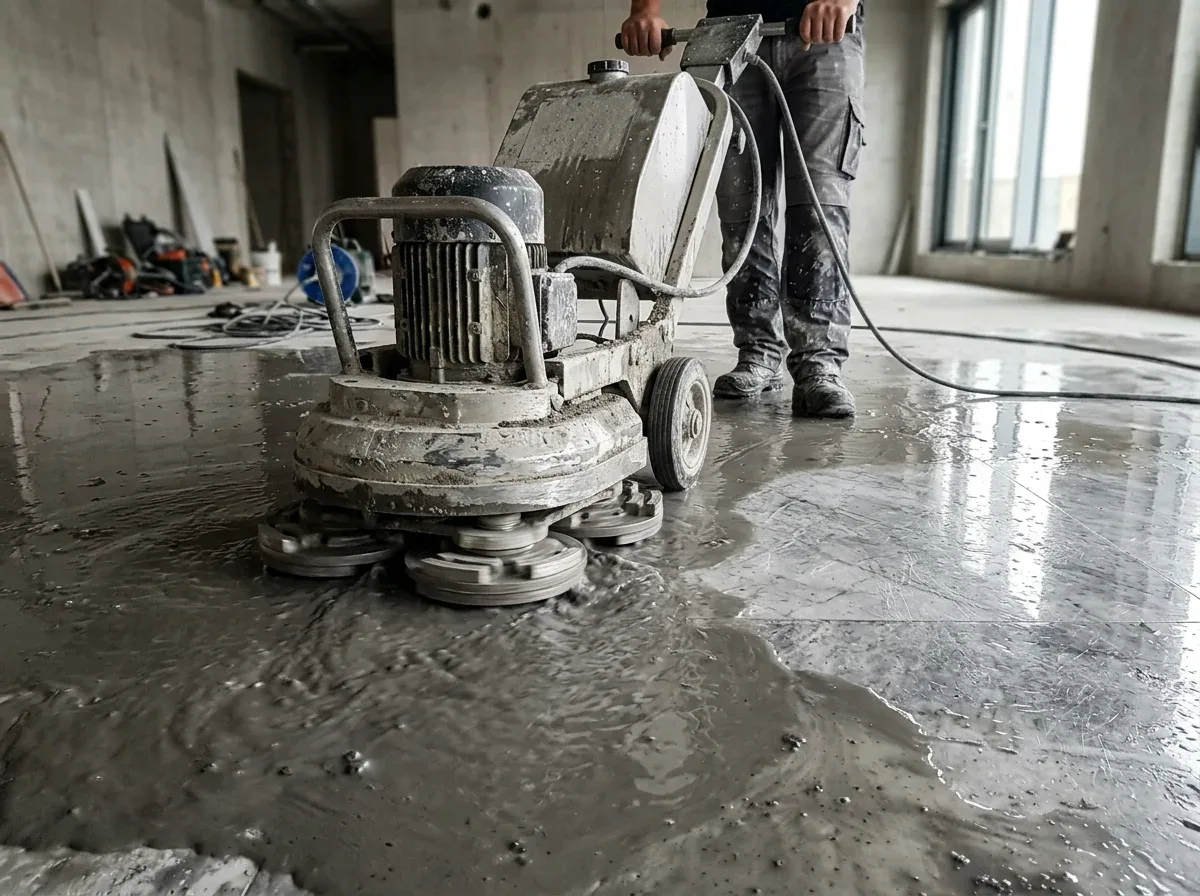
Why Is a First Grinding Necessary on Newly Laid Marble?
In short: "Marble already comes polished from the factory, so why grind and polish it?" is a question we hear often.
At the factory, each slab is polished individually; but once the floor is installed, the slabs have to work together as a single surface. The first grinding and polishing removes the flaws left by installation and unifies the floor.
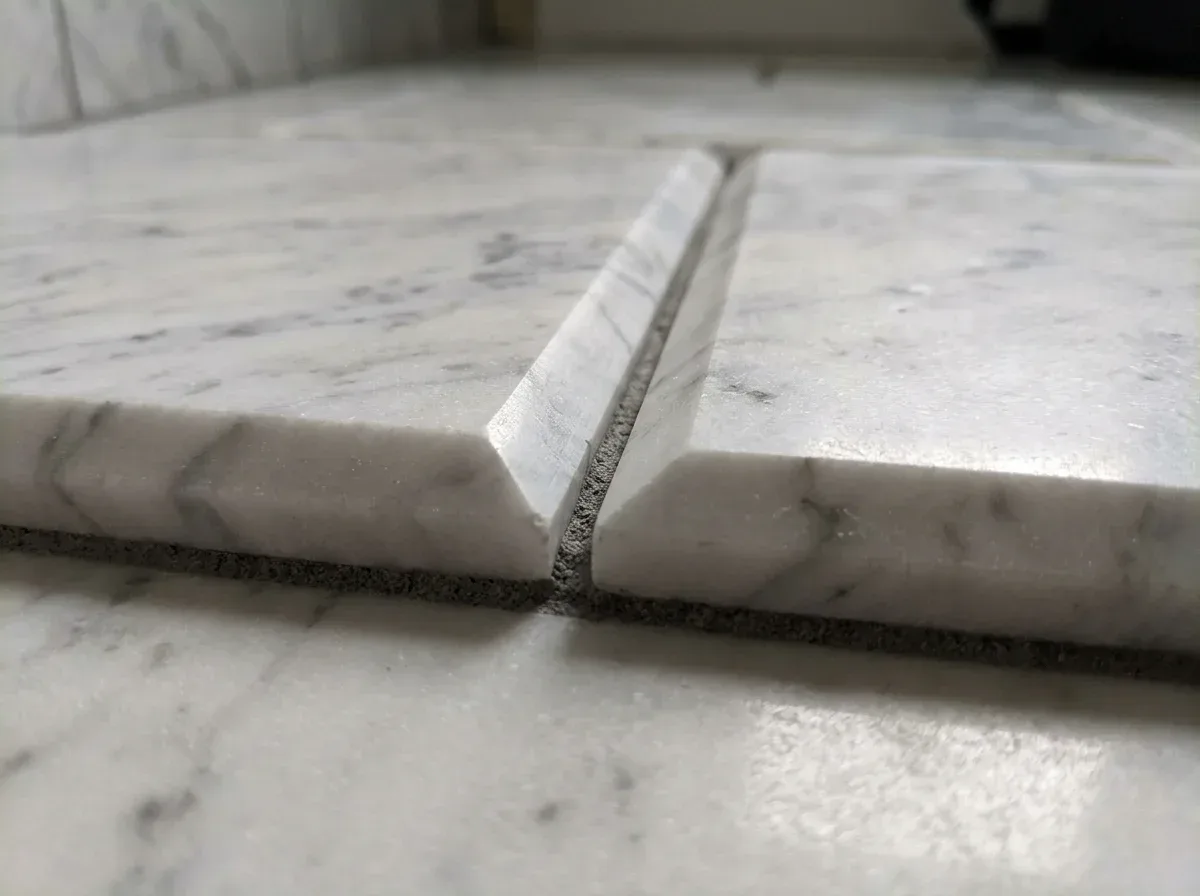
Why Isn't the Factory Finish Enough?
When slabs polished one by one at the factory are laid side by side, the flaws left by installation come to light.
- Level differences: Slabs cannot be laid at exactly the same level; the small differences left at the edges catch the foot, cast shadows in the light and, over time, lead to edge chipping.
- Edge bevels: Some slabs have slightly rounded edges; as a result, the grout lines become more pronounced and dirt collects in these grooves.
- Installation scratches: Tools and gritty shoes leave scratches on the new floor; the factory finish is already damaged in places within the first few days.
- Grout level: Grout joints may sit lower or higher than the stone surface; a joint that sits lower collects dirt, while one that sits higher wears away easily.
- Mortar and cement haze: Mortar and cement haze left over from installation stick to the surface; even though the floor is new, it looks dull and stained in places.
- Factory fills: The fills applied at the factory to the natural voids of the stone can be damaged by impact and friction during installation and may open up again.

What Does the First Grinding and Polishing Do?
The first grinding and polishing turns a floor made up of separate slabs into a single, protected surface through stages that progress from coarse to fine.
- Coarse grinding: First, coarse grinding removes the level differences between slabs and brings the surface to a single plane.
- Leveling the grout and stone: Next, the grout and the stone are brought to the same level; this way the grout lines lose their prominence and no grooves are left to trap dirt.
- Intermediate stages: Then the intermediate stages remove the scratches left by coarse grinding and by installation, and the surface becomes ready for polishing.
- Polishing: Polishing gives the desired gloss; a glossy, semi-gloss or honed finish is chosen according to where the floor will be used.
- Impregnation: Finally, the stone is protected with an impregnating sealer; the protective agent that penetrates the pores slows the absorption of water and oil stains into the stone.
The result is a floor that looks like a single piece, with its joints blended away.
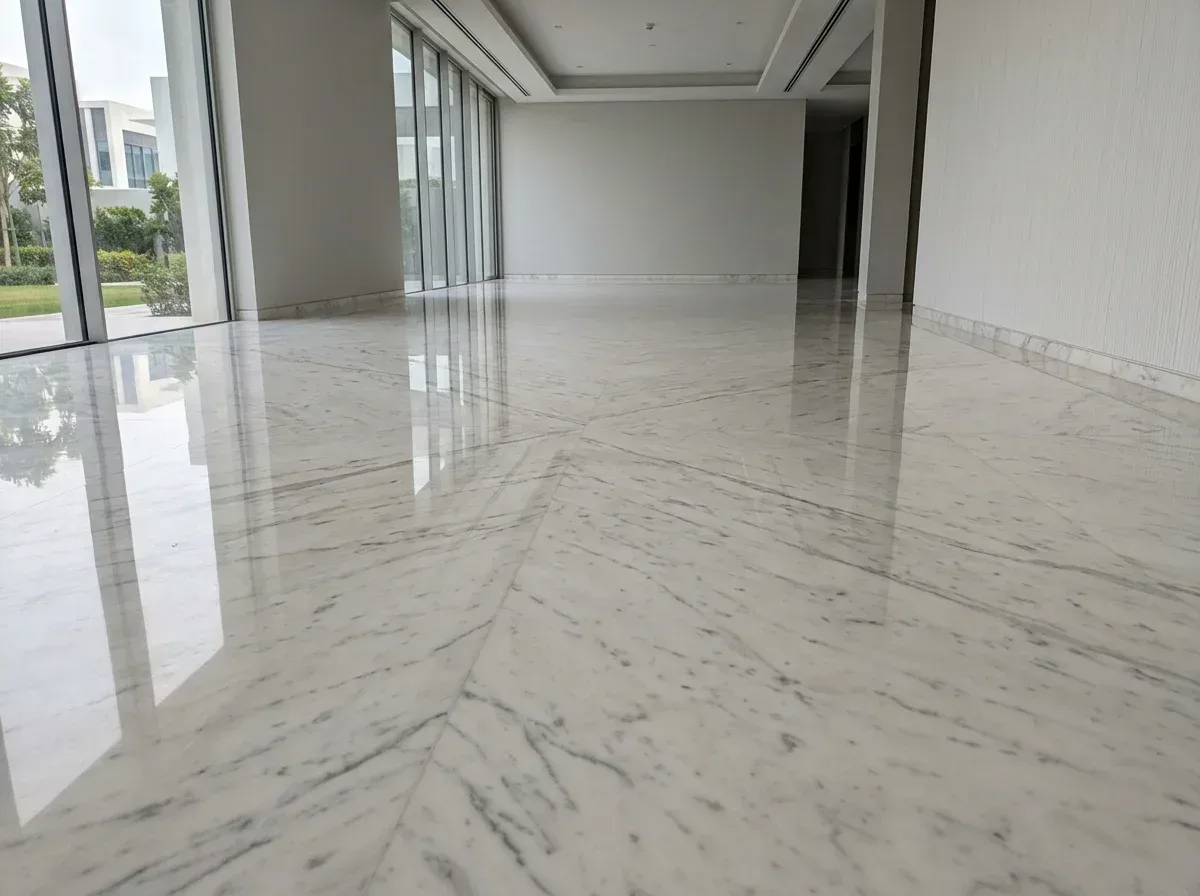
Timing
The timing of the first grinding and polishing is chosen based on the slabs having settled and the other construction work being finished so that it will not damage the floor.
- Wait for the mortar to harden: You should wait until the adhesive and mortar have hardened sufficiently; slabs that have not set may shift under the vibration and weight of the machine.
- Finish the heavy work first: Heavy construction work, painting and ceiling work should preferably be finished; otherwise falling materials and paint drips will damage the newly polished floor.
- Do it before the furniture: Grinding and polishing should be done before the furniture arrives; in an empty home the machine reaches every corner, and no extra work such as moving furnishings arises.
Doing it too early can cause problems on slabs that have not settled sufficiently; doing it too late creates extra work such as moving furniture.
Choosing the Grout
On floors that will receive a first grinding and polishing, the grout is usually chosen in a tone close to the stone; the grout and stone are finished together during the process. The marble dust and slurry produced during grinding help the grout color match the stone even more closely. If the joints are filled not immediately after installation but after coarse grinding, no level difference at all remains between the stone and the grout. For this reason, when planning the first grinding and polishing, we recommend handling the grout work together with the same crew.
What Happens If the First Grinding and Polishing Is Skipped?
| Topic | First grinding and polishing done | First grinding and polishing not done |
|---|---|---|
| Slab joints | Single plane, edges cannot be felt | Edges catch the foot, shadows form |
| Grout joints | Level with the stone, blended away | Sunken or protruding, traps dirt |
| Gloss | Uniform | Varies from slab to slab |
| Edge chipping | Little | Over time at raised edges |
| Protection | Finished with impregnation | Often not done |
Duration of the First Grinding
The duration of the first grinding varies with the size of the area, the depth of the level differences, the number of rooms, and the desired surface finish. In an apartment with small level differences, the job can be completed in a few days, while in large villas and hotel lobbies it takes longer. Because edges and corners are worked through the same stages as the main area, spaces with many rooms and plenty of corners require more time. During the site survey, both the level differences and the schedule are assessed together.
For Contractors and Homeowners
A few planning decisions made by the contractor and homeowner during construction directly affect the result and duration of the first grinding.
- Schedule it for the end of the timeline: Plan the first grinding for the end of the construction schedule, before the furniture is moved in, so that the ground floor isn't scratched again by other trades.
- Lay down a hard protective cover: After installation, protect the floor with a hard protective cover; falling tools and dragged materials can leave deep scratches and edge chips.
- Plan the grout together with the grinding crew: Plan the grout work together with the grinding crew; if the grout is filled after the rough grinding, no level difference remains between the stone and the grout.
- Allow curing time for the impregnation: Allow time after grinding for the impregnation to cure; on a floor used too early, the protection doesn't set fully and the floor may stain.
First Grinding in Alanya
In newly delivered villas and housing complexes in Alanya, we encounter level differences, installation scratches, and grout level problems on most marble floors. In the first grinding, we start with the coarse stage and bring the floor to a single plane, finish the grout joints together with the stone, and polish and impregnate according to the desired finish. In the video below, you can watch a marble grinding and cleaning project carried out by our company.
Honed or Polished?

The final finish is chosen at the first grinding stage:
- Polished: For living rooms and living areas.
- Honed (matte): For bathrooms, kitchens and high-traffic areas.
This decision must be made before grinding.
Our Marble Grinding Service in Alanya

We restore marble floors that have become dull, scratched, or uneven between slabs using wet grinding that keeps dust under control. From coarse grinding to polishing, we choose each stage according to the type of stone and, if needed, carry out crack and joint repairs as part of the same job.
We inspect your floor on site and tell you clearly whether it needs grinding or just polishing. Explore our Marble Grinding service.
Marble Polishing and Cleaning
Factory polish shines each slab individually; the first grinding, however, turns the floor into a single, unified surface. The true look of a new marble floor emerges after the first grinding.