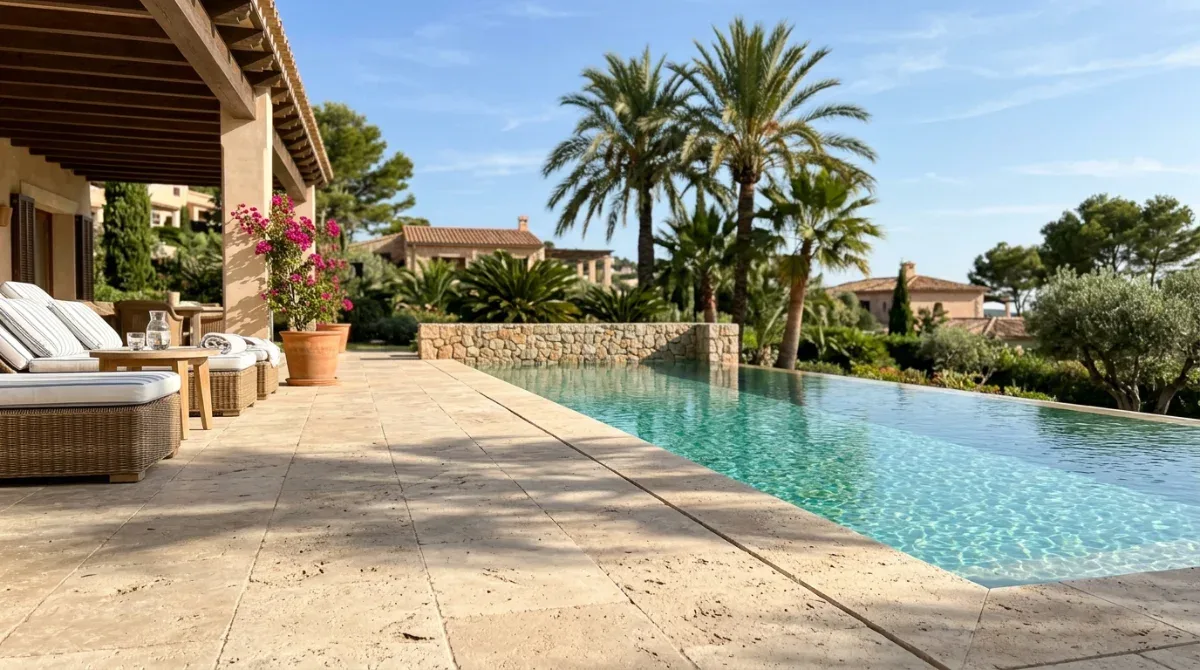
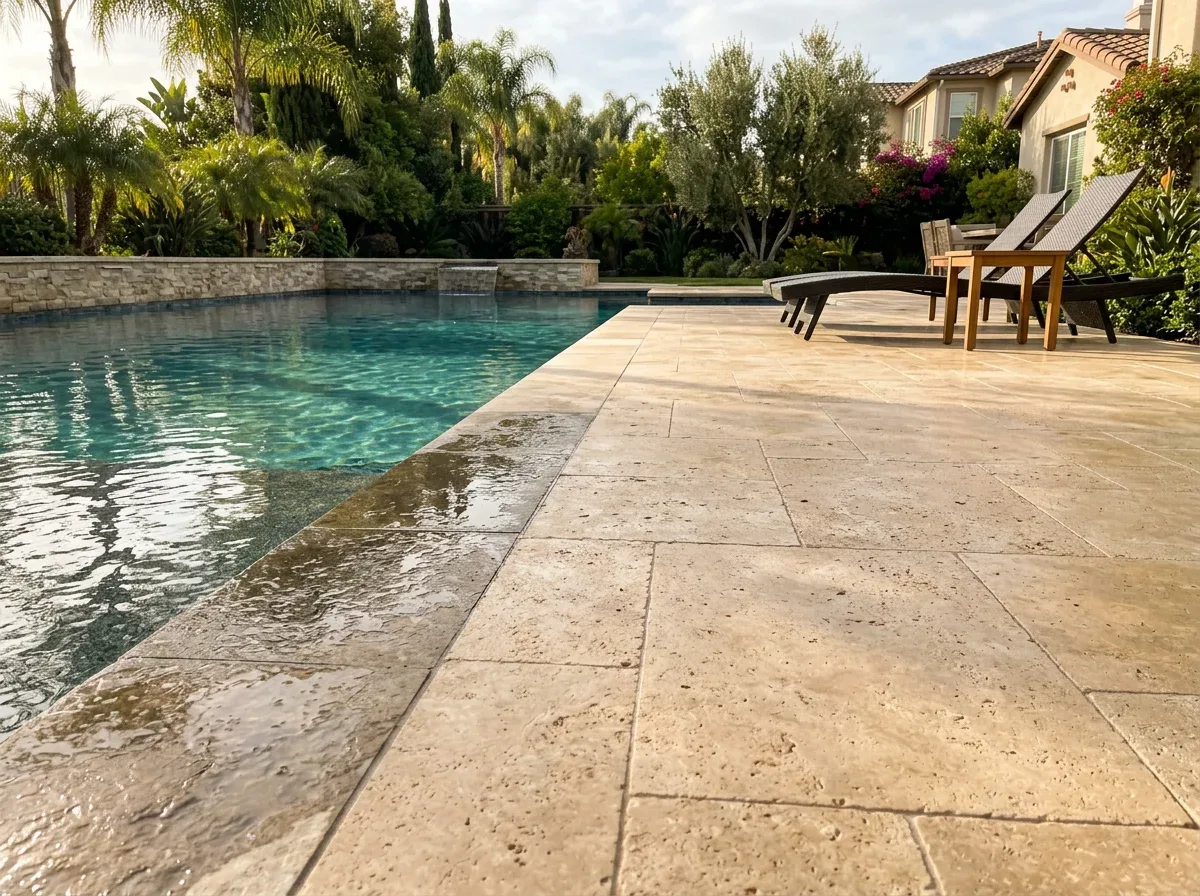
Pits and Opened Pores in Travertine Floors
In short: Travertine is a stone that, by its nature, contains voids.
At the factory, most of these voids are sealed with filler. Over the years the filler crumbles, new pores open up, and small pits full of dirt appear on the floor. In this article, we explain the causes of this problem and its solution.
Why Do Pits Form?
In travertine, pits usually do not come from a single cause, but from the wear of the filler and the erosion of the stone progressing together.
- Filler crumbling: Factory filler gradually crumbles through foot traffic, cleaning, and temperature changes; when the filler comes off, the void beneath it is exposed and a pit appears.
- Voids close to the surface: As the upper layer of the stone thins with wear, the thin shell of the closed voids inside lifts off and these voids open to the surface.
- Honing: When the surface is removed during honing, voids lying just beneath it can open up; for this reason, filling passes are also planned during honing.
- Impact and load: Point loads such as heels, falling objects, or furniture legs break the thin shell over voids and open new pits.
- Water and cleaning: Acidic products wear down both the filler and the stone; cleaning with limescale remover or vinegar speeds up the loosening of the filler.

Problems
Pits left open affect not only the appearance but also the daily use and cleaning of the floor.
- Dirt and water buildup: Dirt and mop water that fill the pits cannot be removed; over time they darken and form scattered black spots on the floor.
- High heels getting caught: Thin heels can slip into open voids and get caught; this creates a risk of falling and also breaks the edge of the void, enlarging the pit.
- Harder cleaning: Mops cannot reach inside the pits; dirt remains in the voids of a floor that is wiped on the surface, so the floor still looks dirty even after cleaning.
- Neglected look: When dirt-filled pits and broken edges multiply, the floor gives an impression of being old and uncared for, even if the stone itself is sound.
Solution: On-Site Filling
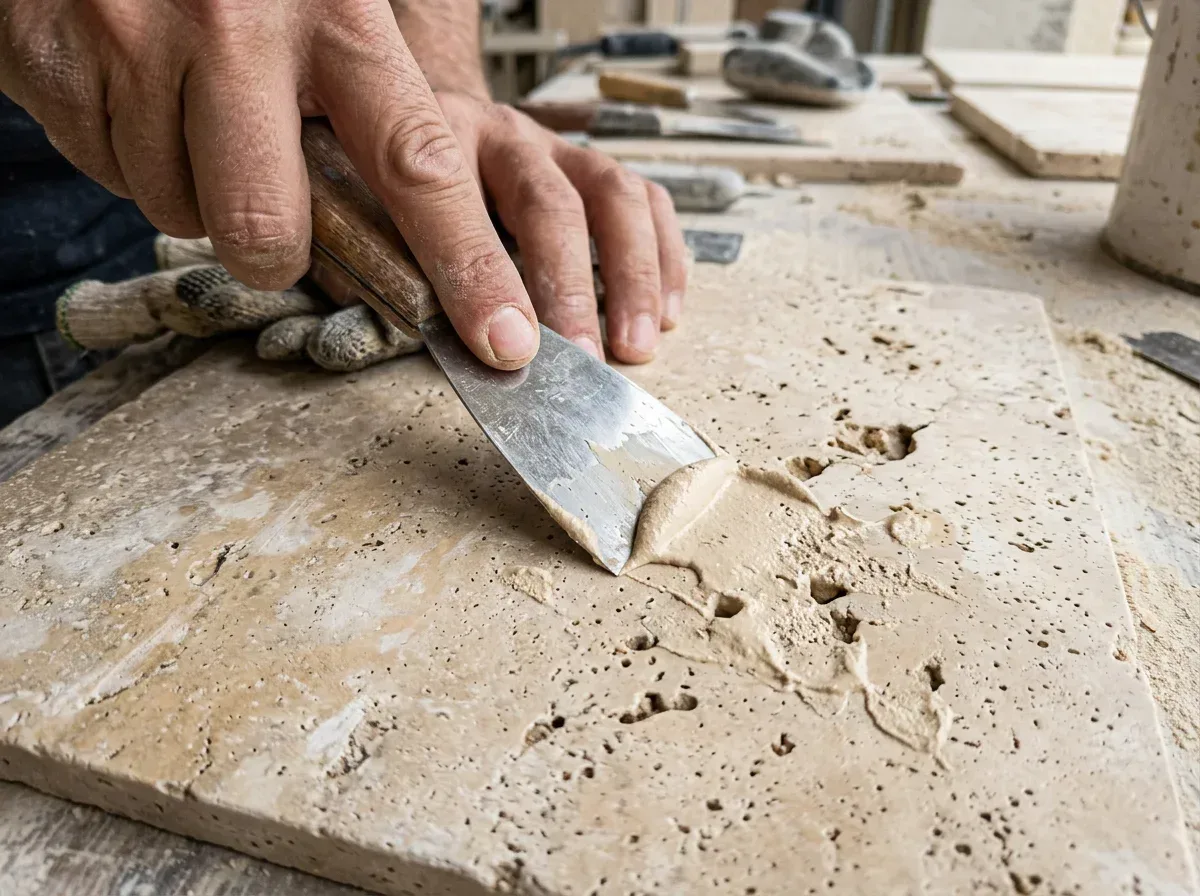
On-site filling means cleaning the voids that have opened and sealing them again so that they are level with the stone, and it goes hand in hand with honing.
- Cleaning: First, the dirt in the pits is removed with a brush and vacuum; dirt left in the void prevents the filler from adhering and leaves a dark stain beneath it.
- Drying: After cleaning, the voids must dry completely; filler applied to a damp void does not adhere well and may come off in a short time.
- Filling: Next, the voids are filled with a suitable filler material (cement-based or resin); the material is chosen according to the place of use and the tone of the stone.
- Curing: After filling, the material's curing time is awaited; if honing begins before full curing, the filler is torn out or sinks.
- Honing: The excess of the cured filler is ground off; since the stone and filler are abraded together, they come to the same level and no height difference remains.
- Second filling if necessary: A second filling pass is carried out for voids newly opened during honing; if this step is skipped, new pits appear on the finished floor.
- Finishing and impregnation: Finally, the surface is honed to the desired grade and finished, and impregnation is applied to reduce water absorption of the stone and the filler.
Color Selection
The color of the filler determines whether the floor will look uniform or textured after the repair.
- Tone close to the stone: Fillers chosen close to the color of the stone are inconspicuous and disappear; the floor looks whole and even without any trace of repair.
- Slightly different tone: A filler chosen slightly different from the stone emphasizes the pore lines and highlights the natural texture of the travertine.
Testing in a small area is important to see the color after it dries.
Open-Pored Travertine
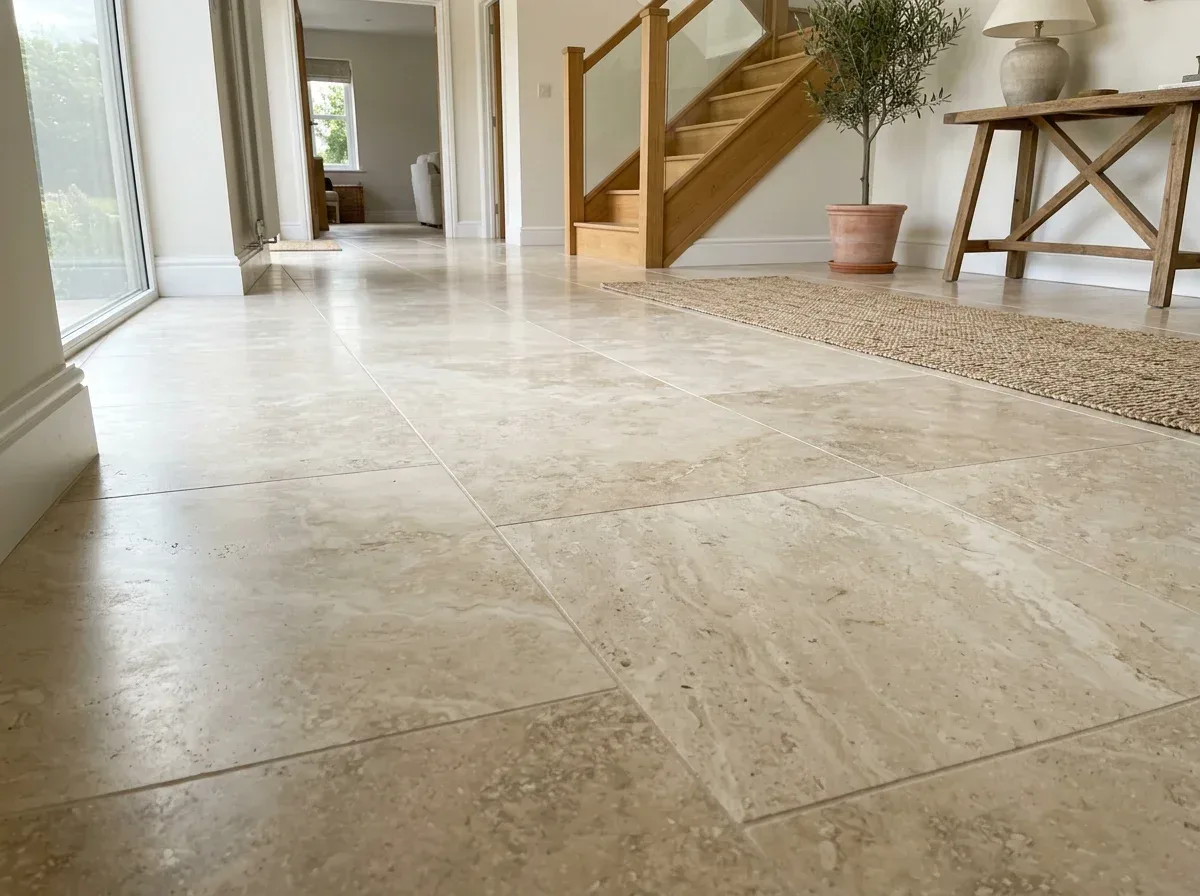
In some applications, especially outdoors, travertine is deliberately left open-pored. This gives a natural and rustic look, but it holds dirt and water and requires maintenance.
Filler Material Comparison
| Material | Advantage | Caution |
|---|---|---|
| Cement-based filler | Texture close to travertine, economical | Long curing time, porous |
| Resin-based filler | Hardens quickly, does not absorb water, strong bond | Color matching and application require skill |
| Filler tinted with travertine powder | Very good color match | Requires testing |
Why Is It Done Together with Grinding?
If travertine filling is done on its own, the excess filler stays on the surface and a height difference forms between the stone and the filler. During grinding, however, the filler is abraded together with the stone and comes to the same level. Since it is known that coarse grinding will also open closed voids near the surface, filling is usually done after coarse grinding, and a second round of filling is added at the intermediate stages for newly opened voids. This way, when the floor is finished, the pores are closed and the surface is a single even plane.
Maintaining Filled Travertine
How long filled travertine stays sound depends on a few simple choices made during everyday cleaning.
- Use a pH-neutral cleaner: Acidic products abrade and loosen the filler; a pH-neutral cleaner suitable for natural stone protects both the filler and the stone surface.
- Change the mop water often: Dirty water collects in the pores and along the edges of the filler; if the water is not changed often, cleaning actually just spreads the dirt across the floor.
- Have new voids filled early: Have newly opened small voids filled before they grow; the edge of a void left open will eventually break and weaken the surrounding filler as well.
- Check the impregnation regularly: Check the impregnation regularly with a drop test; if the water is absorbed immediately, the protection has weakened and it is time to renew it.
Travertine Filling in Alanya
In villas and apartments in Alanya, especially in travertine laid in the 1990s and 2000s, crumbling filler and opened pores are among the most common complaints. In our travertine grinding work, we first clean out the opened voids, apply a filler matching the stone tone after coarse grinding, and also complete any new voids that open at the intermediate stages. We then finish the job with a honed or polished surface, depending on where the travertine is used, and impregnate it.
Prevention

- Avoiding acidic products,
- Regular sweeping,
- Impregnation (sealing),
- Repairing fallen fillers before the damage spreads.
Our Travertine Grinding and Honing Service in Alanya

We grind travertine floors whose pores have opened up or that have darkened or worn, then fill the voids with color-matched filler. For outdoor areas such as pool surrounds, terraces and gardens, we apply honed or brushed finishes that prioritize slip resistance over gloss.
After grinding, we also recommend a suitable impregnating sealer to protect the travertine against stains. Explore our Travertine Grinding service.
The beauty of travertine lies in its pores, and so does its weakness. With the right filling and honing, these pores preserve the character of the floor while no longer trapping dirt.