Yellowing and Darkening of Travertine Floors
In short: Light beige travertine floors can turn yellowish, brownish or dark gray over time.
Most of the time this change comes not from the stone itself, but from dirt, old products and moisture that have filled its pores. In this article, we explain the causes and the ways to restore it.
Why Does It Turn Yellow or Dark?
Dirt in the Pores
Travertine is porous. Dirt, dust and detergent residue fill the pores, and the floor darkens overall.
Old Polish and Varnish
Surface polishes and some sealers applied in the past turn yellow over time and trap dirt.
Moisture
Moisture rising from below or remaining on the surface can activate the minerals inside the stone and cause yellowish stains.
Rust
Iron-bearing minerals or metal objects leave brown stains.
Outdoor Areas
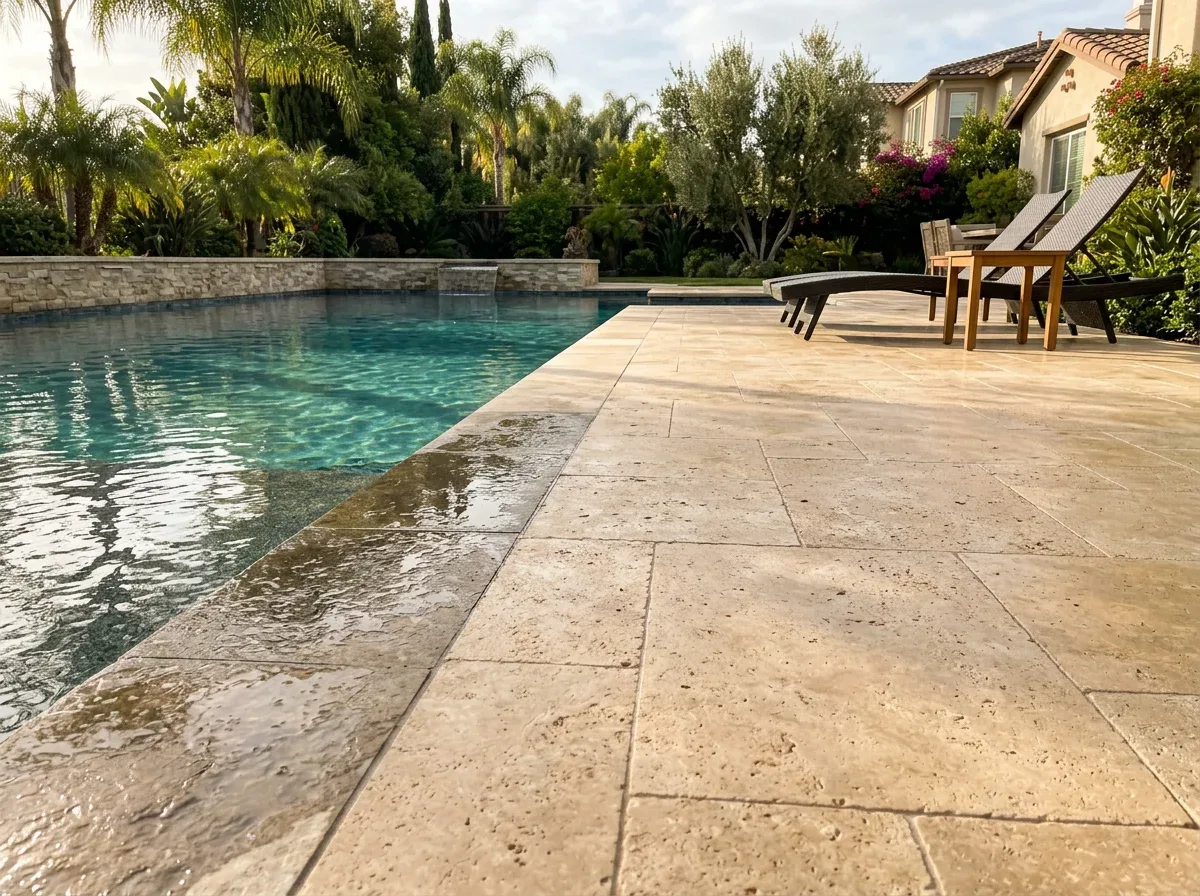
Sun, dust, algae and salty air darken outdoor travertine.
Improper Cleaning
Dirty mop water, products that leave a film, and acidic cleaners.
Diagnosis
The right solution depends on understanding why the color has changed. The most practical way to do this is to carry out a test cleaning on a small area.
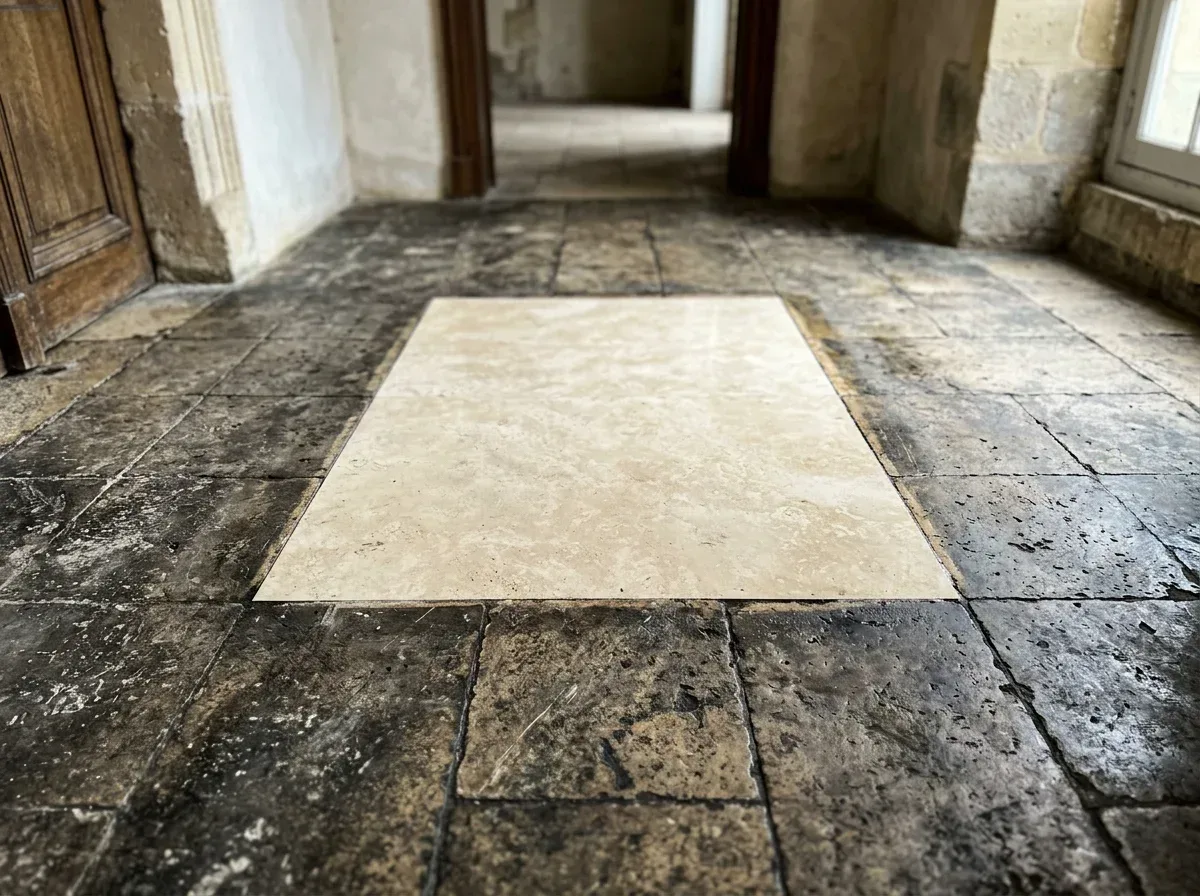
- Test cleaning on a small area: Clean a small area with a cleaner suitable for the stone; if the color lightens, the problem is not in the stone itself but in the dirt in the pores or in an old product.
- If the color does not lighten: If the color does not lighten after the test cleaning, the stain has penetrated the stone or the surface has worn down; in this case, poultice treatment or honing is needed.
- Yellowing along walls and in corners: If the yellowing is concentrated in certain areas, along the walls and in the corners, moisture should be investigated; cleaning carried out without resolving the source will not last.

Restoration
Restoring yellowed or darkened travertine brings back the stone's true tone through sequential steps, from removing dirt to protection.
- Deep cleaning: First, the dirt, dust and detergent residue in the pores are removed; this also shows how much of the color change was caused by dirt.
- Polish removal: Next, the yellowed old polish and sealers are stripped; if these layers remain, they continue to trap the dirt beneath them and dull the color.
- Poultice: A poultice is applied for stains that do not come out with cleaning and have penetrated the stone; the poultice slowly draws the stain out of the pores.
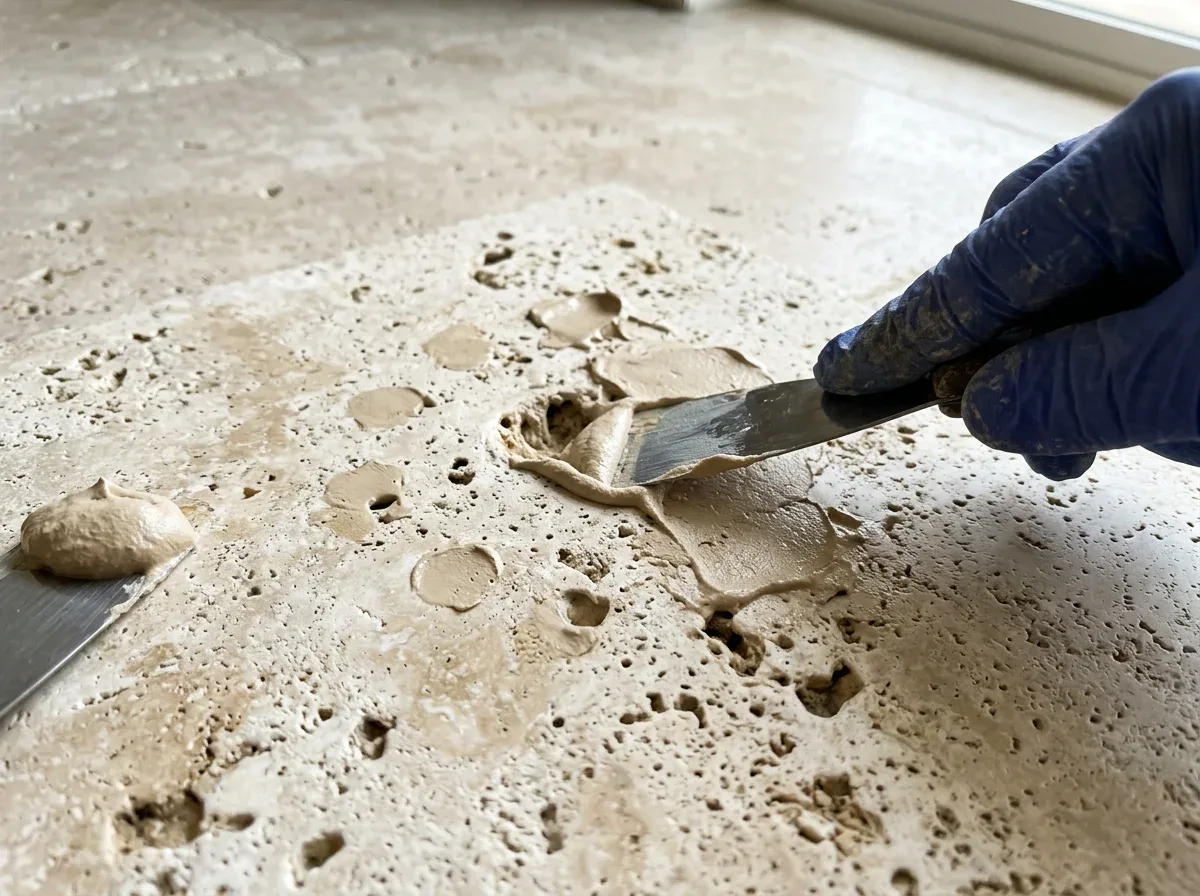
- Filling: Then the opened pores are sealed with a filler matching the tone of the stone; unfilled pores would collect dirt again and form dark spots.
- Honing: Honing removes the dirty and worn top layer, the filler and the stone come to the same level, and the true tone of the travertine is revealed.
- Impregnation: Finally, an impregnating sealer is applied; the stone is protected, dirt and water enter the pores more slowly, and the color stays light for longer.
Summary of Solutions by Cause
| Cause | Symptom | Solution |
|---|---|---|
| Dirt in the pores | General darkening | Deep cleaning, honing, filling |
| Old polish and varnish | Yellowish, glossy but dirty film | Polish removal |
| Moisture | Yellowing along walls and in corners | Resolving the moisture source, poultice |
| Rust | Brown stains | Rust-removing poultice |
| External factors | Darkening, algae | Cleaning, honing, impregnation |
Why Is Bleaching with Bleach Not Recommended?
Using bleach to lighten darkened travertine is a common habit. Although bleach may temporarily lighten some organic stains, it does not remove the dirt in the pores or the old layers of polish. With regular use, it weakens the fillers, damages the impregnation and may leave a blotchy appearance in some areas of the stone. The lasting solution is deep cleaning, poultice and honing, depending on the source of the problem.
Maintaining the Color After Restoration
Keeping renewed travertine from yellowing again comes down to simple habits that stop dirt and residue from getting into the pores.
- pH-neutral cleaner and clean water: Use a pH-neutral cleaner and change the mop water often; dirty water fills the pores and darkens the floor again.
- Place mats at entrances: Keep sand and dirt out by placing mats at entrances; dirt carried inside both scratches the surface and settles into the pores.
- Do not use products that leave a film: Polishes or products that leave a film yellow over time and trap dirt; even if the floor looks shiny, it darkens within a few months.
- Check the impregnation regularly: Check the impregnation regularly with a drop test; if water is absorbed quickly, the protection has weakened and dirt can enter the stone the same way.
- Clean mossy areas early: Outdoors, clean mossy areas early; spreading moss can leave permanent dark stains in the pores of the travertine.
Travertine Restoration in Alanya
In Alanya, light beige travertine floors in villas, hotels and housing complexes turning yellow and dark over time is one of the most common problems we encounter. In our travertine honing work, we first show the cause with a test area, then bring out the true tone of the travertine through deep cleaning, removal of old polish and, where necessary, poultice, filling and honing. In the video below, you can watch footage from our company's natural stone care work.
Expectation

The natural tones of travertine already vary. After restoration, the stone returns to its natural color, but there may be differences in tone between slabs. In the case of yellowing caused by moisture, the problem may recur if the source of the moisture is not eliminated.
Our Travertine Grinding and Honing Service in Alanya

We grind and hone travertine floors with open pores, darkening, or wear, and fill the voids with color-matched filler. In outdoor areas such as pool surrounds, terraces, and gardens, we apply honed or brushed finishes that prioritize slip resistance over shine.
After grinding, we also recommend a suitable impregnating sealer to protect the travertine against stains. Explore our Travertine Grinding service.
Natural Stone Care
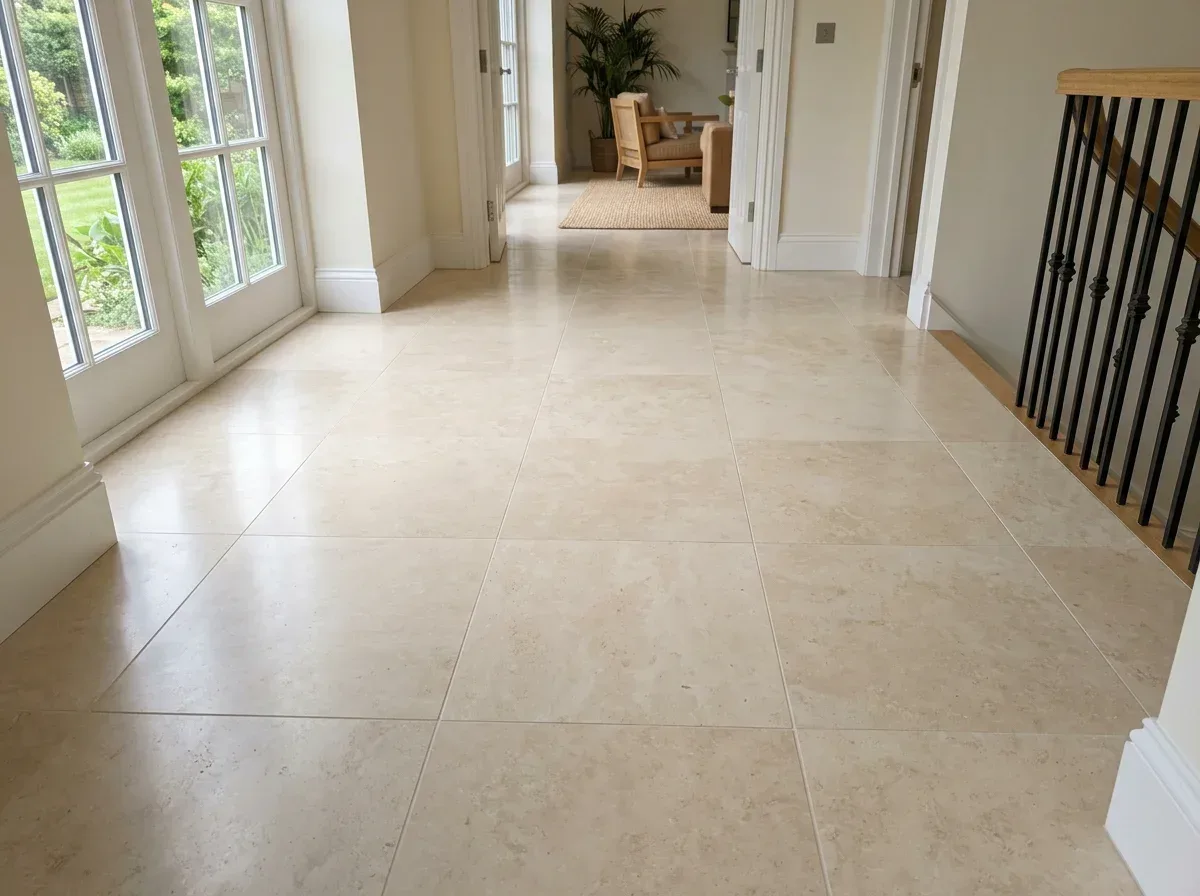
A darkened travertine is usually dirty, not worn out. Once the dirt and old polish in the pores are removed, the stone's warm, light tone shows again.