Travertine in the Bathroom and Shower: Use and Care
In short: Travertine gives bathrooms a warm, natural look.
Travertine is used on shower and bathroom walls in many villas and hotels in Alanya. However, because it is a porous, calcium carbonate-based stone, it needs special care in wet areas. In this article, we explain how to properly maintain travertine bathrooms.
What Does Travertine Face in the Bathroom?
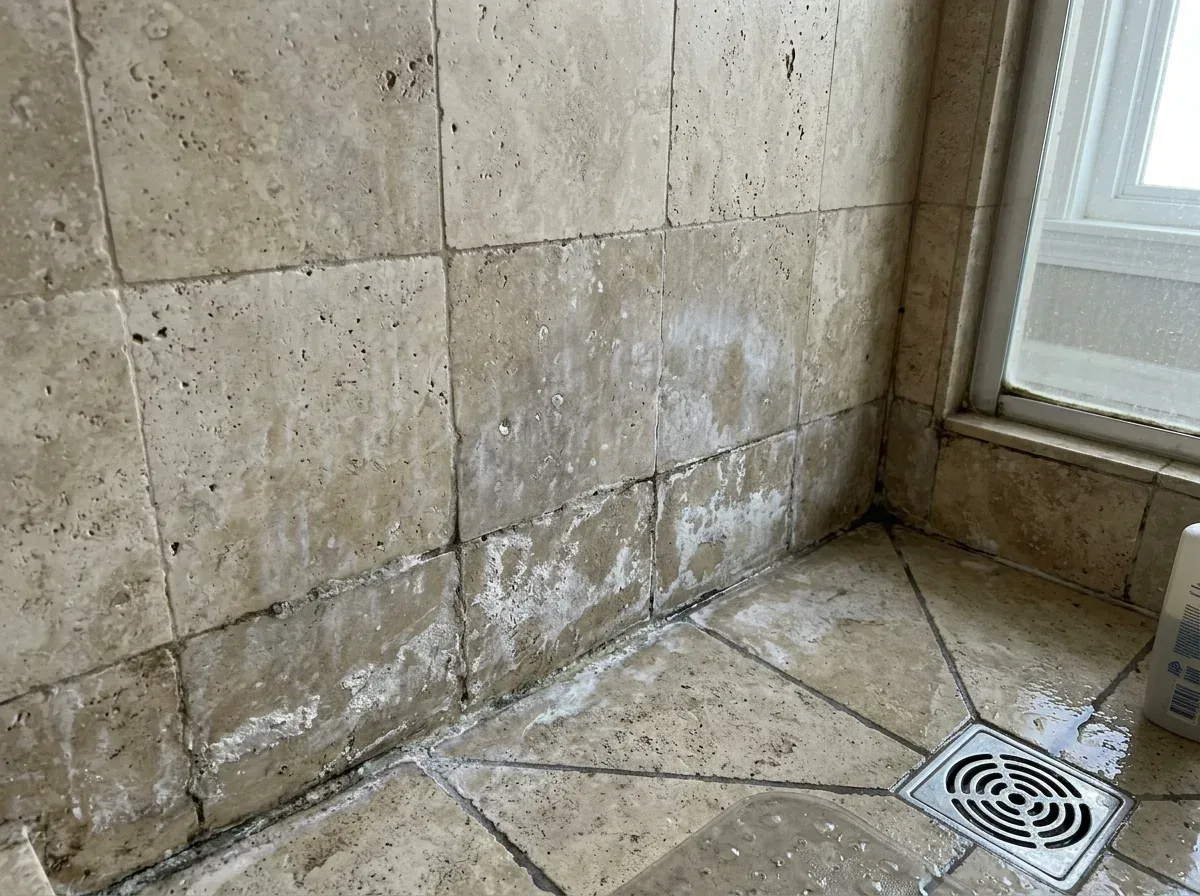
Porous and calcium carbonate-based, travertine is exposed every day in the bathroom to water, soap, limescale and cleaning products.
- Water absorption: The pores absorb water; the stone stays wet for a long time, wet areas darken, and permanent stains can form as this repeats.
- Soap and shampoo residue: Residues build up inside the pores and dull the surface; over time they turn into a sticky layer that mold feeds on.
- Limescale: When water droplets dry, white marks remain; the buildup thickens quickly, especially under the showerhead and at glass joints.
- Acid: Acidic bathroom cleaners dissolve calcium carbonate; the surface becomes matte and rough, and holds dirt more easily.
- Mold: When moisture and soap residue come together in grout joints and open pores, mold takes hold; black spots and odor are signs of this.
- Slipperiness: On polished travertine, a wet surface becomes noticeably slippery underfoot; on shower and bathroom floors this poses a serious risk of falling.

Choosing the Right Finish
In the bathroom, the surface finish of travertine determines both slip safety and how visible marks will be.
- Honed (matte): This is the most common choice for bathroom and shower floors; it reduces slipperiness and shows limescale and water marks less.
- Polished: It can be used on walls, but because it reflects light, it shows water droplets, limescale and acid marks more clearly.
- Brushed: It gives a non-slip, textured surface; since soap and dirt can collect in the recesses, cleaning takes a little more effort.
Filling
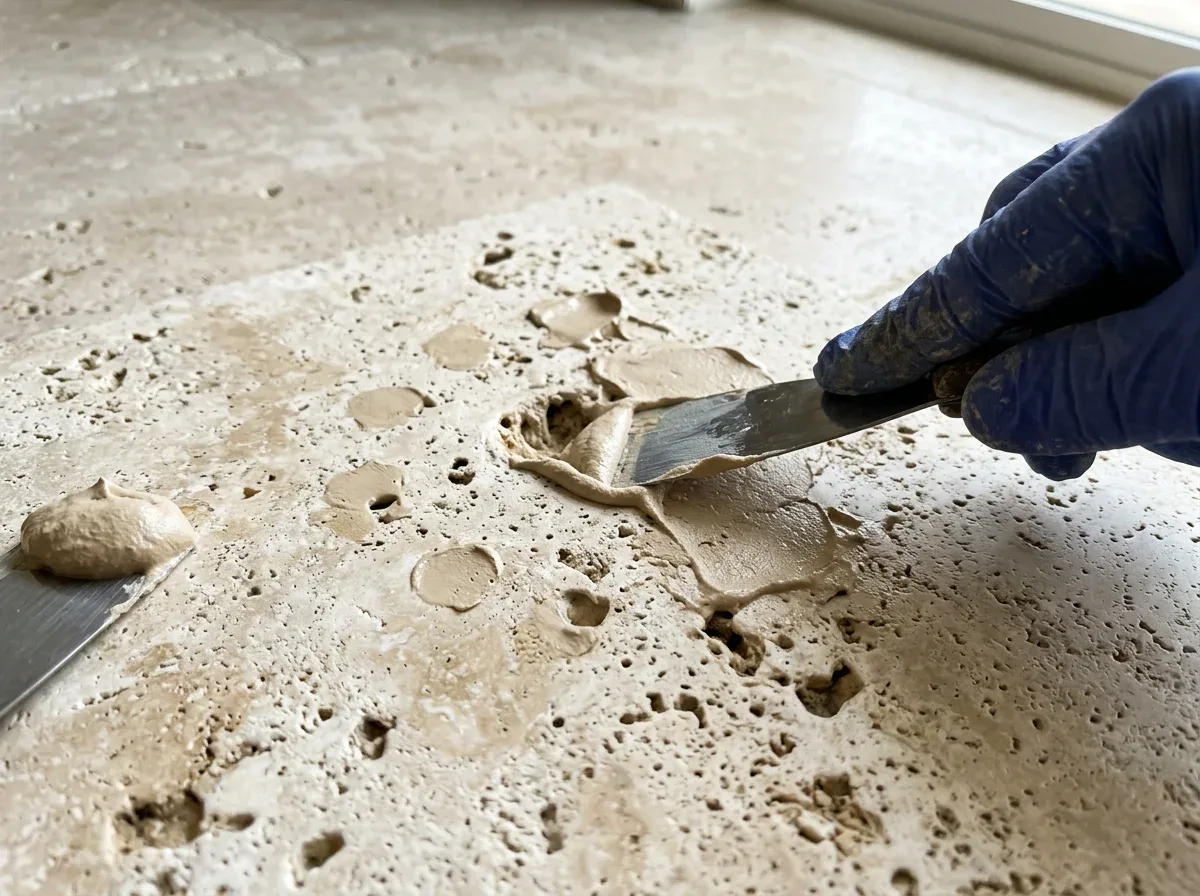
The pores of travertine used in bathrooms and showers must be filled. Open pores collect water, soap and dirt, and over time become a source of mold and odor. On travertine whose factory filling has fallen out, the voids are cleaned and dried, then sealed again with a filler that has low water absorption and is suitable for wet areas. Resin-based fillers last longer inside a shower. After filling, the surface is polished so that the stone and the filler are level.
Impregnation
Travertine in the bathroom must be impregnated; in wet areas, impregnation is the most important protection for travertine.
- Less water absorption and staining: The impregnating sealer penetrates into the pores and slows the entry of water and soap into the stone; as a result, dark wet marks and stains are reduced.
- Easy cleaning: Since dirt and soap stay on the surface instead of penetrating the pores, they are easily removed with a pH-neutral product and a soft cloth.
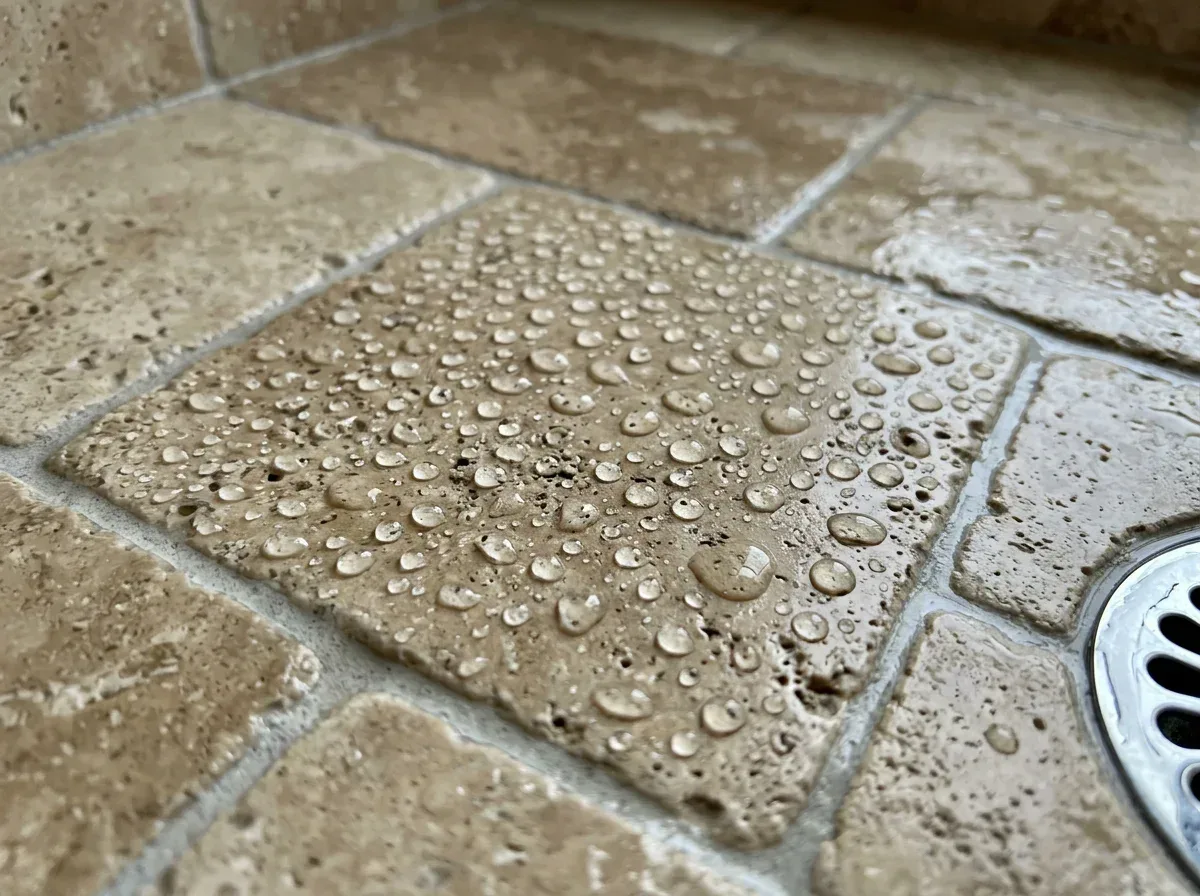
- Frequent renewal: In wet areas, water and cleaning products wear down the impregnation more quickly; it should be checked with a drop test and renewed more often.
Daily and Weekly Care
The life of a travertine bathroom depends largely on small daily habits and the right cleaning materials.
- Wiping off water after showering: Removing the water from the walls and floor with a squeegee after every shower prevents limescale marks and keeps the stone from staying wet for long.
- pH-neutral cleaners: pH-neutral cleaners suitable for stone remove soap and dirt without dissolving the travertine surface or wearing down the impregnation.
- Soft brush and microfiber cloth: A soft brush reaches pores and grout joints, and a microfiber cloth removes dirt without scratching; harsh scouring pads can scratch the surface.
- Ventilation: Ventilating the bathroom after each use prevents moisture from building up in the stone and grout joints, making it harder for mold to take hold.
- Avoiding acid and bleach: Acidic limescale removers dissolve the travertine surface; bleach can also cause changes in the stone's color and in the fillings.
Travertine Problems in the Bathroom and Their Solutions
| Problem | Cause | Solution |
|---|---|---|
| Dark moisture stains | Water absorption by the pores | Filling, impregnation, drying |
| Dull, gray surface | Soap and shampoo residue | Deep cleaning |
| White marks | Limescale | Drying, acid-free product |
| Dull, rough areas | Acidic cleaners | Grinding and honing |
| Black spots | Mold in pores and joints | Mold cleaning, filling, joint renewal |
| Slipperiness | Polished surface | Honing |
Extending the Life of Travertine in the Shower
The areas of a travertine shower that suffer the most damage are under the shower head, where the shower glass meets the wall, and around the drain. Water stays longest in these areas, and limescale and soap build up the most. Removing water from the walls and floor with a squeegee after every shower, cleaning once a week with a soft brush and a pH-neutral product, and ventilating the bathroom well greatly extends the life of travertine. It is also important that the products used to clean the shower glass do not drip onto the travertine.
When Should You Get Professional Help?
Some signs show that the problem has progressed too far to be solved with daily cleaning and that filling, grinding or joint work is needed.
- Black spots and mold: If black spots and mold are visible in the pores, the mold has settled inside the stone; surface cleaning is not enough, and the pores may need to be opened up and refilled.
- Crumbled filler: If the filler has crumbled and holes have opened up, these gaps collect water and dirt; after being cleaned and dried, they are sealed with a filler suitable for wet areas.
- Dull and rough surface: If the surface has become dull and rough, this is often acid or limescale damage; the surface is restored with honing grinding.
- Absorption in the drop test: If water soaks into the stone immediately in the drop test, the impregnation has lost its effect; after the stone is cleaned and dried, it is impregnated again.
- Darkened and hollowed-out joints: If the joints have darkened and become hollow, water can reach behind the slabs; the old joint is opened up and renewed with a material suitable for wet areas.
Travertine Bathrooms in Alanya
Travertine bathrooms are very common in villas and hotels in Alanya; hard water and summer humidity make their maintenance even more important. In our travertine bathroom renovation work, we renew crumbled filler, remove acid and limescale damage with honing grinding, renew the joints, and protect wet areas with suitable impregnation. At the end of the job, we leave a short note for daily care.
Restoration

Travertine bathrooms that have become dull, calcified and stained over the years can be restored with:
- Deep cleaning,
- Refilling of crumbled fillers,
- Honing or polishing,
- Grout renewal,
- Impregnation (sealing)
.
Our Travertine Grinding Service in Alanya

We grind travertine floors whose pores have opened up or that have darkened or worn, and fill the voids with color-matched filler. For outdoor areas such as pool surrounds, terraces and gardens, we apply honed or brushed finishes that prioritize slip resistance over shine.
After grinding, we also recommend a suitable impregnating sealer to protect the travertine against stains. Explore our Travertine Grinding service.
When travertine is used in a bathroom, it is important that its pores are filled. Open pores trap water and dirt. Fillers that have come loose should be renewed. — Expert Note