Post-Construction Natural Stone Floor Cleaning
In short: Every year, a large number of new villas, apartment buildings and hotels are delivered in Alanya.
At the end of construction, natural stone floors are often covered in dust, paint, plaster, mortar and silicone. Incorrect cleaning scratches or dulls new stone from day one. In this article, we explain the correct post-construction cleaning sequence.
What Do We Encounter?
When construction is finished, the stone floor is not covered with a single type of dirt, but with many residues, each of which must be removed with a different method.
- Fine construction dust and plaster dust: Fine dust that settles into pores and joints turns to mud when wetted; for this reason, removing it dry first prevents scratching the surface.
- Paint and primer drips: Dried paint drips adhere firmly to the stone; since scraping them off can scratch the surface, they are softened with removers suitable for the stone and then taken off.
- Mortar, plaster and grout residues: When cement-based residues harden, they bond to the stone; since acidic solvents leave burn marks on marble and travertine, they are removed mechanically.
- Silicone and adhesive marks: Silicone and adhesive leave thin, shiny stains on the surface and trap dirt; they need to be softened with a suitable remover and carefully scraped off.
- Tape and protective cover residues: Masking tapes and covers left in place for a long time leave sticky marks; especially in sunlit areas, these marks cling firmly to the stone.
- Shoe and wheelbarrow marks, scratches: Shoes carrying sand and wheelbarrow wheels leave marks and scratches on the surface; scratches that do not come off with cleaning require grinding and polishing later.

The Correct Sequence
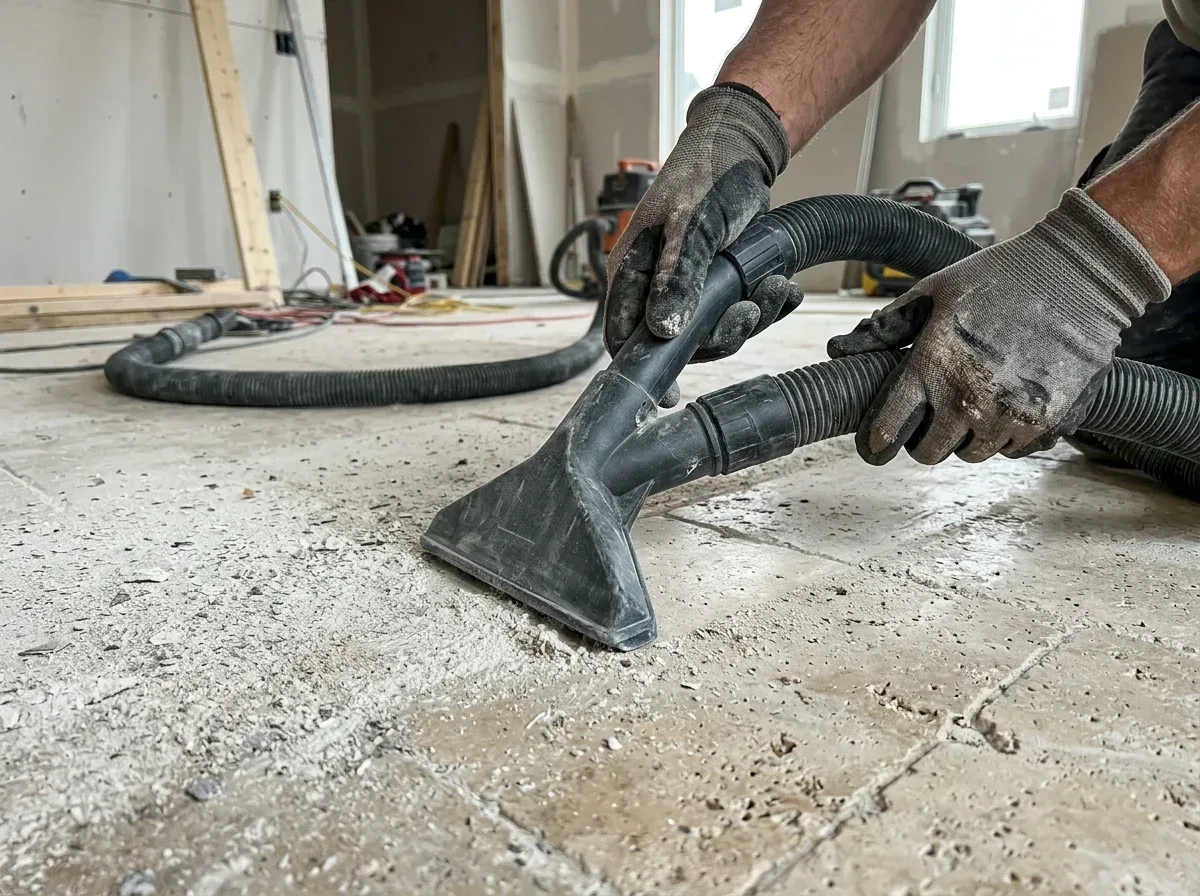
1. Dry Dust Removal
The first step is removing the dust with a broom or an industrial vacuum cleaner. A wet mop turns dust into mud and fills the joints with it.
2. Heavy Residues
Paint, mortar and silicone drips are removed mechanically with plastic scrapers.
3. Wet Cleaning
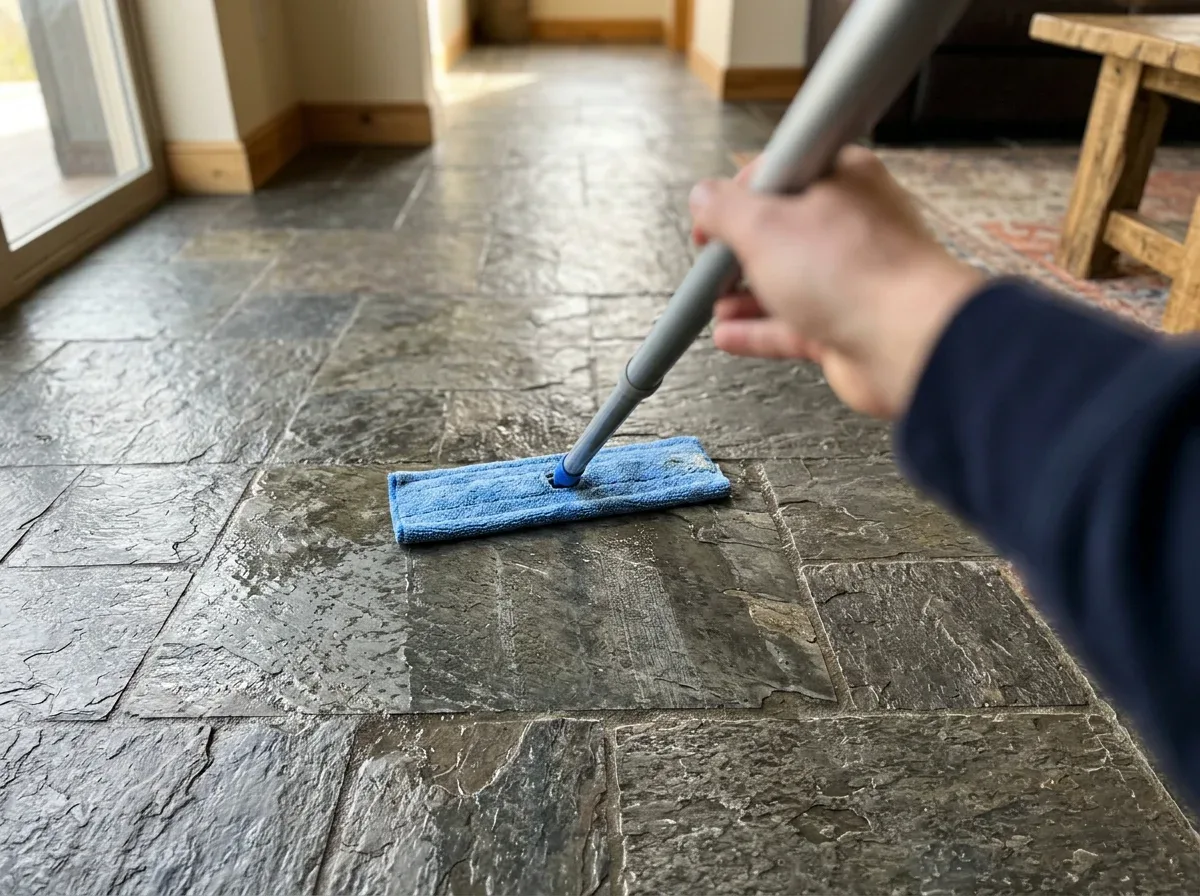
After the dust and heavy residues have been removed, the floor is washed with a pH-neutral or mildly alkaline cleaner suitable for the stone, using a machine with a soft pad. The dirty water is immediately collected with a vacuum; dirty water left standing on the floor seeps into the joints and pores. Washing can be repeated several times until the water runs clear. Acidic products are never used at this stage; if there is a cement haze, it is treated separately with a method appropriate to the stone type.
4. Stubborn Stains
Suitable methods (solvents, poultices, controlled cleaners for granite) are applied to stains such as paint and mortar marks.
5. Assessment
After cleaning, the floor is assessed:
- Is there a height difference (lippage): If there is a height difference at the joints between slabs that you can catch with your foot or hand, this is a defect left over from installation that can only be corrected by grinding and polishing.
- Are there scratches: Scratches visible when looking at the floor in raking light come from sand and tools carried during construction; cleaning does not remove them.
- Are there dull areas: Areas that remain dull even after cleaning may be caused by acidic products, cement or wear marks, and require the surface to be reworked.
These problems do not go away with cleaning; they require grinding and polishing.
Cleaning or Grinding and Polishing?
The type of problem visible on the floor after cleaning determines whether the job will be completed with cleaning or with grinding and polishing.
- If there is only dirt and residue: If the surface is flat and free of scratches, cleaning done in the correct sequence is sufficient; the stone is then prepared for use by applying an impregnating sealer.
- If there is lippage, scratches and dullness: These defects do not go away with cleaning; on a newly laid floor, the first grinding and polishing is carried out to bring the slabs to the same level, and the surface is polished again.
On many new floors, the first grinding and polishing is unavoidable, because height differences from installation and construction scratches can only be corrected by grinding and polishing.
Correct Timing
If stone floor cleaning and grinding and polishing are not planned as one of the last jobs, subsequent renovation steps will quickly spoil the work done.
- After heavy work: Stone floor cleaning and grinding and polishing should be carried out after heavy construction work is finished; otherwise, debris and tool traffic will scratch the surface again.
- Protect the floor during touch-ups: If the floor is covered with cardboard or a sheet during paint touch-ups and furniture assembly, drips, scratches and screw marks will not reach the stone.
- Final cleaning before handover: The final cleaning is done right before handover; this way, dust and marks from the work in between do not require cleaning again.
Post-Construction Cleaning Plan
| Step | Method | To Avoid |
|---|---|---|
| Dust removal | Industrial vacuum cleaner | Wet mop |
| Heavy residue | Plastic scraper | Metal blade, razor |
| Wet cleaning | Soft pad, neutral product, vacuum | Acidic product |
| Stubborn stain | Solvent, poultice, controlled cleaner | Random chemicals |
| Assessment | Checking against the light | Hiding problems with polish |
Pre-Handover Inspection
A short inspection before handover ensures that defects left over from construction are noticed and fixed before they pass on to the homeowner.
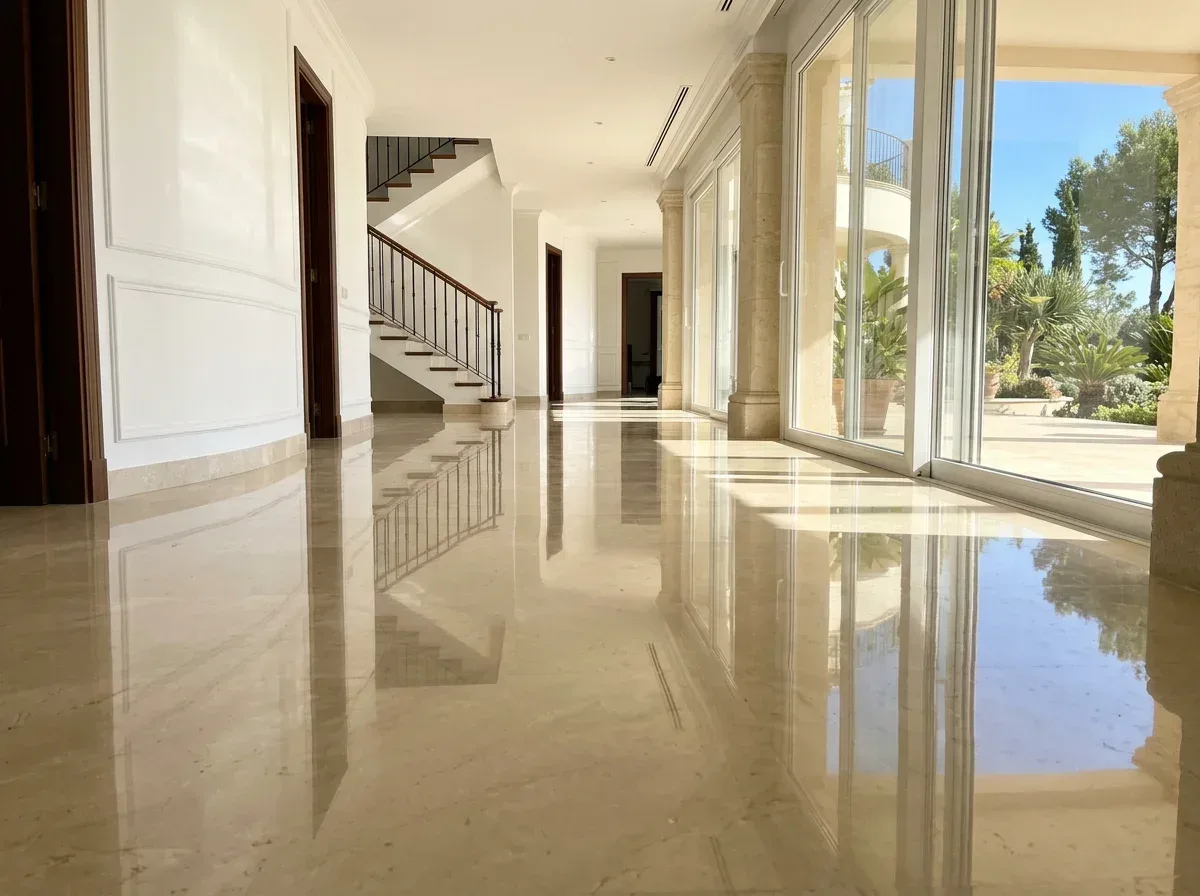
- Angled light check: Looking at the floor at an angle against a window or lamp reveals scratches, dull areas and residues that are not visible when viewed straight on.
- Lippage and scratch honing: If lippage or scratches are seen during the inspection, make sure honing has been carried out and that the slabs are level with each other.
- Condition of the joints: Joints that are clean, filled and free of gaps improve the appearance and keep water and dirt from getting under the slabs.
- Skirting boards and thresholds: The areas along the base of skirting boards and thresholds are places the machine cannot reach; any mortar, paint and silicone residue left there is checked by hand.
- Impregnation and curing: It is verified that the impregnating sealer has been applied and has fully cured; a floor used before curing is not sufficiently protected against stains.
Post-Construction Cleaning in Alanya
For newly delivered villas, residential complexes and hotels in Alanya, we often plan post-construction natural stone cleaning together with the first honing. We first remove dust and heavy residues, then assess the condition of the floor and clearly state whether cleaning is sufficient or honing is needed. When working with contractors, we recommend scheduling floor work at the end of the handover timeline, after the other trades have finished.
Protection

Covering stone floors with breathable protective sheets during construction greatly reduces the work needed afterwards. Moisture can build up under plastic sheeting and cause stains, so the right cover must be chosen.
Our Natural Stone Cleaning Service in Alanya

Instead of acidic and abrasive products, we deep clean natural stone surfaces with pH-neutral products suited to the stone. We also prepare regular maintenance plans for hotels, villas, and housing complex management companies.
We also explain which daily maintenance products and methods are suitable for your stone. Discover our Eco-Friendly Cleaning service.
Natural Stone Cleaning
You can watch one of our team's on-site jobs in the video below.
Deep cleaning is carried out with stone-safe cleaners and a brush machine. Acidic products must never be used on marble or travertine. — Expert Note