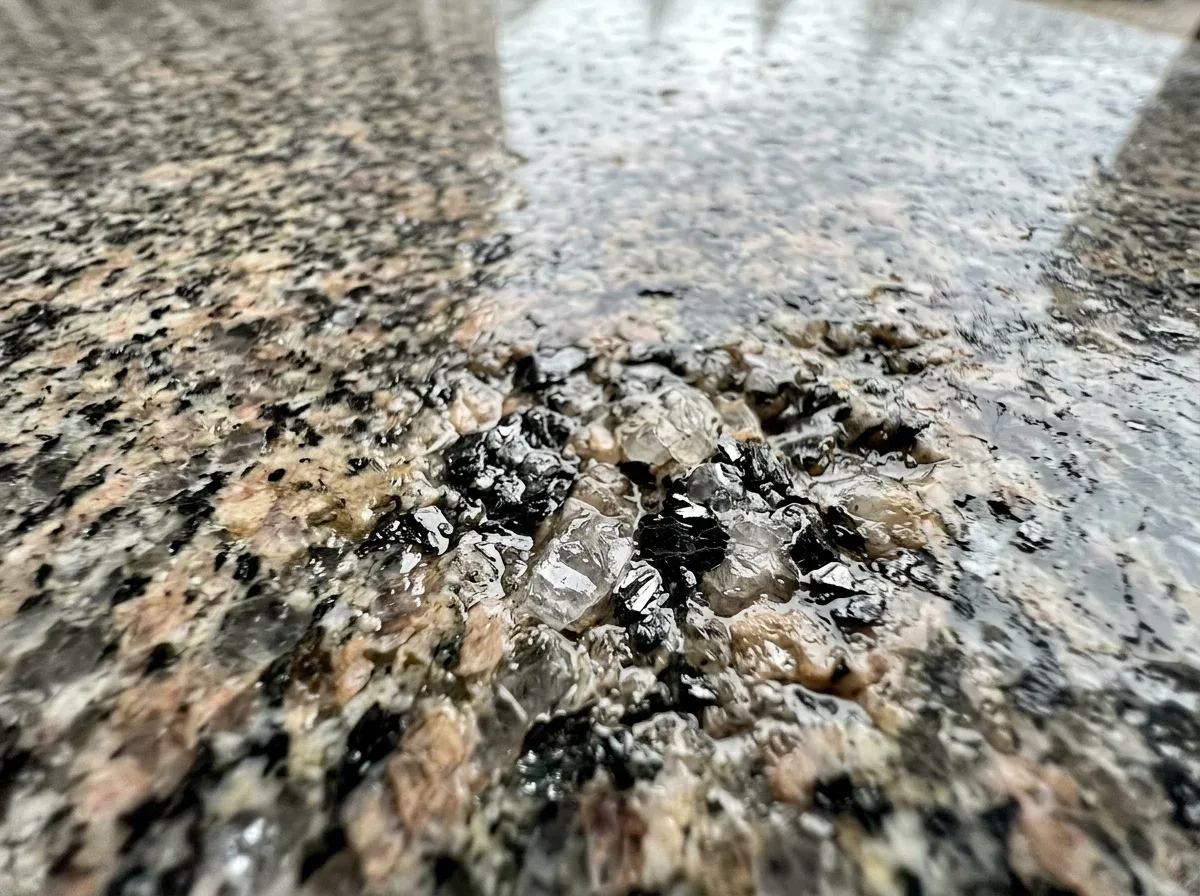
Mortar and Cement Residue on Granite
In short: One of the most common problems on newly laid or renovated granite floors is mortar, cement and grout residue.
It can cover the surface like a thin gray veil or form hardened crusts in drops. Although granite is a hard stone, the wrong method can damage its surface and shine. In this article we explain safe cleaning.
Types of Residue
The residue left on granite after renovation and installation comes from different materials, and each one requires a separate cleaning method.
- Cement haze: A thin, grayish film left on the surface after grouting or mortar work; it makes the stone's color look faded and dulls the shine.
- Hardened drops: Mortar or plaster drops stick to the stone over time and harden; they form small bumps you can feel underfoot and trap dirt.
- Grout residue: Excess that was not wiped off during grouting dries on the edges of the slabs; it leaves cloudy streaks on both sides of the grout line.
- Plaster and gypsum marks: Plaster and gypsum splashed from wall work remain as white stains, especially along skirting boards and at the base of walls.
- Adhesive residue: When ceramic and stone adhesives get on the surface and harden, they bond strongly; unlike cement, they can often only be removed mechanically.

Mechanical Method First
Before resorting to chemicals, thick residue is removed mechanically; this way the stone is cleaned with fewer products and in less time.
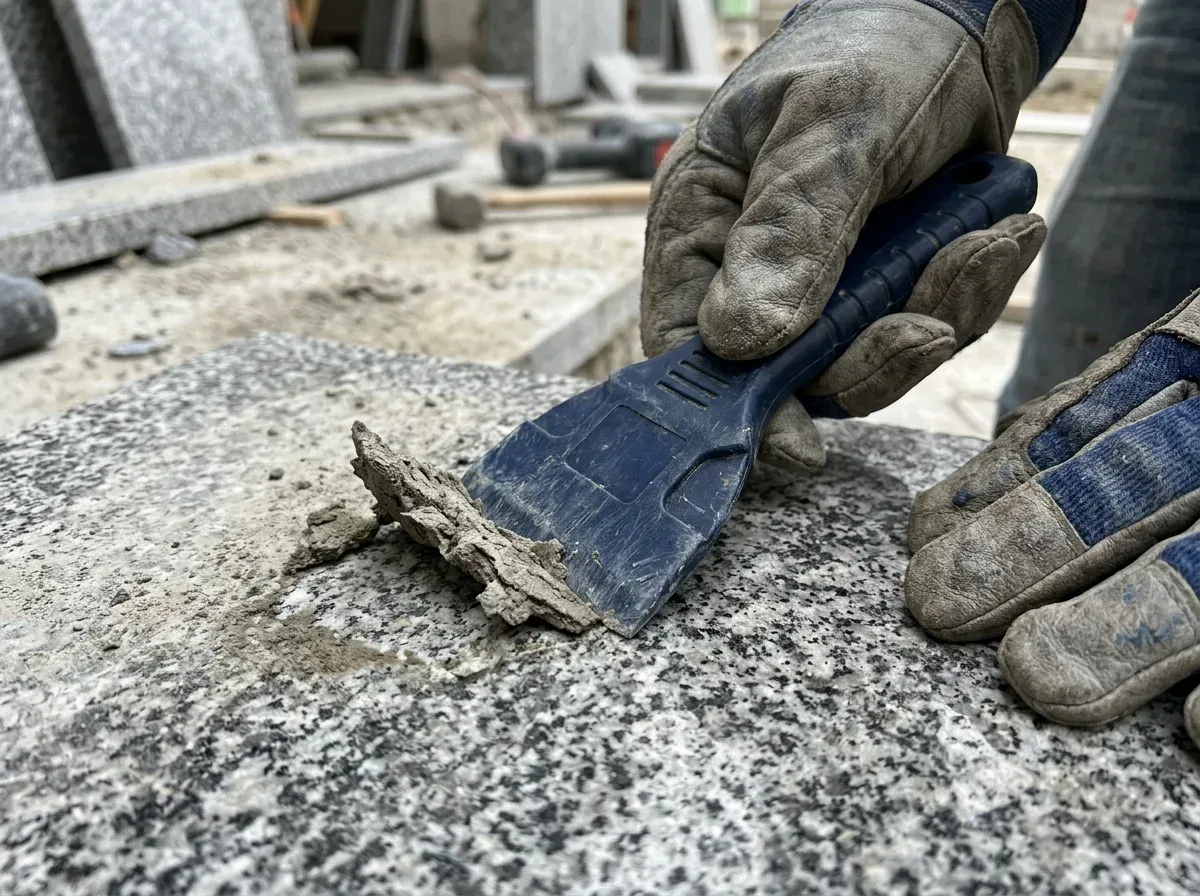
- Plastic spatula and scraper: Thick drops are first removed mechanically with a plastic spatula and scraper; the plastic tip lifts the crust off the surface without scratching the stone.
- Wooden or hard plastic tip: Then a wooden or hard plastic tip is used on edges and corners; residue in narrow spots the spatula cannot reach is cleaned this way.
- Machine with suitable pads: Finally, on large areas, a machine with pads that do not scratch the stone is used; the thin cement haze is loosened evenly across the entire surface.
Using a metal blade may seem faster, but it can leave scratches on polished granite.
Chemical Cleaning
Acid-based cleaners are available on the market for cement residue. Granite is generally more resistant to acid than marble, but:
- Acid-sensitive minerals: Some granites contain acid-sensitive minerals; when these grains come into contact with acid, dull spots or discoloration may appear on the surface.
- Loss of shine: The shine of a polished surface may be affected; a product left on too long or not diluted can cloud the glossy layer.
- Stones mistaken for granite: Some stones thought to be granite are actually marble or limestone; on these stones, an acidic cleaner etches the surface and leaves permanent dull marks.
- Nearby sensitive surfaces: Adjacent marble skirting boards, thresholds or grout lines may be damaged; splashed or running product leaves marks on these calcite surfaces.
Therefore:
- Do a test: First, test in an inconspicuous spot; this shows how the stone reacts to the product before it is applied to the whole floor.
- Dilute according to instructions: The product is diluted according to its instructions; acid used stronger than necessary can affect the stone and the grout along with the cement.
- Leave it briefly and rinse with plenty of water: The product is left on for a short time and rinsed with plenty of water; acid residue left on the surface keeps working and can damage the stone.
- Protect grout and sensitive surfaces: Grout lines and nearby sensitive surfaces are protected with tape or covers; this way the product does not reach marble thresholds and skirting boards.
Finishing
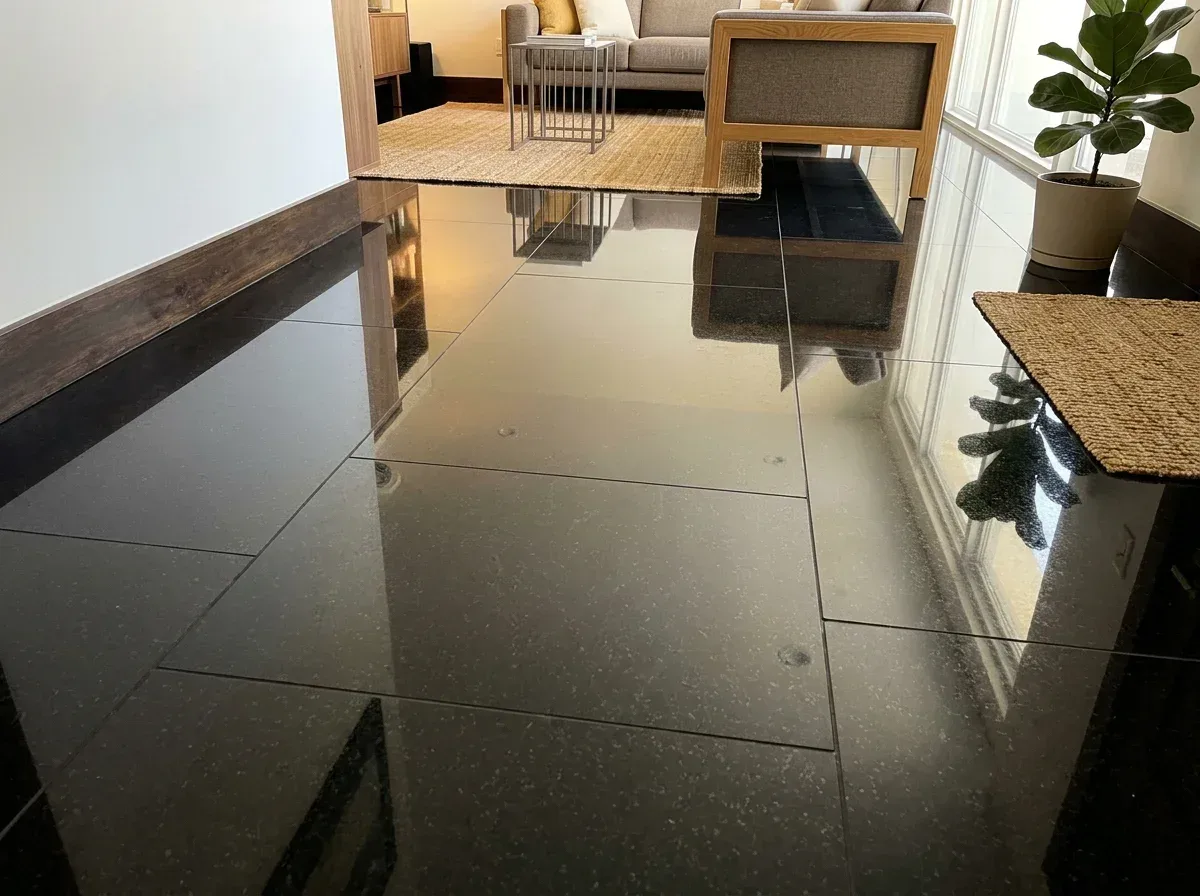
Once the residue is removed, the surface is rinsed with plenty of clean water and dried. The stone is then checked against the light: if dullness or fine scratches remain in some areas after chemical or mechanical cleaning, these areas are polished locally with fine diamond pads suitable for granite. On newly laid floors that also have height differences, the best approach is to do the first grinding after the mortar cleaning. Finally, if needed, a sealer is applied.
Cleaning by Type of Residue
| Residue | First method | If necessary |
|---|---|---|
| Cement haze | Machine with suitable pads, water | Controlled cement cleaner |
| Thick mortar drop | Plastic scraper | Soften and scrape again |
| Excess grout | Wipe while wet, pad if dry | Controlled cleaner |
| Plaster and gypsum | Soaking to soften, scraping | Pad machine |
| Adhesive | Scraping | Remover suited to the product |
The Importance of Early Action
The longer mortar and grout residues sit, the harder they set and the more difficult they become to clean. Fresh excess grout can be wiped off easily with a damp sponge, while cement haze that has sat for weeks requires a machine and products. That is why having the tradesmen clean the stone right away during grout and mortar work makes the final cleaning much easier. In homes under renovation, the stone floor should be covered with a rigid protective cover from the start.
Is It Granite or Not?
Before moving on to an acidic cement cleaner, making sure the stone is really granite prevents permanent marks.
- Find out the type of stone: Check the stone type with the seller or the invoice; some stones sold commercially as granite may react differently to acid.
- A small acid test: If you are not sure, test a very small amount of the acidic product in a hidden corner; if it fizzes or turns dull, the stone is calcite-based.
- No acid on calcite stones: Do not use acidic cement cleaner on calcite-based stones (marble, travertine, limestone); the product dissolves the surface and leaves dull, rough marks.
- Tape off marble thresholds: Protect adjacent marble thresholds and skirting boards with tape; a product that causes no problem on granite can leave permanent marks on these surfaces.
Post-Construction Granite Cleaning in Alanya
In newly handed-over residential complexes and villas in Alanya, cement haze and mortar drops on granite floors, stairs and kitchen countertops are among the problems we encounter most often. We first remove thick residues with mechanical methods, then clean the haze with controlled products that we test beforehand, and if necessary we finish the surface with spot polishing or an initial honing. We always protect nearby marble surfaces.
Mistakes to Avoid

- Using wire brushes and metal scrapers,
- Pouring concentrated acid directly onto the surface,
- Letting the acid dry on the surface,
- Using acid without being sure of the type of stone,
- Leaving residue in place for months (it becomes harder to remove as it hardens).
Our Granite Grinding and Polishing Service in Alanya

Granite is a hard stone, and its shine is restored not with polish but by honing with the right diamond grit stages. We re-polish dulled interior granite and clean exterior surfaces and steps while preserving their slip-resistant finish.
We determine on site which treatment your granite floor needs, based on its condition. Explore our Granite Grinding and Polishing service.
If any dullness remains on the surface after the residues are removed, it is eliminated by polishing. Then, if necessary, impregnation is applied. — Expert Note