Common Mistakes in Granite Floor Care
In short: Because granite is a durable stone, people often think "anything will do."
In reality, most of the dullness, stains and slipperiness we see on granite floors come not from the stone itself but from wrong maintenance habits. In this article, we list the mistakes we encounter most often and their correct alternatives.
1. "More Detergent, Cleaner Floor"
If excess detergent is not rinsed off, it leaves a thin film on the surface. Over time this film traps dirt and makes the floor look sticky and dull. When homeowners see the dullness, they use even more detergent, and the problem grows.
The right way: Follow the ratio on the label. A pH-neutral stone cleaner is enough. Rinse with clean water from time to time.
2. Oily and Silicone-Based "Polishes"
Some of the "polish" products on supermarket shelves form an oily or silicone-based layer on the surface. They look shiny on the first day, but over time:
- It traps dirt and darkens: The oily or silicone-based layer creates a sticky surface; dirt brought in on shoes clings to this layer and the floor darkens over time.
- Patchy wear: The layer wears away along walking paths but remains at the edges; the floor ends up with a patchy look where shiny and dull areas are mixed.
- Increased slipperiness: The silicone-based and oily film reduces the grip of shoe soles on the stone; the floor becomes much more slippery, especially when wet.

The right way: The shine of granite comes from its own surface. If the shine has been lost, the solution is not a film but polishing.
3. "Natural" Cleaning with Vinegar and Descaler
Most granite is not affected by acid as much as marble. However:
- Acid-sensitive minerals: Some granites contain acid-sensitive minerals; vinegar and descaler can leave dull spots or discoloration on these grains.
- Degraded protective treatments: Impregnators and sealers can be broken down by acid; once its protection weakens, the stone starts absorbing oil and water again.
- Damaged grout joints: Grout joints are damaged by acid; cement-based grout wears away and empties out, and dirt and water collect between the slabs.
The right way: Do not use acid for routine cleaning. For heavy limescale buildup, choose a product suitable for stone.
4. Bleach and Harsh Chemicals
Chlorine and strongly alkaline products can affect grout joints and the surface of some granites with regular use; they weaken the impregnation.
The right way: Even in areas that require hygiene, disinfectants suitable for stone and correct dilution should be used.
5. Removing Sand and Dust by Wet Wiping
Wet mopping without sweeping first drags sand across the floor like sandpaper. Even though granite is hard, this eventually causes dulling along walking paths.
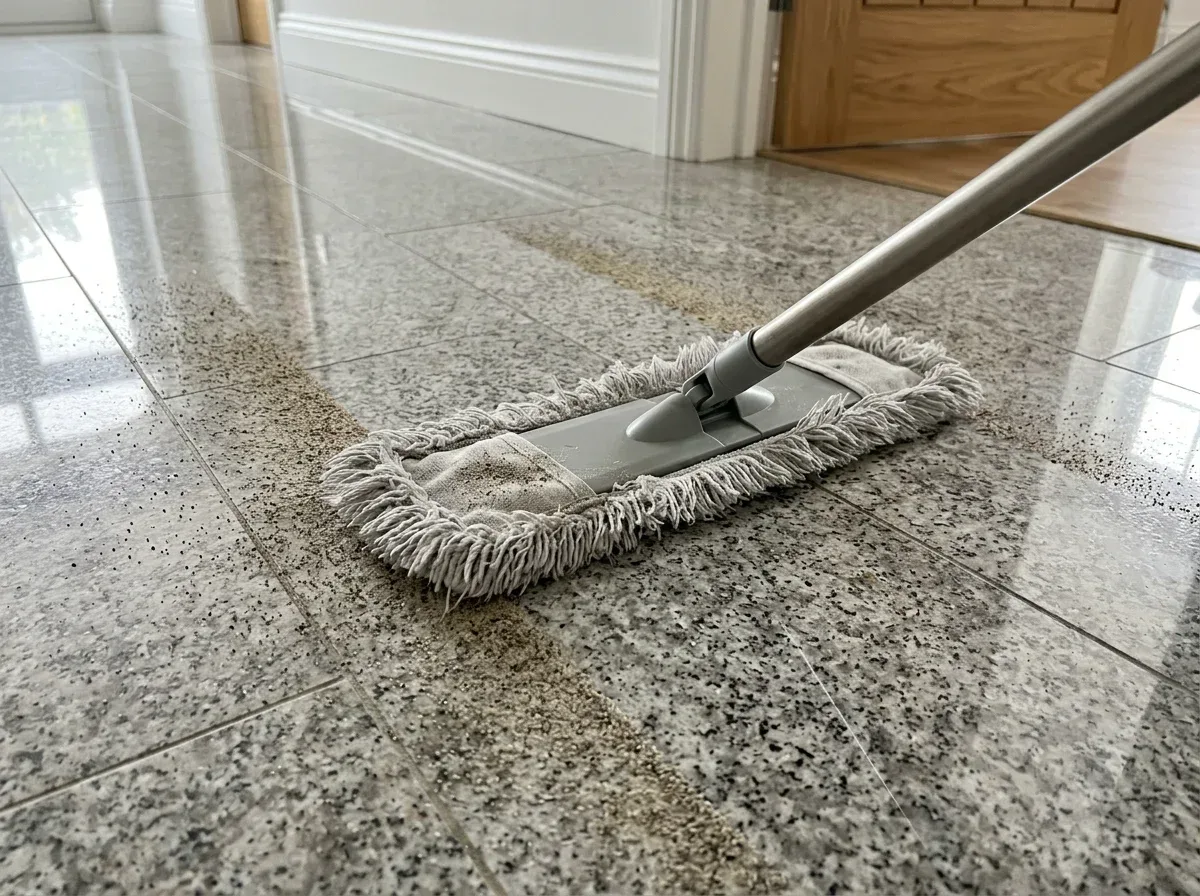
The right way: First remove dust and sand with a dry mop or broom, then do the damp cleaning.
6. Leaving the Mop Too Wet
Cleaning with plenty of water causes the grout joints to absorb water and, once dry, leads to limescale marks.
The right way: Wring the mop out well; wipe the floor damp instead of soaking it.
7. Abrasive Sponges and Wire Brushes
Hard sponges and steel scouring pads used in the kitchen for "burn marks" or "stubborn stains" scratch the shiny surface of granite over time and dull it.
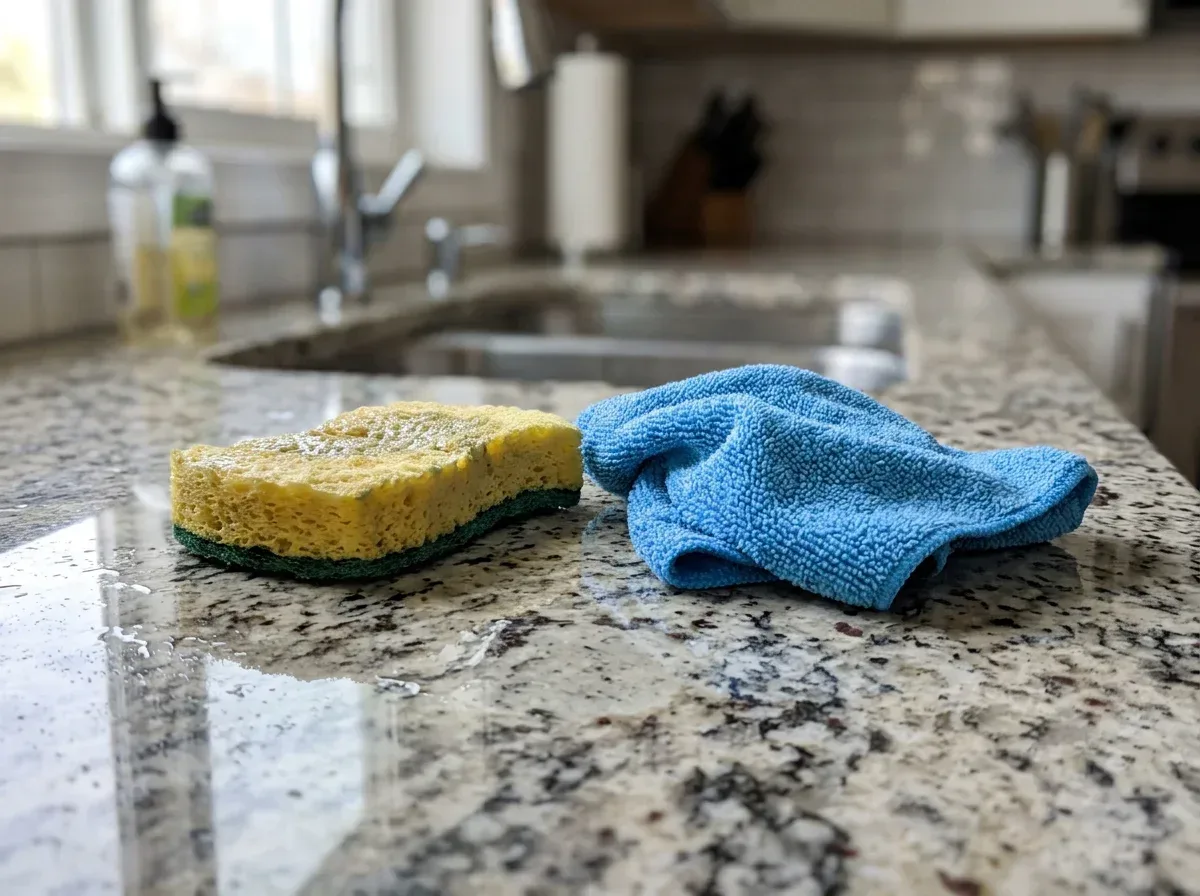
The right way: Soft sponge and microfiber cloth. Stone-safe products for stubborn stains.
8. Constant Cleaning with a Steam Machine
Hot steam can weaken the impregnation and damage some grout joints. When used too frequently, darkening may also be seen on light-colored granites.
The right way: Unless steam is necessary, do not choose it for routine cleaning.
9. Thinking of Impregnation as a "One-Time" Job
Impregnation is not permanent; it weakens depending on cleaning and use. Assuming that an impregnation applied years ago still works can result in stains.
The right way: Check regularly with a drop test and renew when necessary.
10. Blaming the Stone for Dullness
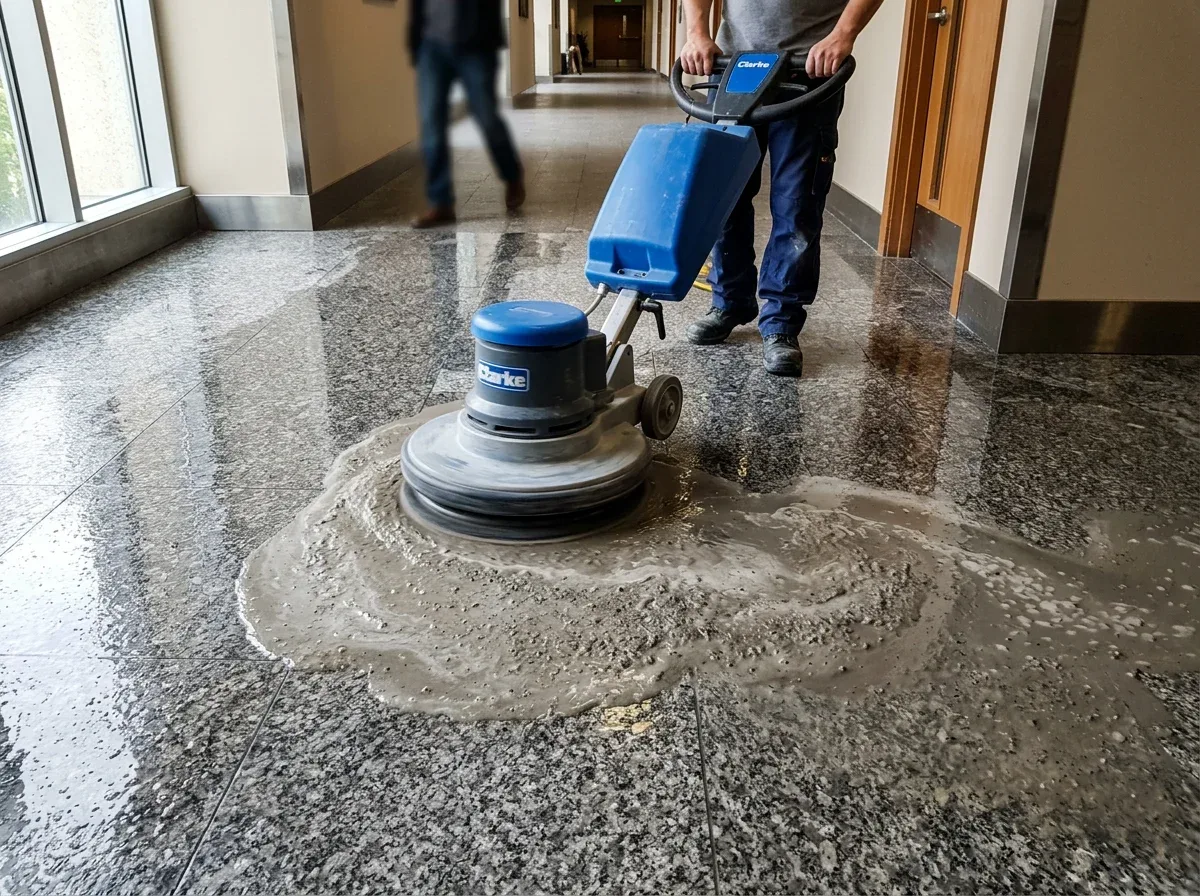
On many granite floors, the "dullness" is not wear of the stone but a layer of detergent, polish and dirt built up on the surface. In this case, deep cleaning and residue removal may be enough instead of honing and polishing.
The right way: Before deciding on honing and polishing, you should try whether the residue on the surface can be cleaned off.
Wrong vs. Right at a Glance
| Wrong habit | Result | The right way |
|---|---|---|
| Too much detergent | Sticky, dull film | The ratio on the label, occasional rinsing |
| Polish products | A layer that traps dirt and is slippery | Mechanical polishing if necessary |
| Vinegar, descaler | Deteriorated sealer and grout | pH-neutral cleaner |
| Wet-wiping first | Scratching from sand | Dry mop first |
| Overly wet mopping | Moisture and limescale marks in the grout | Well-wrung, damp mop |
| Wire and hard sponges | Scratches, dullness | Microfiber and soft sponge |
| Forgetting the sealer | Surface that holds stains | Regular checks with the drop test |
Quick Instructions for Cleaning Staff
In residential complexes, hotels and workplaces, the condition of granite is most often determined by the habits of the cleaning team. As teams change, products and methods can change too. A short written instruction keeps a granite floor looking the same for years:
- Remove sand first: Before every cleaning, sand is removed with a dry mop or broom; a wet mop drags sand across the floor and scratches the surface.
- Designated pH-neutral cleaner: Only the designated pH-neutral stone cleaner is used, at the ratio given on the label; too much product leaves a dull, sticky film on the surface.
- No acidic, chlorinated or polishing products: Acidic, chlorinated and polishing products are not used on granite floors; they damage the sealer, erode the grout or leave a film on the surface.
- Soft pads only: Only soft pads (white or red) are fitted to the machine; abrasive pads are not used because they scratch and dull the polished surface.
- Wring the mop well: The mop is wrung out well and the floor is not left wet; entrances are dry-mopped several times a day to prevent limescale marks and sand buildup.
- Wipe up spills immediately: Spilled oil, coffee and similar liquids are wiped up at once with an absorbent cloth; liquid left standing soaks into the pores of light-colored granite and leaves a stain.
Granite Care in Alanya
In Alanya, granite floors are usually found in heavily used common areas: residential complex entrances, elevator lobbies, hotel lobbies and restaurants. Beach sand, the salt carried by the sea air and traffic that never lets up during the season accelerate the effects of poor care habits. In a significant share of the granite floors we see, the problem is not the stone itself but product residue that has built up over the years. With deep cleaning and residue removal, the floor can often be restored without any need for honing; it is then protected for a long time with the right maintenance routine.
The Right Daily Routine

- Remove dust and grit with a dry mop.
- Mix a pH-neutral stone cleaner into water at the correct ratio.
- Damp-mop with a well-wrung mop.
- Rinse with clean water if necessary.
- Dry any areas that remain wet.
Our Granite Grinding and Polishing Service in Alanya

Granite is a hard stone, and its shine is restored not with polish but by honing with the right diamond grits. We re-polish dulled indoor granite, and we clean outdoor surfaces and steps while preserving their non-slip finish.
We determine on site which treatment your granite floor needs, based on its condition. Explore our Granite Grinding and Polishing service.
Most of the dullness we see on granite floors is not a problem with the stone itself, but with the products that have been applied to it over the years. Before deciding on honing, deep cleaning the floor to remove that residue often reveals a surprising shine.