Why Travertine Floors Wear Down and Lose Their Shine
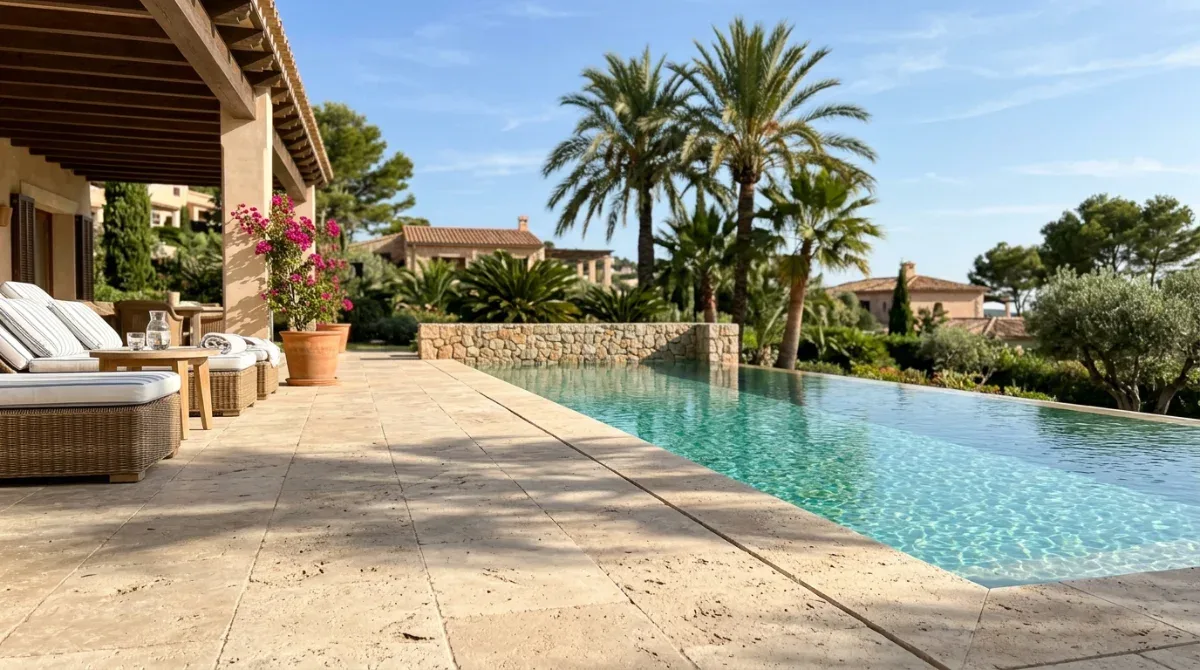
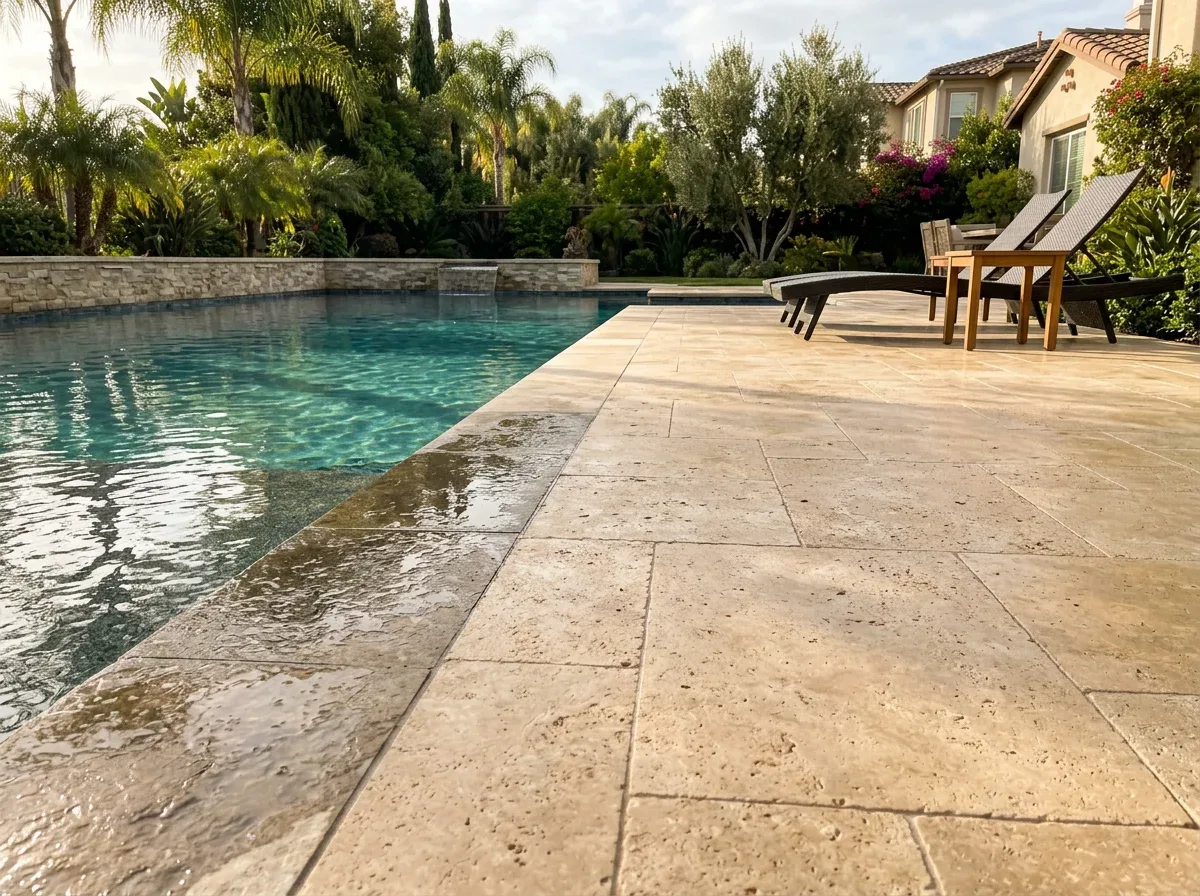
In short: With its warm tones and natural texture, travertine is one of the most popular stones for villas, hotels and holiday homes in Alanya.
However, its voids and calcite content make it more sensitive than marble to wear and dulling. In this article, we explain why travertine wears down and how it is restored.
The Structure of Travertine
Travertine forms when spring water rich in calcium carbonate rises to the surface and precipitates. During this precipitation, water, gas bubbles and plant remains leave voids inside the stone. These voids are what give travertine its character.
In commercial travertines, these voids are usually filled at the factory with a resin- or cement-based filler, and the surface is then processed. Unfilled travertines, on the other hand, offer a more natural, rustic look.
Causes of Dulling and Wear
Calcite Structure
Like marble, travertine is made of calcite. Therefore:
- Easily scratched by sand and dust: Because calcite is softer than hard grains of sand, sand carried in on shoes creates fine scratches on the surface, and the shine gradually fades.
- Chemical etching by acids: Acidic cleaners, lemon, vinegar and some beverages react with calcite; wherever they touch, they leave dull rings and rough stains.
- Rapid dulling of the polish: Under heavy use, a polished surface dulls quickly, especially at entrances and along walking paths; a clear difference appears between glossy and dull areas.
Filler Failure
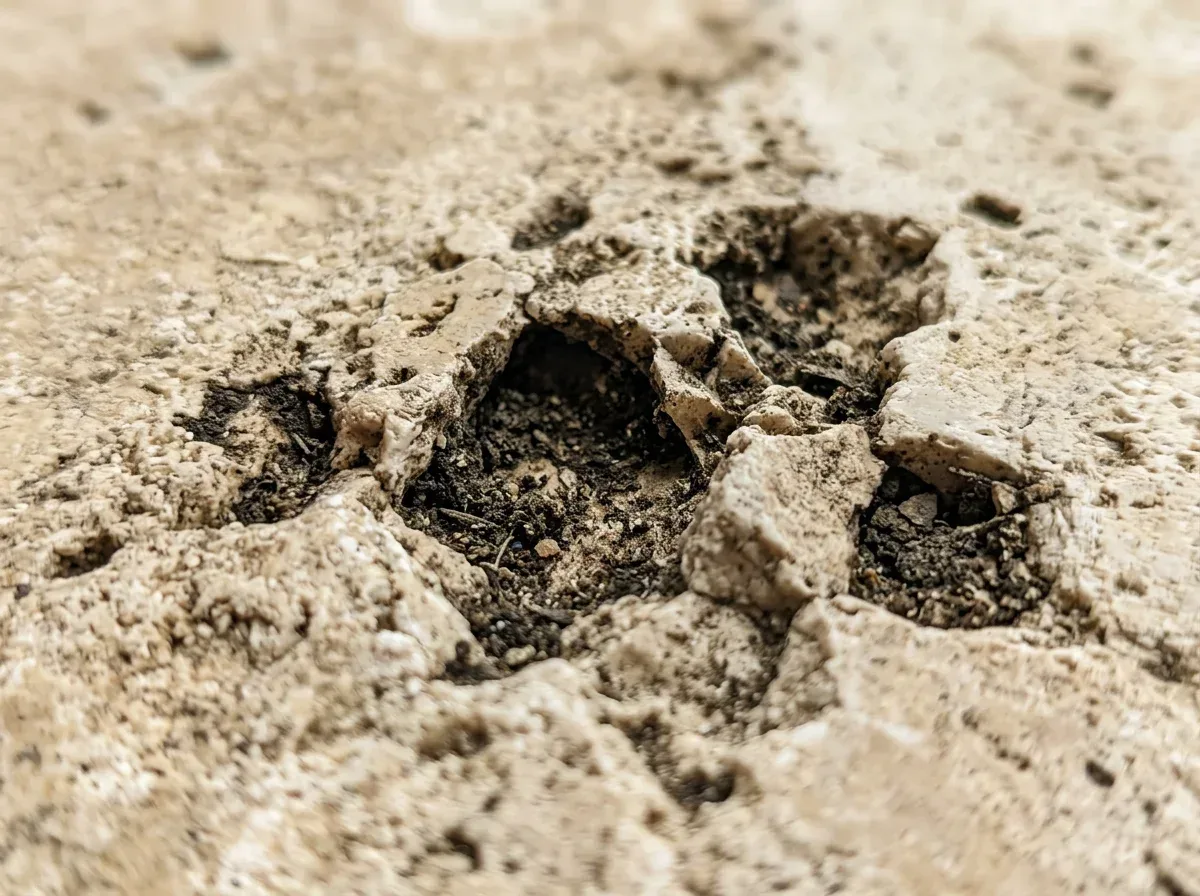
Factory fillers wear away over time, crack or come out completely. The voids that open up on the surface lead to the following:
- Buildup of dirt and detergent: Areas where the filler has come out collect dirt, dust and detergent; since the mop cannot reach inside these voids, the buildup grows with every cleaning.
- Darkened, spotted appearance: Small voids filled with dirt darken over time and give the floor a darkened, spotted look; the stone looks dirty even when it is clean.
- Footholds that chip the edges: Open voids become footholds for high-heeled shoes and chair legs; these impacts chip the edge of the void and enlarge the hole.
New Pores Opening on the Surface
As the floor wears down, closed voids just beneath the surface open up. For this reason, the number of pores seems to have increased in aged travertine.
Dirt and Water Absorption
Travertine is more porous than marble. Dirty water, detergent and oil penetrate the stone and darken its color over time.
Outdoor Effects
Travertine around pools, on terraces and in gardens is exposed to sun, chlorine, salt water and rain. In these areas, limescale buildup, algae and surface erosion progress faster.
Why Does Travertine Wear Faster in Alanya?
In Alanya, travertine floors are exposed to harsher conditions than in inland regions because of the climate and the way they are used.
- Beach sand: Sand carried from the beach into the home is the most effective abrasive; as it is rubbed under shoes and feet, it scratches and dulls the calcite surface.
- Heavy summer use: Rental holiday homes and hotels host many guests in a short time; the floor can wear down in a few months as if it had been used for years.
- Pool water: Chlorine and pool chemicals affect the stone surface; when splashed water dries around the pool, it leaves dull areas and limescale marks on the surface.
- Humidity and salt: Sea air can cause salt buildup in outdoor stones; salt crystallizing in the pores strains the surface from within and erodes it.

How Is Restoration Done?
1. Deep Cleaning
Dirt that has accumulated in the pores and fillers is removed. This step reveals the true color of the stone.
2. Pore and Void Filling
After cleaning, open pores, emptied old fillers and chipped edges become clearly visible. Loose old filler is removed, and the voids are filled with filler material tinted to match the tone of the stone. Resin is generally preferred indoors and in wet areas, while cement-based or UV-resistant fillers are preferred outdoors in direct sun. Once the filler has hardened, grinding is carried out so that the filler and the stone remain on the same plane.
3. Grinding
If there are level differences and deep wear, work starts with coarse grits; if there is only dulling, it starts with medium grits. The filler and the stone are brought to the same level.
4. Surface Selection
After grinding, the surface finish is chosen according to where the travertine will be used and the need for slip resistance.
- Polished or honed indoors: A polished or honed surface is preferred indoors; a polished surface reflects light, while a honed surface shows fewer scratches and marks.
- Textured in wet areas and outdoors: A honed, brushed or antiqued surface is preferred in wet areas and outdoors; these surfaces reduce slipping when wet and hide wear.
5. Impregnation
Because travertine has open pores after grinding, impregnation is very important. It reduces water and stain absorption and makes cleaning easier.
Signs of Wear and What They Mean
| Sign | What does it indicate? | Solution |
|---|---|---|
| Dullness along walking paths | Polished surface worn down by sand | Medium-grit honing |
| Black spots, dirty appearance | Emptied filler, pores clogged with dirt | Cleaning + filling + honing |
| Chipped pore edges | Impact on open voids | Filling and surface correction |
| Overall darkening | Dirt embedded in unprotected stone | Deep cleaning, impregnation |
| White crust, roughness | Effect of limescale or acid | Honing, proper cleaning routine |
Daily Habits That Slow Down Wear
How quickly travertine wears depends largely on how well sand, acid, and impacts are kept away from it during daily use.
- Place mats at entrances: Place mats at entrances, terraces, and pool exits; sand is travertine's worst enemy, and a mat keeps it at the door.
- Dust with a dry mop: Dust regularly with a dry mop; if you don't pick up the sand before wet mopping, the mop drags it across the floor and scratches the surface.
- Use a pH-neutral cleaner: Use a pH-neutral cleaner suitable for natural stone; vinegar, lemon, and limescale removers dissolve the calcite surface and dull it.
- Put felt pads on furniture legs: Put felt pads on chair and table legs; open pore edges chip easily on impact, and friction leaves scratches.
- Have opened pores filled: Have occasional opened pores filled without delay; an open void widens over time and weakens the filler around it as well.
- Check the impregnation: Check the impregnation with a drop test once or twice a year; if water is absorbed quickly, the protection has diminished and needs to be renewed.
Should Travertine Be Removed or Restored?
A worn, darkened travertine floor with opened pores gives the impression at first glance that it is "simply old now." However, if the stone itself is sound and the slabs are firmly set, cleaning, filling, honing, and impregnation can bring the floor back to nearly its original appearance. Removal should only be considered when most of the slabs are broken or have come loose, or when the subfloor needs to be addressed. In Alanya, many of the thick, high-quality travertines laid in older holiday homes and villas are more durable than the new stones sold today; restoring them is often the best choice.
Slowing Down Wear

- Use doormats at entrances, especially for when people return from the beach.
- Clean with pH-neutral detergents.
- Avoid acidic limescale removers.
- Rinse regularly with clean water around the pool.
- Check the impregnation sealer and reapply it when necessary.
Our Travertine Grinding Service in Alanya

We grind travertine floors whose pores have opened up or that have darkened or worn, and seal the voids with color-matched filler. In outdoor areas such as pool surrounds, terraces and gardens, we apply honed or brushed finishes that prioritize slip resistance over shine.
After grinding, we also recommend a suitable impregnating sealer to protect the travertine against stains. Explore our Travertine Grinding service.
Watch the Application on Video
Footage from a surface restoration job we carried out on a worn travertine floor.
The opened pores are filled with filler materials that match the tone of the stone. Once the filler has fully hardened, any excess is removed by honing. — Expert Note