Polished, Honed, Brushed Travertine: Which Finish Is Used Where?
In short: The same travertine looks and behaves very differently depending on its surface finish.
A polished travertine is eye-catching in a living room but can be dangerous at a pool edge. In this article, we explain the types of travertine surface finishes, where each one is suitable, and how the surface of an existing floor can be changed through honing and grinding.
Surface Types
Polished
The stone is polished through fine grit stages; it reflects light and makes colors look deeper.
- Appearance: A glossy, elegant surface with vivid colors; because it reflects light, the veining and tones of the stone look deeper.
- Slip resistance: Low when wet; the smooth, glossy surface easily becomes slippery with wet feet or spilled water.
- Maintenance: Scratches and acid marks are noticed more easily; even a small dull spot stands out against the light on a glossy floor.
- Suitable areas: Used in dry interior spaces such as living rooms, bedrooms and hallways, where the risk of slipping is low and appearance is the priority.
Honed (Matte)
The stone is finished at medium grit stages; it is smooth but not glossy.
- Appearance: A calm, natural and silky matte surface; because it does not reflect light, it shows the color of the stone in a soft and balanced way.
- Slip resistance: Better than polished; with the gloss removed, the surface gives feet better grip when wet.
- Maintenance: Scratches and light wear are less noticeable; on a matte surface, signs of use do not create a distinct mark against the light.
- Suitable areas: Suitable for kitchens, bathrooms, interior stairs and heavily used areas; it is both safer and a lower-maintenance option.
Brushed
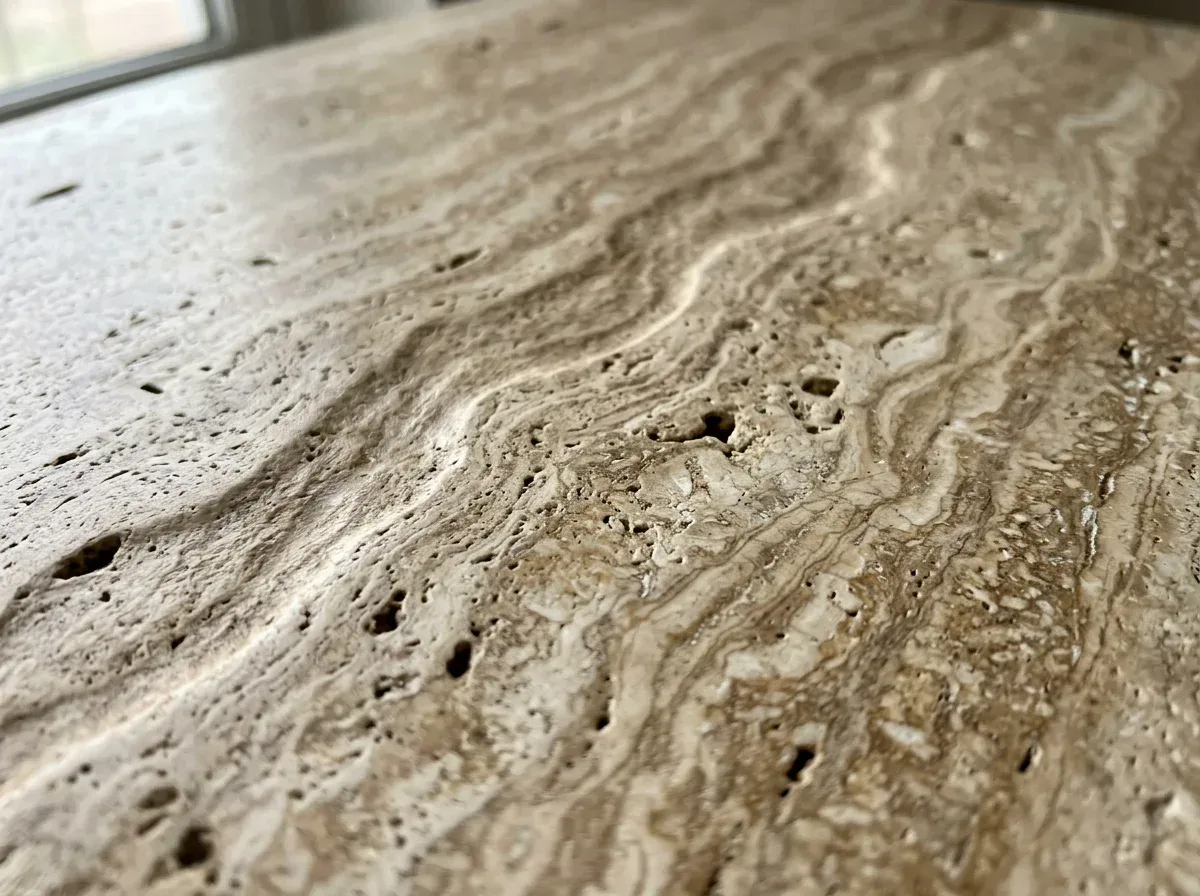
The surface is worked with hard brushes to gain a soft, undulating finish; the natural texture of the stone comes to the fore.
- Appearance: It has a lightly textured, near-antique and warm look; brushing brings out the natural veins and pores of the stone.
- Slip resistance: Good; the slightly wavy texture on the surface provides grip when stepped on with wet feet.
- Maintenance: Because of its texture, it may hold dirt a little more, but it hides wear; regular brush washing prevents dirt from building up.
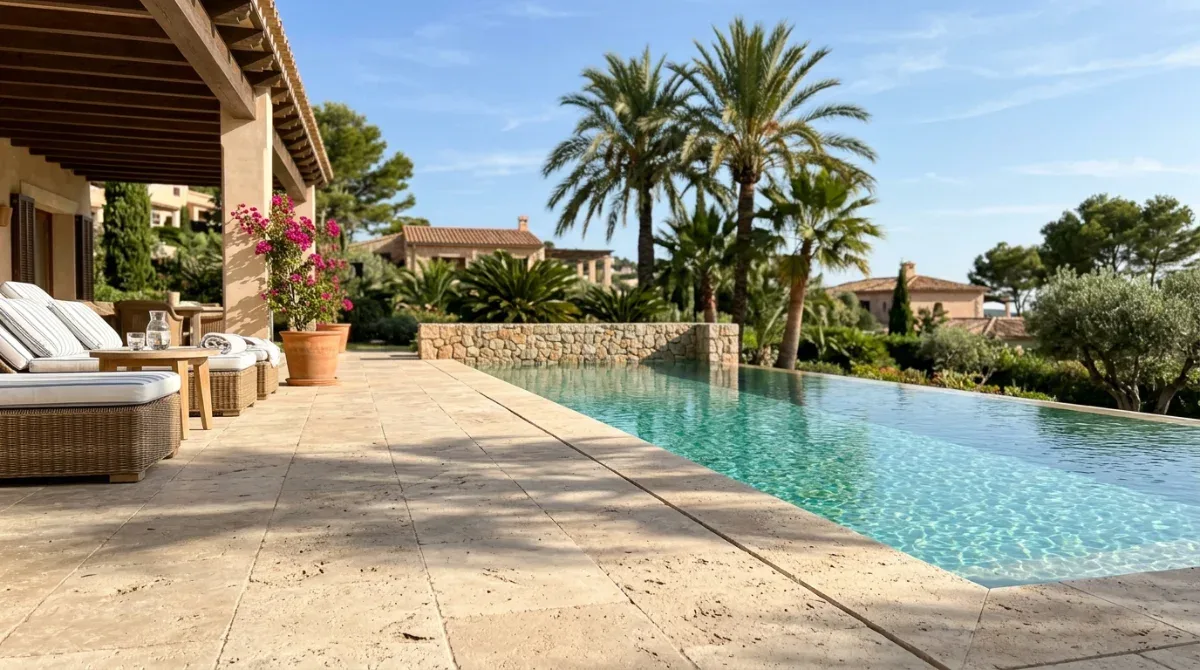
- Suitable areas: Used on terraces, pool edges, exterior stairs and country-house-style interiors; suits places with heavy exposure to moisture and the elements.
Tumbled / Antique
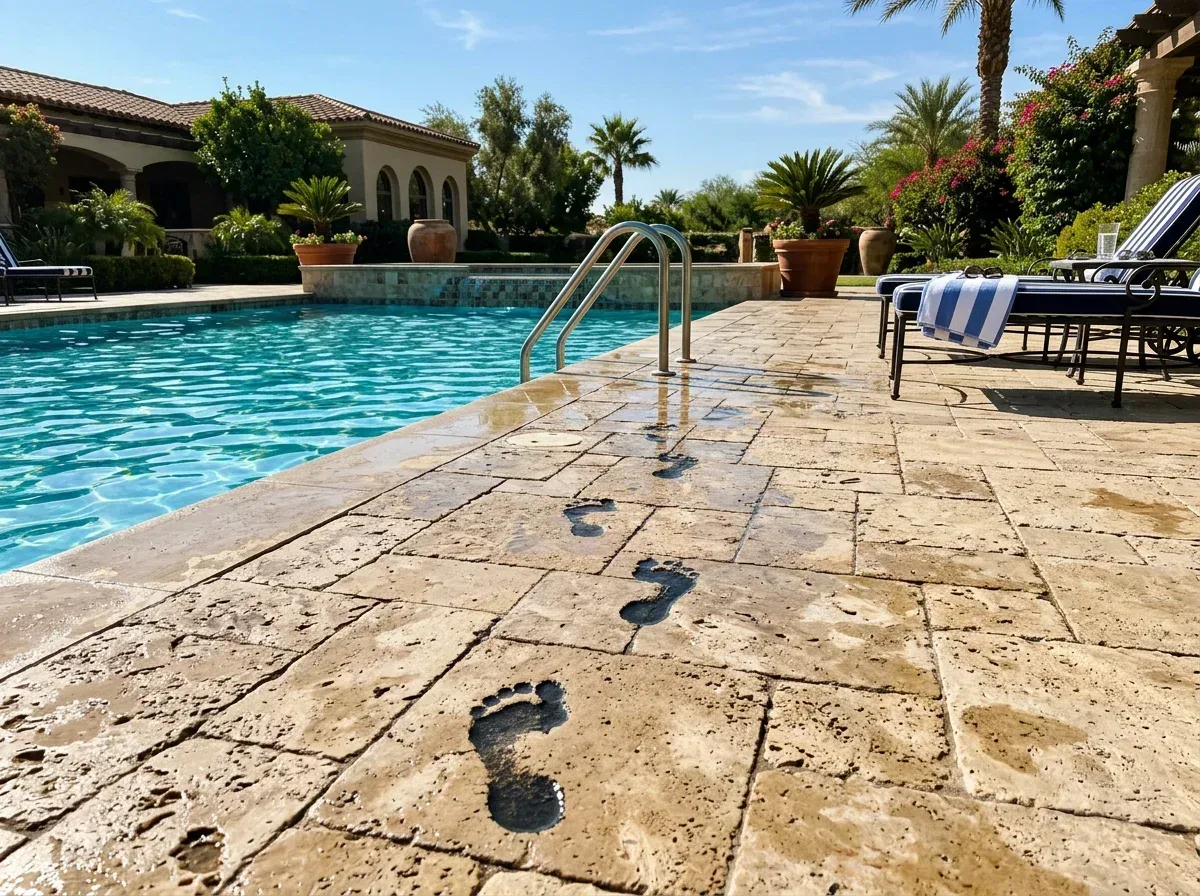
The stone is processed so that its edges are rounded and its surface looks worn.
- Appearance: It gives a rustic look reminiscent of a historic building; the rounded edges and worn surface add an old, natural feel to the stone.
- Slip resistance: Good; the uneven, textured surface largely prevents feet from slipping even when wet.
- Maintenance: Because of its texture, dirt and stains are less visible; however, dirt accumulates in open joints and pores, so these spots need attention.
- Suitable areas: Used in gardens, courtyards, pool surrounds and country houses; its natural look harmonizes with outdoor spaces and rustic architecture.
Filled and Unfilled Travertine
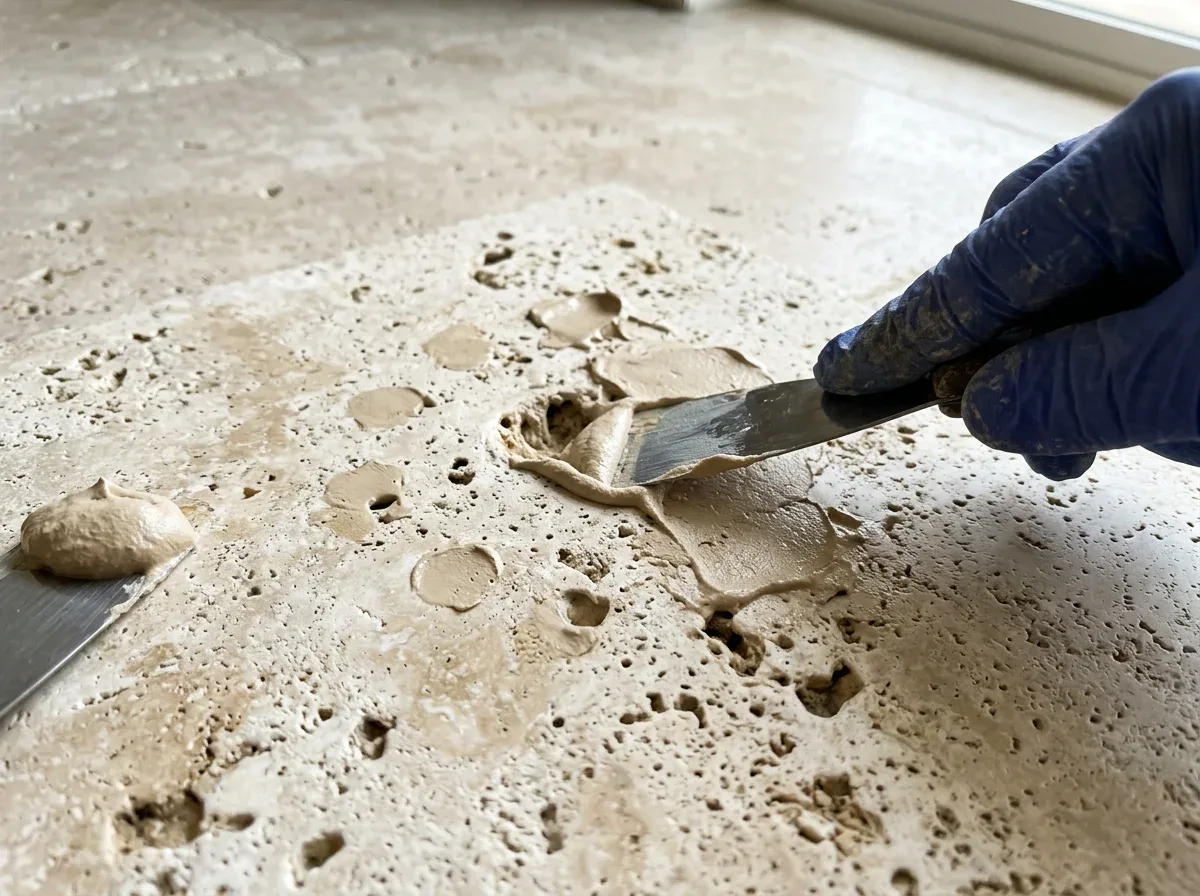
Regardless of the surface finish, travertine is also divided into two types depending on whether its pores are filled. In filled travertine,the voids are sealed at the factory with a resin- or cement-based filler; the surface is smoother and easier to clean. Polished and honed travertines are almost always filled. Unfilled travertine is used with its voids left open; it looks more natural and rustic and is preferred especially for tumbled finishes and in gardens. Because unfilled travertine traps dirt and sand indoors, it requires maintenance; in wet areas, water and soap residue can build up in the voids. During honing, an unfilled travertine can be filled if desired.
Which Surface for Which Area?
| Area | Recommended finish | Note |
|---|---|---|
| Living room, bedroom | Polished or honed | Depends on taste |
| Kitchen | Honed | Scratches and stains are less visible |
| Bathroom floor | Honed or brushed | Slip resistance is important in wet areas |
| Inside the shower | Brushed or honed | Slip resistance is the priority |
| Interior stairs | Honed | Slip resistance on the stair nosings |
| Terrace and balcony | Brushed or tumbled | Rain and sun |
| Poolside | Brushed or tumbled | Wet feet, chlorine |
| Garden path | Antiqued or brushed | Soil and leaves |
Can the Surface of an Existing Floor Be Changed?
Yes. With grinding and polishing, you can switch between surface finishes:
- From polished to honed: The gloss is removed using medium grits; this is a common procedure for slippery bathrooms and stairs, making the floor safer without tearing it out.
- From honed to polished: Finer grits and polishing are added; the matte floor gains the glossy, vivid look desired in dry indoor areas.
- From polished or honed to brushed: Texture is added to the surface with brushing machines and suitable brushes; this gives a more slip-resistant surface, especially outdoors.
- Polishing an antiqued surface: It is possible, but the antiqued texture is largely lost; since the rustic character of the stone disappears, it is often not recommended.

Testing on a small area before changing the surface shows whether the result meets your expectations.
Maintenance Differences by Surface
| Surface | Daily maintenance | Need for renewal |
|---|---|---|
| Polished | Sand control is critical; keep away from acid | Gloss needs refreshing more often |
| Honed | Impregnation is important against stains | Wear is noticed late |
| Brushed | Brushed cleaning for dirt that builds up in the texture | Infrequent; cleaning and impregnation are enough |
| Antiqued | Check joints and pores | Renew filling and impregnation |
Practical Choices for Homes in Alanya
In Alanya, travertine is most often used on terraces, poolsides, garden paths and the interior floors of villas. Our recommendation is usually as follows:
- Poolside and terrace: Brushed or antiqued; a surface that is safe with wet feet, does not get too hot in the sun and hides sand wear.
- Living rooms and rooms inside villas: A honed or polished surface is suitable; in homes with a lot of beach sand, a honed surface requires less maintenance.
- Bathroom and shower: A honed or brushed surface is chosen and must be protected with impregnation; this both reduces the risk of slipping and keeps the stone from absorbing water and soap stains.
- Stairs: Treads are left honed for safety; risers, which are not stepped on, can be polished for appearance if desired.
A poolside or bathroom that was laid polished years ago and is slippery today can be made safe by brushing or honing it without removing it. You can watch a polishing job we did on a travertine surface in the video.
Things to Consider When Choosing

- Slip resistance first: In wet areas, choose safety over shine.
- Appearance and style: For modern buildings, polished and honed finishes are preferred; for Mediterranean and rustic styles, brushed and antiqued finishes are preferred.
- Maintenance expectations: A polished surface requires the most maintenance.
- Usage intensity: For holiday rentals and hotels, a honed surface looks less worn.
Our Travertine Grinding Service in Alanya

We grind travertine floors that have open pores, have darkened or have worn down, and seal the voids with color-matched filler. For outdoor areas such as pool surrounds, terraces and gardens, we apply honed or brushed finishes that prioritize slip resistance over shine.
After grinding, we also recommend a suitable impregnating sealer to protect the travertine against stains. Explore our Travertine Grinding service.
Travertine Surface Polishing
Images from our team's surface polishing work on interior travertine.
Regardless of the surface finish, whether the pores are filled or not also matters. Filled travertine is generally used indoors; unfilled travertine looks more natural outdoors, but it collects dirt. — Expert Note