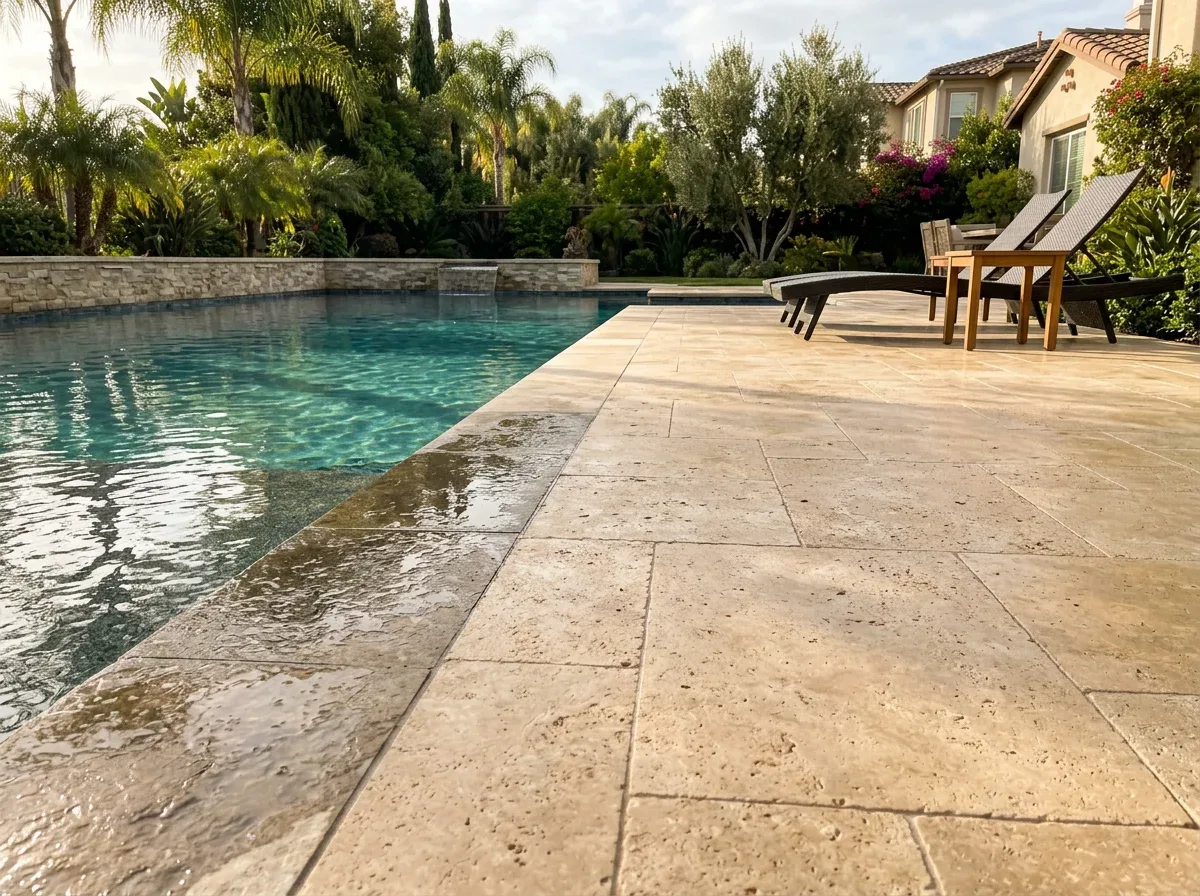
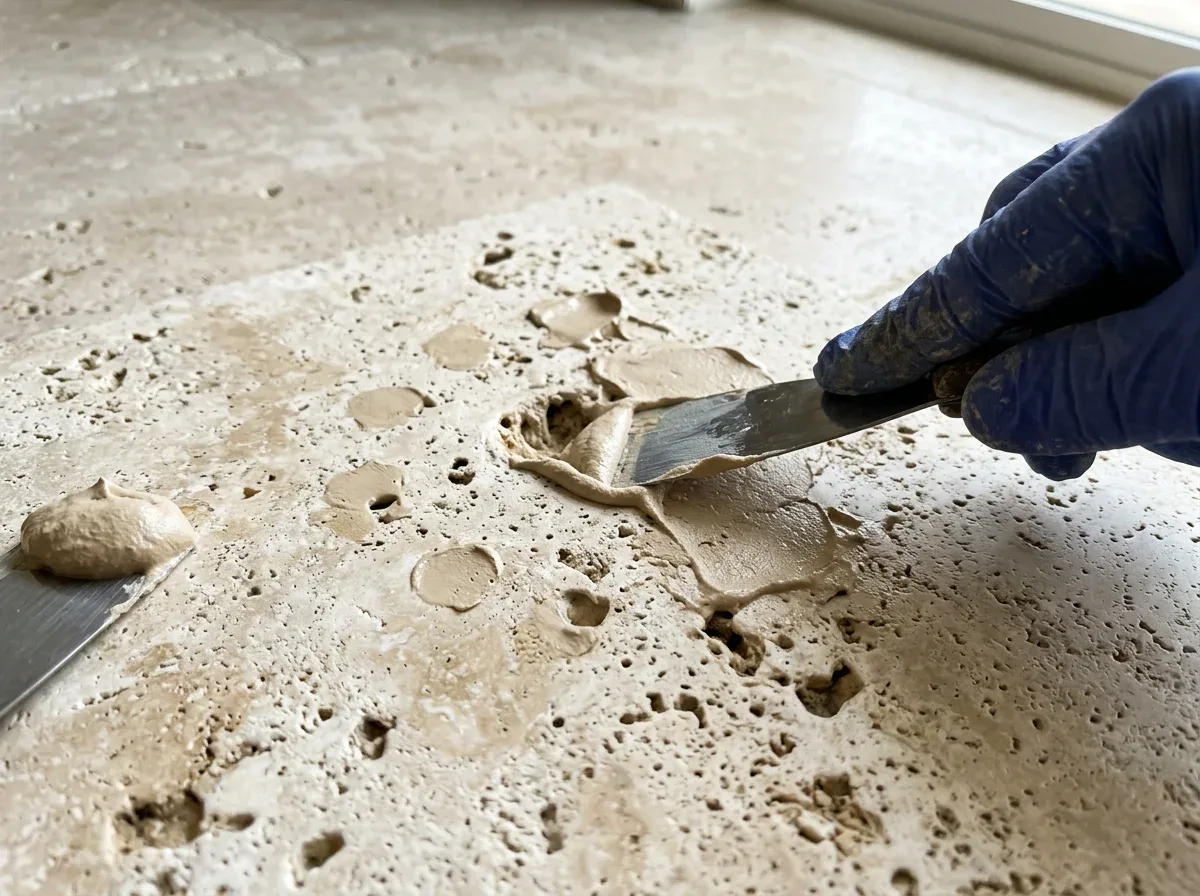
Color and Tone Differences in Travertine Floors: Why Do Tiles Look Different?
In short: It is common for some tiles on a travertine floor to look darker, yellower or lighter than others.
Part of this difference is the nature of the stone and cannot be changed; another part is caused by soiling, moisture or improper repair and can be corrected. In this article, we help you understand the cause of the difference.
Natural Tone Variation
Travertine is extracted from different layers in the quarry. Even blocks from different sections of the same quarry differ in tone, veining and pore density.
- Cutting direction: Cuts parallel to the vein and cross-cuts make the same stone look completely different; one gives a striped pattern and the other a cloudy one, so they look different side by side.
- Batch difference: Materials purchased at different times may come from different sections of the quarry and therefore have different tones; this is why boxes added later stand out.
- Quality grade: Tone uniformity differs between select and standard grades; in the standard grade, light and dark tiles are more often found together in the same batch.

Differences of this kind are balanced out by how the tiles are distributed during installation. In a good installation, tones are mixed evenly; dark tiles are not grouped in one corner and light tiles in another.
Honing does not change this difference. On the contrary, as the layer of dirt is removed, natural tone differences can become more noticeable.
Differences That Develop Over Time
Soiling and Darkening
Tiles in heavily used areas become darker because of dirt and detergent that accumulate in their pores. Tiles along the edges and under furniture stay lighter.
Can it be corrected? Yes. The layer of dirt is removed through deep cleaning and honing.
Moisture and Water Absorption
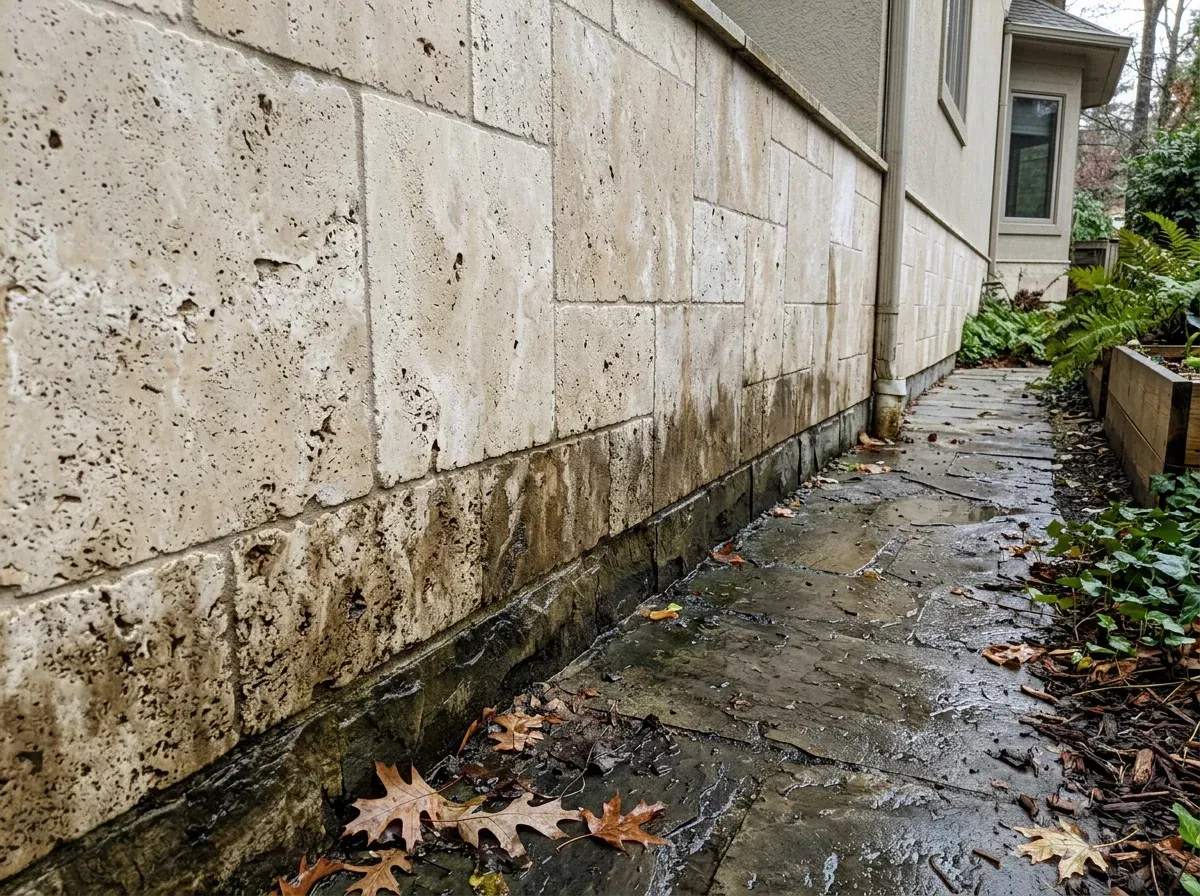
Tiles that draw moisture from below look dark and lighten as they dry. This is common in bathrooms, kitchens and along exterior walls.
Can it be corrected? Yes, if the source of moisture is resolved. If the source is not resolved, the stain will return.
Yellowing
Some travertines may yellow over time. The causes are:
- Oxidation of iron-bearing minerals: Iron-bearing minerals inside the stone oxidize with moisture and air, creating yellow or rust-toned areas; this difference comes from the stone itself.
- Yellowing sealers and polishes: Wrongly chosen sealers and polishes yellow with sun and time; since the color is in the surface coating rather than in the stone, it can be removed by stripping and honing.
- Detergent residues: Residues of some detergents build up in the pores and form a yellowish layer over time; this is especially seen on floors that are not rinsed well.
Can it be corrected? If it is caused by a coating or residue, it is corrected by stripping and honing. If it comes from the stone's own minerals, it lightens only to a limited extent.
Replaced Tiles
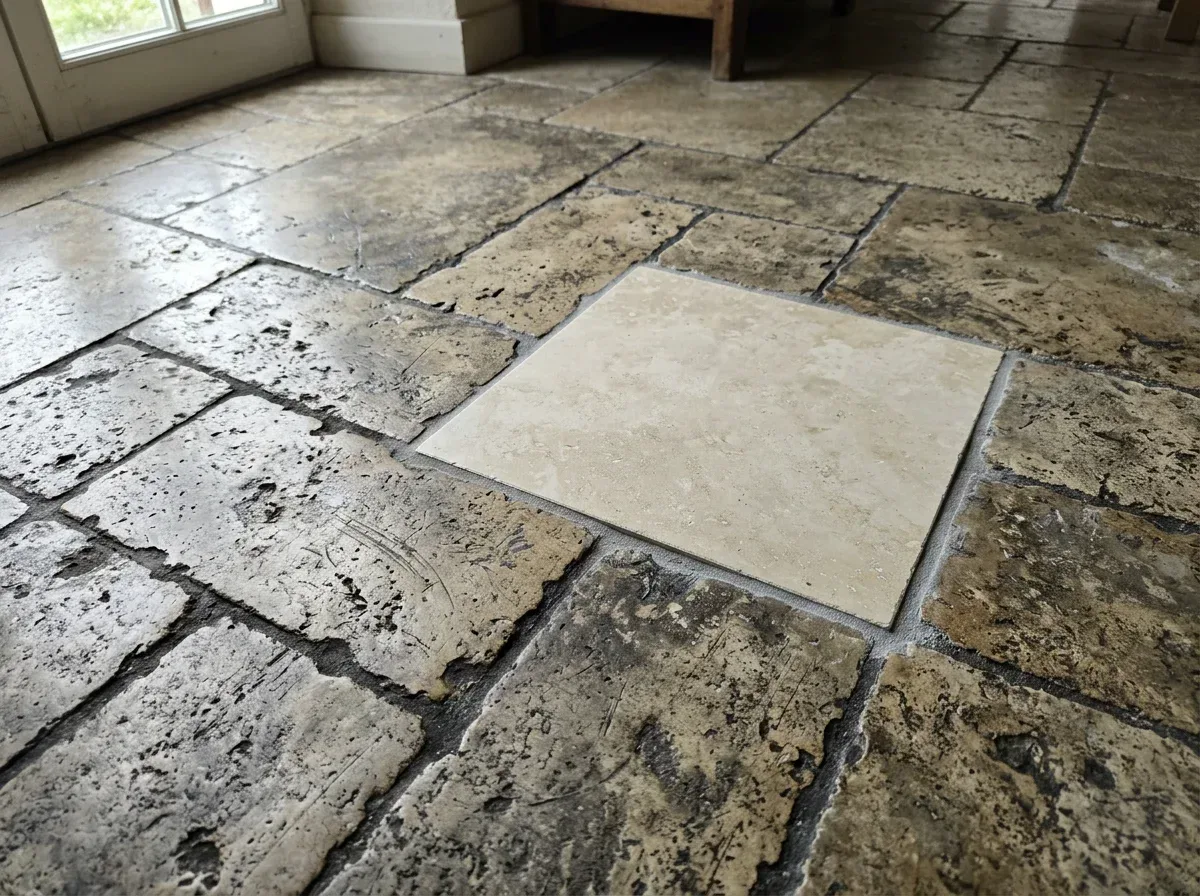
When a broken tile is replaced with a new one years later, the new tile usually looks different:
- Patina of the old tiles: Over the years, the old tiles have gained a patina through use, light and maintenance; since the new tile does not carry this history, it looks lighter or more vivid.
- Different batch: The new tile comes from a different batch, often from a different section of the quarry; therefore its tone and vein structure do not fully match the old ones.
- Surface finish difference: The new tile's factory polish, honing or filling treatment may differ from the old ones; a difference in gloss is also perceived as a tone difference.
Can it be corrected? When the entire floor is honed together and brought to the same surface, the difference decreases significantly, but the tone difference may not disappear completely.
Filler Color Difference
When pore fillers are done in a different color in one area, that area looks spotted and different.
Can it be corrected? Unsuitable fillers can be removed and redone in a color that suits the stone.
Sun Effect
Travertine near windows and outdoors may lighten or change color in the sun. Areas under rugs and furniture stay darker.
Can it be corrected? Honing renews the surface, but the change the sun has made in the stone's top layer may partly remain.
How Do I Identify the Cause of the Difference?
Looking at where and how the tone difference appears often lets you identify the cause before starting work.
- Even difference across the whole tile: If the difference is even across the entire tile, from edge to edge, it is most likely a natural or batch difference and will not change with honing.
- Strong difference along walking paths: If the difference is concentrated along the most-walked routes, the cause is soiling and wear; it is largely removed by deep cleaning and honing.
- Difference that changes with the season: If the difference darkens in the rainy season and lightens in the dry season, the cause is moisture; the source of moisture must be found and resolved first.
- Spot stains: If the stains are scattered in dots, the cause is filler color or dirt accumulated in the pores; it is corrected by renewing the fillers.
- Tiles installed later: If the difference appears only on certain tiles and those tiles were installed later, the cause is the replacement; honing the whole floor together reduces the difference.
Overview of Shade Variation Types
| Type of variation | Cause | Can it be corrected? |
|---|---|---|
| Natural shade variation | Quarry layer, batch, cut | No; it is the character of the stone |
| Darkening along walkways | Buildup of dirt and detergent | Yes; cleaning and honing |
| Darkness that changes with the seasons | Moisture coming from below | Yes; the moisture source must be fixed first |
| General yellowing | Polish residue or iron-bearing minerals | If it is residue, yes; if it is minerals, partly |
| New tile variation | Different batch, lack of patina | Largely reduced |
| Spotted appearance | Mismatched grout color | Yes; grout renewal |
How Does Honing Affect Shade Variation?
After honing, the floor looks more uniform, because the differences created by dirt, residue and wear are removed. However, the same honing can also reveal the stone's own natural variations clearly for the first time. On a floor that has been covered in dirt for years, you may notice after honing that some tiles are actually darker or have more veining. This is not a defect; it is the true appearance of travertine. For this reason, doing a trial honing on a small area before starting is the best way to know in advance how the result will look.
How Can the Difference Be Reduced When Replacing Tiles?
When replacing a broken tile, the choice you make and where you place it determine how noticeable the new tile will be on the floor.
- Use spare tiles: If possible, spare tiles left in the building are used; because they come from the same batch, they give the most compatible result.
- Compare samples in daylight: If there are no spares, samples are obtained from several different suppliers and compared on the floor in daylight; artificial light can hide shade differences.
- Place the new tile somewhere inconspicuous: The new tile is placed in the least noticeable area of the floor; an older tile nearby can be moved to a more visible spot.
- Hone the whole floor together: After the replacement, the entire floor is honed to the same level and protected with the same impregnating sealer; this eliminates differences in gloss and surface.
In Alanya, it is difficult today to find travertine laid years ago from the same quarry. For this reason, in holiday homes and villas, not throwing away the spare tiles left over from construction makes future repairs much easier.
What to Expect Before Honing

Honing removes the dirty, worn layer and brings the entire floor to a uniform surface. However, travertine is a natural stone and every slab is different. After good honing, the floor should be expected to look "clean and cohesive," not "one uniform color."
Our Travertine Grinding Service in Alanya

We grind travertine floors whose pores have opened up or that have darkened or worn, and fill the voids with color-matched filler. For outdoor areas such as pool surrounds, terraces and gardens, we apply honed or brushed finishes that prioritize slip resistance over gloss.
After grinding, we also recommend a suitable impregnating sealer to protect the travertine against stains. Explore our Travertine Grinding service.
It is in the nature of stone that every slab of a travertine floor looks slightly different, and this is not a defect. Our job is to remove the differences that appear later because of dirt, moisture, and improper repair, and to bring out the true look of the stone.