Algae, Limescale and Mold Stains on Travertine
In short: In Alanya's hot and humid climate, outdoor and wet-area travertine often faces three problems: green algae, white limescale crust and black mold.
These three problems have different causes and different solutions, and using the wrong product can permanently damage the stone. In this article, we explain how to recognize each one and the right cleaning approach.
Why Travertine?
Travertine's porous structure retains moisture. Damp, shaded surfaces that get little sun are an ideal environment for algae and mold. On surfaces where hard water evaporates, minerals build up and form a limescale crust.
Algae
What it looks like: Green, sometimes blackish-green stains; a slippery layer when wet.
Where it appears: Shaded terraces, north-facing facades, under plant pots, irrigation areas, pool surroundings, and spots with poor drainage.
Why it matters: It spoils the appearance and, most importantly, makes the floor very slippery.
Cleaning:
- Pre-cleaning with a brush and plenty of water: First, the surface is cleaned with a brush and plenty of water; once loose algae and soil are removed, the cleaner reaches the underlying layer directly.
- Acid-free algae cleaner: Acid-free algae cleaners suitable for stone are applied and left to act according to the product instructions; an acidic product would etch travertine's calcite surface.
- Rotary brush machine: The pores are cleaned with a rotary brush machine; this way, algae roots in gaps that a hand brush cannot reach are lifted from the surface.
- Rinsing with plenty of clean water: The surface is rinsed with plenty of clean water; if cleaner and algae residue left in the pores are not removed, they may leave stains or feed new growth.

Lasting solution: As long as shade and moisture persist, algae will come back. Changing the irrigation direction, raising plant pots on feet, correcting drainage and brushing regularly will reduce recurrence.
Limescale (Mineral Crust)
What it looks like: A white, gray or cream-colored, hard, sometimes raised crust. Especially at the pool water level, under fountains and shower heads, and in areas the irrigation system touches.
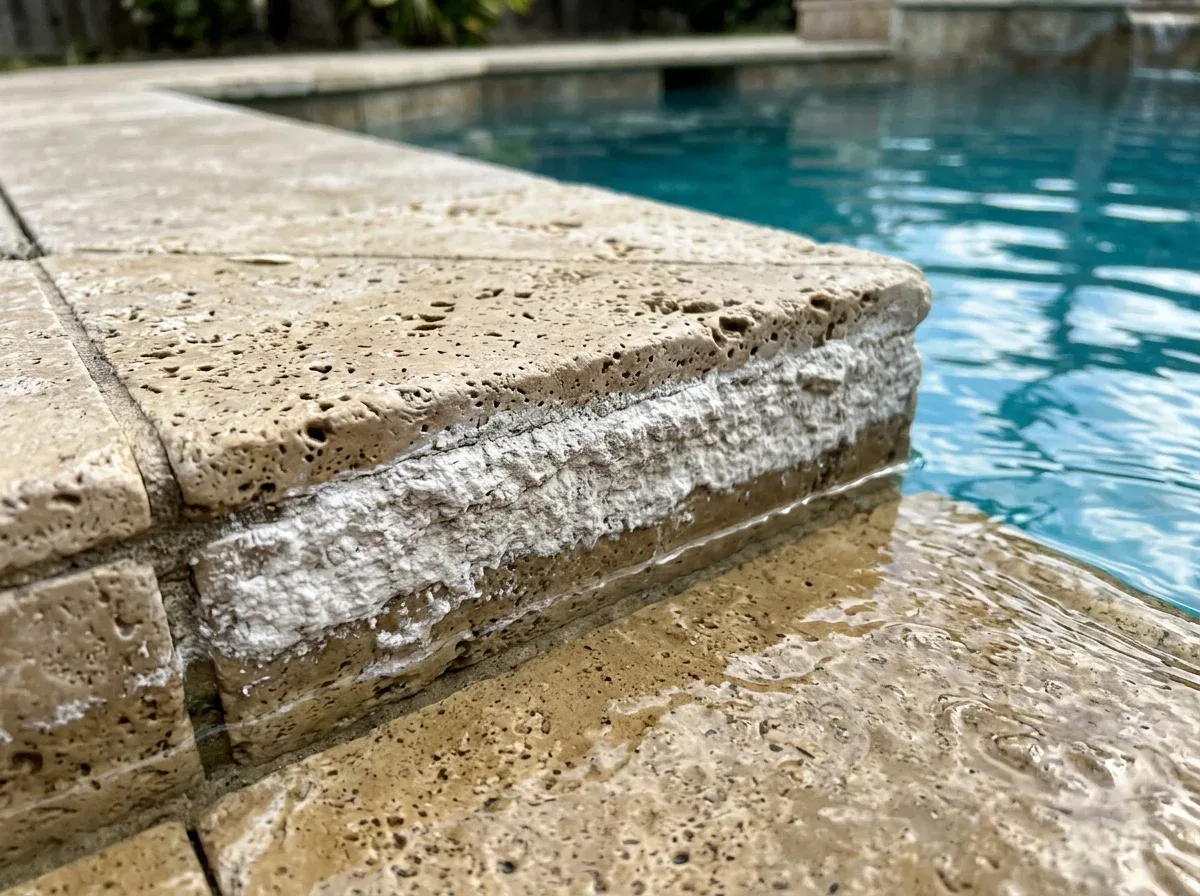
Why it occurs: Calcium and magnesium minerals left behind when hard water evaporates.
Why it is difficult: Limescale is chemically very similar to travertine itself. Acids that dissolve limescale also dissolve the surface of travertine.
Cleaning:
- Do not use acidic descalers: Acidic descalers etch the stone's surface along with the limescale, leaving a dull, rough and more absorbent surface behind.
- Acid-free product for thin deposits: Thin deposits can be removed with acid-free products suitable for stone and a brush; this method softens a light limescale layer without damaging the surface.
- Mechanical methods for thick crust: Thick crusts are removed mechanically, that is, by honing or with suitable abrasives; trying to dissolve them with chemicals is riskier because it would dissolve the stone too.
- Leveling the surface and impregnation: The surface is then leveled and, if necessary, impregnated; this way the area where the crust was removed looks the same as its surroundings and re-absorbs less water.
Lasting solution: Regularly wipe and dry areas where limescale forms, and change the direction of irrigation and fountain sprays.
Mold
What it looks like: Black, gray or pinkish spots and stains; they often start in the grout joints and corners.
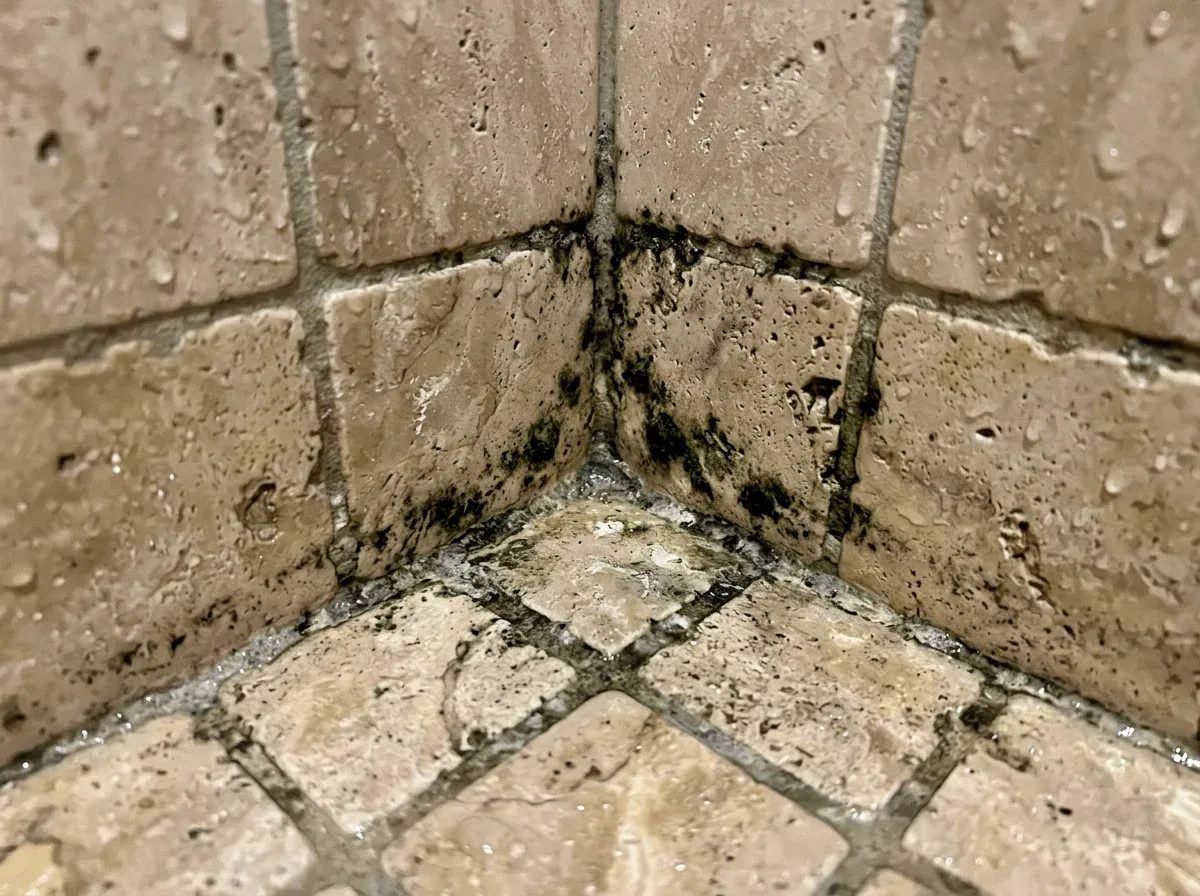
Where it appears: Bathrooms, showers, hammams, poorly ventilated indoor areas, and shaded corners outdoors.
Cleaning:
- Mold cleaner suitable for stone: Grout joints and the surface are cleaned with mold cleaners suitable for stone; since mold mostly starts in joints and corners, these spots are tackled first.
- Be careful with bleach: Bleach and high-chlorine products can damage grout and some travertines with regular use; they should be used diluted and rinsed thoroughly.
- Regrouting for deep mold: Mold that has penetrated deeply may require regrouting; mold embedded in the grout filler cannot be removed by surface cleaning and returns quickly.
Lasting solution: Ventilation, drying after showers, and keeping the grout joints sound and impregnated.
Be Careful When Using Pressure Washers
Pressure washing is effective for removing algae and dirt, but:
- Surface abrasion: Water held very close and at high pressure can wear down travertine's soft calcite surface, leaving a rough surface that absorbs more water.
- Grout washout: A strong water jet can gouge out and empty the grout filler; water and dirt get into the opened joints, and the underside of the slabs becomes damp.
- Pore filler breaking away: The filler in filled pores can come off under pressure; the exposed voids quickly fill with dirt and turn into black spots.
Use a suitable distance and wide-angle nozzles.
The Three Problems at a Glance
| Algae | Limestone | Mold | |
|---|---|---|---|
| Color | Green, blackish green | White, gray, cream | Black, gray, pinkish |
| Touch | Slippery | Hard, rough | Stained, often in the grout joints |
| Cause | Shade, moisture, standing water | Evaporation of hard water | Poor ventilation, moisture |
| Proper cleaning | Acid-free algae remover, brush | Mechanical removal, wiping | Mold remover suitable for stone |
| Avoid | Vinegar, acid | Acidic descaler | Undiluted chlorine |
| Lasting solution | Drainage, sunlight, irrigation schedule | Drying, sprinkler direction | Ventilation, grout renewal |
Protection After Cleaning
Once algae, limescale and mold have been removed, the pores of the stone are left open. A breathable impregnating sealer applied at this stage slows the penetration of water into the stone; algae have a harder time taking hold and limescale wipes off more easily. For the sealer to work, the stone must be completely dry; outdoors, this means several days of dry weather. Especially around pools and on shaded terraces, the sealer should be checked more often than indoors and renewed as needed.
Seasonal Maintenance
Because algae, limescale and mold on travertine come to the fore depending on the season, the intensity of maintenance also changes throughout the year.
- Winter and spring: During the rainy season, algae spread quickly in shaded areas. Brushing once a month and checking for standing water is sufficient.
- Summer: Limescale left by pool and irrigation water becomes the main issue. Rinsing the pool deck weekly with fresh water and keeping sprinkler spray away from the stone reduces limescale.
- Autumn: Leaf and fruit stains and clogged drains appear; this is the most suitable time for an end-of-season deep cleaning and a sealer check.
- Year-round (indoors): In the bathroom and shower, ventilation and drying after use prevent moisture from lingering in the grout joints and thus prevent mold.
Why Are These Problems Common in Alanya?
Summers in Alanya are hot and humid, and winters are rainy. Because the mountains are close to the sea, the sun sets early in some neighborhoods; travertine surfaces in the shade of garden walls and trees stay damp all day. In coastal areas, the hardness of well and mains water also accelerates limescale in pool and irrigation areas. For this reason, algae, limescale and mold are problems that recur almost every year on outdoor travertine; with regular maintenance and the right product choice, they can be kept under control without permanent damage.
After Cleaning

Once cleaning is complete, the stone must dry completely, and then, if necessary, an impregnating sealer should be applied. Impregnation reduces the penetration of moisture and dirt into the stone, slowing the return of algae and mold. For outdoor areas, breathable products that do not reduce slip resistance should be chosen.
Our Travertine Grinding and Honing Service in Alanya

We grind and hone travertine floors that have open pores, have darkened, or are worn, and fill the voids with color-matched filler. For outdoor areas such as pool surrounds, terraces, and gardens, we apply honed or brushed finishes that prioritize slip resistance over shine.
After honing, we also recommend a suitable impregnating sealer to protect the travertine against stains. Explore our Travertine Grinding and Honing service.
Limescale on travertine and the travertine itself are chemically almost the same substance. Any acid that dissolves limescale will also dissolve the stone, so when the scale is thick, the only safe approach is to remove it mechanically.