Exterior Facade and Garden Travertine Care: The Effects of the Sun
In short: In Alanya, the sun is strong for most of the year.
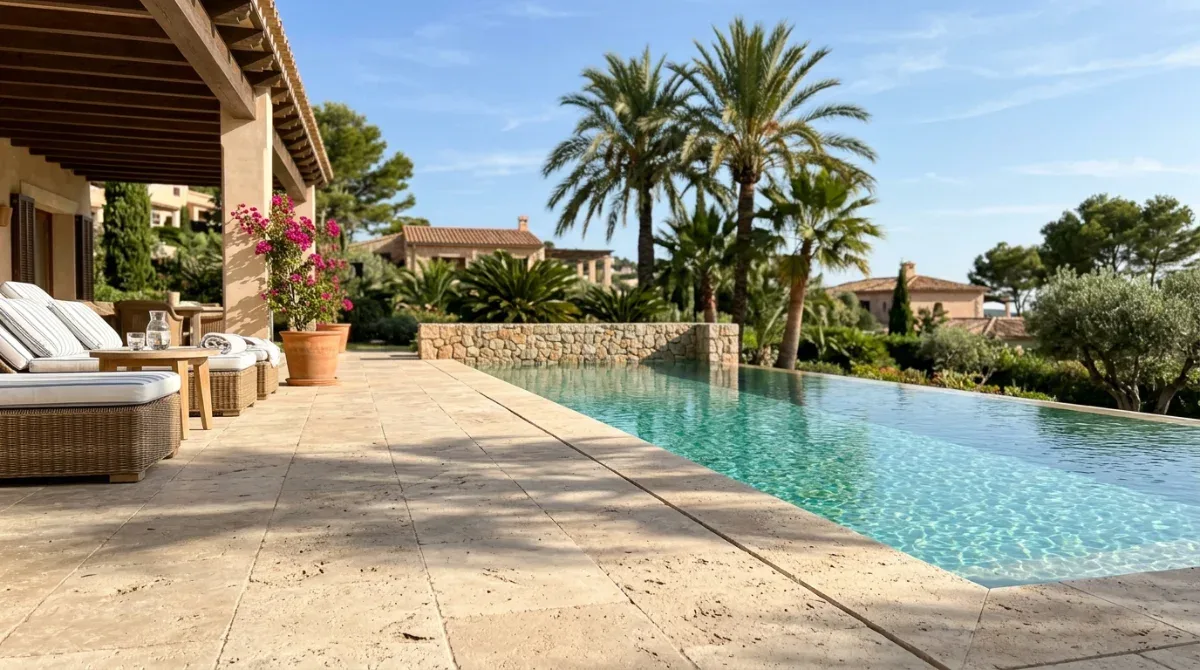
Travertine on exterior cladding, garden walls, courtyards, and terraces is exposed to the combined effects of sun, temperature swings, and rain. In this article, we explain what these effects do to the stone and how to keep outdoor travertine looking good for many years.
What Does the Sun Do to Travertine?
Heating and Expansion
Under the sun, the surface of the stone gets very hot during the day and cools down at night. This constant expansion and contraction causes:
- Cracking in joints: As the slabs expand and contract every day, the joint material between them cannot withstand this movement; it first cracks into fine lines and then begins to crumble out.
- Micro-cracks: Cracks that are hard to see with the naked eye form at the stone's weak points, such as veins, fillings, and pores; over time, they can absorb water and grow.
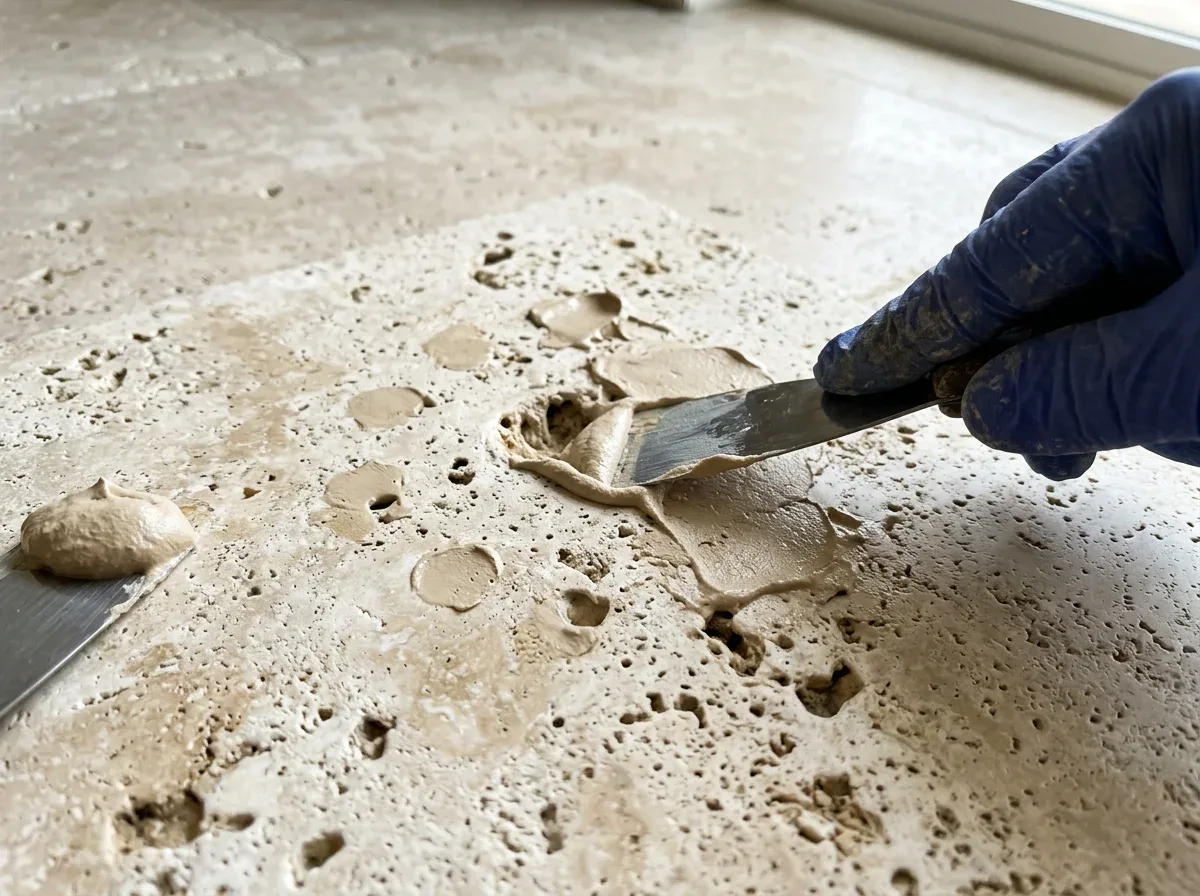
- Fillers coming loose: Because the fillers that seal the holes in travertine do not expand at the same rate as the stone, they loosen, separate from the edges, and eventually fall out, reopening the pores.
This cycle of heating and cooling can cause such damage over time.

Color Change
The sun affects some of the minerals on the stone's surface and, in particular, polishes, varnishes, and some sealers applied to the stone afterward. As a result:
- Yellowing of polish and varnish: Film-forming coatings applied to the stone afterward yellow and crack under the sun's effect and peel off in flakes, leaving a blotchy, aged look on the surface.
- Tone difference in sun-exposed areas: Areas that receive sun all day age differently from those in the shade; clearly lighter and darker areas appear on the same facade or terrace.
- Lightening in some travertines: Some minerals on the surface fade over time in the sun; beige and brown-toned travertines in particular begin to look lighter than on the day they were first laid.
Drying and Salt
In stone that gets wet and dries during the day, the salts within it and in rainwater are carried to the surface. This can cause white salt efflorescence and, over time, dusting on the surface.
Rain and Water
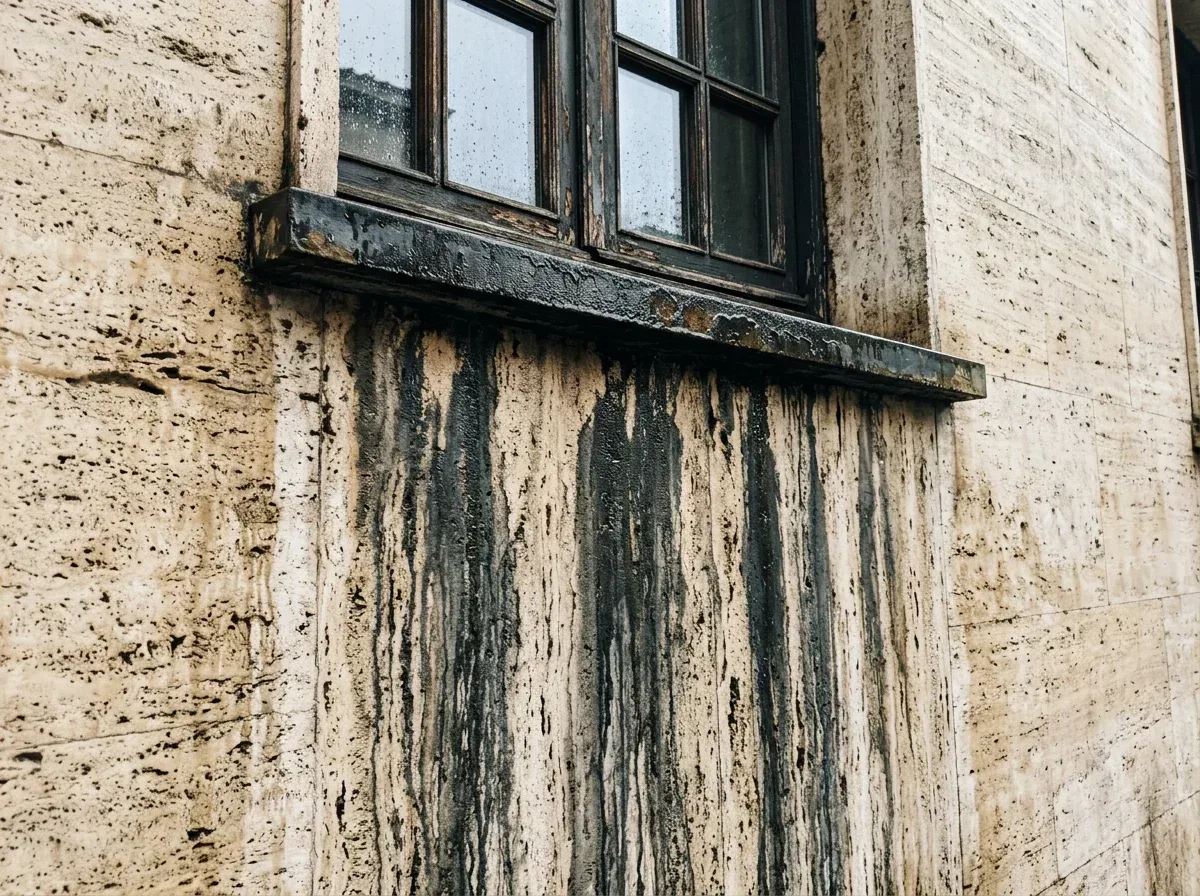
- Dirt carried into the pores: Rainwater carries dirt into the pores; dark marks form especially under eaves and along drip lines.
- Runoff marks: On facades where roof and balcony drip edges are inadequate, the traces of flowing water leave distinct stains.
- Water getting behind the stone: Water entering through the joints can get behind the stone and affect how well the cladding holds; over time, moisture and salt accumulate behind the slab.
Risks Specific to Facade Cladding
In facade cladding, problems can affect not only the appearance but also how securely the slabs stay in place.
- Loosening of slab connections: Thermal movement and water getting behind the slabs gradually weaken the anchors and adhesive; a loosened slab sounds hollow when tapped and calls for an expert inspection.
- Corner and edge chips: The outer corners of the facade and the edges of the slabs are the places most exposed to impact and thermal stress; small chips there also make it easier for water to enter.
- Water entering through holes: When air-conditioning pipe, ventilation, and dowel holes are not properly sealed, water reaches directly behind the cladding, and stains and adhesion problems begin around them.
- Organic stains: Bird droppings, leaves, and plant debris leave dark, stubborn marks on porous stone; the longer they are left, the harder they are to remove.
Safety and access (scaffolding, basket platform) for facade work must be planned separately. A loose slab at height is a safety risk and must first be examined by an expert.
Maintenance and Renewal
Cleaning
When cleaning outdoor travertine, the aim is to remove dirt without wearing down the stone's surface and fillings.
- Brush and low-to-medium pressure: The surface is cleaned with a brush, a suitable detergent, and low-to-medium pressure water; high pressure can open up the pores and fillings.
- No acidic cleaners: Acidic facade cleaners are not suitable for travertine; they dissolve the calcium carbonate stone, dulling and roughening the surface.
- Spot cleaning for organic stains: Bird, leaf, and resin stains are cleaned with a suitable product only at the spot where the stain is, without treating the entire surface.
Joint and Filler Repair
Outdoors, joints deteriorate before the stone itself. The joints between slabs that heat up and cool down in the sun crack, empty out, and allow water to get behind the stone. In the repair, the old joint is opened to a certain depth, cleaned, and refilled with a flexible material suitable for outdoor use. The opened pores of the travertine are also sealed at this stage with UV-resistant fillers matched to the tone of the stone. On a facade, joint repair is important not just for appearance but also for keeping the slabs in place for a long time.
Removing Old Polish and Varnish
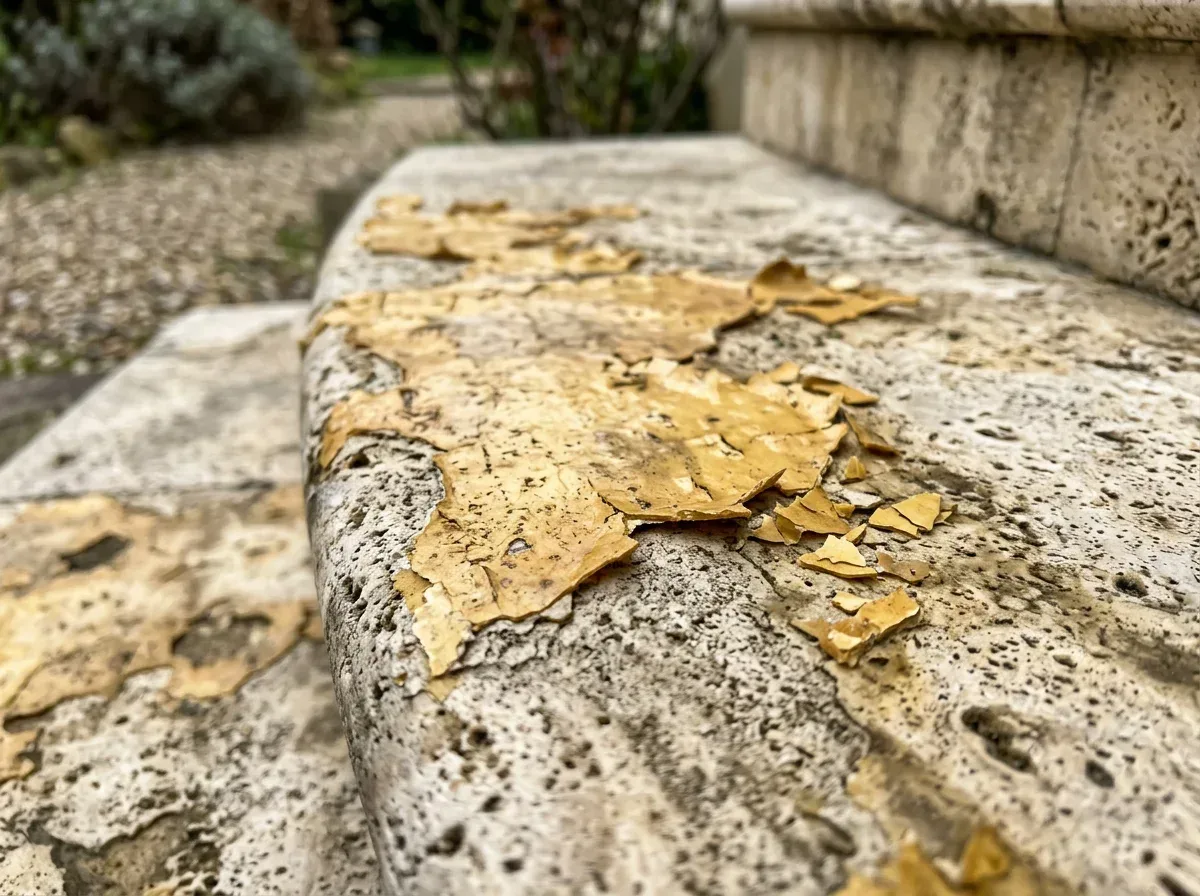
Yellowed and flaking coatings make outdoor travertine look bad and prevent it from breathing. By removing these coatings, the stone is returned to its natural state.
Impregnation
The impregnating sealer applied to outdoor travertine should be:
- UV-resistant: A product that cannot withstand the sun deteriorates quickly, loses its protective effect, and in some cases causes a change in the tone of the stone.
- Breathable: The moisture inside the stone must be able to evaporate; if vapor cannot escape, moisture stays trapped inside, and efflorescence and surface blistering may occur.
- Non-yellowing, non-film-forming: Products that form a layer on the surface yellow and flake in the sun; an impregnating sealer that penetrates the pores protects the stone without changing its natural appearance.
- Does not reduce slip resistance: A product used on floors such as terraces, courtyards and pool surrounds must not make the surface slippery; reduced grip when wet increases the risk of falls.
Impregnation should be renewed more often outdoors than indoors.
Surface Restoration
If courtyard and terrace floors show wear, dirt or slippery areas, the surface is renewed by brushing or honing.
Maintenance Recommendations by Area
| Area | Common problem | Recommendation |
|---|---|---|
| South and west facades | Yellowing varnish, color fading | Coating removal, UV-resistant impregnation |
| North facade and shaded walls | Algae, moisture stains | Brush cleaning, breathable impregnation |
| Under windows and eaves | Dark run-off marks | Cleaning, drip edge inspection |
| Base of garden wall | Efflorescence, irrigation marks | Dry brushing, correcting the irrigation direction |
| Courtyard and terrace floor | Wear, slipperiness, opened pores | Filling, brushing or honing |
Practical Measures Against the Sun
The way to protect outdoor travertine from the sun is to choose the right product and regularly monitor the path water takes across the facade.
- Do not apply polish or varnish: Do not apply film-forming polish or varnish to outdoor travertine; it yellows and flakes quickly in the sun.
- UV-resistant grout and filler: Always choose outdoor-grade, UV-resistant grout and filler materials; indoor products crack and change color in the sun.
- Have drip edges checked: Have the drip edges of eaves, windows and balconies checked; most run-off marks are a problem of water direction, not of the stone.
- Drop test once a year: Check the impregnation with a water drop test once a year; protection weakens faster on sun-exposed facades.
- Do not clean at midday in summer: Do not clean the stone with cold water and chemicals at midday in summer; the sudden temperature difference combined with chemicals damages the stone.
Outdoor Travertine in Alanya
In Alanya, strong sun for most of the year, high humidity in summer and heavy rain in winter all occur together. For this reason, exterior facade and garden travertine experience both the thermal effect of the sun and the effects of rain and salty air. The problem we see most often on outdoor travertine that was varnished or polished years ago is a flaking, yellowed coating. Once this coating is removed, the stone usually emerges with a sound, attractive natural surface; with proper filling and impregnation, it can be used again for many years.
Suggested Maintenance Schedule

- Spring: Joint inspection and moss removal after the winter rains.
- Early summer: General cleaning and sealer check (water drop test).
- Autumn: Removal of leaves and resin, clearing of drains.
- As needed: Repair of cracks and breakages.
Our Travertine Grinding and Honing Service in Alanya

We grind travertine floors whose pores have opened up, or that have darkened or worn, and seal the voids with color-matched filler. For outdoor areas such as pool surrounds, terraces and gardens, we apply honed or brushed finishes that prioritize slip resistance over gloss.
After grinding, we also recommend a suitable impregnating sealer to protect the travertine against stains. Explore our Travertine Grinding service.
Cracked joints and loose fillings are cleaned out and renewed with flexible materials suitable for outdoor use. — Expert Note