Restore Old Travertine by Honing, or Rip It Out?
In short: Many villas and apartments in Alanya built in the 1990s and 2000s still have their original travertine floors.
Most people who see a travertine floor that has gone dull, with open pores and stains, think "let's tear it out" at first glance. In most cases, however, the floor can be restored through honing, filling, and repair. In this article, we explain the criteria that make the decision easier.
When Honing Is the Better Choice
If the Slabs Are Firmly Set
Slabs that do not shift when stepped on and give a solid sound when tapped are suitable for honing.
If the Problem Is on the Surface
If the problem is in the top few millimeters of the stone, there is no need to remove the slabs; honing removes this layer and exposes the sound stone underneath.
- Dullness and wear: Travertine that has been walked on for years loses its shine and walkways become visible; honing removes the worn top layer and gives the floor an even surface.
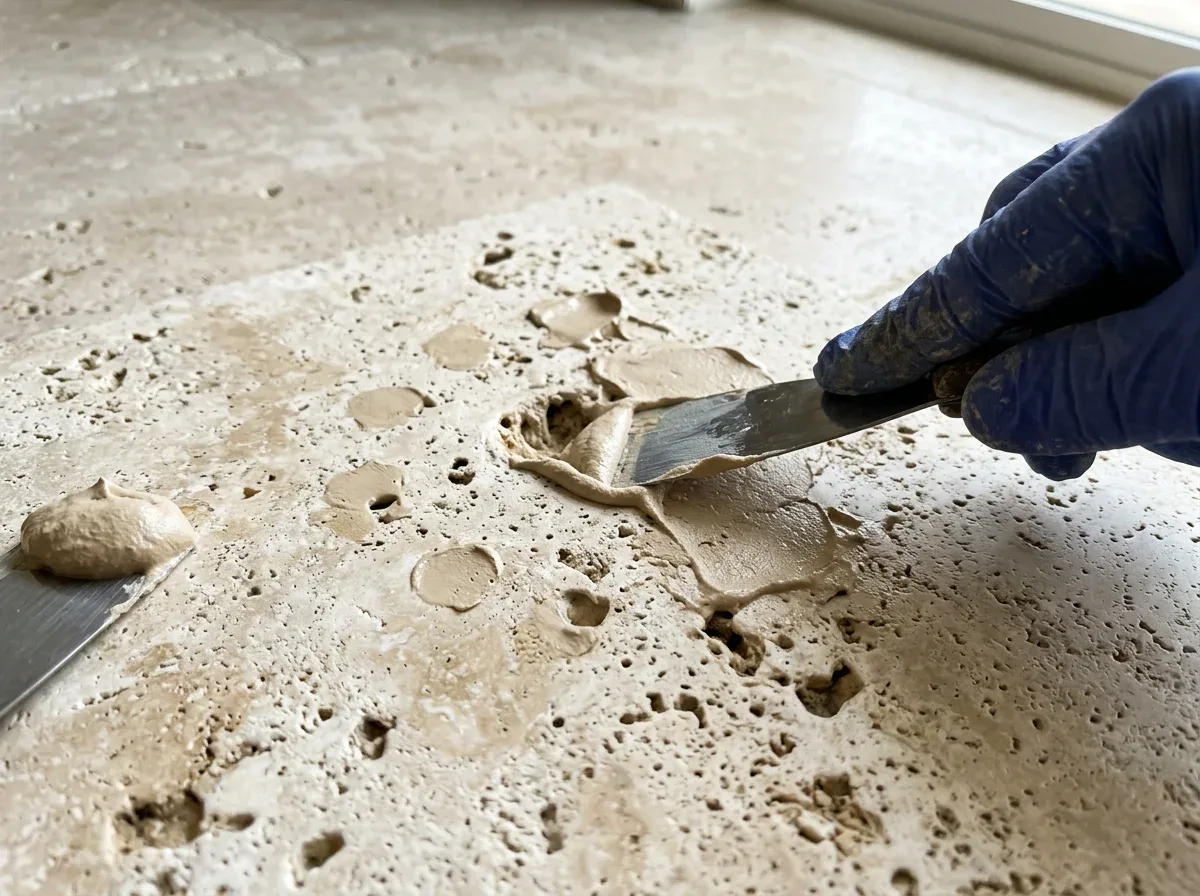
- Open pores and missing fill: Over time, old filler falls out and dirt collects in the voids; after honing, these pores are refilled with a filler matched to the tone of the stone.
- Surface stains and dirt: Stains that have not penetrated deeply into the stone and years of accumulated dirt are removed along with the honing pads, revealing clean, vivid stone underneath.
- Level differences and lippage: Height differences between slab edges are shaved down with coarse honing; the ridges that catch your feet and trap dirt disappear, and the floor comes together on a single plane.
All of these are problems that honing solves.

If You Like the Stone Itself
Most older travertines are of qualities and tones that are hard to find today. If you like the color and texture of the stone, honing renews it while preserving the same look.
If the Home Is Occupied
Removal means dust, noise, rubble, and weeks of renovation. Honing, on the other hand, can often be completed in a few days without emptying the house.
When Removal Is the Better Choice
If Hollow and Loose Slabs Are Widespread
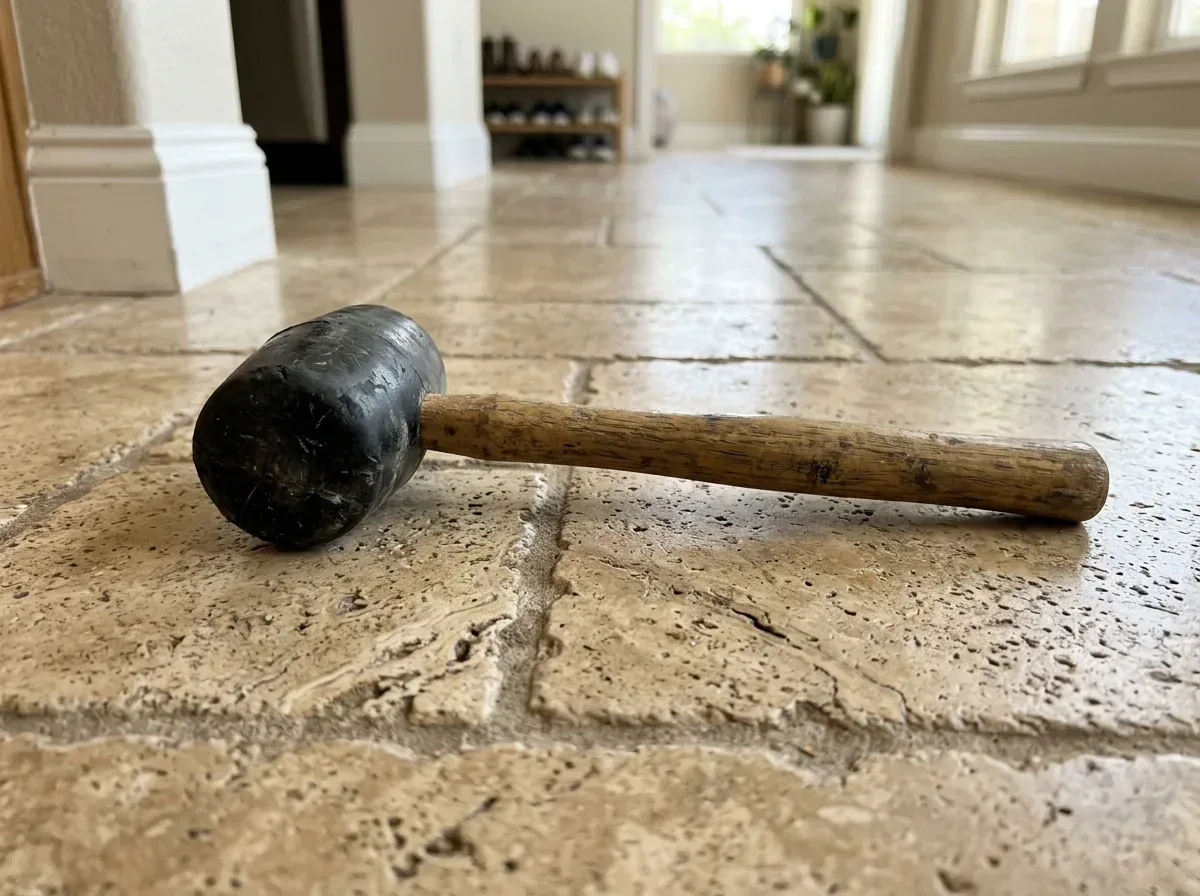
Slabs that sound hollow when tapped indicate that the adhesive underneath has failed. If only a few slabs are affected, they can be removed locally and re-bonded. But if most of the floor is hollow, removal may be the better decision.
If There Is a Moisture or Plumbing Problem Underneath
If there is a water leak, an insulation problem, or constant moisture beneath the floor, removal may be needed anyway to fix the problem.
If the Slabs Are Too Thin or Have Been Honed Too Much
If an old floor has already been aggressively honed several times, the slab thickness and fillers may not allow it. Checking the slab thickness at the edges gives an idea.
Many Broken Slabs and Cracks
Individual cracks can be repaired. But widespread breakage can be a sign of movement in the screed or ground beneath.
If a Design Change Is Wanted
If a different stone, color, size, or a new system such as underfloor heating is wanted, removal is unavoidable.
The Middle Path: Partial Replacement + Honing
On most old floors, the real solution is a combination of the two:
- Hollow and broken slabs are identified: Hollow and broken slabs are identified; the floor is checked slab by slab with a mallet, and slabs that sound hollow or are cracked are marked to prepare a repair plan.
- Problem slabs are removed locally: These are removed locally; if possible, the same slab is cleaned and re-bonded, otherwise it is replaced with a spare or similar slab.
- The entire floor is honed: After the repair, the whole floor is honed so that old and new slabs are brought to the same surface, leaving no level difference between the replaced slabs.
- Filling, grouting, and impregnation: Finally, the pores are filled, the joints are renewed, and impregnation is applied; the stone is protected against staining and the floor is completed as a whole.
This method resolves problem areas without removing the entire floor.
A Simple Checklist for the Decision
The decision between honing and removal is determined jointly by the soundness of the floor, the moisture beneath it, and how the household lives.
- Movement in the slabs: Do the slabs shift when stepped on? A shifting slab indicates there is no adhesive left underneath and must be secured before honing.
- Hollow-sounding slabs: How many slabs sound hollow when tapped? If only a few, local repair is enough; if most of the floor is affected, removal may be the better option.
- Moisture, water leaks, or odor: Is there moisture, a water leak, or an odor underneath? If so, the source must be fixed first, which often requires removal.
- Extent of cracks: Are the cracks few or widespread? Isolated cracks can be repaired, while widespread breakage may indicate movement in the screed beneath.
- Liking the stone: Do I like the color and texture of the stone? If so, honing preserves the same look by renewing it, and you keep a stone that is hard to find today.
- Working while living in the home: Does the work need to be done while living in the house? Honing is often finished in a few days without emptying the house, whereas removal brings dust, rubble, and a long renovation.
- New design or system: Is a new floor design or system needed? If a different stone, size, or underfloor heating is wanted, removal becomes unavoidable.
Polishing vs. Replacement Comparison
| Polishing + repair | Removal + new flooring | |
|---|---|---|
| Duration | A few days | Weeks |
| Use of the home | Usually without emptying the house | The house or room cannot be used |
| Dust and debris | Almost no dust thanks to the wet method | Demolition, debris, hauling |
| Affected areas | Floor only | Skirting boards, doors, cabinets, plumbing |
| Character of the stone | Same stone, same look | New stone, different look |
| When is it necessary? | The stone is sound, the problem is on the surface | Widespread hollow spots, subfloor problems, design changes |
How Is Old Travertine Restored?
Once the decision goes in favor of polishing, the work usually proceeds in the following order. First, the whole floor is checked piece by piece by tapping, and hollow tiles are marked. These tiles are fixed or re-bonded, and broken tiles are replaced. Next, years of accumulated dirt in the pores is removed by deep cleaning, level differences are eliminated with coarse grinding, and the exposed pores are filled to match the tone of the stone. After the filler has hardened, the desired finish (honed or polished) is achieved with fine grit stages; finally, once the stone is completely dry, a sealer is applied. At the end of this process, the old travertine often ends up with a more even surface than on the day it was first laid.
A Note for Old Villas in Alanya
The travertine used in villas built in Alanya in the 1990s and 2000s is generally thick and tightly textured. Today, it is often impossible to find stone of the same tone from the same quarry. For this reason, removing these floors is not only a cost, but also means losing a part of the home's character. If there are spare tiles left over from construction, they should be kept; they give the best match for repairs. In the video, you can watch a polishing job we carried out on a travertine surface.
Cost and Time Comparison

Once demolition, new materials, screed repair, installation, skirting boards, door frame adjustments, debris removal and cleaning are all added up, the cost and duration of a renovation are usually much higher than those of polishing. However, in cases of serious substrate problems, polishing is only a temporary solution. That is why the decision should be based on an on-site inspection of the floor.
Our Travertine Grinding and Honing Service in Alanya

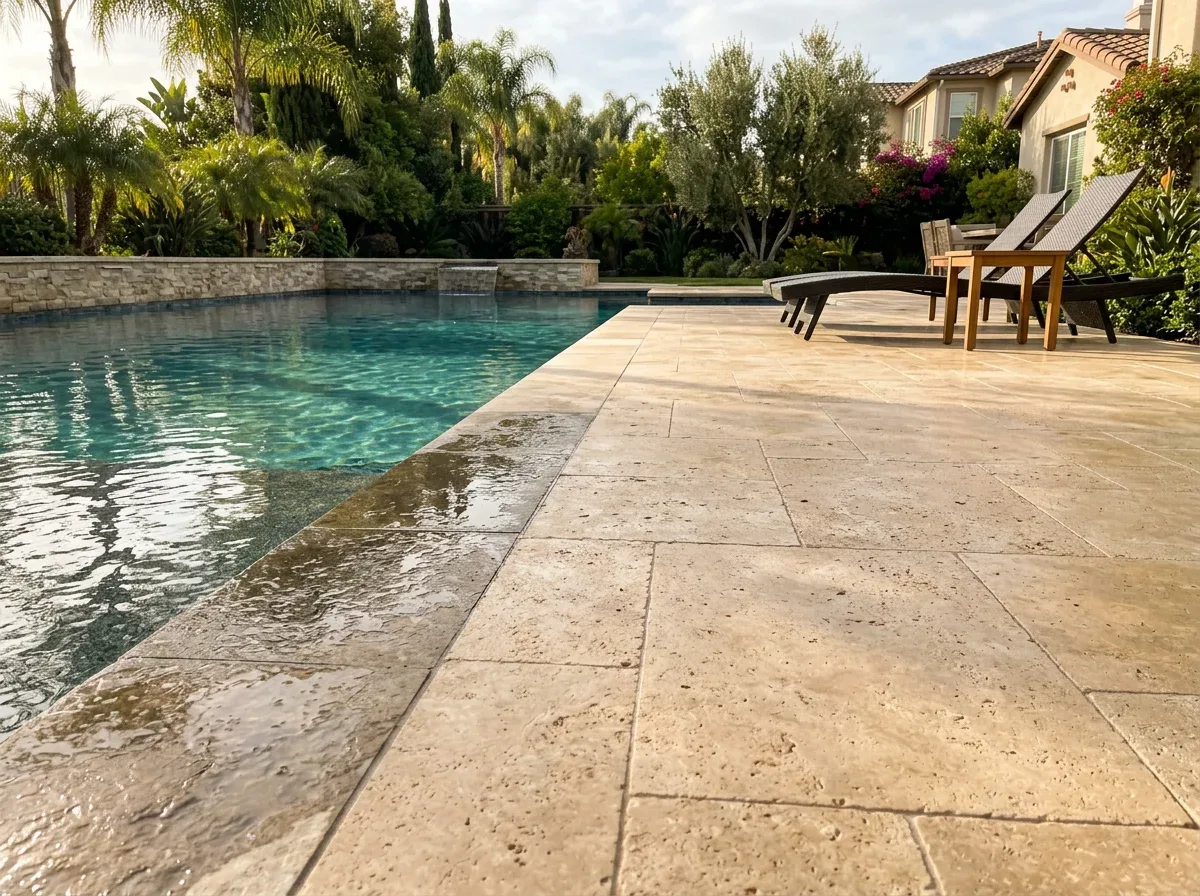
We grind and hone travertine floors that have open pores, have darkened or have worn down, and fill the voids with color-matched filler. For outdoor areas such as pool surrounds, terraces and gardens, we apply honed or brushed finishes that prioritize slip resistance over shine.
After honing, we also recommend a suitable impregnating sealer to protect the travertine against stains. Explore our Travertine Grinding and Honing service.
Travertine Surface Polishing
Images from a polishing job we carried out on a restored travertine floor.
Before removing an old travertine floor, you need to sound every slab one by one with a mallet. In most of the floors we see, the number of problem slabs is far smaller than people assume; once those few slabs are repaired, the rest of the floor can be restored by honing.