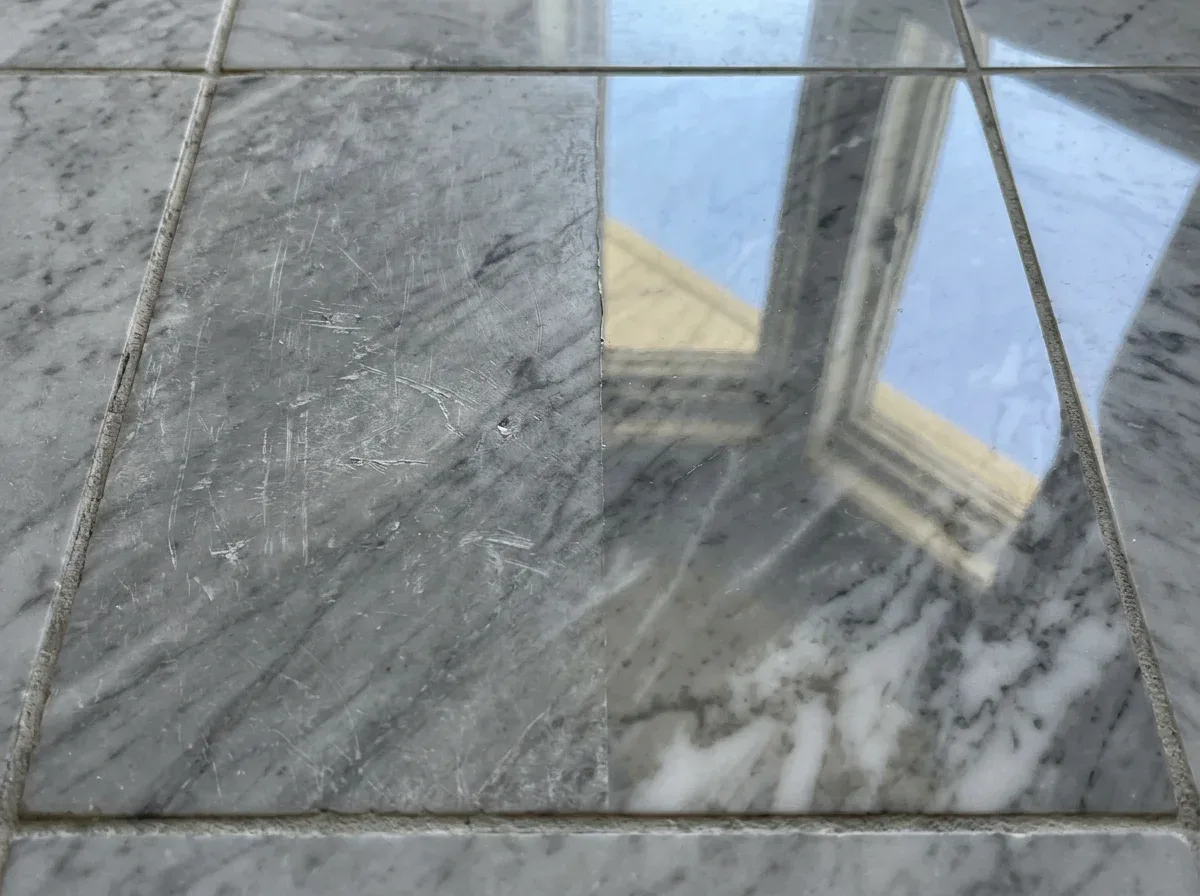
Grinding Machines: Single-Disc vs. Planetary Machines
In short: One of the factors that determines the result in floor grinding is the machine used.
In the field you will most often see two types of machines: single-disc machines and planetary (multi-head) machines. In this article, we explain the difference between them and which one is used for which job in plain language.
Single-Disc Machines
A single large disc rotates in one direction; diamond abrasives or pads are attached underneath the disc.
- Advantages: Light and easy to carry; practical in narrow spaces and for house and apartment jobs. Common in polishing and maintenance work.
- Limitations: Slower at leveling wide and very uneven floors; the operator's experience is reflected more in the result, and improper use can leave waviness.
Planetary Machines
A main plate rotates, and several smaller discs on it also rotate in the opposite direction on their own axes.
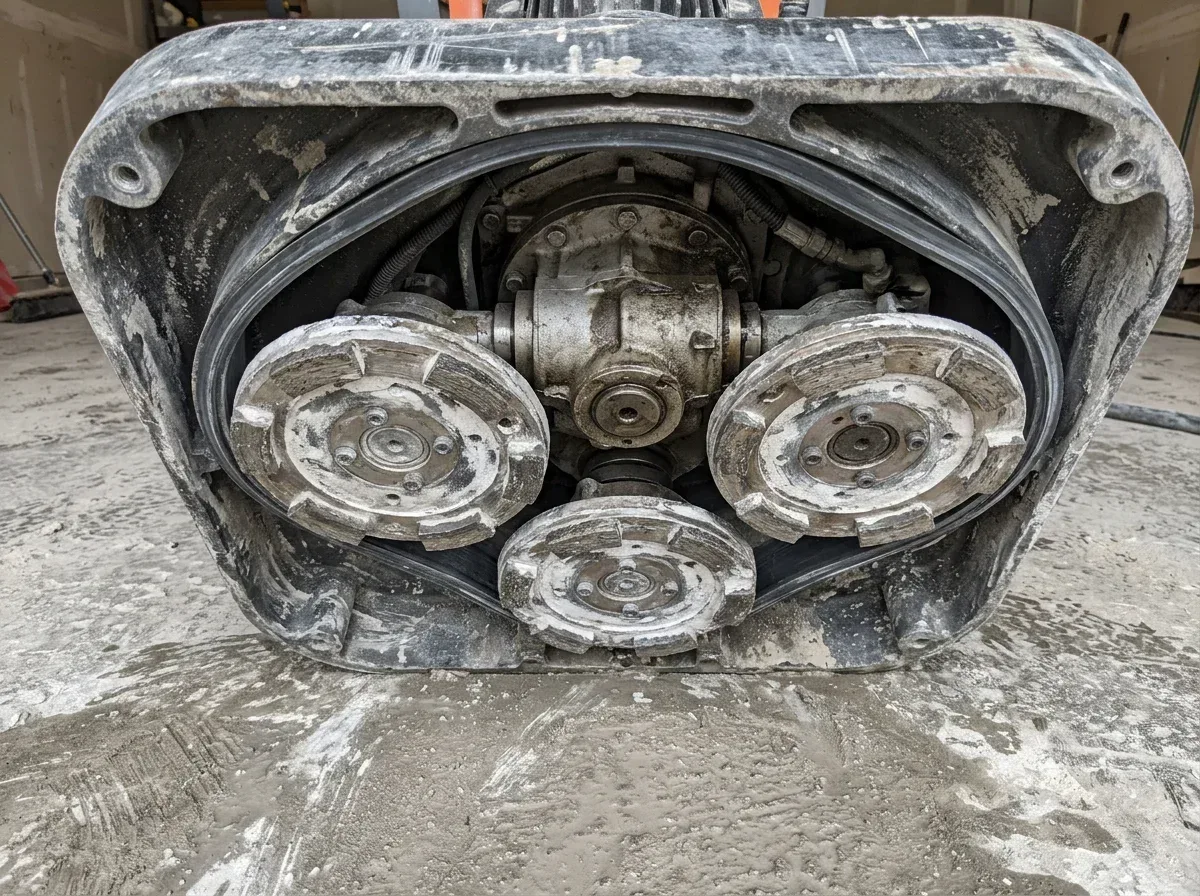
- Advantages: Heavier and more balanced; it works the floor flatter and more uniformly. Faster on large areas. Strong for concrete grinding and rough leveling.
- Limitations: It is heavy; transporting it and getting it into elevators and onto floors requires planning. Its efficiency drops in small and narrow areas, and it cannot reach edges and corners.
Which Machine for Which Job?
The machine is chosen according to the size of the area, the type of floor, and whether the job is rough leveling or polishing.
- Apartments, villas, small areas: Single-disc or medium-sized machines are usually used; they are easy to carry and move comfortably between rooms and narrow passages.
- Level differences and leveling: Heavy, balanced machines are advantageous; because the weight is distributed evenly on the surface, high edges are removed while the floor is brought to a single plane without waviness.
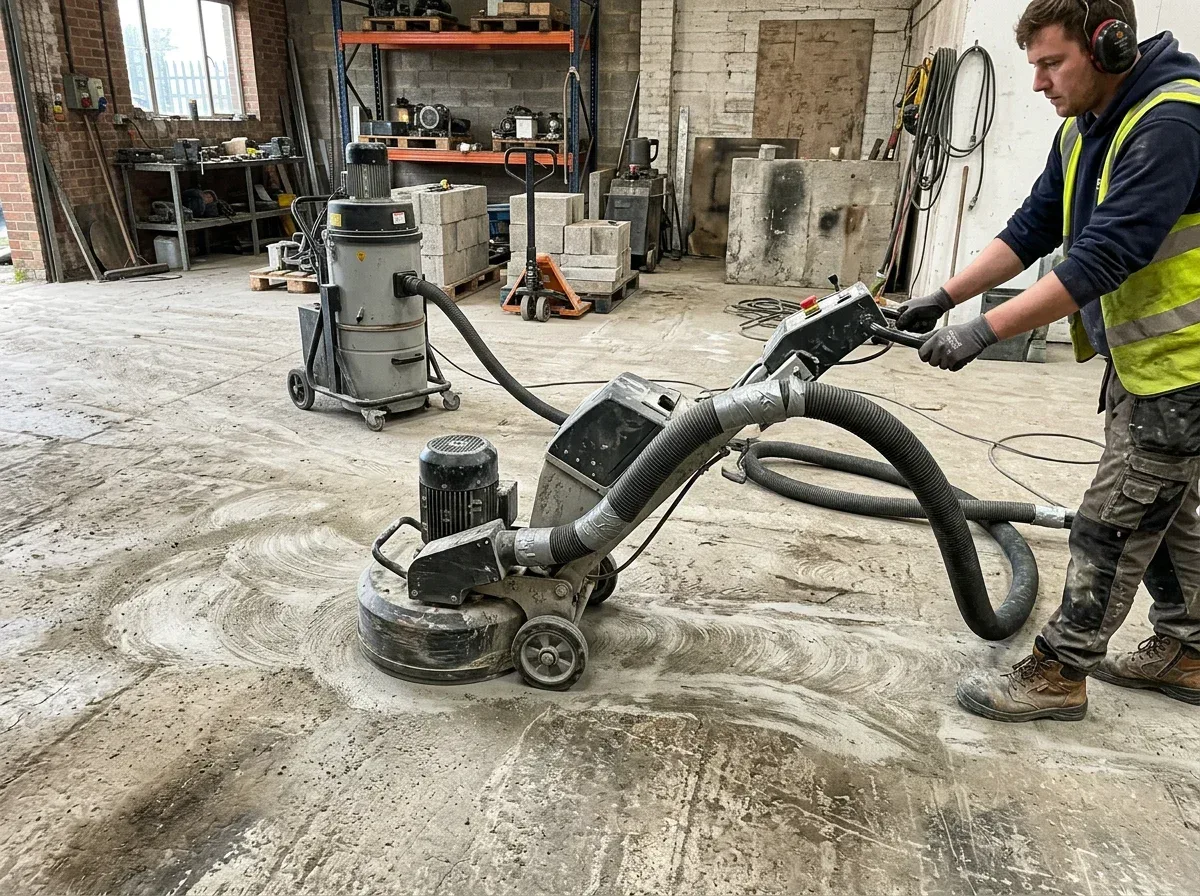
- Concrete grinding, car parks, warehouses: Planetary machines and dust extraction systems are used; they work a large area quickly, grind hard concrete evenly, and collect dust in dry operation.
- Maintenance polishing: Single-disc machines and suitable pads are sufficient; since only fine scratches on the surface are removed, there is no need for a heavy machine.

In most jobs, more than one machine is used together.
Edge Machines
Large machines cannot fully reach wall bases, corners, areas around columns, and narrow passages. These areas are processed with smaller-bodied edge machines and hand grinders, following the same steps as the middle of the floor. Steps, window sills, and countertops are also ground with these small machines. If edge work is not done well, the middle of the room is shiny while the wall bases stay matte; that is why edge machines are as important as the main machine.
Dust Extraction
In dry operation, the machines are connected to a dust extraction system. In wet operation, slurry collection and cleanup are planned.
Comparison of Machine Types
| Feature | Single-disc | Planetary | Edge / hand machine |
|---|---|---|---|
| Weight | Light-medium | Heavy | Light |
| Suitable area | Apartment, villa, maintenance | Large area, concrete, leveling | Edges, corners, steps, countertops |
| Leveling power | Medium | High | Low |
| Ease of transport | Easy | Requires planning | Very easy |
| Influence of operator experience | High | Medium | High |
The Role of the Craftsman in Machine Selection
Even the best machine does not give good results if it is not used correctly. With single-disc machines, the machine's travel speed, overlapping passes, and not lingering too long in one spot directly determine the result; inexperienced use can cause waviness and swirl marks on the surface. Although planetary machines run more steadily, choosing the right abrasive and not skipping steps remain the craftsman's responsibility. That is why the experience of the team using the machine matters as much as the machine itself.
Preparation Before Work
So that the machines run smoothly on site, transport, electricity, water, and dust arrangements are planned before the work begins.
- Determining the transport route: How the machines will be brought to the site (elevator, stairs, door width) is determined in advance; if a heavy machine does not fit through a narrow door, the job is delayed on the first day.
- Electrical connection: A suitable electrical connection is provided; large machines usually require three-phase power, and an inadequate connection reduces the machine's power or trips the fuse.
- Water and slurry plan: For wet work, water access and slurry collection are planned in advance; if the grinding slurry is not collected, it spreads into joints, under doorways and into neighboring areas.
- Dust extraction system: For dry work, a dust extraction system is set up; fine stone and concrete dust is collected from beneath the machine before it can become airborne.
The Equipment We Use in Alanya
On our projects in Alanya, we use single-disc, planetary and edge machines together, depending on the size of the area and the type of floor. In apartments and villas we work with lighter machines, while in car parks and warehouses we use heavy planetary machines and systems with dust extraction. In the video below, you can watch the marble grinding techniques our company applies on site.
What Matters as Much as the Machine

The result of grinding depends not only on the machine, but also on the choice of abrasive, the grit stages, and the experience of the operator.
- The right diamond abrasive: An abrasive that does not suit the hardness of the stone and the condition of the floor will either leave deep scratches or fail to level the surface sufficiently.
- Not skipping stages: Each stage removes the scratches left by the previous one; a skipped stage leaves scratches on the surface and reduces the gloss.
- Experienced operator: Adjusting the machine's speed, pressure, and water amount takes experience; incorrect use leaves a wavy surface and ring marks.
- Adjustment by stone type: Marble, granite, travertine, and concrete differ in hardness; speed, pressure, and stage selection are determined by the type of stone.
Our Marble Grinding Service in Alanya

We restore marble floors that have become dull, scratched, or developed height differences between slabs, using wet grinding that keeps dust down. From coarse grinding to polishing, we choose each stage according to the type of stone and, if needed, carry out crack and joint repairs as part of the same job.
We inspect your floor on site and tell you clearly whether it needs grinding or just polishing. Explore our Marble Grinding service.
Marble Polishing Techniques
Whichever main machine is used, small edgers and hand tools are needed for areas along walls and in corners. — Expert Note