Polish, Crystallization, or Surface Coating?
In short: There are different methods for making marble look shiny, and all of them can be called "polish."
But diamond polishing, crystallization and surface coatings are very different from one another. In this article, we compare the three approaches.
1. Mechanical Polishing (with Diamond Pads)
The stone's surface is leveled with graded diamond abrasives that progressively refine the roughness; the shine comes from the stone itself.
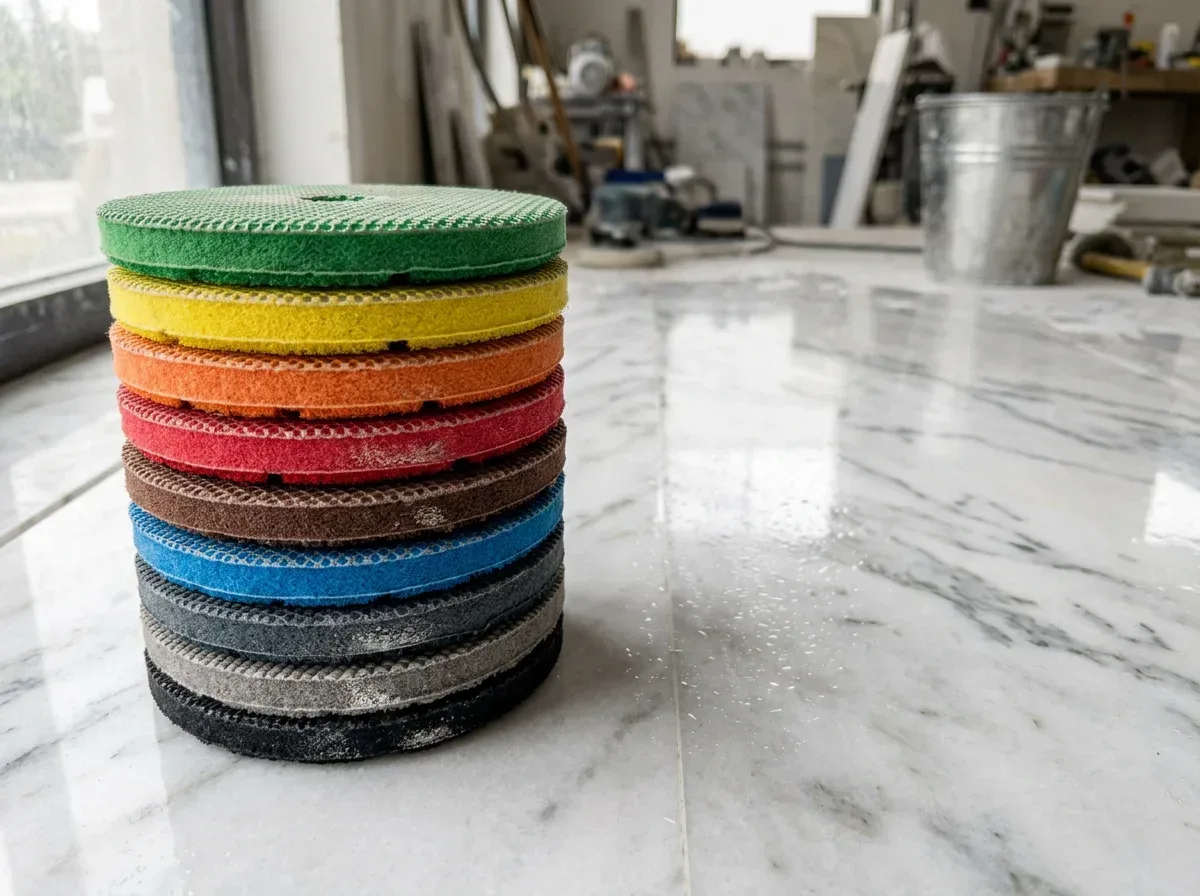
- Advantage: No layer is added to the surface; the shine does not yellow or peel. The stone breathes, and later maintenance can be done with polishing alone.
- Limitation: The level of shine that can be achieved is limited depending on the type of stone; some stones can only reach a certain level of gloss with mechanical polishing.
- Use: It is used after honing, as well as in renewal and maintenance polishing; it is the final step of every job in which scratches and dullness are removed.

2. Crystallization
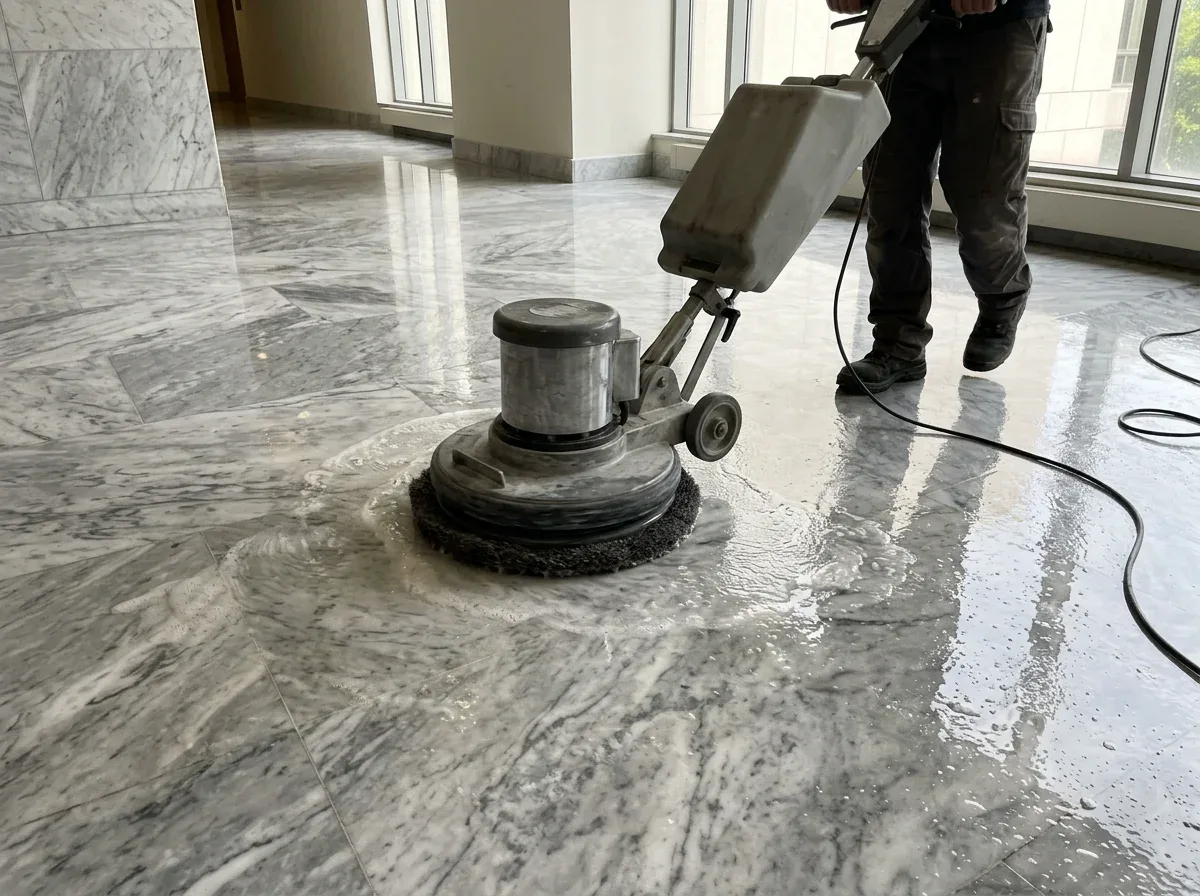
Special chemicals are applied to the marble surface with a heavy single-disc machine and steel wool or special pads. The product reacts with the calcite structure of the marble, forming a harder and shinier layer on the top surface. This layer is part of the stone, not a film stuck onto the surface.
- Advantage: It provides high gloss and a certain increase in surface hardness; in high-traffic areas, the shine is maintained for longer.
- Limitation: It is effective only on stones containing calcium carbonate (marble, travertine, some limestones); it does not work on granite. Incorrect or excessive application can make the surface brittle and stained, and can reduce the stone's breathability.
- Use: In maintenance polishing, especially in busy areas such as hotel lobbies, it is applied as a complement after honing and mechanical polishing.
3. Surface Coatings (Acrylic, Varnish, Polish Film)
Products that are applied to the surface and form a glossy film once dry.
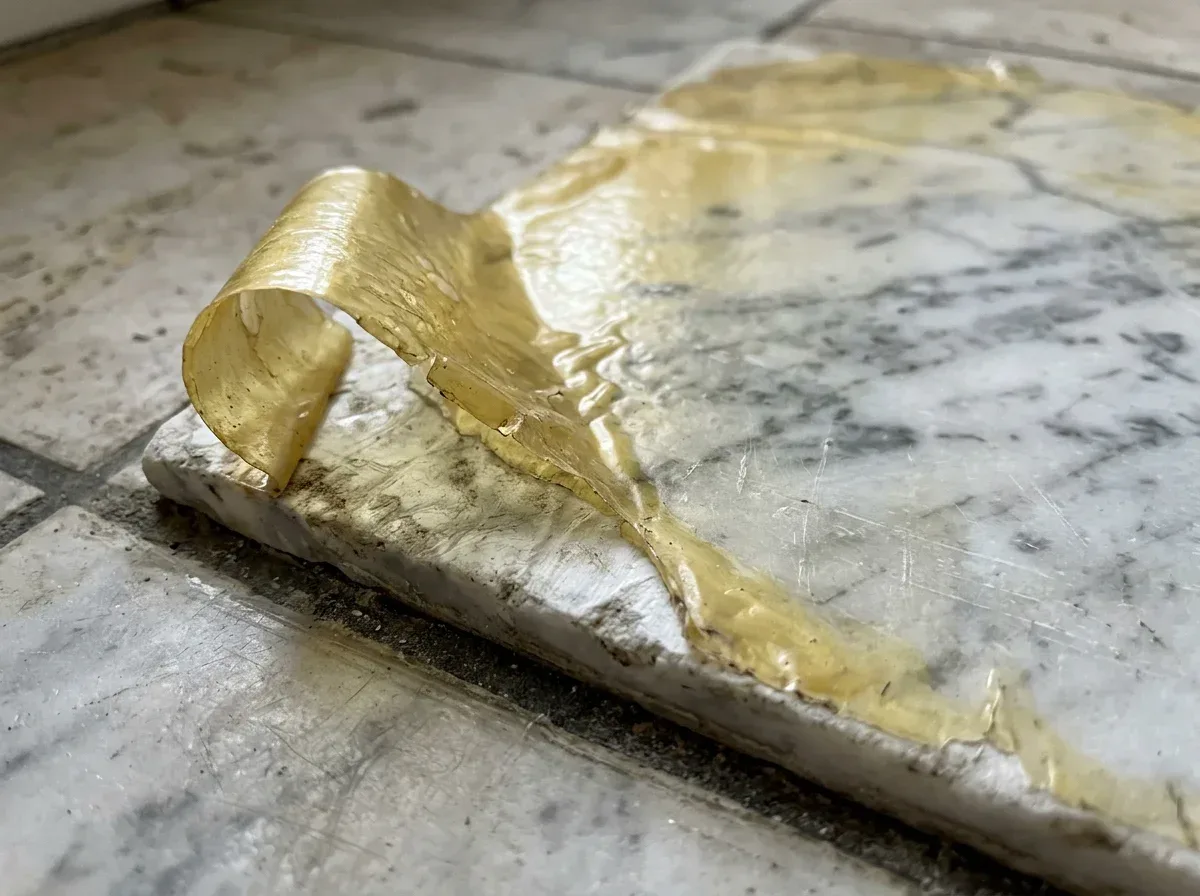
- Advantage: It gives a quick and cheap shine; once the product is applied and dried, the floor looks shiny in a short time.
- Limitation: The film's shine belongs to the coating, not the stone; it yellows, scratches, peels, traps dirt and must be stripped later.
- Use: We do not recommend it on natural stone floors; the short-term shine does not make up for the stripping labor required afterward or the damage it does to the stone.
Comparison
| Mechanical polishing | Crystallization | Surface coating | |
|---|---|---|---|
| Where does the shine come from? | The stone itself | Reaction on the surface | Film |
| Which stone? | All | Marble, travertine | All |
| Yellowing | None | Slight | Yes |
| Peeling | None | None | Yes |
| Stripping afterward | Not required | Sometimes | Required |
Which Method in Which Case?
The right polishing method is chosen according to the type of stone, the current condition of the floor, and whether the area is wet or heavily used.
- Scratched, uneven or acid-etched floor: Honing is done first, followed by mechanical polishing; since deep damage cannot be hidden by polishing, the surface is leveled first.
- Marble lobby where high shine is desired: Crystallization is done after honing and polishing; the marble's calcite structure gains a shinier and harder top layer.
- Granite floor: Mechanical polishing is performed; crystallization is not applied because granite does not contain the calcium carbonate that the product reacts with.
- Wet areas, stairs, outdoor spaces: A honed finish and impregnation are applied; neither crystallization nor film, because a glossy surface becomes slippery when wet.
- Yellowed and peeling old polish: Film stripping, honing and polishing are carried out; without removing the old layer, the stone's own color and shine cannot emerge.
Watch Out for the Word "Polish" in Quotes
In floor quotes, the word "polish" can be used for any of these three methods. That is why, if a quote says polish, you should ask whether it means mechanical polishing with diamond pads, crystallization, or a product applied to the surface. Film products applied to the surface in particular, although they give a shiny appearance in a short time, cause problems within a few months through yellowing and peeling, and stripping them afterward means extra cost.
Our Polishing Approach in Alanya
On marble and travertine floors in Alanya, we always obtain the shine from the stone itself: graded honing and mechanical polishing with diamond pads are our core method. In areas where high gloss and durability are required, such as hotel lobbies, we complement this with crystallization. We do not recommend polishes and varnishes that form a film on the surface for natural stone floors, and we also strip previously applied ones to reveal the stone's true shine. In the video below, you can watch a marble polishing job carried out by our company.
Our Approach

Primarily, we bring out the stone's natural shine through grinding and mechanical polishing with diamond abrasives. Crystallization can be considered as a complementary treatment when the stone and its condition are suitable. Instead of film-forming coatings, we recommend protection with impregnation.
Our Crystallization Polishing Service in Alanya

After honing, or on marble floors that have lost their shine but have no deep damage, we use crystallization polishing to improve the surface's gloss and durability. It is a method that extends the maintenance interval in heavily used areas such as hotel lobbies, shops, and apartment building entrances.
We show you on site whether crystallization polishing or honing is the right choice for your floor. Explore our Crystallization Polishing service.
Marble Polishing Service
Chemicals suited to the marble surface are applied, and the surface is worked with a machine and steel wool or a pad. The chemical reacts with the calcium carbonate surface, forming a thinner, harder and glossier finish. — Expert Note