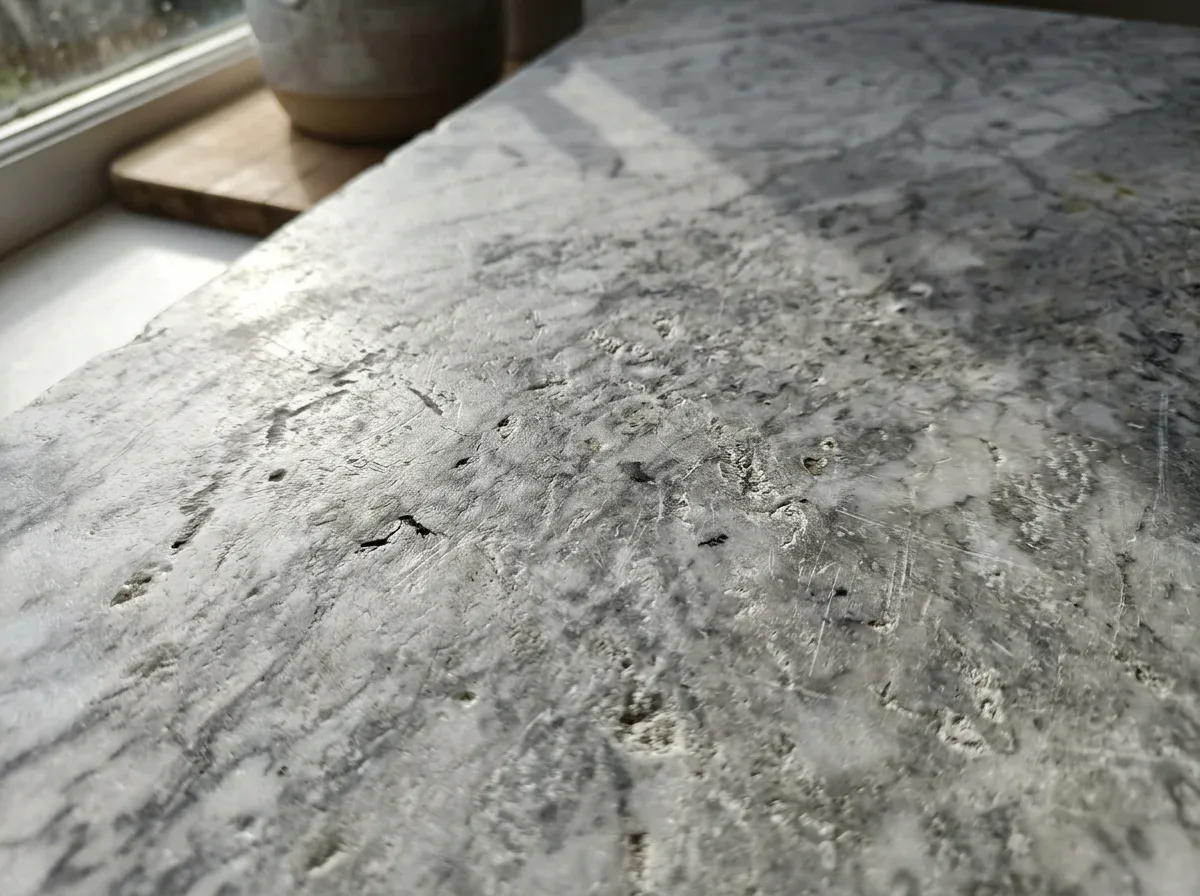
What Is an Antiqued (Aged) Finish? A Natural Look for Stone
In short: An antique or aged finish gives a new stone the look of having been used for centuries.
With its soft edges, slightly wavy surface and natural texture, it is especially popular in Mediterranean-style villas, courtyards and pool surrounds. In this article, we explain how an aged finish is achieved and what its advantages are.
How Is an Aged Finish Achieved?
Factory Aging (Tumbled)
Small-format stone tiles are rotated in large rotating drums together with sand, gravel and water. This process:
- Rounds the edges: As the tiles rub against each other and the sand in the drum, their sharp edges wear down; once installed, this creates a soft, old-stone-like transition between tiles.
- Softens the corners: Sharp corners break off and take on an irregular softness; this is the most distinctive detail that gives new stone the impression of having been used for years.
- Gives a naturally weathered texture: Sand and gravel leave slight undulations and fine pits on the surface; the surface loses its shine but grips better when wet.

Aged travertine and marble tiles are produced with this method.
Brushing and Acid Aging
On some products, the surface is aged with hard brushes and controlled chemical treatments. Soft areas wear away while hard areas remain, revealing the texture.
On-Site Aging
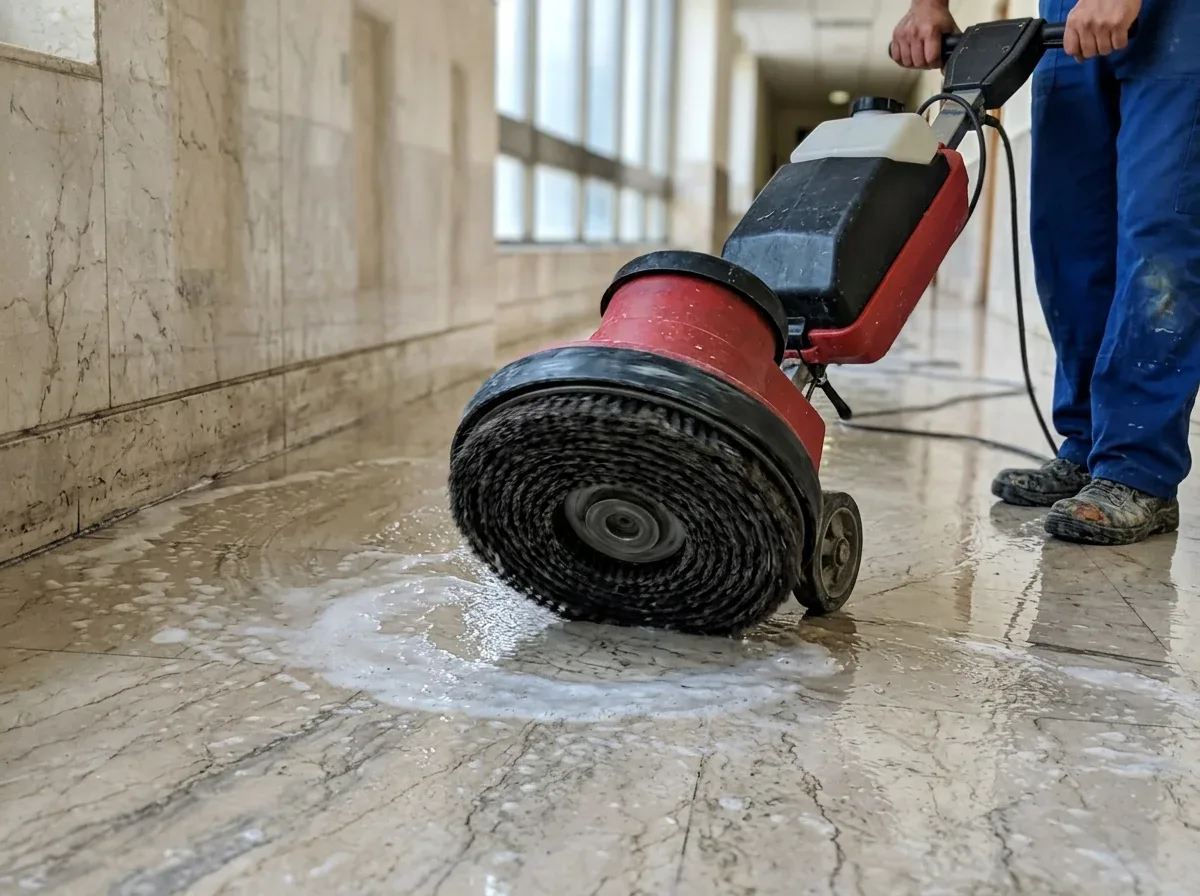
An existing floor can be given an aged look on site using special brushes and abrasives. This is one way to make a polished, slippery outdoor floor more natural and safe. The tumbled look with rounded edges cannot be fully achieved on site, but the surface texture gives a similar effect.
Advantages
Natural and Warm Appearance
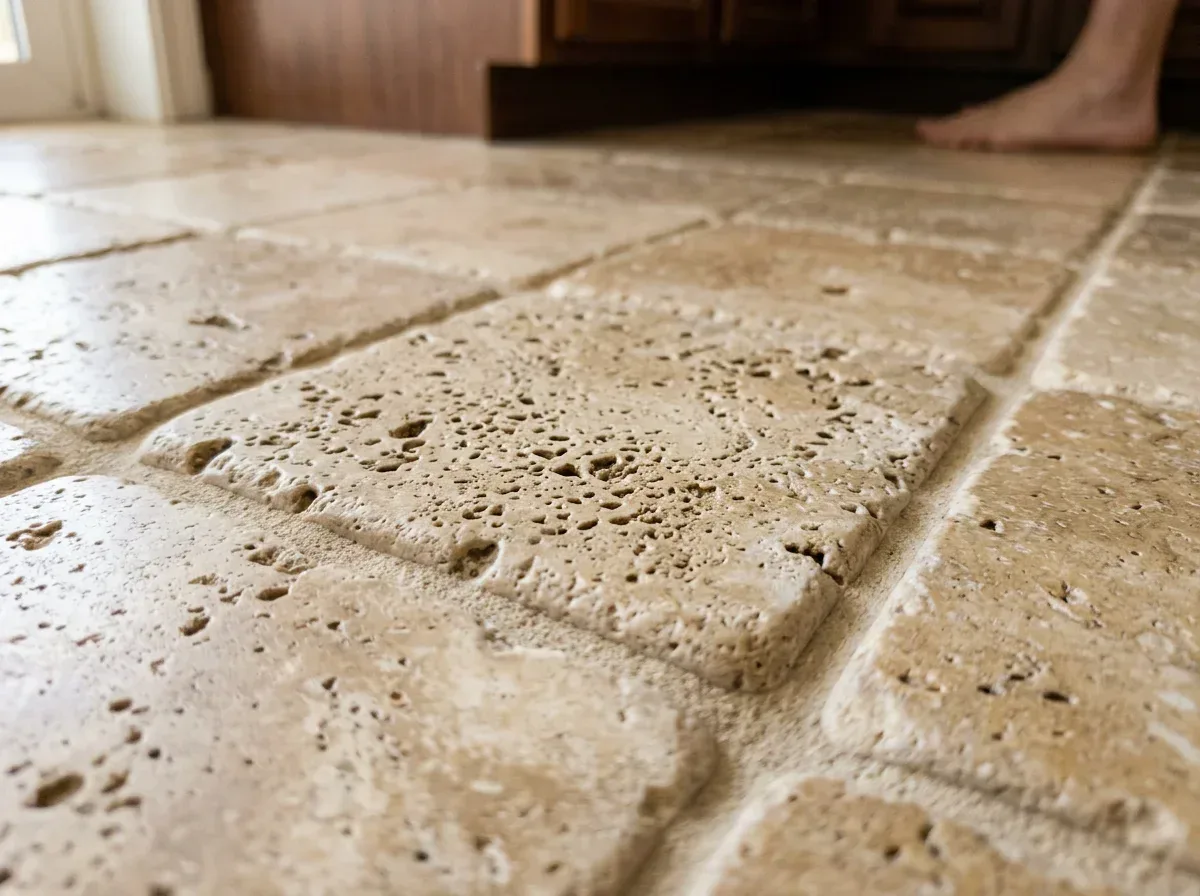
An aged surface adds history and character to the stone. It harmonizes very well with Mediterranean, Ottoman and rustic-style buildings.
Slip Resistance
The slightly wavy, textured structure of an aged surface provides much better grip when wet than polished stone. For this reason, it is one of the most suitable surfaces for pool surrounds, open terraces, garden paths and exterior stairs. However, since the buildup of algae, leaves and dirt can make any textured surface slippery, regular cleaning is still essential.
Hides Wear and Imperfections
On a surface that already looks "aged," new scratches, wear marks and small chips go unnoticed. This is a great advantage for heavily used areas.
Suitability for Outdoor Use
Outdoor surfaces exposed to sun, rain and foot traffic naturally develop a patina over time; an aged surface ages in harmony with this process.
Disadvantages
While the textured structure of an aged surface provides slip resistance, it requires more attention in cleaning and joint maintenance.
- Holds more dirt: A textured surface holds slightly more dirt; for this reason, regular brush cleaning is needed instead of a simple mop.
- Buildup on unfilled travertine: Dirt and water can accumulate in porous, unfilled aged travertine; darkening and algae may appear over time in shaded areas.
- Wider joint gaps: Because of the rounded edges, joint gaps may be wider; these joints collect dirt and water, so they require regular maintenance.
- Not suitable for those who want a glossy look: The surface remains matt and rustic; for those who want a glossy, modern look, a polished or honed finish is a more suitable choice.
Where Is It Used?
Aged surfaces are most often preferred in Mediterranean-style interiors and exteriors, where slip resistance and a natural look stand out.
- Villa courtyards and garden paths: In these areas that age under sun, rain and constant foot traffic, aged stone preserves a natural look by hiding wear.
- Pool surrounds and terraces: A textured surface grips much better under wet feet than polished stone, which reduces the risk of slipping at poolsides and on open terraces.
- Country-house-style kitchens: It harmonizes with rustic wood and copper details; the small marks that come with use are not noticeable on a surface that already looks aged.
- Common areas of boutique hotels: It creates a warm atmosphere in heavily used lobbies, courtyards and passageways, and hides scratches and wear much better than polished stone.
- Wall cladding and fireplace surrounds: It adds history and character to stone even on surfaces that are not walked on; it gives a natural, textured look around fireplaces and on accent walls.
Maintenance
Maintaining an aged surface relies on regularly removing dirt that settles into the texture and joints, and on proper protection.
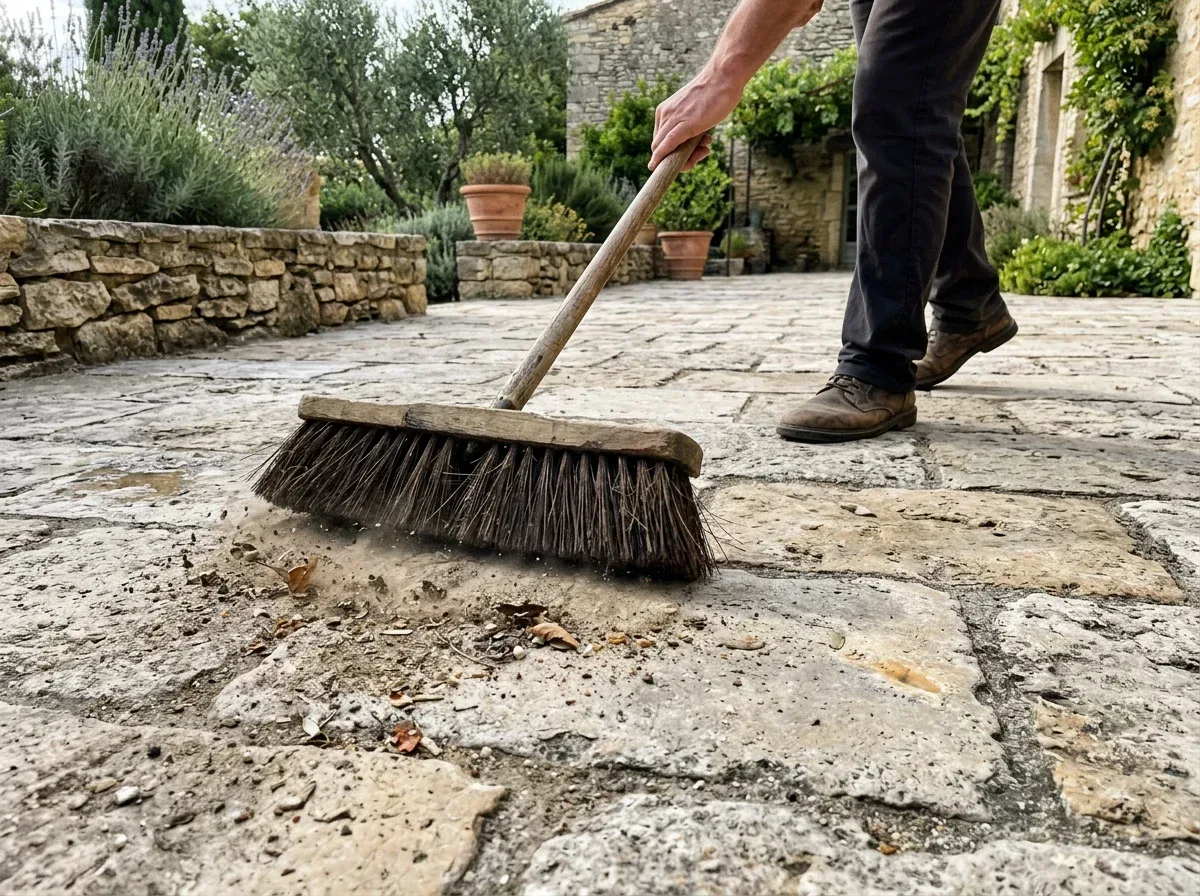
- Dry brush or broom: Leaves, dust and sand are removed regularly with a dry brush or broom before they settle into the recesses of the texture.
- Brush machine and pH-neutral product: For wet cleaning, brush machines and pH-neutral products are used; the brush reaches into the recesses, and the neutral product does not damage the stone or the sealer.
- Pore and joint cleaning: Dirt in the pores and joints is removed periodically; dirt left for a long time darkens and prepares the ground for algae in shaded areas.
- Suitable sealer: A sealer is applied; for outdoor use, UV-resistant, breathable products are chosen so that moisture inside the stone can escape.
- Color enhancer: If desired, a color-enhancing impregnator can be used to revive the tone; since it changes the appearance, it is best to test it on a small area first.
Surface Options Comparison
| Surface | Appearance | Slip Resistance | Suitable area |
|---|---|---|---|
| Polished | Glossy, modern | Low | Dry indoor areas |
| Honed | Matte, understated | Medium-good | Bathroom, kitchen, stairs |
| Brushed / patinato | Textured, natural | Good | Outdoor steps, terrace |
| Antique (tumbled) | Rustic, soft-edged | Good | Courtyard, poolside, country house |
Pore Filling in Tumbled Travertine
Tumbled travertine tiles are sometimes sold with unfilled pores and sometimes with filled ones. In unfilled travertine, the pores collect dirt, soil and water over time, and algae may form in shaded areas. When maintaining such floors, the dirt in the pores is first washed out, and then, if desired, the pores are sealed with a filler matching the tone of the travertine. Because the antique look is meant to be preserved, the surface is not polished; it is only lightly brushed and impregnated.
Maintenance Schedule for Antique-Finish Floors
Maintaining an antique-finish floor becomes easier when it is divided into regular intervals, from weekly sweeping to an annual impregnation check.
- Weekly: Leaves and dust are swept away; when debris that builds up on a textured surface gets wet, it both leaves stains and makes the floor slippery.
- Monthly: Brush washing is done with a pH-neutral product; the brush lifts dirt lodged in the recesses of the texture and in the pores up to the surface.
- At the start of the season: Algae and darkening are cleaned off and the joints are checked; buildup that forms in shaded areas after the rainy season is removed at this stage.
- Once a year: A drop test is performed and the impregnation is renewed if necessary; if water soaks into the stone quickly, it indicates that the protection has weakened.
Antique-Finish Surfaces in Alanya
Tumbled travertine is very common in villa courtyards, around pools and in the gardens of boutique hotels in Alanya. Intense sun and sea air cause darkening, algae and dirt buildup in the pores of these stones over time. In these areas, we carry out deep cleaning, pore filling and impregnation without altering the character of the surface; on polished and slippery outdoor floors, we also offer brushing that creates an on-site antiquing effect upon request.
Can Antiqued Flooring Be Honed?

It can be honed, but honing largely removes the antiqued texture and flattens the surface. For antiqued floors, deep cleaning, grout renewal and impregnating (sealing) are usually preferred. If there is serious wear or repair is needed, the surface can be re-brushed to preserve the texture.
Our Patina and Antiquing Service in Alanya

On outdoor stone, pool surrounds and garden paths, we use brushing and patina finishing to achieve a slip-resistant, natural-looking surface. We open up the texture of weathered stone and renew surfaces that trap dirt.
We assess on site whether your stone is suitable for patina finishing. Explore our patina service.
A textured surface provides better grip when wet than polished and honed surfaces. For this reason, it is preferred around pools and on terraces. — Expert Note