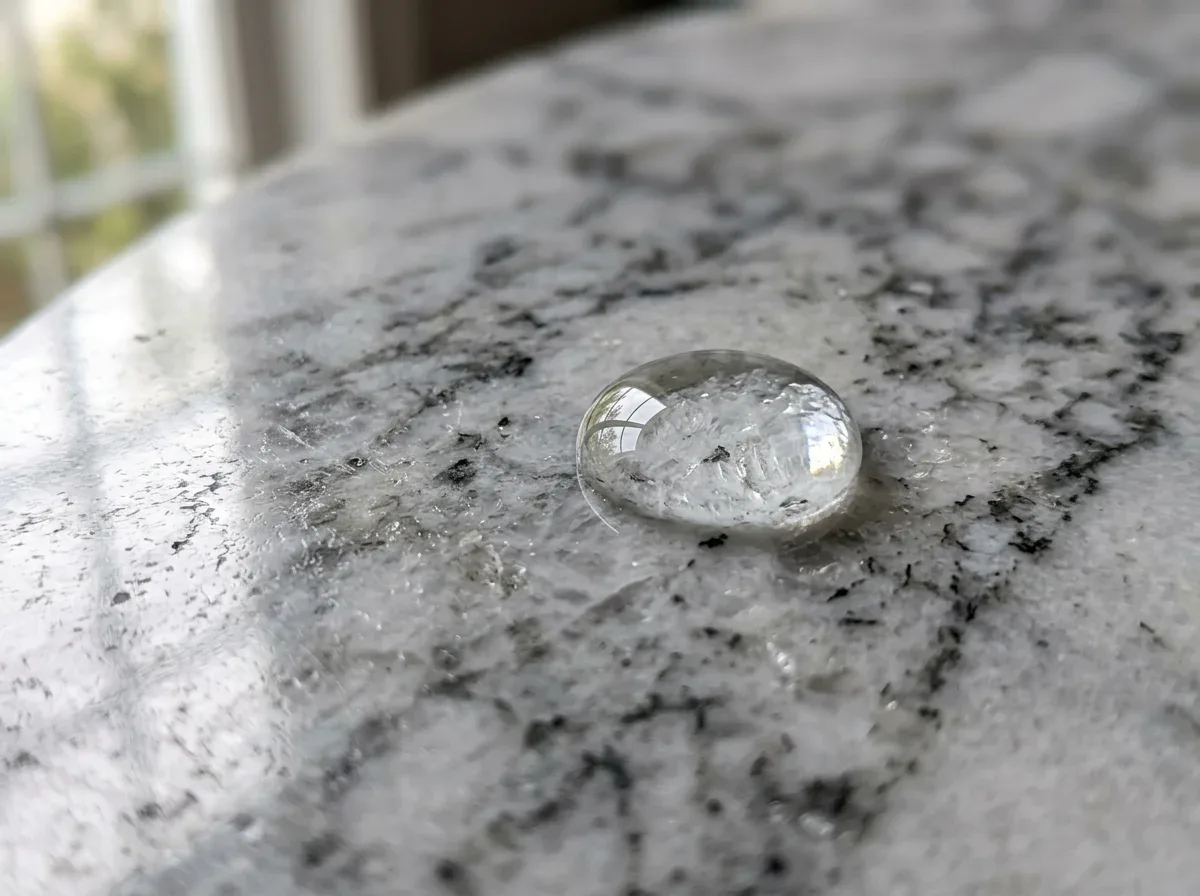
What Is Crystallization Polishing?
In short: Crystallization is a surface treatment used to increase and preserve shine, especially on hotel lobbies, shopping malls and heavily used marble floors.
Although the word "polish" comes up, it is not a polish applied onto the surface in the classic sense. In this article, we explain what crystallization is, how it works and where its limits lie.
How Does Crystallization Work?
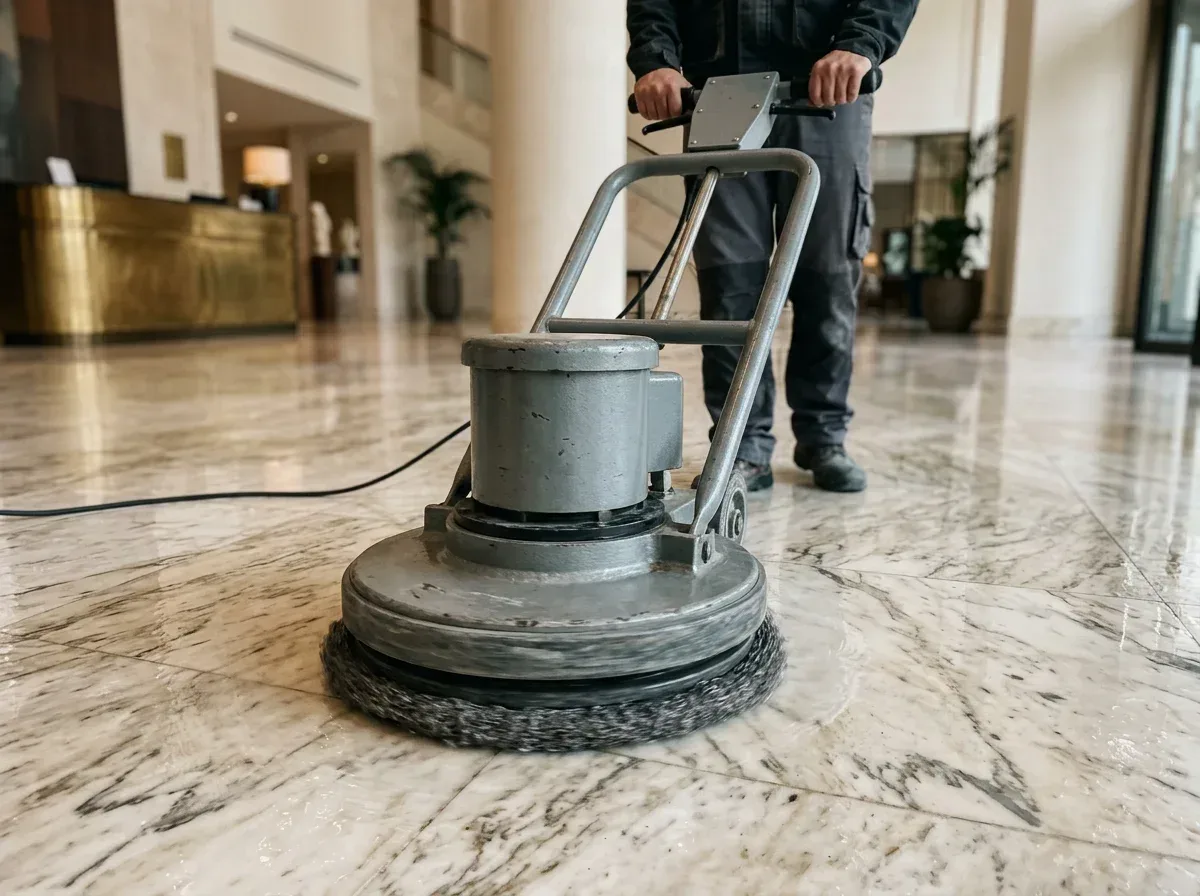
Crystallization products contain special chemicals that react with calcite, the main mineral of marble. The product is applied to the surface with a heavy machine and steel wool or special pads. Through the heat generated by friction and the chemical action of the product:
- The top layer is restructured: The product reacts with calcite, and with the frictional heat the thin topmost layer of the marble is reshaped as part of the stone itself.
- A harder, shinier surface: The restructured layer is denser than the surrounding stone; therefore it reflects light more evenly and dulls later under foot traffic.
- Micro-scratches are removed: Fine scratches and slight dullness that develop during daily use are closed in this layer, and the surface regains an even, vibrant look.
This layer is a part of the stone; it is not a film stuck onto the surface. Therefore, properly applied crystallization does not peel or flake.
On Which Stones Is It Applied?
The effect of crystallization depends on the calcite content of the stone; therefore it does not give the same result on every surface.
- Marble: This is the main application area of crystallization; since most of marble consists of calcite, the product reacts directly with the surface.
- Travertine and limestone: It can be applied because they contain calcite; however, the result varies with the structure of the stone, and the shine may differ on porous and filled surfaces.
- Terrazzo (marble chips): It can be applied; the marble chips gain shine, but the binder holding the chips may not react the same way as the stone.
- Granite: Since it does not contain calcite, marble-specific crystallization products do not give the expected effect; on granite, shine is achieved with honing and diamond pads.
- Ceramic and tile: It is not applied; the glazed or fired structure of these surfaces has no calcite for the product to react with.

Crystallization and Honing
Crystallization does not replace honing:
- Deep defects require honing: Crystallization does not remove deep scratches, lippage or acid marks; these defects can only be eliminated after the surface is first corrected by honing.
- Reinforcement after honing: Crystallization after honing strengthens the shine and makes the surface more durable; it gives the best result on the even surface produced by honing.
- Extends the honing interval: With regular maintenance, crystallization can extend the interval between full honings; since the shine is renewed periodically, the floor needs re-honing later.
Advantages
The strengths of crystallization are shine, surface hardness and ease of maintenance.
- High shine: It approaches the mirror shine desired in areas such as lobbies and showrooms; because light reflects evenly from the surface, the space looks brighter.
- Surface hardness: Because the restructured top layer is denser, the surface dulls later under foot traffic and the shine is preserved for longer.
- Ease of maintenance: It is applied quickly at shine-renewal intervals; only the top surface can be revived without honing the floor from scratch.
- No film: It does not create a layer that prevents the stone from breathing; there is no coating left on the surface that could peel or flake.
Limits and Risks
Crystallization is not suitable for every area; slipperiness, acid resistance and application errors directly affect the result.
- Slip resistance: High shine can increase slipperiness when wet. It is not suitable for wet areas, stairs and outdoor spaces.
- Acid resistance: A crystallized surface does not provide full protection against acids; when lemon, vinegar or an acidic cleaner touches it, a dull mark can still remain.
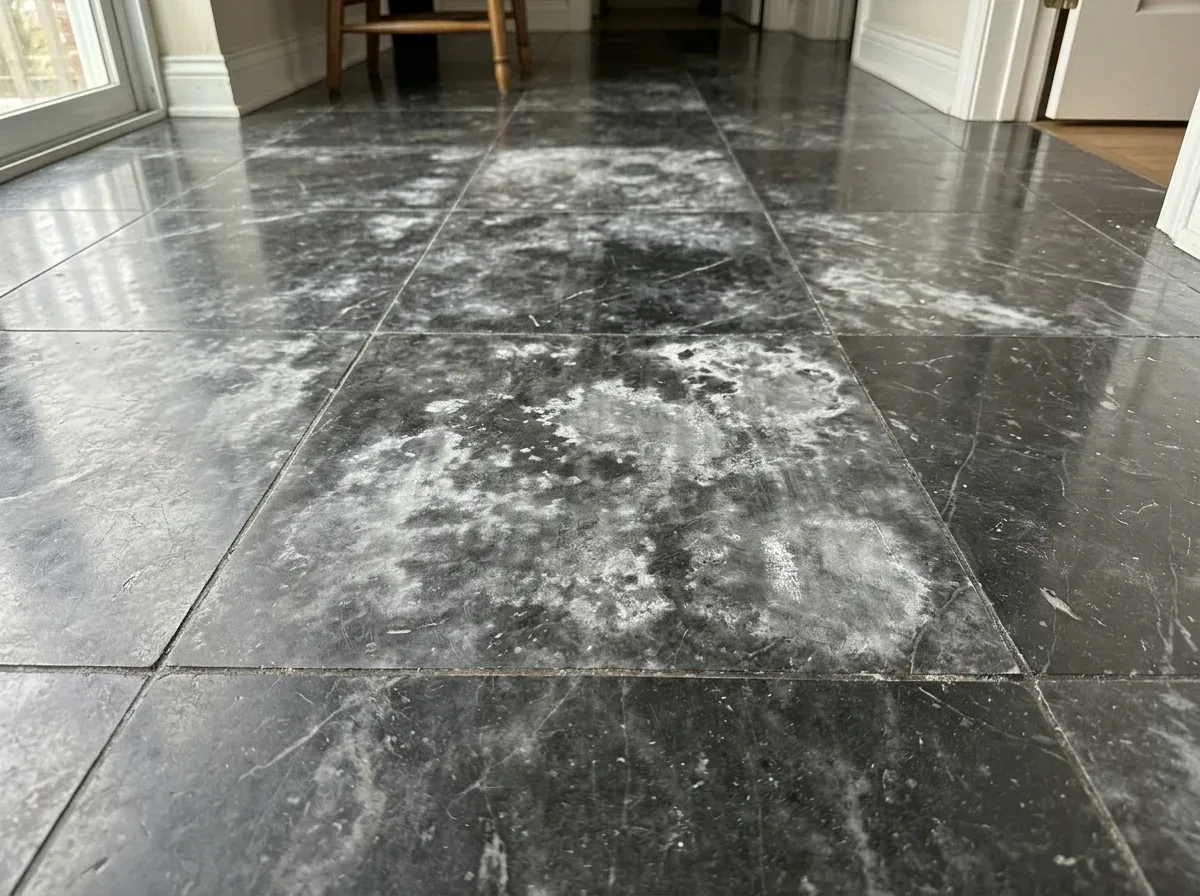
- Incorrect application: Excess product, the wrong pad or insufficient cleaning can leave a hazy look, stains and white residues on the surface.
- Dark-colored marbles: On some dark stones, whitish marks may appear after crystallization; therefore a trial should be done in a small area before moving on to the whole floor.
- Joints and edges: The product must not overflow onto the joints and surrounding surfaces; overflowing product can stain the joint filler and neighboring materials.
How Often Is It Applied?
In high-traffic lobbies, crystallization is applied periodically as part of a regular maintenance program; in homes, it is usually done once as the final step of honing and refreshed as needed. The interval is determined by traffic and cleaning habits.
Difference Between Crystallization, Polish and Surface Coating
| Feature | Crystallization | Wax / acrylic polish | Grinding and polishing |
|---|---|---|---|
| How does it work? | Chemical reaction with the top surface of the stone | Applied to the surface as a film | The stone itself is ground and polished |
| Deep scratches and level differences | Does not remove them | Does not remove them, covers them | Removes them |
| Peeling, yellowing | None | Occurs over time | None |
| Breathability of the stone | Not affected | May be blocked | Not affected |
| Suitable stone | Marble, calcite-based stones | Varies | All natural stones |
Application Steps
Before crystallization, the floor is thoroughly cleaned; if there are any layers of old polish, wax or coating, they are removed completely, because the product must come into direct contact with the stone. If there are deep scratches, acid marks or level differences, grinding is done first. The product is then applied in small sections using a heavy single-disc machine and a suitable pad; in each section, work continues until the desired gloss is achieved. When the application is finished, the floor is cleaned and any residue is removed. Grout joints and surrounding surfaces are protected beforehand.
Who Is Crystallization Suitable For?
Crystallization is most effective on large, dry marble floors where gloss is a priority and regular maintenance can be carried out.
- Hotel lobbies and showrooms: In these areas, where a high gloss determines the first impression of the space, crystallization helps the floor look mirror-like.
- Shopping mall corridors: In corridors with heavy foot traffic, the hardened top surface delays dulling, and the gloss is quickly refreshed with interim maintenance.
- Large marble floors: In large areas where the gloss is meant to last longer after grinding, crystallization works as a protective layer that postpones the need for re-grinding.
- Corporate buildings: In buildings where a regular maintenance program can be applied, crystallization is refreshed periodically and the floor keeps the same appearance throughout the year.
In wet areas or areas with a high slip risk, such as bathrooms, stairs, poolsides and outdoor spaces, a honed finish and impregnation should be preferred over crystallization.
Crystallization Projects in Alanya
In Alanya, we apply crystallization mostly in hotel lobbies, reception areas and large stores. Before the season, after grinding and polishing, we strengthen the surface with crystallization, and throughout the season we plan interim maintenance according to the hotel's occupancy. On dark-colored marbles and on floors where a different product has previously been applied, we always make a small test area first.
Maintenance of Crystallized Floors

- Daily dust removal with a dry mop,
- pH-neutral detergents,
- Avoiding acidic and abrasive products,
- Not using oil-based polishes,
- Entrance mats.
Our Crystallization Polishing Service in Alanya

On marble floors that have lost their shine after honing, or whose gloss has faded but which have no deep damage, we use crystallization polishing to improve the surface's shine and durability. It is a method that extends the maintenance interval in heavily used areas such as hotel lobbies, shops and apartment entrances.
We show you on site whether crystallization polishing or honing is the right choice for your floor. Explore our Crystallization Polishing service.
Crystallization enhances the shine of a well-honed floor, but it cannot rescue a floor in poor condition. Honing first, then crystallization; the order should never be reversed.
From the Field: Marble Polishing
You can watch one of our team's on-site projects in the video below.