What Is a Patinato and Brushed Finish?
In short: Patinato and brushing are finishes that give natural stone a slightly wavy surface that feels soft to the touch yet still provides grip.
They are an ideal middle ground for those who want to get rid of the slipperiness of a polished surface but do not want a look as rustic as an antiqued finish. In this article, we explain these finishes and how they differ from other finishes.
How Is It Applied?
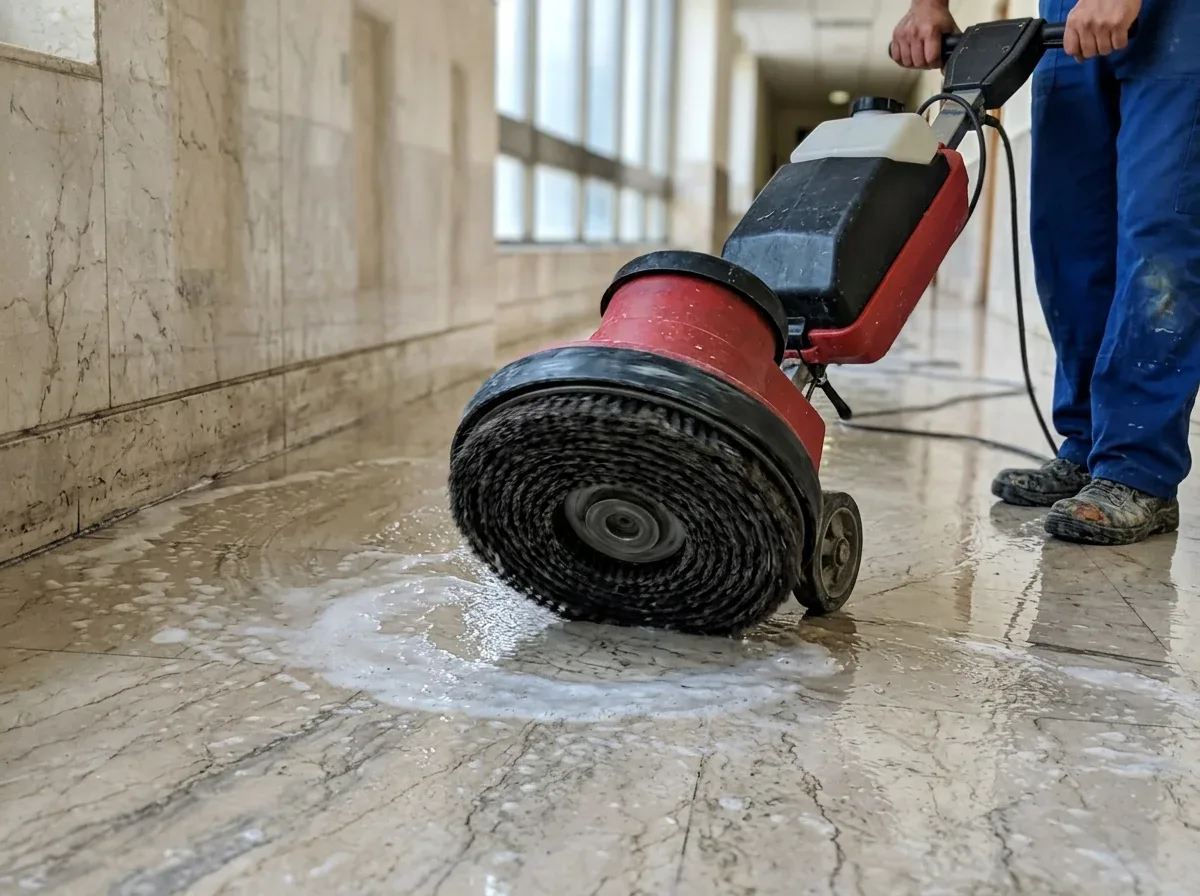
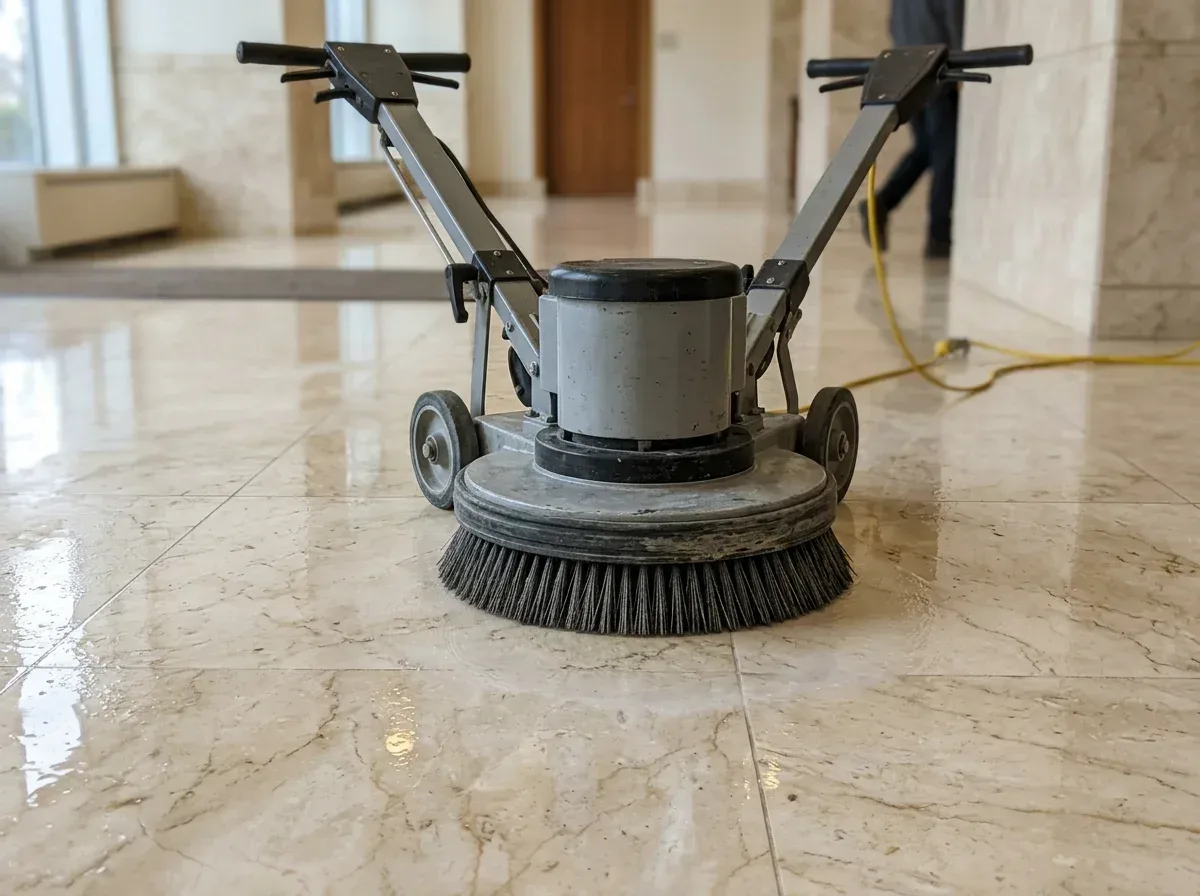
Patinato and brushing are carried out on the stone surface with special brushes fitted with hard abrasive wires or diamond particles. The brushes wear away the softer parts of the stone more and the harder parts less, which creates the following characteristics on the surface:
- Slight waviness: Because the brushes wear away the softer parts more, a slight waviness that follows the natural structure of the stone and is hard to see with the naked eye forms on the surface.
- Silky surface: The surface does not reflect like a mirror, but it is not as dull as honed stone either; light is diffused softly and the color of the stone stays vivid.
- Tactile texture: A slight texture can be felt when touched by hand; when the surface is wet, this texture helps the sole of the foot grip the stone.
The process moves gradually from coarse brushes to fine brushes. If it is finished with coarse brushes, the texture is pronounced; if it continues with fine brushes, a softer, slightly glossy (satin) surface is obtained. The name "patinato" is generally used for this soft, satin-looking brushed surface.
Difference Between Honing, Brushing and Antiquing
| Honing | Brushing / Patinato | Antiquing | |
|---|---|---|---|
| Surface | Flat, smooth | Slightly wavy | Pronounced texture, rounded edges |
| Gloss | Matte | Matte-satin | Matte |
| Slip resistance | Good | Better | Very good |
| Appearance | Modern | Natural, warm | Rustic, antique |
| Dirt retention | Low | Medium | Higher |
Which Stones Can It Be Applied To?
Brushing can be applied to most soft and hard stones, but the result and the duration of the work vary depending on the structure of the stone.
- Marble: It gives a very beautiful result; veins and textures look vivid yet soft, and the slipperiness of polished marble is reduced.
- Travertine: Brushed travertine is one of the most popular outdoor surfaces; its porous structure becomes more pronounced with brushing and takes on a natural, warm look.
- Limestone: It enhances the natural look; brushing highlights the plain color and texture of the stone, giving the surface an aged but well-kept feel.
- Granite: It takes longer because of its hardness, but brushed granite also offers a natural, slip-resistant surface.

Where Is It Preferred?
Patinato surfaces are most often preferred in areas where slip resistance, easy maintenance and a natural look are all desired together.
- Terraces, balconies and pool surrounds: Since people walk on them with wet feet, polished stone becomes slippery in these areas; a brushed texture increases grip and does not cause dazzling reflections in the sun.
- Building entrances and exterior stairs: In rainy weather, water brought in on shoes creates a slip risk at entrances and on steps; a textured surface reduces this risk and shows wear less.
- Bathroom and shower floors: On constantly wet floors, patinato is safer than a polished surface; soap and water stains are also less noticeable on a silky surface.
- Kitchens: Spilled water and oil make a polished floor slippery; on a brushed surface, grip increases and small scratches are not visible.
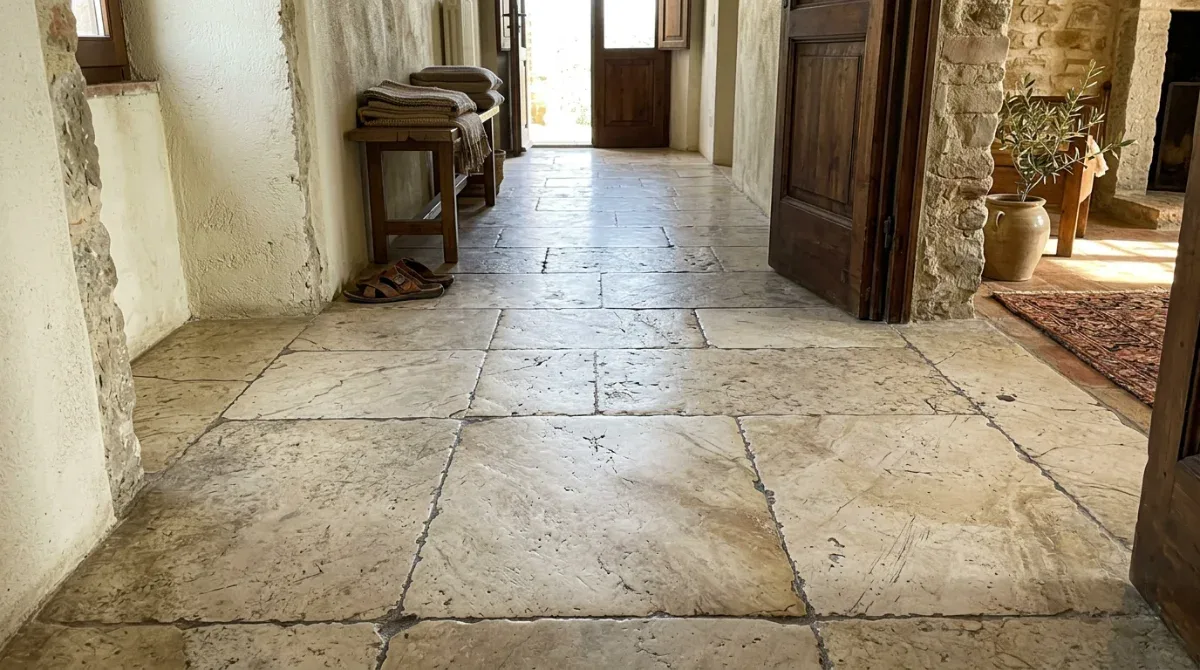
- Natural-style interiors: In rustic, Mediterranean and natural-style decor, the soft texture of brushed stone harmonizes with materials such as wood, lime plaster and linen.
- Fireplace surrounds and walls: On surfaces that are not walked on, brushing is chosen for appearance rather than slip resistance; the texture gives the stone depth together with light.
Application on Existing Floors
A polished or honed floor can be turned into a patinato surface by brushing it in place. Depending on how the space is used, this process offers several benefits.
- Safer flooring: Brushing gives the polished surface a texture, making slippery floors safer; the risk of slipping is reduced, especially in wet areas.
- Hides imperfections: It hides the imperfections of worn and scratched floors; because the silky texture scatters light, marks that stand out on a polished surface disappear.
- New character without removal: It gives the floor a new character without the need for removal; the stone stays in place, and there is no debris or re-laying cost.
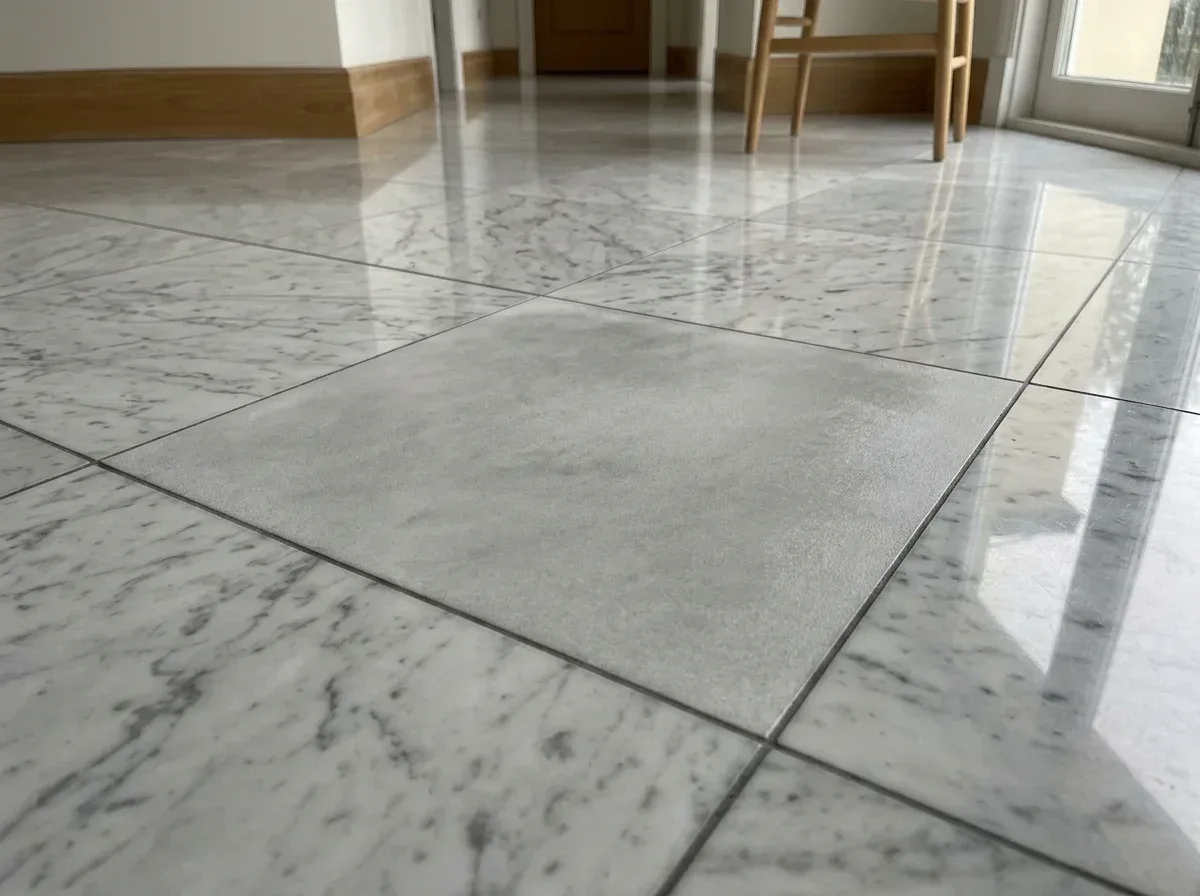
Making a small test area first shows whether the result matches your expectations.
Application Process
Patinato is applied in place as a process that progresses step by step, from preparing the floor to protecting it.
- Cleaning and removing the old polish: The floor is cleaned and any old polish or coating is removed; otherwise the brushes work on the coating rather than the stone and the texture comes out uneven.
- Coarse grinding if necessary: If there are level differences or deep damage, coarse grinding is done first; since brushing does not level the surface, differences between slabs would remain as they are.
- Texture with coarse brushes: The texture is created with coarse brushes; as the softer parts of the stone wear away, the slight undulation on the surface emerges at this stage.
- Softening with fine brushes: The texture is softened with fine brushes and the desired satin look is achieved; how far to go is determined by the result chosen on the test area.
- Washing and drying: The floor is washed and dried; the stone dust left from brushing is removed from within the texture, and the surface is ready for impregnation.
- Impregnation: An impregnating sealer suited to the place of use is applied; the textured, open-pored surface is thus protected against water, oil and dirt penetrating it.
How Much Does Patinato Increase Slip Resistance?
Patinato and brushing give the surface a texture that improves the grip between the shoe sole and the stone when wet. How much the increase will be depends on the type of stone, the brush grade, and how undulating the surface is left. A surface left with coarse brushes is more slip-resistant but holds more dirt; a satin surface finished with fine brushes looks more elegant but offers slightly less grip. For this reason, a more pronounced texture is generally preferred in wet and sloped areas.
Patinato Applications in Alanya
In Alanya, we most often apply patinato and brushing on villa terraces, pool surrounds, exterior stairs and slippery balcony floors laid with a polished finish. We also find that patinato marble is both a safe and an elegant solution in holiday rentals and indoor areas where people walk barefoot on wet floors. Before starting work, we always make a test area and choose the texture depth together with the homeowner.
Maintenance

- Regular cleaning with dry sweeping and a brush machine,
- pH-neutral products,
- Impregnation: UV-resistant products for outdoor use that do not reduce slip resistance,
- If needed, reviving the tone with a color-enhancing impregnator.
Our Patina and Antiquing Service in Alanya

On outdoor stone, pool surrounds and garden paths, we use brushing and patina finishing to achieve a slip-resistant surface with a natural look. We open up the texture of weathered stone and renew surfaces that trap dirt.
We assess on site whether your stone is suitable for patina finishing. Explore our patina service.
Brushing is done with special brushes containing abrasive particles. Thanks to the abrasives embedded in them, the bristles of these brushes wear down the surface of the stone. The key point is this: the brush wears down the soft areas of the stone more than the hard areas. The result: — Expert Note