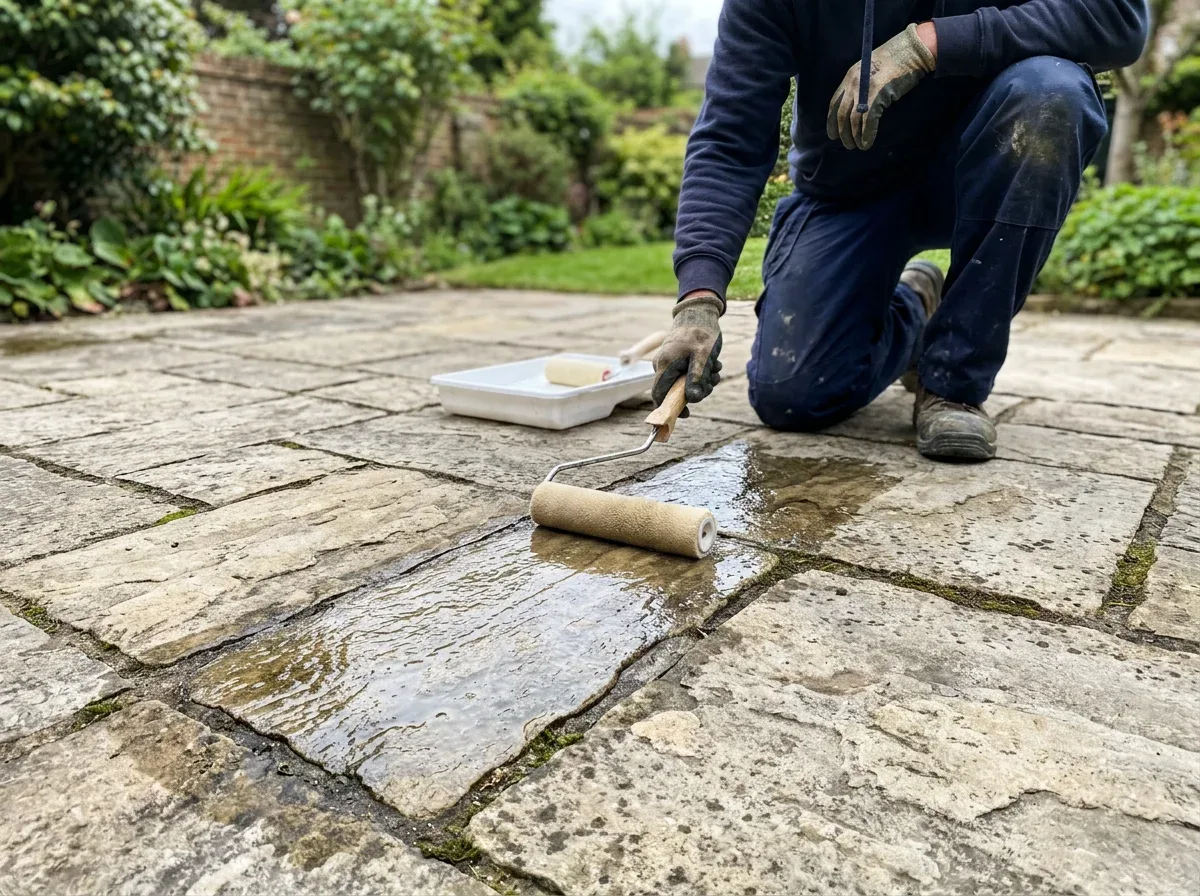
Post-Sealing Drop Test: Is the Protection Working?
In short: Impregnation is invisible to the eye; a properly applied sealer does not change the appearance of the stone.
So how can you tell whether the sealer is really working or whether it is time to renew it? The simplest way is the drop test. In this article, we explain how to perform the test and how to interpret the result.
Why Should I Test?
Because impregnation cannot be seen, the only way to know when the protection is weakening is a regular test.
- Impregnation wears off over time: Impregnation wears off over time; use, cleaning products and sunlight shorten its life, so the protection of the first day should not be considered permanent.
- Some areas lose protection first: Some areas of the floor (walkways, kitchen countertop, in front of the shower) lose their protection before others; the test reveals these spots early.
- Preventing permanent stains: Knowing the condition before a stain forms prevents permanent stains; if the protection is renewed when it weakens, you won't have to deal with a stain that has penetrated the stone.
What You Need for the Test
A few simple items you already have at home are enough for the drop test; no special tool or product is required.
- Clean water: The basic test on all surfaces is done with water; clean water shows how quickly the stone absorbs it without changing its color.
- Cooking oil: Used in kitchens, countertops and dining areas to measure protection against oil; a small amount is enough, since an oil stain can be permanent.
- Paper towel: Used to blot the drops by pressing down on them when the time is up, without wiping; this way the liquid does not spread and you can clearly see whether the stone darkens.
- Clock: Needed to track how many minutes it takes for the drops to be absorbed; the absorption time is what determines how you interpret the result.
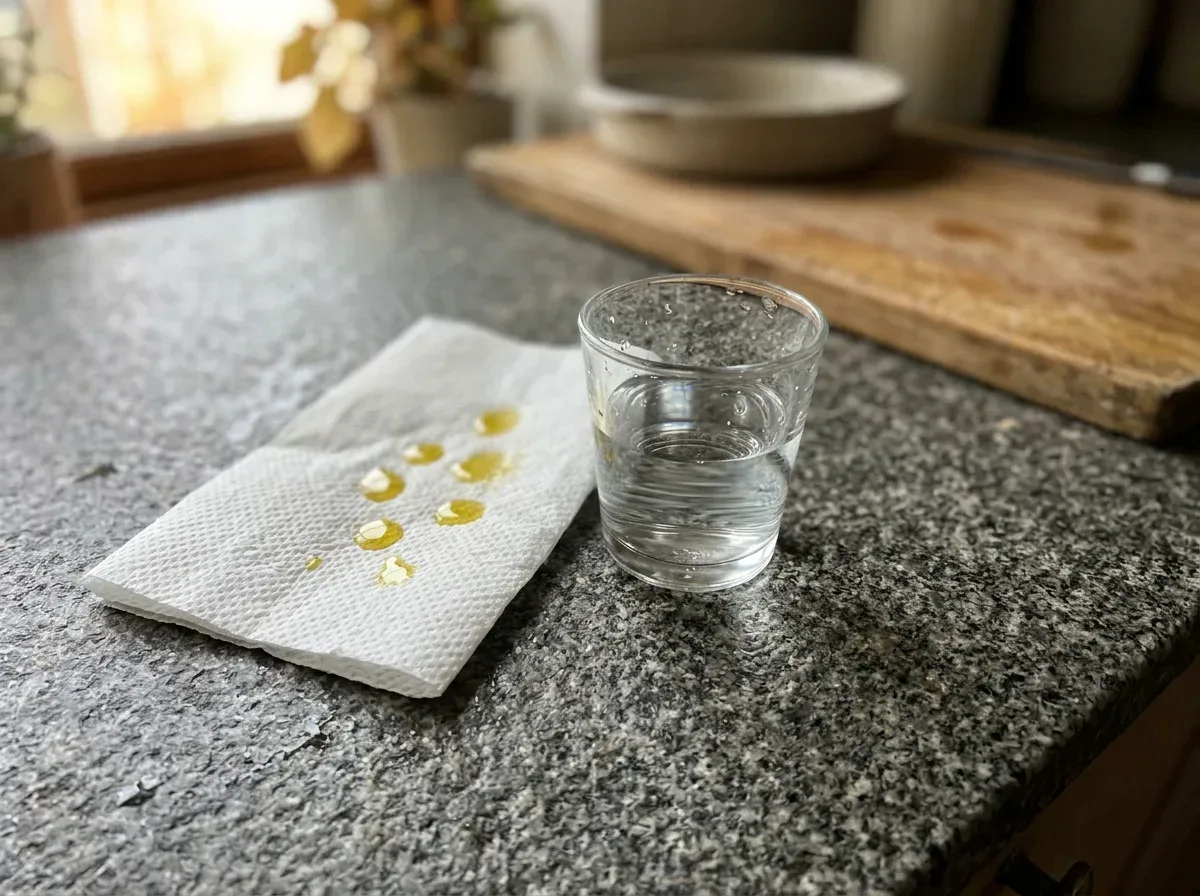
How Is the Test Done?
For the test to give a reliable result, the steps must be carried out in order, on a clean surface and comparatively.
- Clean, dry area: First make sure the test area is clean and dry; dirt, moisture or detergent residue will skew the result.
- Choose two different areas: Choose a heavily used area and a lightly used area; comparing the two shows where the protection wears off faster.
- Drop water: Then place a few drops of water on each area; spacing the drops far enough apart that they do not merge makes the result easier to read.
- Drop oil in the kitchen: In the kitchen and on the countertop, place a few drops of oil on a separate spot; since the main stain risk in these areas comes from oil, it is measured separately.
- Watch the time: Check the condition of the drops after about 5, 10 and 15 minutes; note whether they are beading, spreading or being absorbed.
- Blot the drops and check the color: Finally, blot the drops with a paper towel and look at the color of the stone; darkening shows that the stone has drawn the liquid in.
Interpreting the Results
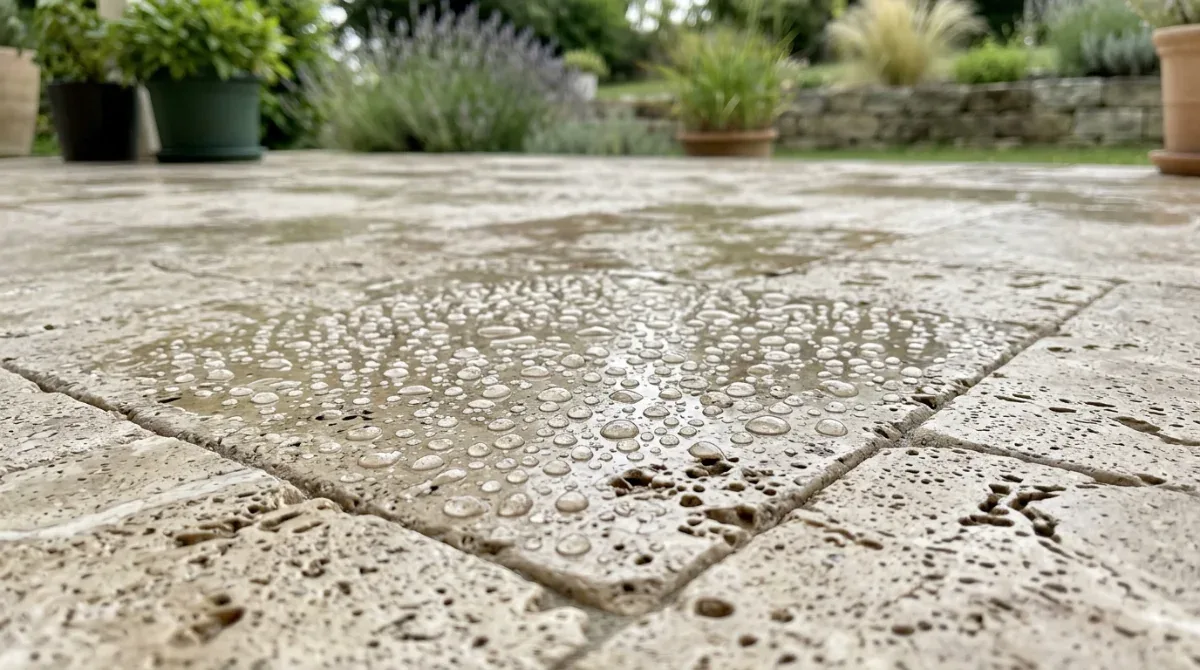
Drops Stay Beaded, Stone Does Not Darken
The protection is working. The stone is repelling the liquid.
Drops Spread but Stone Does Not Darken
The protection is still there but may have started to weaken. Do the next check sooner.
Stone Darkens Within a Few Minutes
The protection has largely worn off or was never applied. The stone absorbs water quickly; in the same way, coffee, wine or oil will soon penetrate it as well. In this case, the impregnation needs to be renewed. If darkening is seen only on walkways or in the heavily used part of the countertop, these areas can be treated first; however, renewing the whole surface together usually gives a more even result.
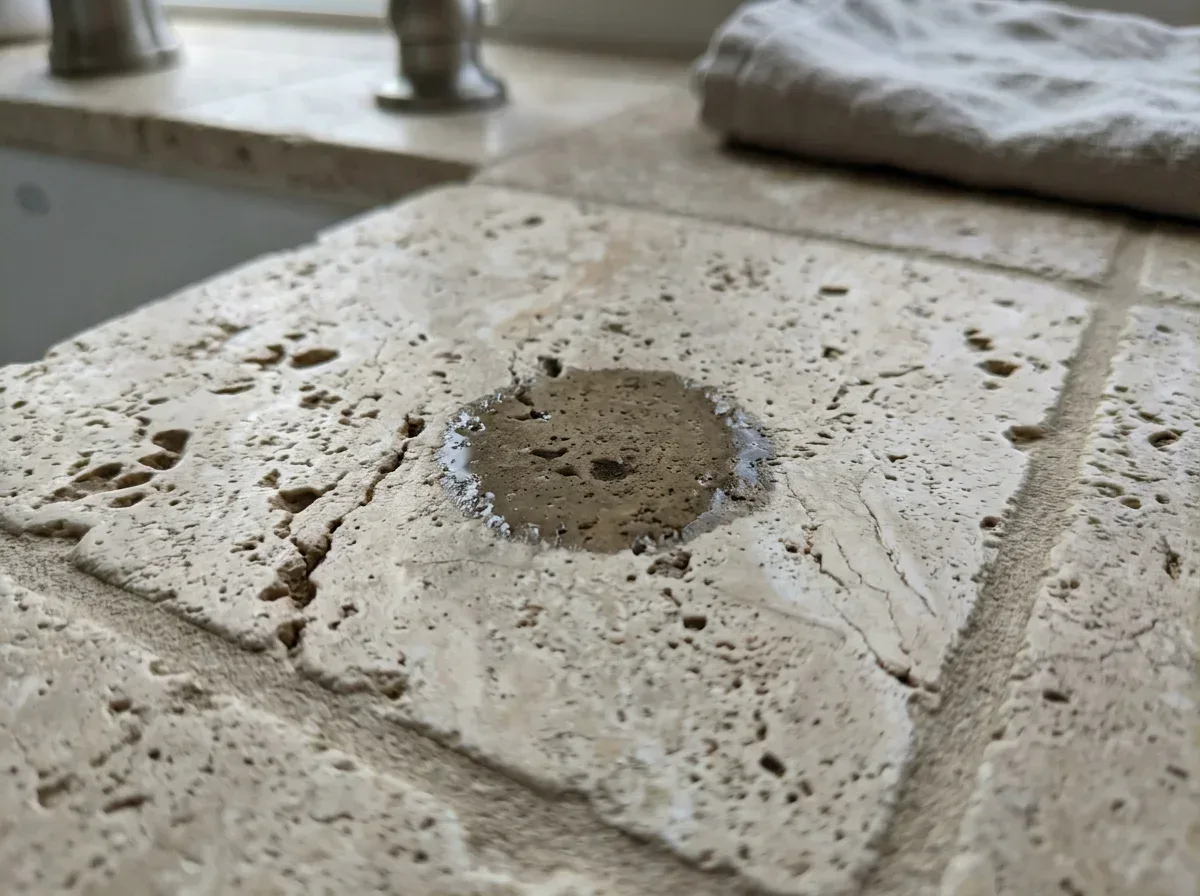
Darkening Disappears When It Dries
In a water test, the darkening disappears once it dries; this shows that the stone has absorbed the water. In an oil test, the darkening may be permanent; therefore, do the oil test in an inconspicuous spot.
Some Stones Absorb Little Anyway
Very dense granites and some dark marbles absorb water very slowly even without impregnation. On these stones, the drop test may give a positive result for a long time; this indicates that impregnation is not necessary. Conversely, on porous travertine and light-colored stones, the difference is immediately visible.
How Often Should the Test Be Done?
The frequency of testing varies depending on how heavily the surface is used and what it is exposed to.
- Kitchen countertops and dining areas: Tested every few months; on these frequently wiped surfaces that come into contact with oil, protection weakens sooner than in other areas.
- Bathroom and shower: Checked every few months; constant contact with water, soap and cleaning products shortens the life of the protection.
- Living room and bedrooms: Testing once or twice a year is enough; protection wears more slowly in dry areas, but walkways are still checked first.
- Outdoor areas and pool surroundings: Tested at the change of seasons; sun, rain and pool water weaken the protection faster than indoors.
Common Mistakes
Although the drop test is simple, when performed at the wrong time or in the wrong place it gives a misleading result about the condition of the protection.
- Testing right after impregnation: A test done before the product has cured is misleading; you need to wait a few days to see the full effect of the protection.
- Testing on a dirty or damp surface: The result will be wrong; dirt can hold water on the surface, and damp stone is already wet, so it won't show any darkening.
- Testing only in a rarely used area: Protection wears out first along walking paths; a test done only in the corners can give the impression that the protection is still working.
- Doing the oil test in a conspicuous spot: If the protection is weak, the oil can soak into the stone and leave a permanent mark; that's why the test should be done in a hidden spot, such as under a cabinet.

Summary of Results
| Observation | Meaning | What should be done? |
|---|---|---|
| Drop beads up, stone isn't darkening | Protection is good | Check again at the next scheduled test |
| Drop spreads, stone isn't darkening | Protection is weakening | Test more frequently |
| Slight darkening within 10-15 minutes | Protection has decreased | Plan a renewal |
| Noticeable darkening within a few minutes | No protection | Renew the impregnation |
Preparation Before Renewal
If the drop test shows that the impregnation needs to be renewed, the surface must be thoroughly cleaned before the new product is applied. Dirt, grease and detergent residues clog the pores and prevent the new impregnation from penetrating the stone. After cleaning, wait for the stone to dry completely. If the surface is worn, dulled or scratched, doing a light honing and polishing first, instead of just renewing the impregnation, gives a longer-lasting result.
Tips to Make Testing Easier
Doing the test regularly and in a comparable way makes it easier to see how quickly the protection weakens over time.
- Use the same spots: Use the same spots for every test; this makes it easier to compare results and to follow the change in protection more clearly.
- Make a note of the results: Keep the test dates and results as a simple note; that way you will notice in advance when renewal time is approaching.
- Do the oil test in a hidden spot: Do the oil test in a spot that isn't visible, such as under a cabinet or in a corner; if the protection is weak, any mark that remains won't be noticeable.
- Test in the shade: Outdoors, do the test at a time when the stone hasn't been heated by the sun and is in the shade; water evaporates quickly on hot stone and the result becomes misleading.
- If in doubt, take a photo: If you're unsure about the result, take a photo and show it to an expert; the degree of darkening can also be assessed from an image.
Drop Test and Impregnation Check in Alanya
In Alanya, strong sun, sea air and hard (limescale-rich) water are the main factors affecting the lifespan of impregnation. Especially on poolside travertine and on the kitchen countertops of rental holiday homes, we see the protection weaken sooner than expected. During our maintenance visits we do the drop test together with you, and plan impregnation renewal either only in the areas that need it or over the entire surface.
Renewal

When the drop test fails:
- The surface is deep cleaned,
- The stone is dried completely,
- A suitable impregnating sealer is reapplied,
- After curing, it is tested again.
Our Natural Stone Sealing Service in Alanya

Whether after polishing or on its own, we apply sealer that protects porous stones against water, oil and stains. Depending on the type of stone, whether it is indoors or outdoors, and how heavily it is used, we choose either a water-based or a solvent-based product.
After application, we check together with you, using a drop test, that the protection has taken hold. Explore our Natural Stone Sealing service.
The stone is absorbing liquid; the sealer has weakened or was never applied. Especially if the stone darkens when exposed to oil, the risk of staining is high in kitchen and dining areas. We recommend reapplying the sealer. — Expert Note