Types of Impregnators: Water-Based and Solvent-Based Protectors
In short: "Impregnation" is not a single product but a family of sealers with very different properties.
The type of stone, where it is used and the look you expect determine which product to choose. In this article we explain the types of impregnating sealers in plain language and describe what to consider when making your choice.
Penetrating Sealers vs. Film-Forming Products
First we need to make the basic distinction: natural stone sealers fall into two groups depending on whether they work inside the stone or on top of it.
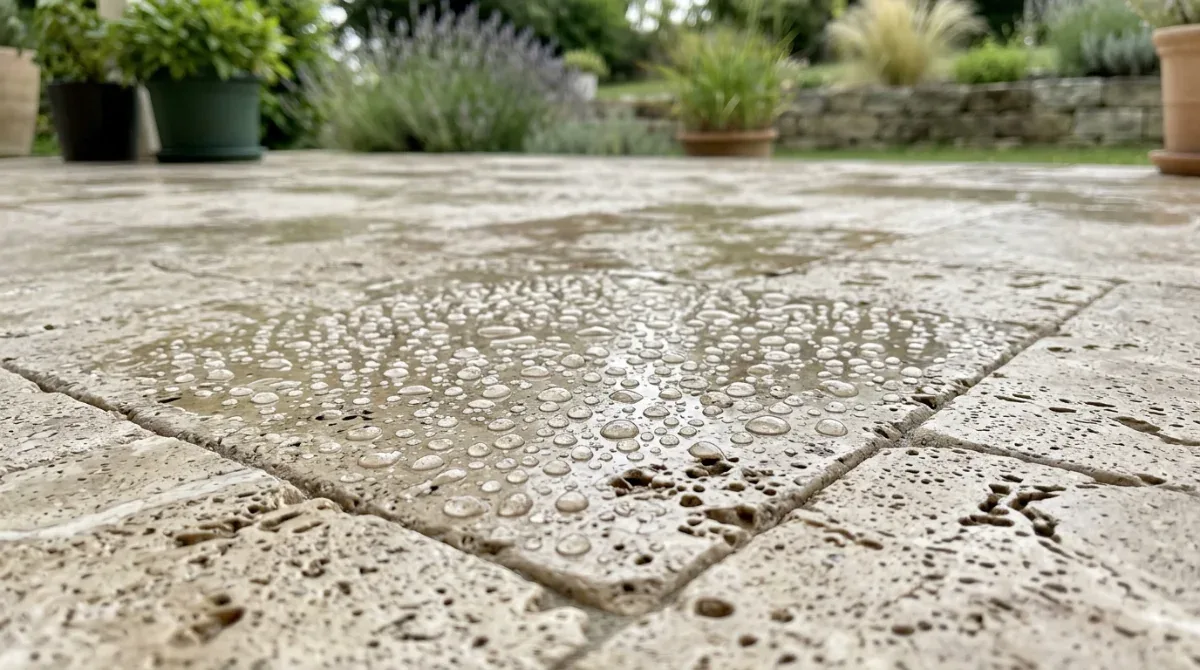
- Penetrating sealers: They enter the pores and make the pore walls water- and oil-repellent, leave no layer on the surface, and the stone can still breathe. When people talk about impregnation for natural stone, they usually mean these.
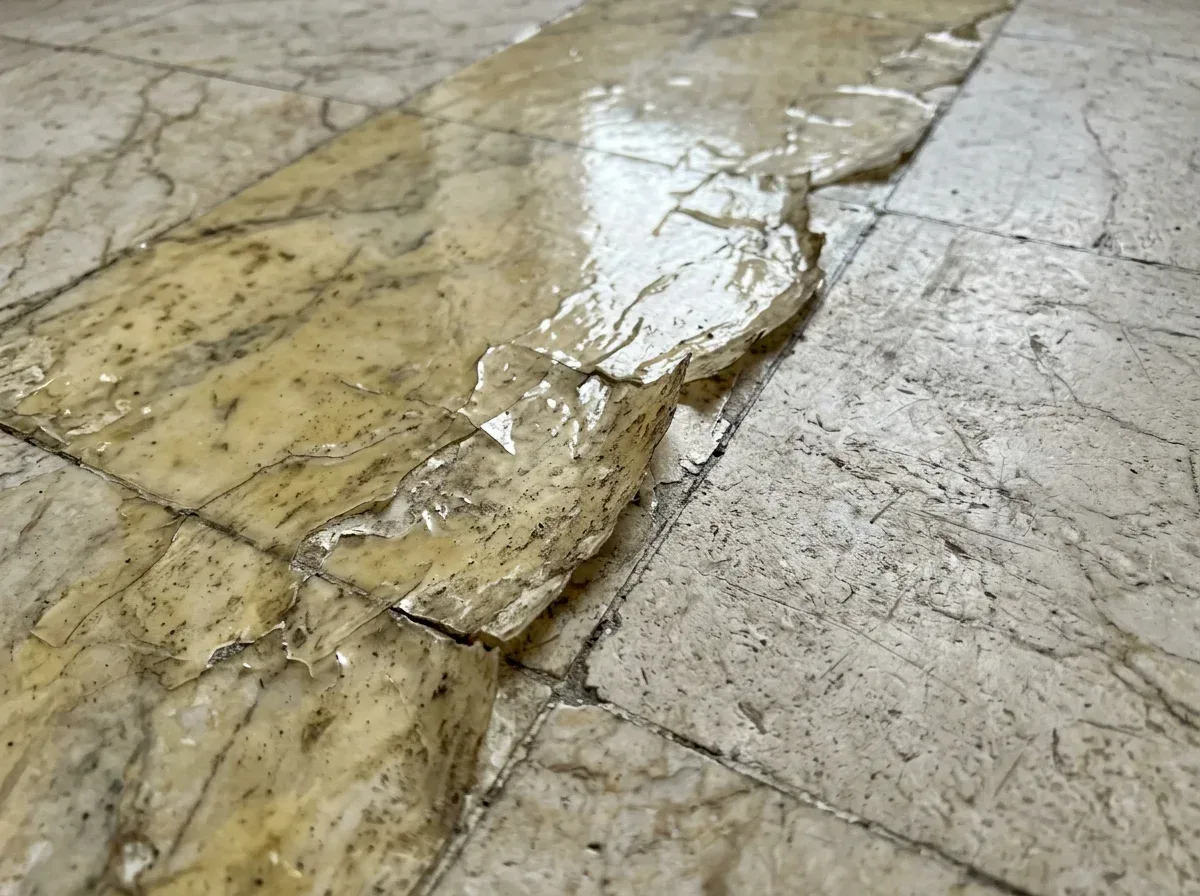
- Film-forming products: Surface coatings, polishes and varnishes form a glossy layer on top of the stone; over time they wear off, scratch, yellow and can block breathability. They are generally not recommended for natural stone floors.
By Carrier: Water-Based and Solvent-Based
The active ingredient of a penetrating sealer reaches the stone in a carrier liquid. This carrier can be water or an organic solvent.
Water-Based Impregnating Sealers
Because water-based sealers are odorless and suitable for interiors, they are often the first choice for lived-in spaces.
- Odor: Low or practically none; no unpleasant smell remains in the home or business during or after application.
- Indoor suitability: They are better suited to occupied homes, hotels and restaurants; it is often not necessary to completely vacate the area during the work.
- Penetration: They give good results on porous stones; on very dense stones, the product may penetrate less deeply.
- Application: It is important that the stone is completely dry; stone with moisture left inside does not absorb enough of the product and the protection is not distributed evenly.
- Appearance: Most products do not change the look of the stone; color and texture stay as they were before application, and liquids simply bead up on the surface.
Solvent-Based Impregnating Sealers
Solvent-based sealers can penetrate deeper into dense stones, but are used with care because of their odor and flammability.
- Odor: It is pronounced; good ventilation is needed during application, and the work plan for occupied spaces is made accordingly.
- Penetration: They can penetrate deeper into dense stones and granite, so they may be preferred for dense stones where a water-based product falls short.
- Outdoors: Some products can last longer outdoors; this is an advantage on surfaces exposed to sun, rain and salt.
- Safety: They may be flammable; they should be used with care in enclosed, poorly ventilated areas, and fire and sparks must be kept away during application.
- Appearance: Some can darken the stone slightly; that is why testing on a small area before treating the whole surface shows the result in advance.
Today, advanced water-based products perform close to solvent-based ones in many applications; the choice should be made according to the stone and where it is used.
By Function
Water-Repellent
Prevents water from entering the stone. It is a basic requirement for outdoor areas, façades and wet areas.
Water- and Oil-Repellent (Oleophobic)
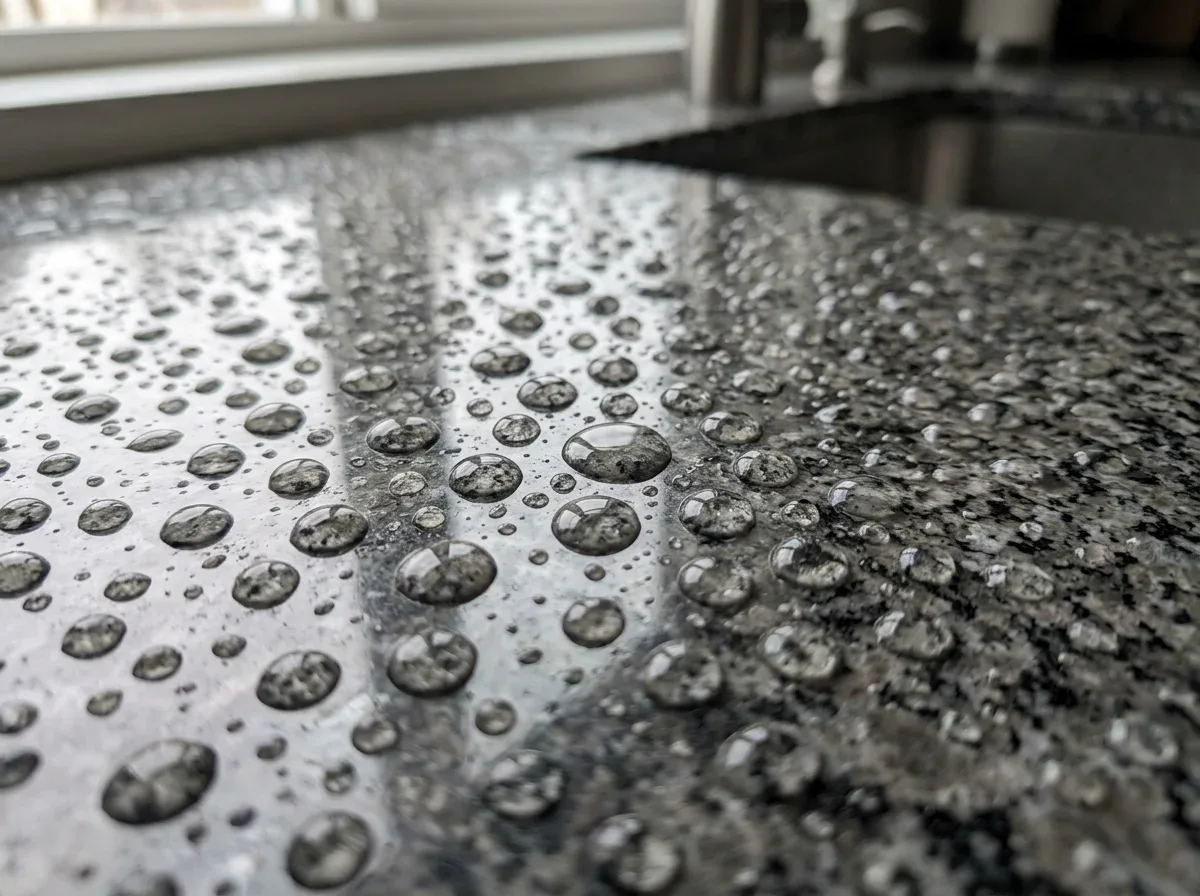
Besides water, it also makes it harder for oil to enter the stone. It is preferred in places where oil and sauce spills are likely, such as kitchen countertops, dining areas, restaurant floors and hotel breakfast halls. These products do not make staining completely impossible, but they give you time to wipe up a spill before it soaks into the stone. Their prices are generally higher than those of water-repellent-only products.
Color Enhancer
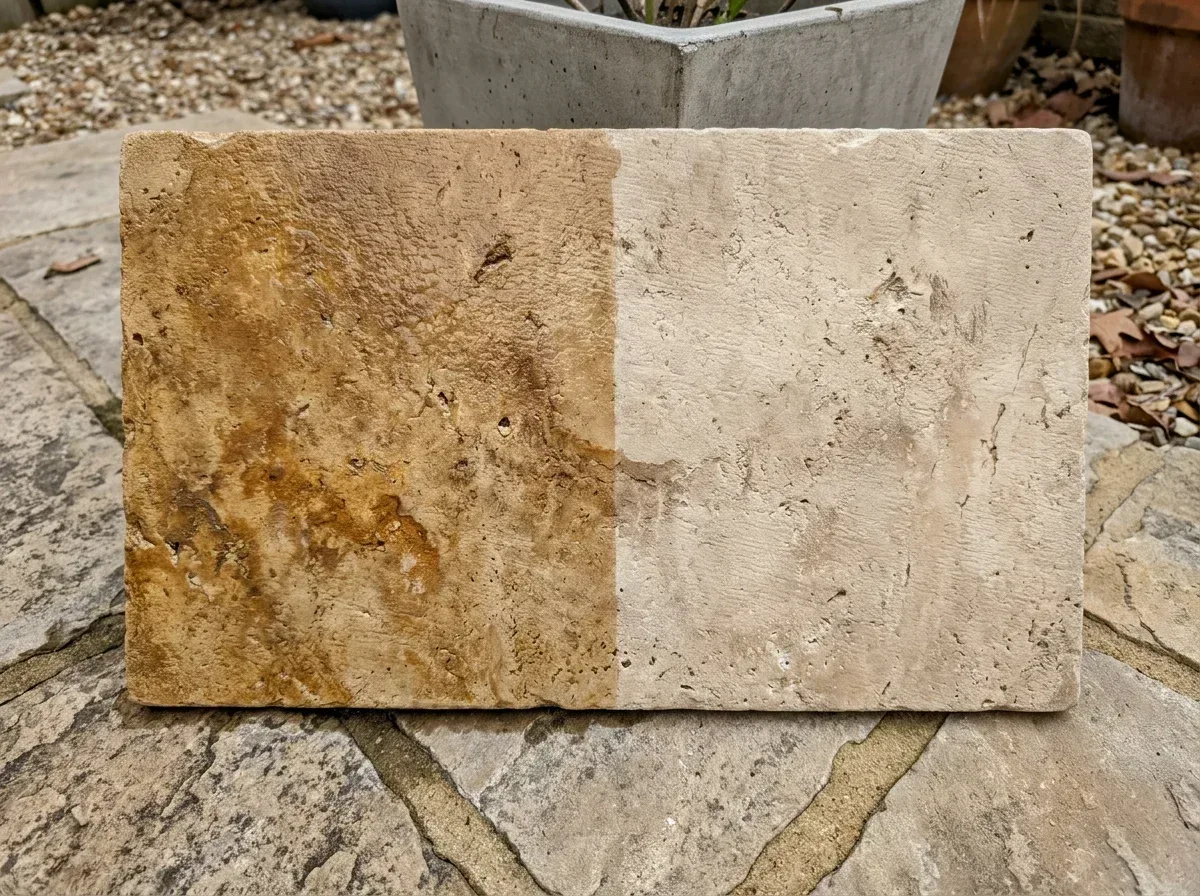
It darkens the color of the stone and gives a "wet look". It is used especially on honed and brushed surfaces, or on outdoor stones whose color you want to bring out. Since it changes the appearance, it should first be tested on a small area.
Products with Slip-Resistance Support
Products designed for outdoor and wet areas so as not to reduce, or even to support, slip resistance.
Selection Guide
| Area | Recommendation |
|---|---|
| Living room, bedroom marble | Water-based, non-appearance-changing |
| Kitchen, dining area | Water- and oil-repellent |
| Bathroom and shower | Water-repellent, breathable |
| Poolside, terrace | UV-resistant, does not reduce slip resistance |
| Granite countertop | Suitable for dense stone, stated to be food-contact safe |
| Rustic outdoor stone | Color enhancer, if desired |
How Long Does Impregnation Last?
The lifespan of an impregnating sealer depends on the quality of the product, the porosity of the stone, surface wear, and the cleaning products used. On an indoor marble floor cleaned with pH-neutral products, a good sealer can remain effective for years. Outdoors, sun, rain, and salt shorten its life; on frequently cleaned surfaces such as kitchens and bathrooms, more frequent checks are also needed. That is why, instead of giving a fixed period, the most reliable approach is to check regularly with a water drop test.
Common Mistakes in Application
When an impregnating sealer fails, the cause is usually not the product but simple steps skipped during application.
- Applying to damp stone: Because the pores of damp or freshly washed stone are filled with water, the product cannot penetrate and the protection remains weak on the surface.
- Not wiping off excess product: Excess sealer left on the surface does not penetrate the stone; once dry, it leaves sticky, shiny stains that are a hassle to remove afterwards.
- Applying to a dirty or polished surface: Dirt and an old layer of polish block the pores; the product cannot reach the stone, and the dirt underneath gets trapped inside.
- Not waiting for the curing time: Wet cleaning before the curing time has elapsed prevents the product from fully bonding in the pores and shortens the life of the protection.
- Skipping a test patch: A color enhancer darkens the stone; if it is applied to the entire area without a test, the unwanted tone is difficult to reverse.
- Mistaking a film-forming product for an impregnating sealer: Using a film-forming product outdoors, mistaking it for an impregnating sealer, results in a coating that yellows and flakes in the sun.
Why Impregnate After Honing?
Honing removes the dirty and worn top layer of the stone and exposes the pores again. This is the moment when the stone looks new and clean, but it is also when it absorbs stains and water most easily. That is why applying a suitable sealer once the stone is completely dry after honing and polishing is the most important step in keeping the renewed surface protected for a long time.
Choosing a Sealer in Alanya
In Alanya, indoors we mostly use water-based sealers that do not change the appearance; being odorless is a big advantage in lived-in homes and hotels. For pool surroundings, terraces, and balconies with sea views, we prefer products with high UV and salt resistance that do not reduce slip resistance. In rustic travertine courtyards we apply a color enhancer if the customer wishes, but we always show a small test area first.
Application Precautions

- The stone must be clean and dry.
- Excess product must not be left on the surface and should be wiped off before it dries.
- The product's curing time must be observed.
- A test should first be carried out on a small area.
Our Natural Stone Sealing Service in Alanya

Whether after polishing or on its own, we apply sealer to protect porous stones against water, oil and stains. We choose a water-based or solvent-based product depending on the type of stone, whether it is indoors or outdoors, and the level of use.
After application, we check together with you that the protection has taken hold using a water drop test. Explore our Natural Stone Sealing service.
Provides protection against both water and oil stains. Suitable for kitchens, dining areas, restaurants, and hotel lobbies. — Expert Note