Impregnation, Crystallization and Densifier: Which One and When?
In short: Three terms come up often in floor restoration quotes: impregnation (sealing), crystallization (crystallizer), and densifier (hardener).
All three are associated with "protection," but what they do, the materials they are applied to, and the benefits they provide are completely different. In this article, we compare the three side by side and explain when each one is needed.
In Short
| Impregnator | Crystallizer | Densifier | |
|---|---|---|---|
| What does it do? | Makes pores water- and oil-repellent | Hardens and polishes the surface | Densifies the top layer of concrete |
| Which material? | Natural stone, concrete, terrazzo, grout | Marble and calcite-based stones | Concrete |
| Effect on appearance | Usually none | Increases gloss | Little on its own; makes polishing easier |
| Main benefit | Stain and water protection | Gloss and surface durability | Dust control and abrasion resistance |
| Does it form a film? | No | No | No |
Impregnator
What Does It Do?
It penetrates the pores of the stone and makes the pore walls water- and oil-repellent. It slows down the absorption of liquids into the stone.
When Is It Needed?
Impregnation comes into play wherever the stone is at risk of absorbing liquids, and especially after honing, when the pores are opened.
- On porous stones: Travertine, light-colored granites, and some marbles absorb water and oil easily; on these stones, impregnation slows down the penetration of stains.
- In wet and heavily used areas: In kitchens, dining areas, bathrooms, and outdoor spaces, the stone constantly comes into contact with water, oil, or dirt; an unprotected surface stains quickly in these areas.
- After honing: Honing removes the dirty top layer of the stone and reopens the pores; impregnation protects the surface during this period, when the stone stains most easily.
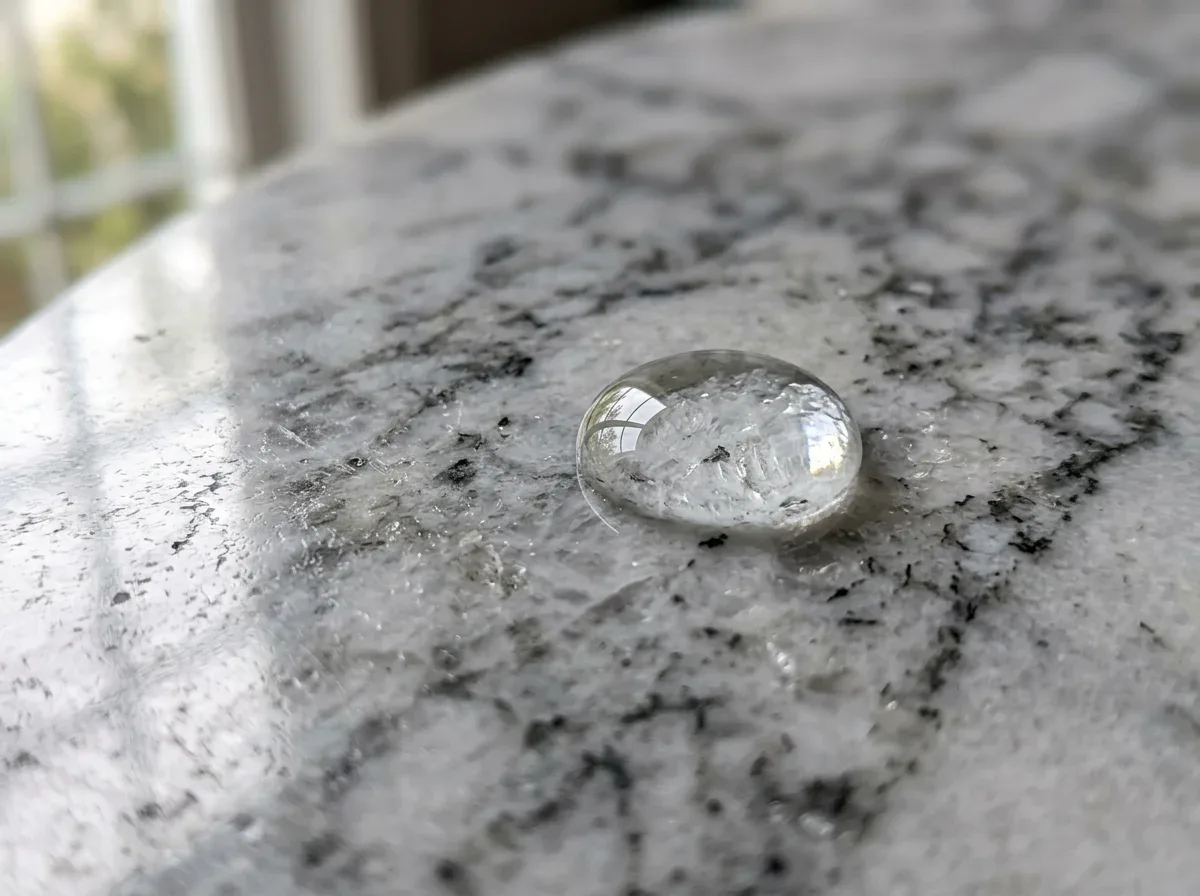
- If the drop test is negative: If a drop of water is absorbed within a few minutes and the stone darkens, the existing protection has worn off or never existed; impregnation needs to be applied or renewed.

What Does It Not Do?
It does not prevent acid etching, does not prevent scratching, and does not add gloss.
Crystallizer
What Does It Do?
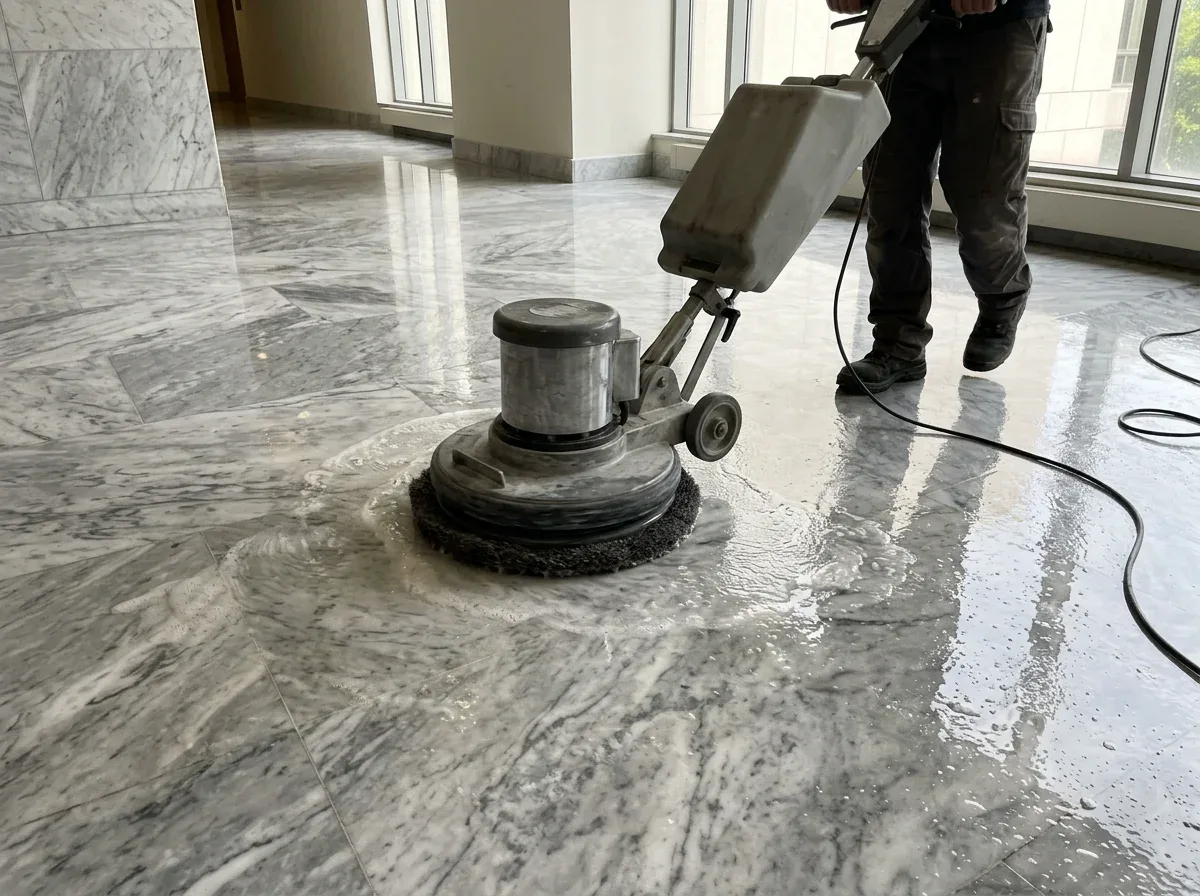
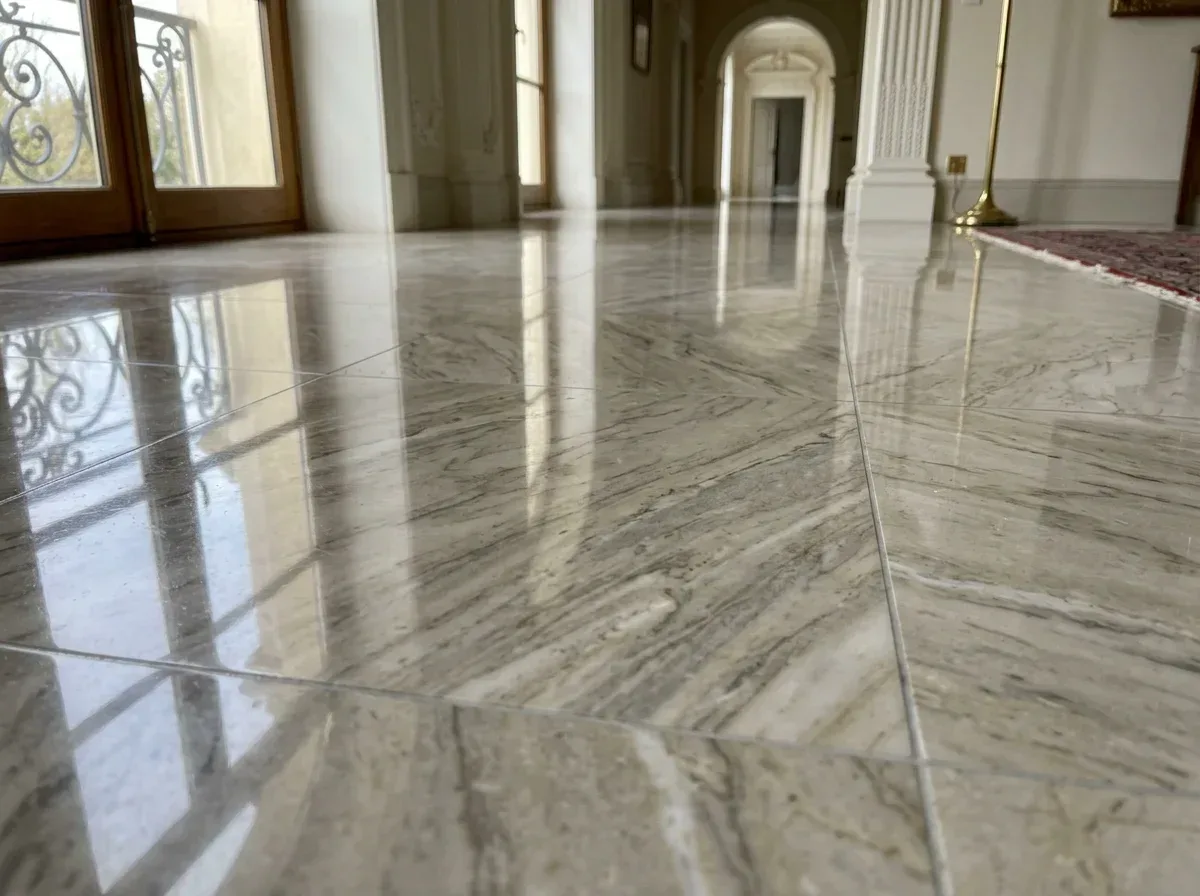
It reacts chemically with the calcite structure of marble, hardening the top surface and increasing its gloss.
When Is It Needed?
Crystallization is used to increase the gloss and surface hardness of marble; its main place is in high-traffic areas where high gloss is desired.
- Marble where high gloss is desired: Crystallizer reacts with the calcite structure of marble to increase gloss; it is preferred for lounge and lobby floors where a mirror-like surface is wanted.
- High-traffic areas: In places with a lot of foot traffic, such as lobbies, shopping malls, and hotel entrances, the hardened top surface gives in to wear more slowly and the gloss is maintained longer.
- After honing and periodic maintenance: It is applied after honing to strengthen the gloss, or during periodic maintenance to refresh the gloss; this way, re-honing is not required every time.
What Does It Not Do?
It does not give the expected effect on granite and ceramic; it does not provide stain protection; it does not remove deep scratches.
Densifier (Hardener)
What Does It Do?
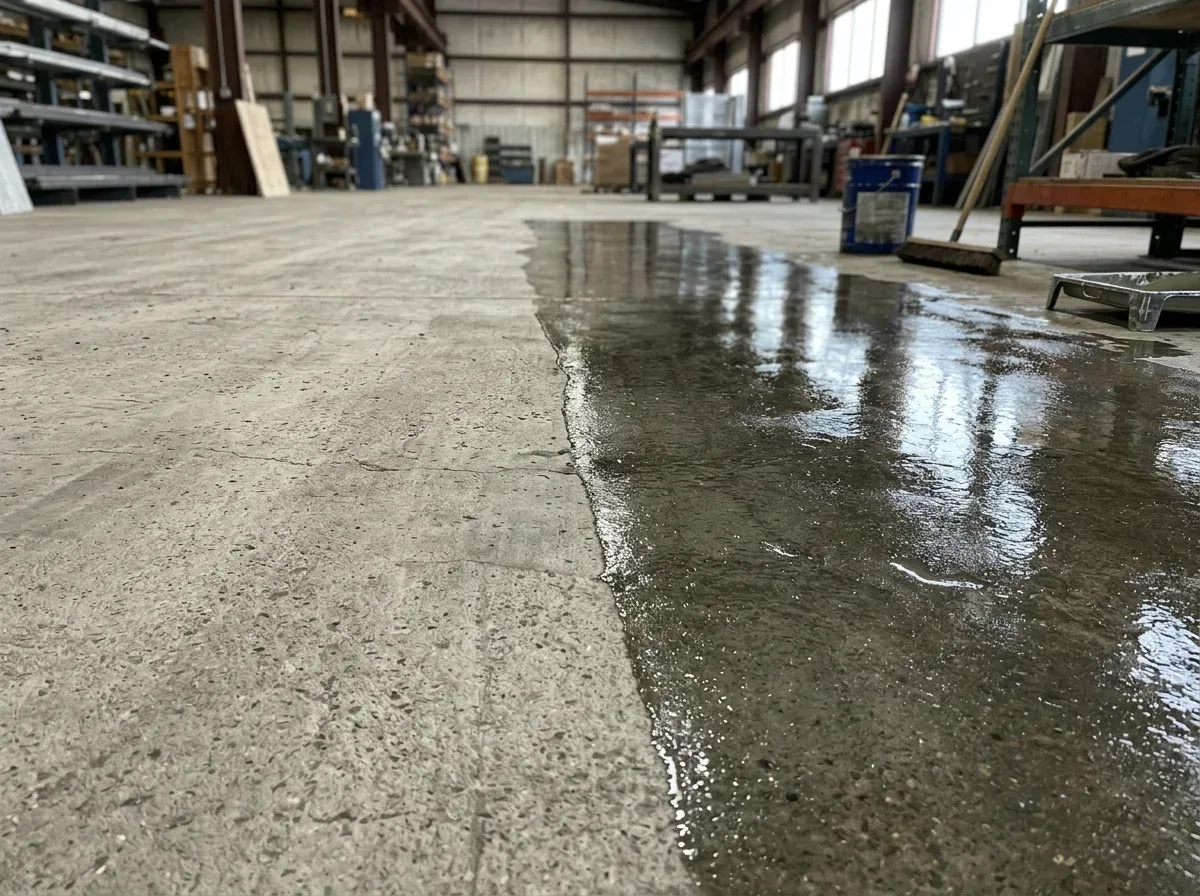
It converts the weak component in concrete (calcium hydroxide) into a hardened component; the top layer becomes denser and harder.
When Is It Needed?
Densifier works only on concrete; because it densifies a weak surface, it is used on dusting concrete floors and concrete floors that will be polished.
- Dusting concrete floors: Concrete with a weak surface releases dust as people walk and vehicles pass over it; the densifier reduces dusting by densifying the top layer.
- Concrete honing process: The densifier applied during honing prepares the surface for polishing; hardened concrete achieves better gloss in the following stages.
- Parking lots, warehouses, and factories: In parking lots, warehouses, factories, garages, and polished concrete applications, it helps the surface wear more slowly under heavy traffic and heavy loads.
What Does It Not Do?
It does not provide complete protection against oil and chemical stains; a separate stain protector may also be needed. It is not used on natural stone.
Choosing the Right Treatment by Material
Which treatment to choose depends on the floor material and the area where it is used; the same product does not give the same result on every surface.
- Marble living room floors: Grinding and polishing come first; if a high gloss is wanted, crystallization is added, and in areas at risk of staining, such as dining areas or entrances, impregnation is applied.
- Marble kitchens and bathrooms: A honed finish and impregnation are preferred because they grip better when wet; crystallization is not recommended in these areas because it can be slippery.
- Travertine: Pore filling and impregnation; optional crystallization indoors, because if travertine's porous structure is left unprotected, it gets dirty quickly.
- Granite: Grinding and polishing; impregnation if needed. Crystallization is not applied, because granite does not react the way marble does.
- Concrete: Grinding, hardener, and stain protector; the hardener strengthens the surface, while the stain protector completes the protection against oil and chemicals that would otherwise be lacking.
- Terrazzo: Grinding and impregnation; because it contains marble chips, crystallization can be applied, while the cement binder is porous and therefore needs protection.
What to Watch for in Quotes
In floor renovation quotes, these three terms are sometimes used interchangeably, which leads to wrong expectations. A quote should clearly state which product will be applied, for what purpose, and at which stage. For example, a quote that says "crystallization" for a granite floor may be describing a treatment that will not give the expected effect on granite. Recommending only "impregnation" for a marble floor, on the other hand, may not meet expectations for shine. The correct sequence is usually grinding first, then polishing or crystallization, and impregnation last.
Application Preferences in Alanya
In our projects in Alanya, we use grinding, crystallization, and impregnation where needed in hotel lobbies; grinding, polishing, and impregnation in villas and apartments; and combinations of concrete grinding, hardener, and stain protector in car parks, warehouses, and garages. During the site survey, we explain which product we recommend and why, and we list each step separately in the quote.
Combined Use and Order of Application

On Marble Floors
- Grinding (up to the required grit levels),
- Crystallization (if desired),
- Impregnation (if needed and if the products are compatible).
Some applicators impregnate first and crystallize afterwards; product compatibility and the condition of the stone determine the order.
On Travertine Floors
- Filling and grinding,
- Impregnation (often essential),
- Crystallization only for polished interior travertine and if desired.
On Concrete Floors
- Rough grinding,
- Repair,
- Hardener,
- Polishing steps,
- Stain protector (impregnation for concrete).
On Granite Floors
- Grinding and polishing,
- Impregnation based on the drop test.
Our Crystallization Polishing Service in Alanya

After honing, or on marble floors that have lost their shine but have no deep damage, we use crystallization polishing to increase the surface's gloss and durability. It is a method that extends the maintenance interval in heavily used areas such as hotel lobbies, shops and apartment entrances.
We show you on site whether crystallization polishing or honing is the right choice for your floor. Explore our Crystallization Polishing service.
A product only makes sense when it is used on the right material and in the right order. Expecting a crystallizer to work on granite, or a hardener instead of an impregnator on concrete, both end in disappointment.