Daily Care After Countertop Restoration
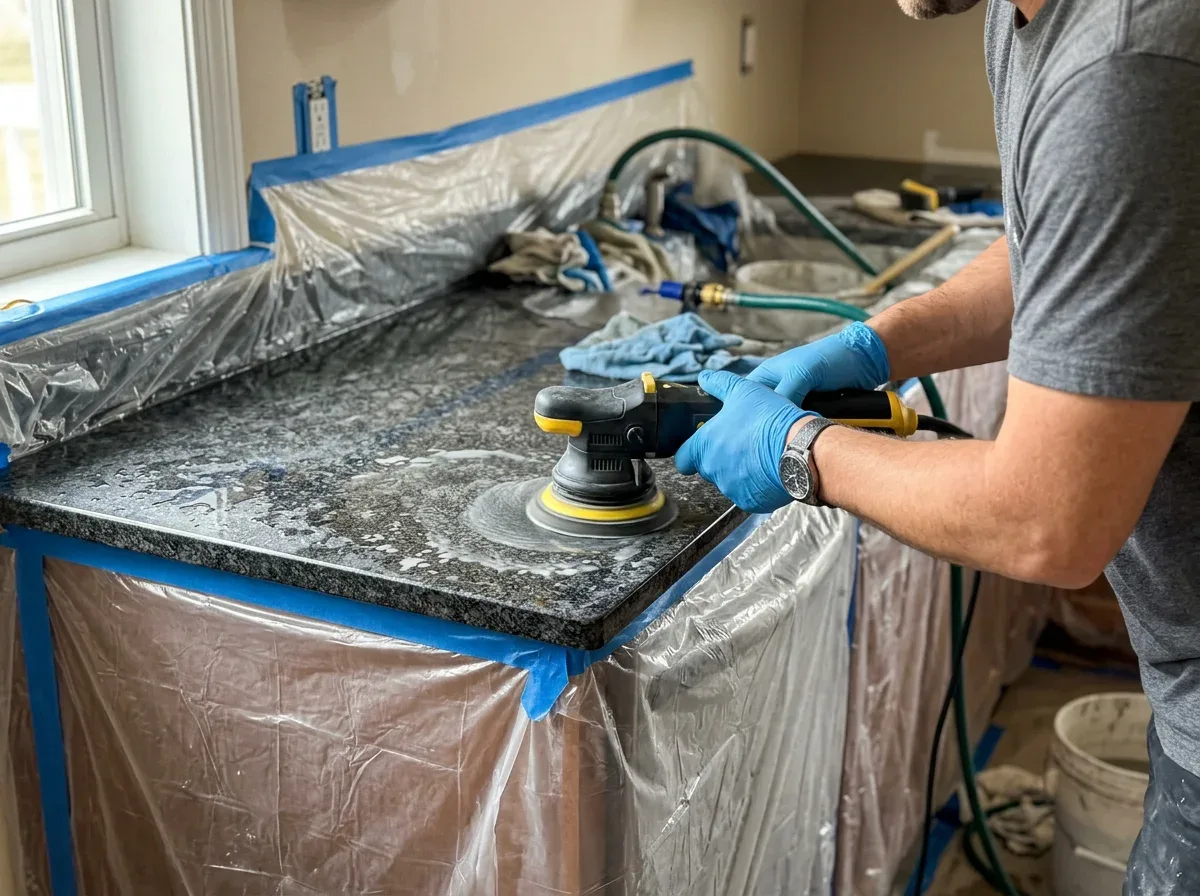
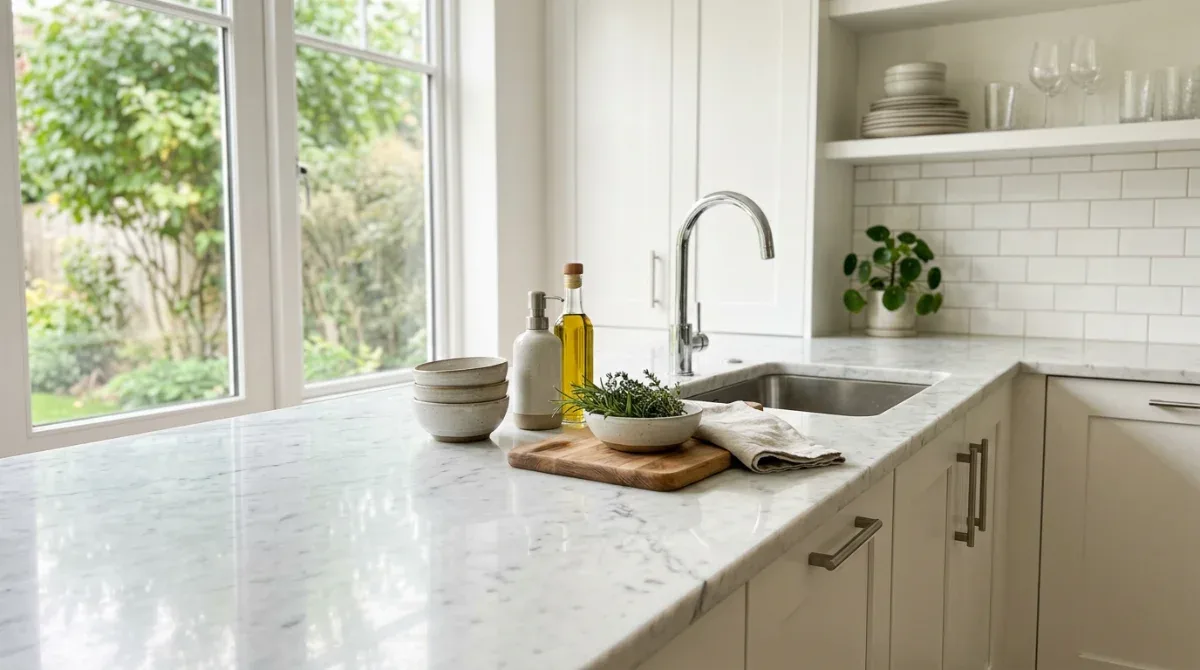
In short: Your countertop has been restored, its shine is back and the stains are gone.
How long this result lasts depends largely on daily habits. In this article, we explain a simple daily care routine for marble and granite countertops, the products to avoid, and the first response to minor accidents.
The First Days
After polishing and sealing:
- Do not leave the countertop wet: Do not leave the countertop wet during the curing time of the sealer; since the protective layer has not fully set during this period, water can penetrate the stone and leave marks.
- Beware of colored liquids and acids: During this period, be especially careful with colored liquids, oil and acidic substances; a liquid spilled before the protection is complete can leave a permanent stain.
- Do not put tape or adhesives on it: Do not put tape or adhesive protection on the countertop; adhesive can damage the surface of the curing sealer and leave marks when removed.
The team that carried out the application will tell you the exact duration based on the product used.
Daily Cleaning Routine
A few minutes of the right wiping routine preserves the shine of the countertop and prevents the buildup of stains and limescale marks.
- Remove crumbs with a dry cloth: First, remove crumbs and dust with a dry, soft cloth; hard crumbs dragged with a wet cloth can leave fine scratches on the polished surface.
- Prepare a neutral cleaner: Add a small amount of pH-neutral stone cleaner or a plain, neutral dish detergent to warm water; too much detergent leaves a film on the surface.
- Wipe with a well-wrung microfiber cloth: Then wipe with a well-wrung microfiber cloth; microfiber picks up dirt and, since it works with little moisture, leaves no water on the surface.
- Rinse with clean water: Then rinse with a cloth dampened with clean water; if no detergent residue remains, the surface does not dull and does not attract dirt.
- Dry with a dry cloth: Finally, dry with a dry microfiber cloth; water drops left on the surface leave limescale rings and stain marks when they dry.
Drying, especially around the sink, is the most effective way to prevent water rings and limescale marks.
Products to Avoid
Some cleaning products commonly used at home damage the stone's polish and sealer; keeping them away from the countertop protects the restored surface.
- Acidic products: Vinegar, lemon, limescale remover and some natural cleaning mixtures leave marks on marble; on granite, they weaken the sealer.
- Bleach and ammonia-based products: With regular use, they damage the sealer; stone with a weakened seal absorbs stains more easily and needs maintenance sooner.
- Abrasive creams and powders: The hard particles in them scratch and dull the surface; the shine gained through polishing is lost quickly.
- Steel wool and hard sponges: They create fine scratches on polished stone and dull the shine; even for stubborn dirt, a soft cloth and neutral cleaner should be preferred.
- Oil-based, waxy or silicone polishes: They leave a film on the surface and attract dirt; over time the countertop looks stained and sticky, and the film can only be removed by cleaning.
- Some glass cleaners: Some glass cleaners may contain ammonia or acid; using them on stone surfaces without reading the label can damage the sealer.

First Response to Accidents
Responding to a spill with the right method in the first few minutes prevents most marks and stains from forming.
- Lemon, vinegar, wine, cola: Do not spread by wiping; blot with absorbent paper, rinse with clean water and dry, so the acid stays in contact with the stone for a shorter time.
- Oil: First blot with paper, then wipe with neutral detergent; if oil is left, it penetrates the pores of the stone and leaves a dark stain.
- Coffee, tea: Blot immediately; if color remains, give it time to fade on its own, and if it is persistent, a poultice may be needed.
- Cosmetics and paint: Blot immediately and do not try solvents at random; the wrong solvent can spread the stain into the stone or dull the surface.
A quick response prevents most marks and stains.
Practical Habits in the Kitchen
A few small habits in the kitchen protect the countertop from the most common causes of damage, such as acid, heat and impact.
- Use a cutting board: Using a cutting board protects both the countertop from scratches and the knife from dulling on the stone.
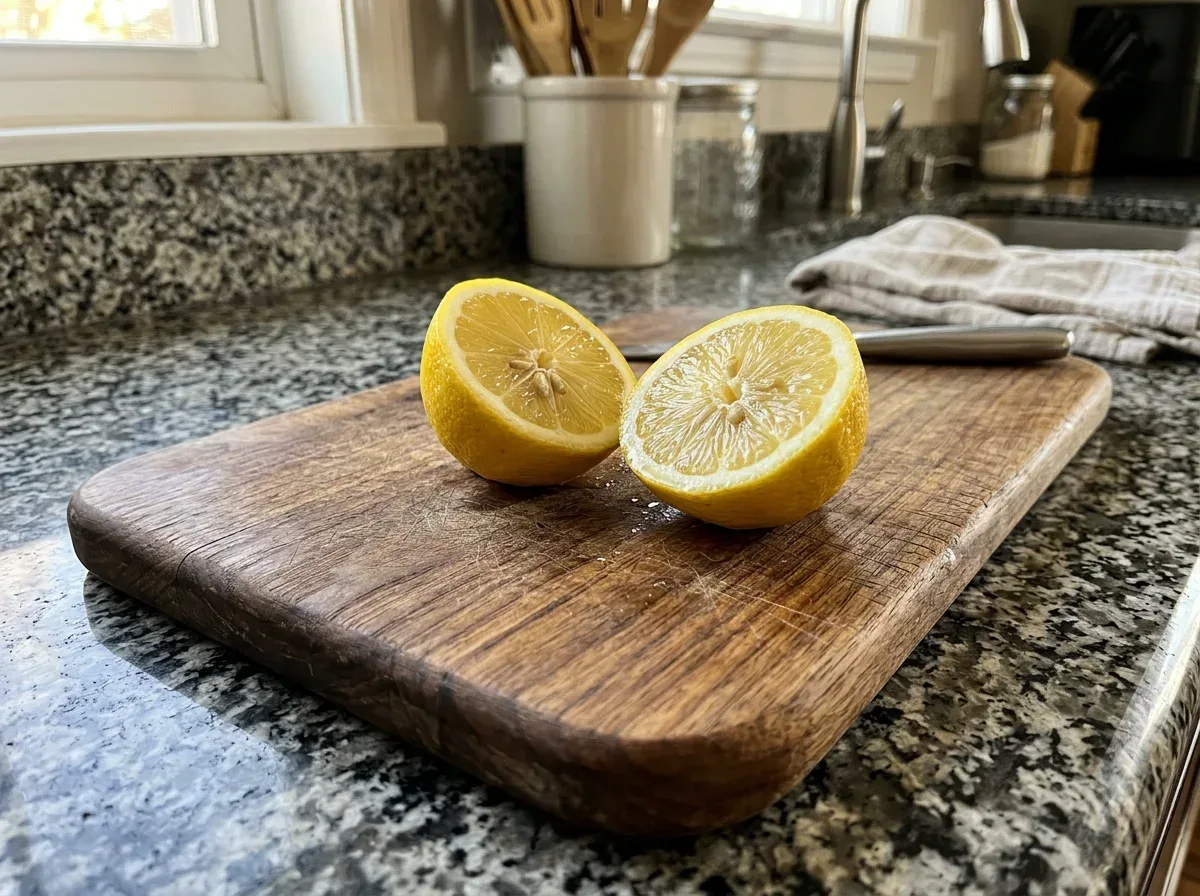
- Do acidic tasks on a board: Do tasks like squeezing lemons or preparing salad dressing on a board or tray; splashing acid does not touch the stone directly.
- Keep bottles on a tray: Keep oil, vinegar and sauce bottles in a small tray; drips that collect at the bottom of the bottle will not leave ring marks on the stone.
- Trivet for hot cookware: Do not place hot pots and pans directly on the stone, use a trivet; a sudden temperature difference can cause marks or cracks in the stone.
- No impacts on the edges: Be careful not to knock heavy objects against the edge of the countertop; the edges are the most fragile part of the stone, and even small impacts can cause chipping.
Practical Habits in the Bathroom
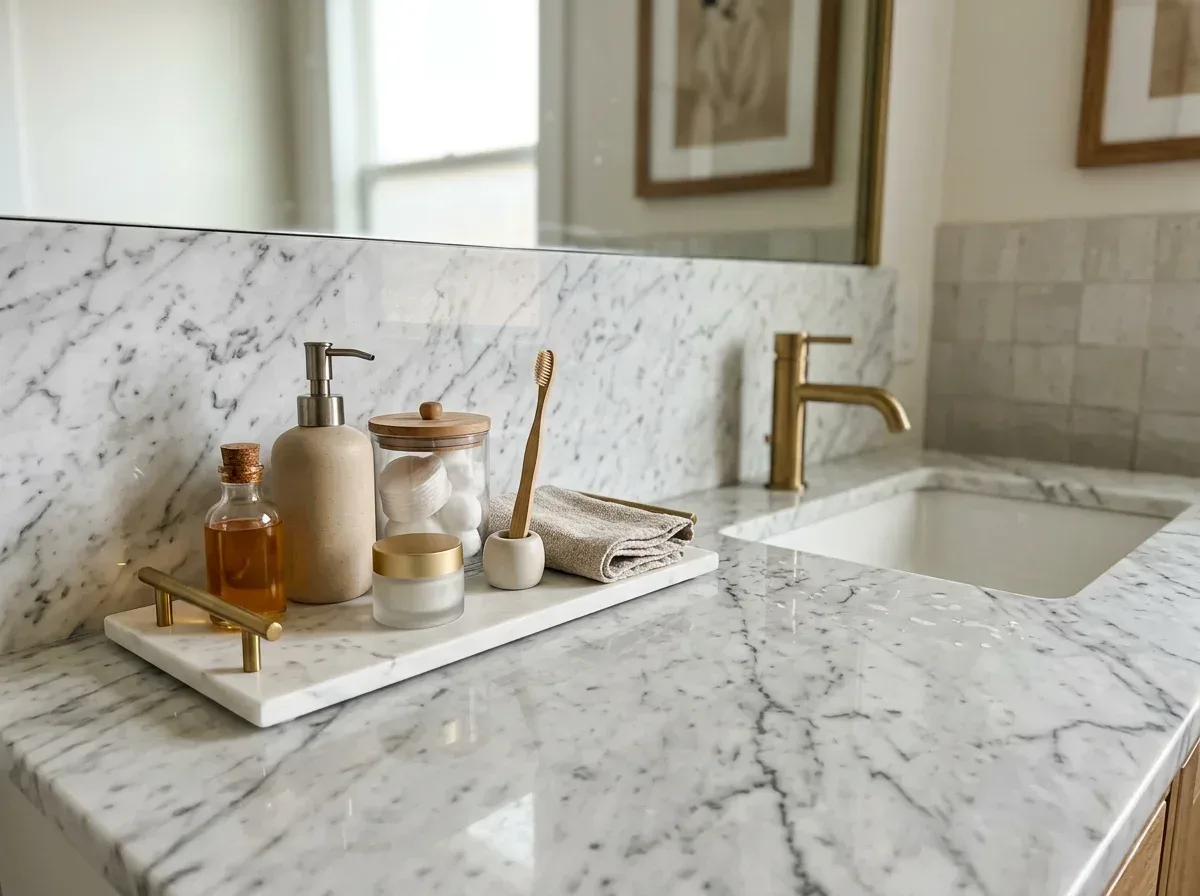
Most stains on a bathroom countertop come from cosmetic products, metal objects, and water left to dry.
- Keep cosmetics on a tray: Keep cosmetic and perfume bottles on a tray; the oils, alcohol, and dyes inside them can leave stains if they come into direct contact with the stone.
- Do not place metal objects on the stone: Do not place metal objects such as razors or spray cans directly on the stone; the metal base rusts with moisture and leaves a ring of rust on the stone that is hard to remove.
- Wipe off residue at the end of the day: Wipe off toothpaste and soap residue at the end of the day; dried residue forms dull stains on the surface and traps dirt.
- Dry the area around the sink: Dry the area around the sink; water that constantly remains here leads to limescale buildup and wears down the sealer faster.
Sealer Check
Do a drop test every few months: place a few drops of water on the most heavily used areas of the countertop. If the water darkens the stone within a few minutes, it is time to renew the sealer.
Maintenance Schedule
| Frequency | Kitchen countertop | Bathroom countertop |
|---|---|---|
| After every use | Removing crumbs and spills | Wiping off water and soap splashes |
| Every day | Wiping with a neutral cleaner and drying | Drying the area around the sink |
| Once a week | Detailed cleaning around the sink and the base of the faucet | Cleaning under the trays |
| Every few months | Drop test | Drop test |
| Every 1-3 years | Sealer renewal, polishing if necessary | Sealer renewal, silicone check |
Maintenance Differences Between Marble and Granite
Granite countertops are far more resistant to acids than marble; lemon or vinegar generally leaves no mark on granite, but regular use of acids weakens the sealer. Marble, on the other hand, can lose its shine even after brief contact with acid. For this reason, on marble countertops it is more important to respond to spills quickly and to make using cutting boards and trays a habit. The common rule for both stones is the same: a neutral cleaner, a soft cloth, and drying.
What You Should Keep at Home
Expensive products are not needed for daily care; a few simple supplies are enough to keep the countertop clean and protected.
- Neutral cleaner: A pH-neutral stone cleaner or a plain, neutral dish detergent removes everyday dirt without damaging the stone's polish or sealer.
- Clean microfiber cloths: Keep two or three clean microfiber cloths, with one used only for drying; this way, drying is never done with a dirty cloth.
- Absorbent paper towels: Absorbent paper towels should be within reach so you can blot up spills rather than wipe and spread them.
- Cutting board, trivet, and trays: A cutting board, a trivet, and small trays prevent knives, hot pots, and bottles from coming into direct contact with the stone.
- Coasters for glasses and bottles: Coasters for glasses and bottles prevent water, wine, or juice that collects at the bottom from leaving a ring mark on the stone.
Countertop Care in Alanya
Alanya's hard tap water causes limescale to form quickly on countertops, especially around sinks and basins; that is why the habit of drying is even more important here. In summer houses and rental homes that see heavy use during the summer months, citrus and wine stains are also common. At the end of our countertop renovation jobs, we leave homeowners and cleaning crews a written list of which products to use, and if requested, we schedule annual maintenance visits.
Periodic Maintenance

Over time, heavily used countertops may develop slight dulling and fine marks. In this case, a full re-honing is not necessary; a light polish and a refresh of the sealer may be enough.
Our Countertop Honing Service in Alanya

We hone away etch marks, scratches and stubborn stains on marble and granite kitchen and bathroom countertops, usually on site without removing the countertop. We protect your cabinets and walls while we work, and we usually finish the job the same day.
After honing, we also apply a suitable sealer for your countertop's type of stone. Explore our Countertop Honing service.
The cleaning product you use determines the lifespan of a restored countertop. The right product and a dry cloth are more effective than many expensive interventions.