Removing Old Polish and Varnish Layers from Marble Floors
In short: In the past, many marble and travertine floors were coated with varnish, acrylic polish or surface coatings to make them look shiny.
These layers look glossy at first, but over time they yellow, scratch, peel and trap dirt inside. In this article we explain how to recognize an old polish layer and how it is stripped.
Signs
An old polish or varnish layer reveals itself through a series of signs seen not in the stone itself but in the film on the surface.
- Yellowing: Especially in areas that receive sunlight, the film turns a yellowish tone; a clear color difference appears between the areas near windows and the areas that stay in the shade.
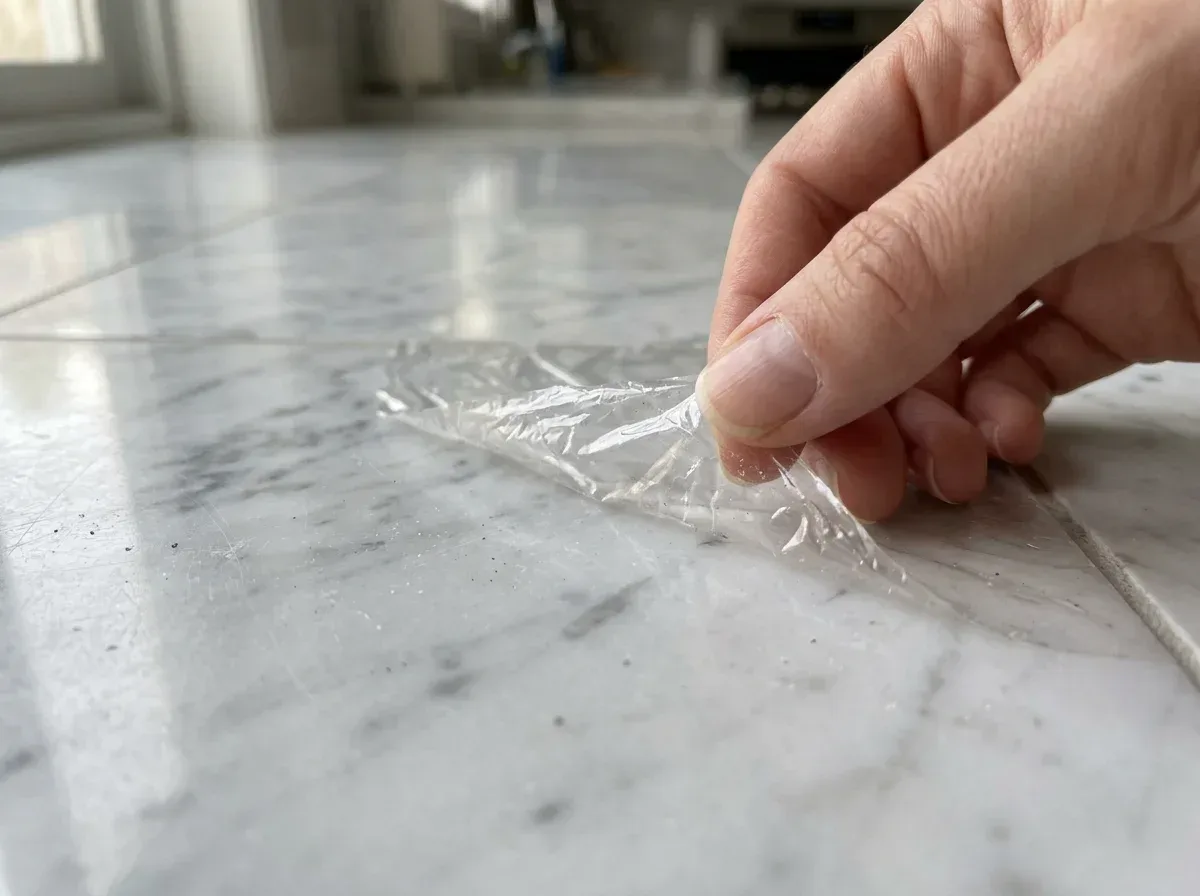
- Plastic-like look: The shine belongs to the film on the surface, not to the stone; the floor looks artificial and lacks depth, as if a transparent layer had been laid over it.
- Peeling and flaking: In high-traffic paths the film wears and lifts off in pieces; because the lifted areas are matte and the remaining areas are glossy, the floor looks patchy.
- Whitening: In areas that come into contact with water, the film turns white; cloudy white stains appear in the kitchen, in front of the bathroom door and under flower pots.
- Scratches: Because the film is soft, it scratches easily; chairs, shoes and pet claws quickly leave fine marks on the surface.
- Dirt buildup at the edges: The film thickens at the edges and holds dirt; a dark strip that cannot be removed by cleaning forms along the baseboards and in the corners.

Simple Test
To find out whether there is a film on the floor, you can run a few simple tests in an inconspicuous corner before stripping.
- Scratching with a fingernail: Lightly scratch an inconspicuous spot with your fingernail; if a soft layer comes off, there is a film on the surface that does not belong to the stone.
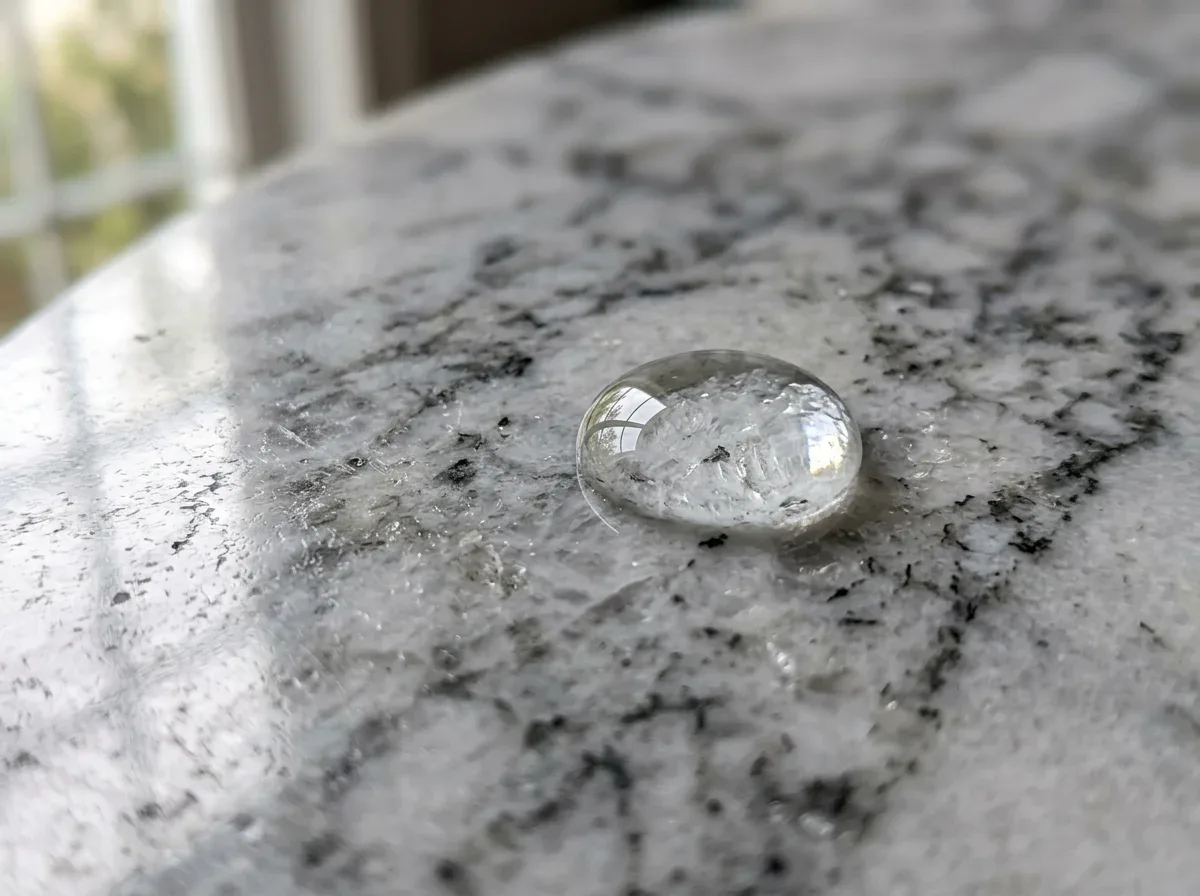
- Water drop: Leave a drop of water; under a film the water can cause whitening, whereas on uncoated stone the water is either absorbed or dries without leaving a mark.
- Wiping with solvent: Wipe a small area with a suitable solvent; if the film softens or transfers to the cloth, there is a coating and stripping is necessary.
Stripping
Chemical Stripping
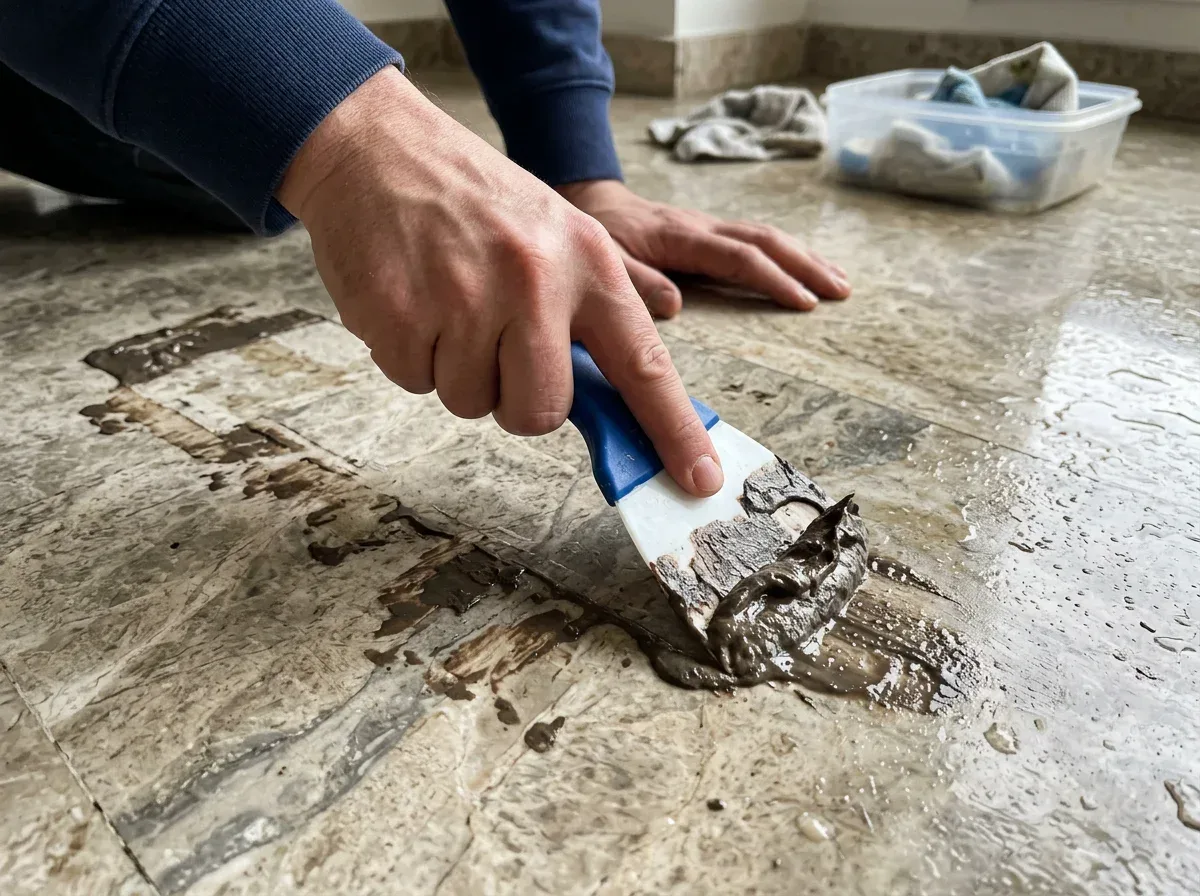
Acrylic polish and some varnishes are softened with strippers suited to their type. The stripper is applied to the surface and left for the time specified by the product, and the softened film is removed with plastic scrapers or a machine with a soft pad. This method removes most of the film without damaging the stone. It is important that the stripper used is suitable for marble, that the area is well ventilated and that the waste is collected properly.
Stripping by Grinding
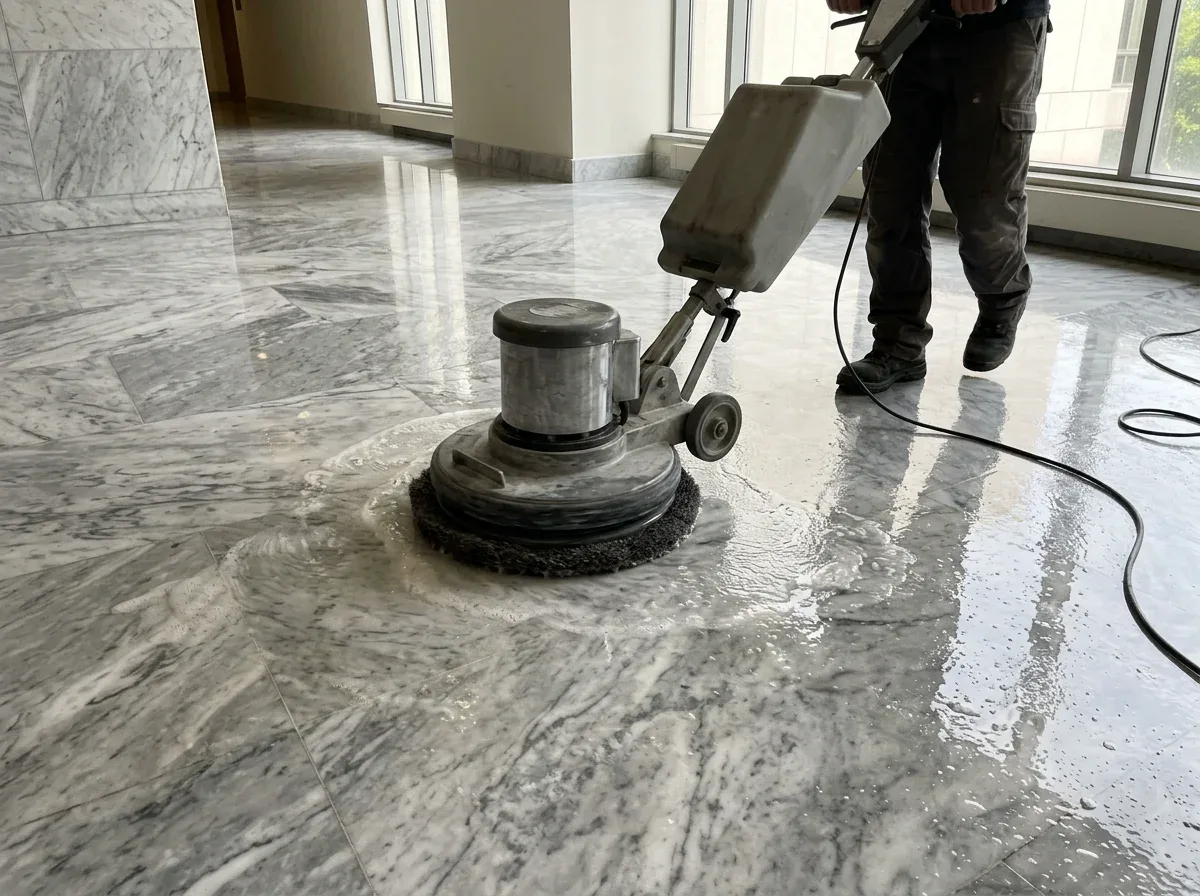
The film is removed by grinding it off with coarse diamond abrasives. During this process the abrasives can become clogged with the film, so frequent cleaning and replacement are required.
In most jobs, the two methods are used together.
Afterwards
The job is not finished once the film is removed; the stone's own surface is prepared again through grinding, polishing and protection, in that order.
- The real surface is revealed: Once stripping is finished, the stone's real surface is revealed; wear, scratches and stains that were hidden beneath the film may become visible at this stage.
- Progressive grinding: The surface is then corrected with progressive grinding; wear and scratches are removed and the stone gets a uniform surface.
- Polishing: After grinding, the stone's own shine is restored through polishing; this shine comes not from a coating but from the smoothed surface of the stone.
- Impregnation: Finally, the stone is protected with impregnation; no film is applied for shine, so the same yellowing and peeling problems do not occur again.
Difference Between a Film Layer and Real Shine
| Feature | Polish / varnish film | Grinding and polishing |
|---|---|---|
| Source of the shine | A layer on the surface | The stone itself |
| Over time | Yellows, scratches, peels | Slowly dulls, can be refreshed |
| Slip resistance | Can be slippery when wet | Can be adjusted to the surface |
| Breathability of the stone | Can be blocked | Not affected |
| Maintenance | Removal and reapplication | Cleaning and periodic refreshing |
Precautions During Removal
When removing polish, work begins with preparation and a test so that neither the stone nor the surrounding surfaces are damaged.
- Test area first: A test is done on a small area first to determine the type of film and the appropriate stripper; the wrong product either gives no result over time or damages the stone.
- Protecting surrounding surfaces: Wooden skirting boards, door frames and surrounding surfaces are protected; the stripper and slurry can cause stains and swelling on these materials.
- Ventilation: The area is well ventilated; the fumes of chemical strippers can build up in an enclosed space and disturb workers and the household.
- Cleaning the abrasives: Abrasives are cleaned or replaced as they become clogged with film; a clogged abrasive does not cut the stone, it only heats the film and smears it onto the surface.
- The film must be removed completely: Honing is not started until the film has been completely removed; otherwise the remaining pieces stick to the abrasive and leave a stained surface.
Polish Removal in Alanya
In older villas and apartments in Alanya, we often come across marble and travertine floors where varnish and acrylic polishes applied in the past for shine have yellowed and peeled. First we identify the type of film in a test area, then use chemical and mechanical removal together to free the stone completely of the coating. Then, through gradual honing and polishing, we bring out the stone's own natural shine and protect it with impregnation.
Why Real Polishing Instead of a Film?

Polish and varnish form a separate layer on the surface; polishing the stone itself eliminates the problems of that layer.
- No yellowing or peeling: Because the shine comes from the stone's own surface, there is no layer that yellows over time, or gets scratched and peels off.
- Breathable stone: Since there is no film sealing the surface, moisture inside the stone can evaporate; no whitening or blistering appears under a film.
- Easy maintenance and refreshing: Areas that have gone dull can be refreshed with light polishing, without having to strip off the old polish.
Our Crystallization Polishing Service in Alanya

After honing, or on marble floors that have lost their shine but have no deep damage, we use crystallization polishing to improve the surface's shine and durability. It is a method that extends the maintenance interval in heavily used areas such as hotel lobbies, stores, and apartment building entrances.
We show you on site whether crystallization polishing or honing is the right choice for your floor. Explore our Crystallization Polishing service.
Marble Surface Restoration
You can watch one of our team's on-site projects in the video below.
Strippers suited to the type of coating are applied, and the softened film is removed with scrapers and machines. This method protects the stone, but several repetitions may be needed. — Expert Note