What Is Concrete Grinding and How Is It Done? Turning Dusty Concrete into a Polished Floor
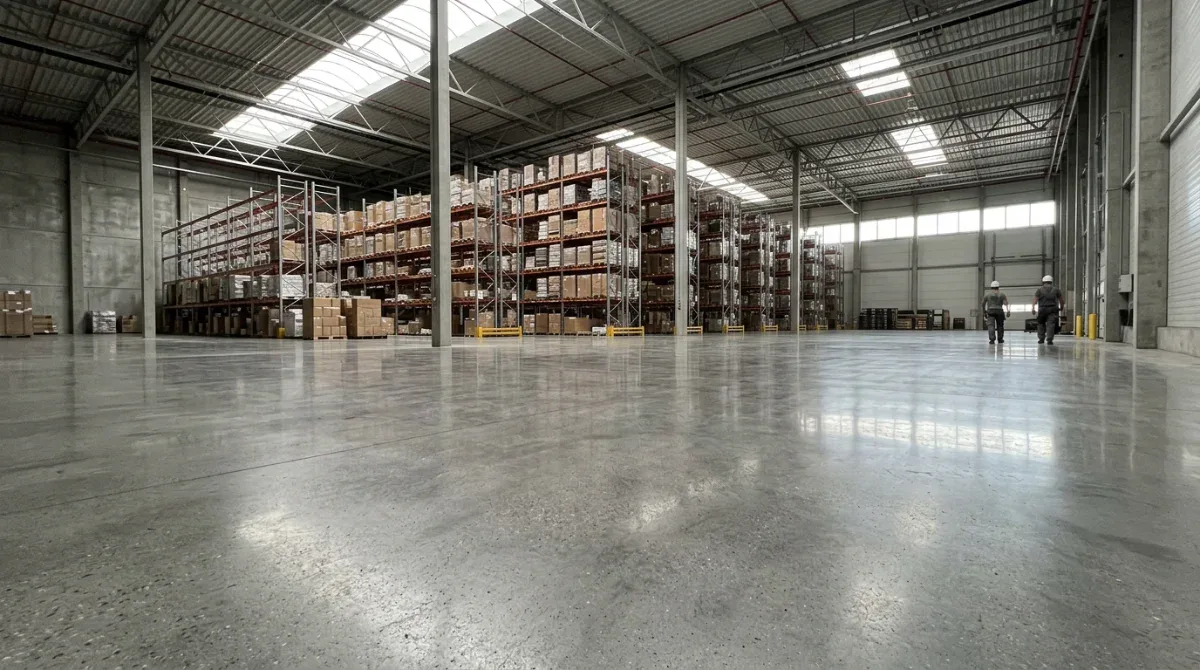
The gray dust that rises into the air as forklifts pass between warehouse racks, the black marks tires leave in a residential complex parking garage, or the fine sand swept up every day from a shop's concrete floor... Most concrete floors suffer from these problems, because the top layer of poured concrete is weak and breaks down under use. Applying paint or a coating over this weak layer may look good in the first months, but over time it blisters, peels and has to be redone. Concrete grinding takes a different approach: instead of adding something on top of the floor, it works on the concrete itself, removes the weak layer, exposes the sound concrete and hardens it.
In short: Concrete grinding is a process that removes the weak top layer with diamond segments, fills cracks and pits, strengthens the concrete with a chemical hardener (densifier) and polishes it in stages. As a result, the floor does not produce dust, is easy to clean, reflects light, and since there is no coating to peel off, it lasts for many years.
Why Does Concrete Dust?
When concrete is poured, the water and fine material in it rise to the surface. Once the concrete dries and hardens, this top layer remains much weaker and more porous than the concrete beneath. Under foot, vehicle or forklift traffic, this layer gradually breaks down; the fine dust that results contaminates shelves, products, vehicles and ventilation.
Besides dusting, a weak surface brings other problems as well:
- Oil, water and dirt easily penetrate the pores; stains become permanent.
- As the surface becomes rougher, cleaning machines cannot work efficiently.
- Joint edges break, and small pits and spalls form.
- Light is absorbed; the space looks darker than it is.
What Does Concrete Grinding Do?
Concrete grinding removes this weak layer, exposes the sound concrete beneath it and strengthens it. The resulting floor:
- Does not dust: The pores are closed and there is no weak layer left to wear away.
- Is easy to clean: The smooth surface does not hold dirt and is easily washed with a machine.
- Reflects light: Polished concrete brightens the environment; in warehouses and stores it can reduce lighting needs.
- Does not peel: Since there is no separate layer such as epoxy or paint, there are no problems with blistering, peeling or repainting.
- Is renewed in place: When the gloss fades, it can be refreshed with light polishing without removing the floor.
Which Floors Is It Suitable For?
Concrete grinding is used in many areas that have a sound, load-bearing concrete base.
| Area | Problem | Benefit of concrete grinding |
|---|---|---|
| Residential complex, hotel and shopping mall parking garages | Dust, tire marks, oil stains | Dust-free, easy-to-wash surface |
| Warehouse and logistics areas | Forklift wear, rack dust | Hard, durable and bright floor |
| Factory and workshop | Oil, dirt, heavy loads | Hardened, stain-resistant surface |
| Store and showroom | Worn, stained appearance | Modern, industrial and glossy floor |
| Office and café | Cost of replacing coverings | Long-lasting, simple floor |
| Home, garage, basement | Dust and moisture | Breathable, dust-free surface |
However, not every concrete floor is suitable for grinding. Concrete that is very weak, sandy, delaminated or hollow underneath may first require repair or a different solution. For this reason, the strength and condition of the floor should be inspected on site before work begins.
Concrete Grinding Stages

Inspection and preparation
Cracks, broken joint edges, pits, old paint and epoxy residues, and oil stains on the floor are identified. The area is cleared; the surroundings of racks and fixed equipment are protected. In an operating business, the work is planned in sections.
Rough grinding
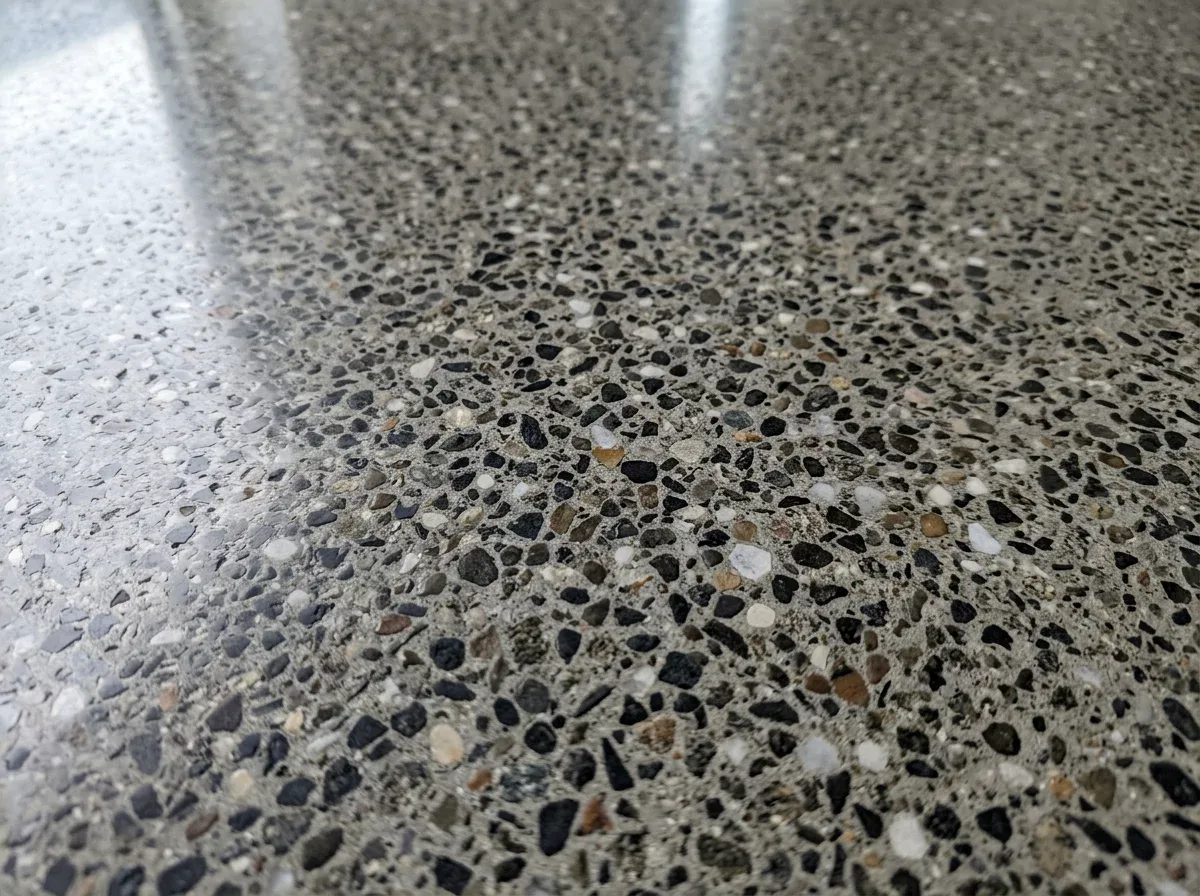
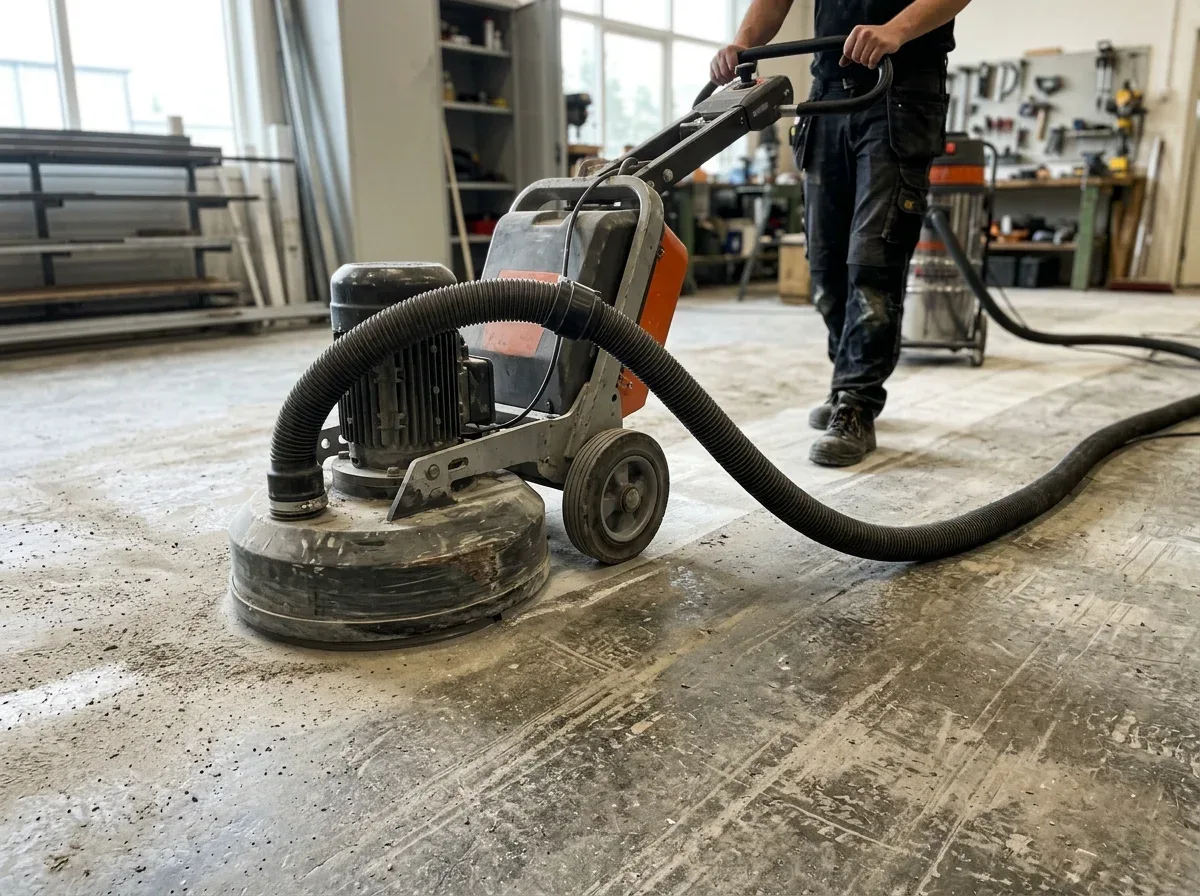
The weak top layer is removed with heavy grinding machines and metal-bond diamond segments. Old coating residues, paint and stuck-on dirt are cleaned off at this stage. The grinding depth is determined according to the desired look: staying at the surface, exposing fine aggregate, or revealing coarse aggregate.
Repair and filling
Cracks, pits and broken joint edges are filled with suitable repair mortars or resins. Small pores opened during grinding are sealed with a special filler mixed with concrete dust.
Hardener (densifier)
A lithium or sodium silicate-based hardener is applied to the floor. This liquid reacts with the free lime in the concrete, forming a hard and lasting structure in the pores. Dust is stopped and the surface hardens noticeably.
Fine grinding and polishing
The surface is gradually refined with resin-bond diamond pads. Each step removes the scratches left by the previous one. The targeted gloss is set as matte, satin or high gloss, and the final steps are chosen accordingly.
Protection
Finally, a protective impregnating sealer against oil and liquid stains can be applied to the surface. This layer penetrates into the floor and does not form a separate film on top.
Wet or Dry?
Concrete grinding can be done using either the wet or the dry method. In the wet method, water binds the dust and the resulting slurry is collected with a vacuum. In the dry method, powerful industrial dust extraction systems are used. In enclosed, occupied areas, such as a working business, dust control is the most important part of the job, and the method is chosen accordingly.
How Long Does It Take?
The main factors that determine the duration are the floor area in square meters, the hardness of the concrete, whether there is an old coating, the amount of repair needed, and the desired gloss level. The reaction time of the hardener and the drying of the fillers are also added to the schedule.
| Area | Example size | Approximate duration |
|---|---|---|
| Home garage | 30–40 m² | 1–2 days |
| Small shop | 100–150 m² | 2–3 days |
| Apartment complex parking lot | 1,000 m² and above | 1–2 weeks, in sections |
| Warehouse | Several thousand m² | Work split across the schedule |
These durations are examples; to give accurate information, the floor needs to be seen on site.
Maintenance After Grinding
After concrete grinding, the floor is a low-maintenance surface. Daily sweeping or machine dry cleaning and weekly damp cleaning are sufficient for most areas. Oil and chemical spills should be wiped up immediately, and in high-traffic areas the gloss should be refreshed with light polishing every few years.
Dust-Free Operation

In working warehouses and stores, the most frequently asked question is about dust. In the wet method, water binds the dust, while in the dry method, powerful dust extraction systems connected to the machines are used.
We work by dividing the area into sections and protecting the shelves and products. This way, the floor is renewed section by section without the business having to close completely.
You Choose the Aggregate Look

In concrete grinding, the depth of grinding determines the look of the floor. If you stay at the surface, the result is a plain gray appearance; going a little deeper reveals a fine-grained texture, and at the deepest level the large pebbles are exposed.
During the site survey, we open a small test area and evaluate the different looks together. Once you have made your choice, the entire floor is processed at the same depth.
Crack and Joint Repair

A glossy concrete floor makes unrepaired cracks and chipped joint edges more noticeable. That is why repair is one of the most important stages of grinding and polishing.
We open up and clean the cracks, then fill them with a suitable resin or repair mortar. We rebuild chipped joint edges, then grind the surface to bring the fillings level with the floor.
The quality of concrete grinding depends on applying the hardener at the right time and in the right amount. When applied immediately after grinding, while the pores are still open, it penetrates deep into the concrete and permanently eliminates dusting. — Expert Note
Frequently Asked Questions About Concrete Grinding and Polishing
01What is the difference between polished concrete and epoxy coating?
02Can freshly poured concrete be polished?
03Is the floor slippery after polishing?
04How long does polished concrete last?
05Does the business have to close during the work?
06Can polished concrete be done on an old painted or epoxy floor?
07Is every concrete floor suitable for polishing?
Related Articles
Concrete Grinding or Epoxy Coating? Which Is Right for Which Floor, Why Does a Concrete Floor Dust? What Does a Densifier Do?, Polished Concrete, Burnished Concrete and Power-Troweled Concrete: What Are the Differences?, Concrete Grinding Process and Duration: Day-by-Day Workflow, Garage and Parking Lot Floor Grinding