Concrete Grinding or Epoxy Coating? Which Is Right for Which Floor
A business manager who wants to renovate a concrete floor typically receives two different proposals: one says "let's grind and polish the floor," the other says "let's pour epoxy over it." The two proposals differ in price, duration and outcome, but which one is right depends on how the floor will be used. In Alanya, from housing complex car parks to hotel service areas, from warehouses to shops, we see both methods applied in many places. Some have been trouble-free for years, while others blistered in the first year. What makes the difference is choosing the right method for the right place.
In short: Concrete grinding works on the concrete itself; there is no layer to peel off, it performs well on damp floors, and it can be refreshed on site. Epoxy is a shell poured over the concrete; it offers a wide choice of colors and high chemical resistance, but it can blister under moisture, impact and abrasion and may need to be redone. In general areas, concrete grinding, and in small zones with chemical risk, epoxy is most often the best combination.
The Basic Difference Between the Two Methods
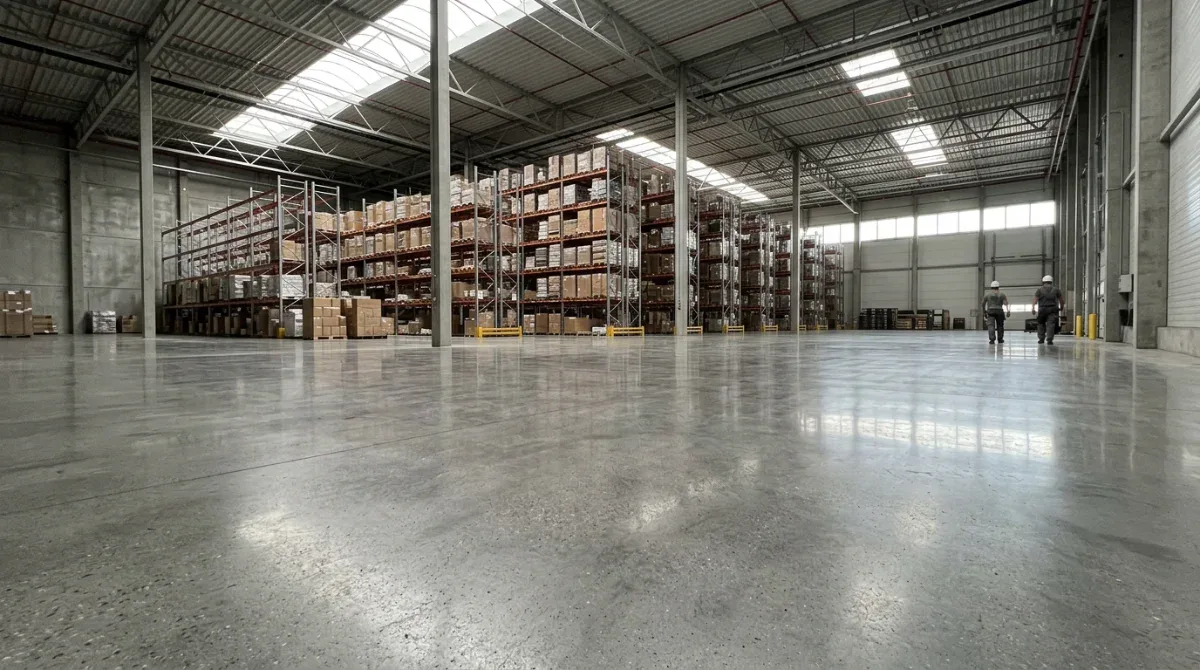
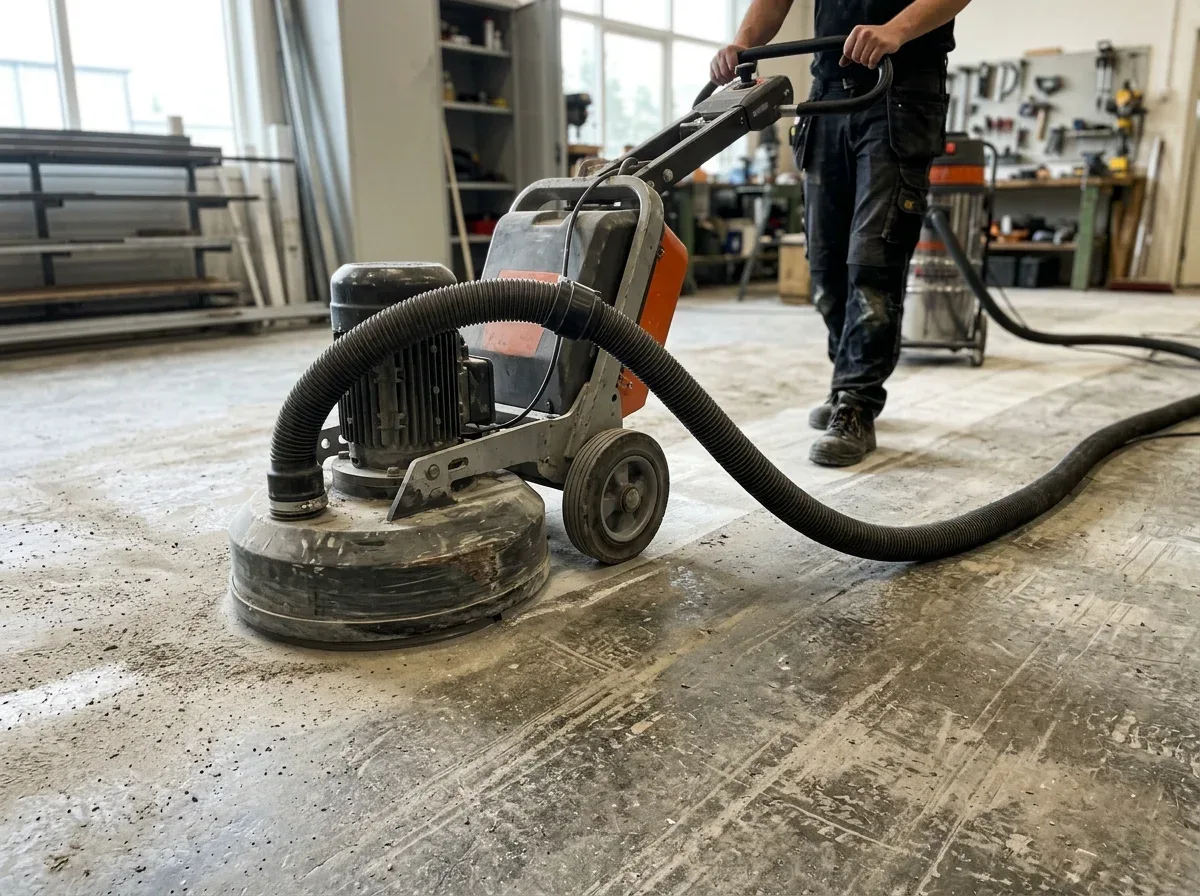
Concrete grinding does not add anything on top of the floor. The weak upper layer of the concrete is removed, strengthened with a hardener and polished. The floor is still concrete; it is just harder, flatter and cleaner.
Epoxy coating is a separate layer formed when liquid resin is poured over the concrete and cures. The concrete stays underneath; on top forms a colored, glossy and sealed plastic surface.
This difference is the core of all the comparisons below: one is the floor itself, the other is a shell on top of the floor.
Side-by-Side Comparison
| Criterion | Concrete grinding | Epoxy coating |
|---|---|---|
| Structure | The concrete itself is processed | A separate resin layer on top |
| Peeling, blistering | None | Can occur with moisture and impact |
| Moisture from below | Not a problem, concrete breathes | Risk of blistering, measurement is essential |
| Chemical resistance | Medium, increases with protection | High |
| Hygiene | Easy to clean, does not hold dust | Seamless and sealed surface |
| Slipperiness | Safe when dry, matte option available | Slippery when wet, sand additive required |
| Color options | Natural gray tones, aggregate | Wide range of colors, stripes, logos |
| Renewal | Light on-site re-polishing | Removal and recoating |
| Service life | Very long | Depends on preparation and use |
Durability and Wear
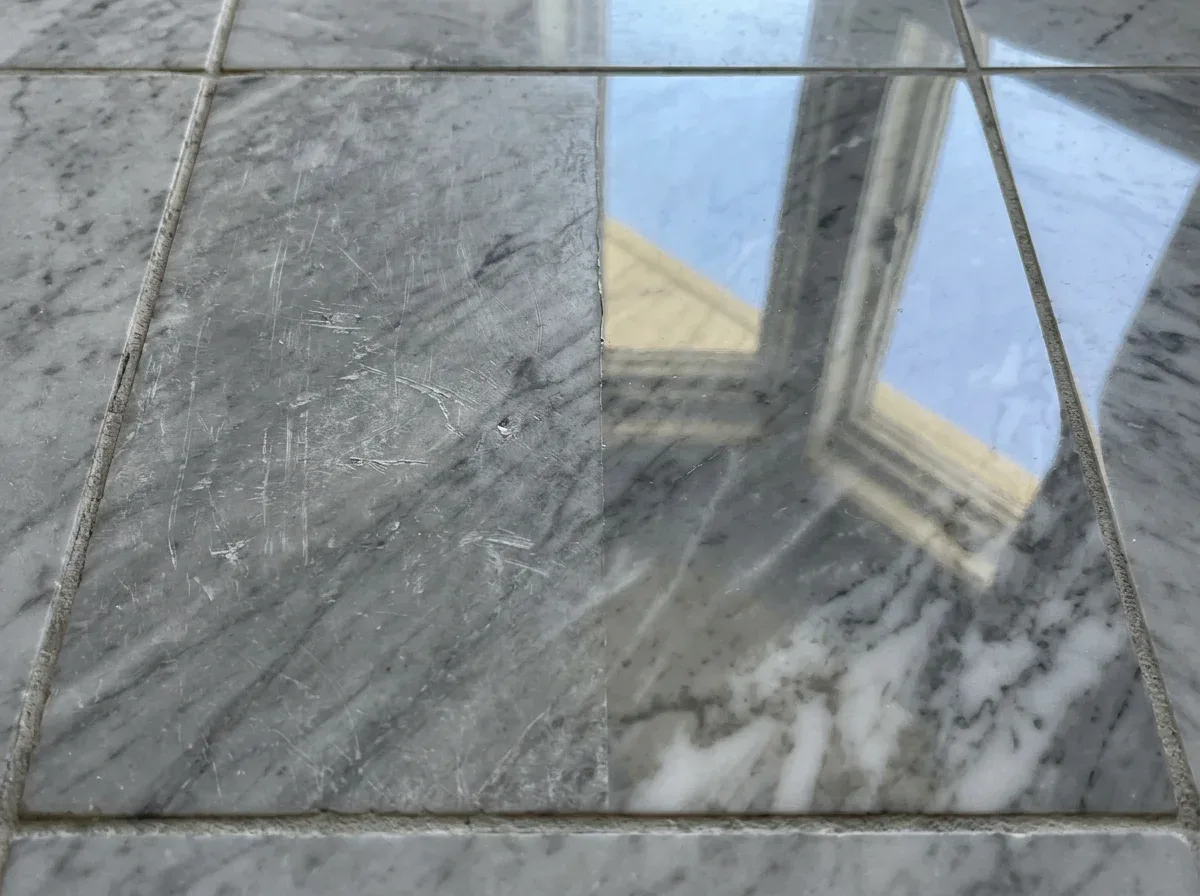
With concrete grinding, since the surface is the concrete itself, there is no layer to peel off. Gloss may fade over time, but the floor does not "lift"; it withstands forklift and vehicle traffic for a long time. Epoxy is durable when applied well; however, under impact, scratching and heavy traffic, the layer wears, scratches and peels in some spots. The life of the coating depends heavily on the preparation and moisture of the concrete beneath.
Moisture and Blistering
Concrete continues to "breathe." On floors with moisture coming from below, concrete grinding does not suffer from blistering. Epoxy, being a sealed layer, can cause blistering and detachment as moisture and vapor pressure from below build up under the coating. Moisture measurement is essential, especially in basements and car park levels in contact with the ground.
Chemical and Stain Resistance
Thanks to its sealed surface, epoxy forms a good barrier against acids, oils and many chemicals; for this reason it may be preferred in food, pharmaceutical and chemical facilities. In concrete grinding, the hardener and stain protector increase resistance to oils and liquids, but strong acids can affect the concrete. In areas where chemicals are constantly spilled, a coating may be more suitable.
Hygiene
Epoxy's seamless, sealed surface is an advantage in areas that require hygiene. In concrete grinding, the smooth surface with closed pores is easy to clean and does not hold dust; it is sufficient for most commercial areas.
Slipperiness
Glossy epoxy can be slippery when wet; for slip resistance, quartz sand is sprinkled into it to create a textured surface. Glossy concrete is generally safe when dry; in wet and oily areas, a more matte gloss level is chosen.
Appearance
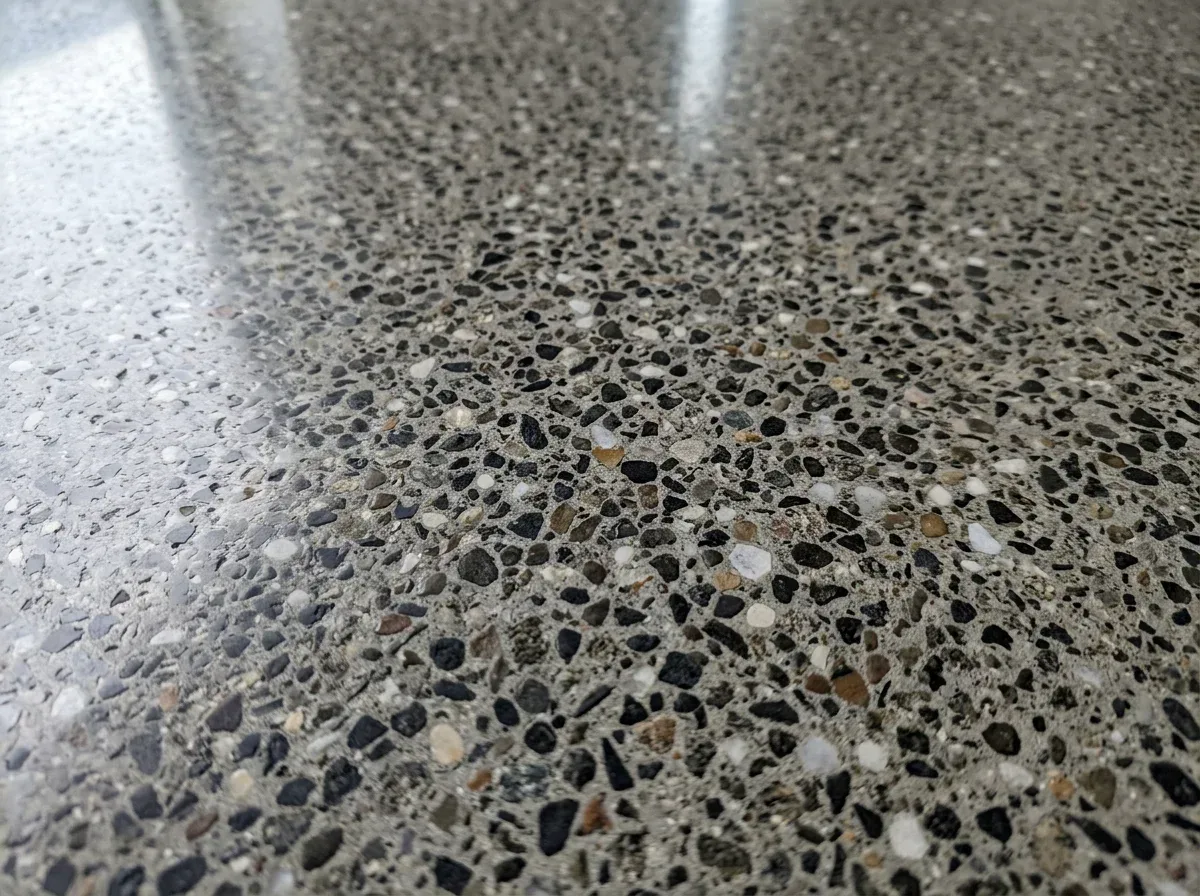
Epoxy has a wide range of colors; stripes, parking lines and logos can be made. With concrete grinding, on the other hand, the natural gray tones of the concrete, the aggregate look and the gloss level can be adjusted. Parking lines and markings are made separately with paint.
Maintenance and Renewal
With concrete grinding, daily cleaning is easy with a machine. When the gloss fades, it is refreshed on site with light re-polishing; there is no need to remove the floor. When epoxy wears or peels, it must be recoated, which often requires grinding off the old layer and repeating the process from scratch.
Which Method for Which Floor?

In many businesses, the two are used together: concrete grinding in general areas, and a coating in small zones with chemical risk.
How Should Cost Be Evaluated?
In the first quote, the prices of the two methods may be close, or epoxy may even look cheaper. But cost should be calculated not just on the initial job, but over the entire service life:
- When epoxy needs to be renewed, removing the old layer is added to the job.
- Repairing blistered and peeled areas disrupts the business's operations.
- With concrete grinding, renewal is a light re-polish done on site without removal.
- A light-colored concrete surface can reduce lighting costs in large warehouses.
That is why, for large areas that will be in use for a long time, polished concrete is often more advantageous in terms of total cost.
Removing Existing Epoxy and Switching to Polished Concrete
Old epoxy coatings that bubble, peel, or constantly need repair can be completely removed by grinding. The same floor is then processed through the polished concrete stages. This transition is often preferred by parking garage and warehouse managers who want to get rid of the constant cost of renewal.
Questions to Ask Before Deciding
- What kind of traffic will the floor carry: pedestrians, vehicles, forklifts?
- Is there a risk of moisture rising from below, and has a moisture test been done?
- Are chemicals, acids, or oils spilled on the floor?
- Are colored zone markings or a logo required?
- How many years will the floor be in use, and how long can the business close for renovation?
- Is there an old coating on the existing floor, and what condition is it in?
Once the answers to these questions are clear, the right method becomes obvious on its own.
Why Choose Polished Concrete for Car Parks?

Most residential complex and hotel car parks in Alanya have levels built directly on the ground. On these levels, moisture rising from below is the most common cause of blistering in epoxy coatings.
Because polished concrete does not trap moisture, it performs reliably on these levels. Tire marks and oil stains are easily cleaned from the hardened, protected surface, and the floor can be used for years without peeling.
Removing Old Epoxy

Patching bubbling epoxy is often only a short-term fix; if the moisture problem remains, the new patches will lift as well.
On these floors, we remove the old coating completely with heavy-duty grinding machines, clean and repair the concrete, and then carry out the concrete polishing stages. This puts an end to the constant cycle of re-coating.
Making the Right Decision Together

The right method is not the same for every floor. During the site survey, we evaluate the floor's hardness, moisture, the condition of the existing covering, and how the area will be used.
In some areas we recommend concrete grinding, in others a coating, and in others a combination of the two. Our goal is a floor that will serve you without problems for many years, not just the first year.
If you are considering epoxy for a parking garage level that sits directly on the ground, be sure to request a moisture test before getting a quote. Most epoxy blistering is caused by moisture from below that was not measured before the work began. — Expert Note
Frequently Asked Questions About Polished Concrete and Epoxy
01Which is more durable: polished concrete or epoxy?
02Why does epoxy blister?
03Can an epoxy floor be converted to polished concrete?
04Are there color options for polished concrete?
05How are parking lot lines done on polished concrete?
06Which one is finished faster?
07Which should be preferred in a food facility?
Related Articles
What Is Concrete Grinding and How Is It Done? Turning Dusting Concrete into a Glossy Floor, Removing Old Epoxy and Switching to Concrete Grinding, Salt and Moisture Emergence on Concrete Floors, Residential Complex Parking Lot Floor Renovation: A Guide for Property Managers, Industrial Warehouse and Factory Floor Renovation