The Difference Between Marble Polishing and Marble Glazing
Someone who says "I want to polish my marble" can get two different answers. One suggests applying a bottle of polish to the floor; within a few hours the floor gleams. The other suggests working with machines, diamond pads and patience; the job takes longer, but the shine lasts for years. On the first day the results may look alike, but six months later the difference is clear. One floor yellows, attracts dirt and gets scratched; the other keeps showing the stone's own color and veining. Understanding this difference helps you choose the right service and avoid unnecessary expense.
In short: Mechanical polishing smooths the marble itself with diamond abrasives; the shine belongs to the stone and does not peel or yellow. A surface coating applies a film on top of the stone; it gives a quick shine but scratches easily, yellows, and eventually has to be stripped. Crystallization is a maintenance method that sits between the two, reacting with the stone's surface.
Where Does the Shine Come From?
Whether a surface looks shiny depends on how evenly it reflects light. At the microscopic level, a rough surface scatters light in every direction and looks matte. A smooth surface with the roughness removed reflects light in a single direction like a mirror, and appears shiny.
With marble, this smoothness can be achieved in two ways:
- Smoothing the stone itself: The surface is gradually refined with diamond abrasives; each step removes the scratches left by the previous one. In the end, the stone's crystals reflect light directly. This is called mechanical polishing
- Filling the surface of the stone: A polish or coating applied to the surface fills in the roughness and forms a smooth film on top. The shine comes from this film. This is called a surface coating or topical polish.
The Three Methods Side by Side
| Feature | Mechanical polishing | Crystallization | Surface coating |
|---|---|---|---|
| Source of the shine | The stone itself | A hard layer formed on the stone's surface | The film on top |
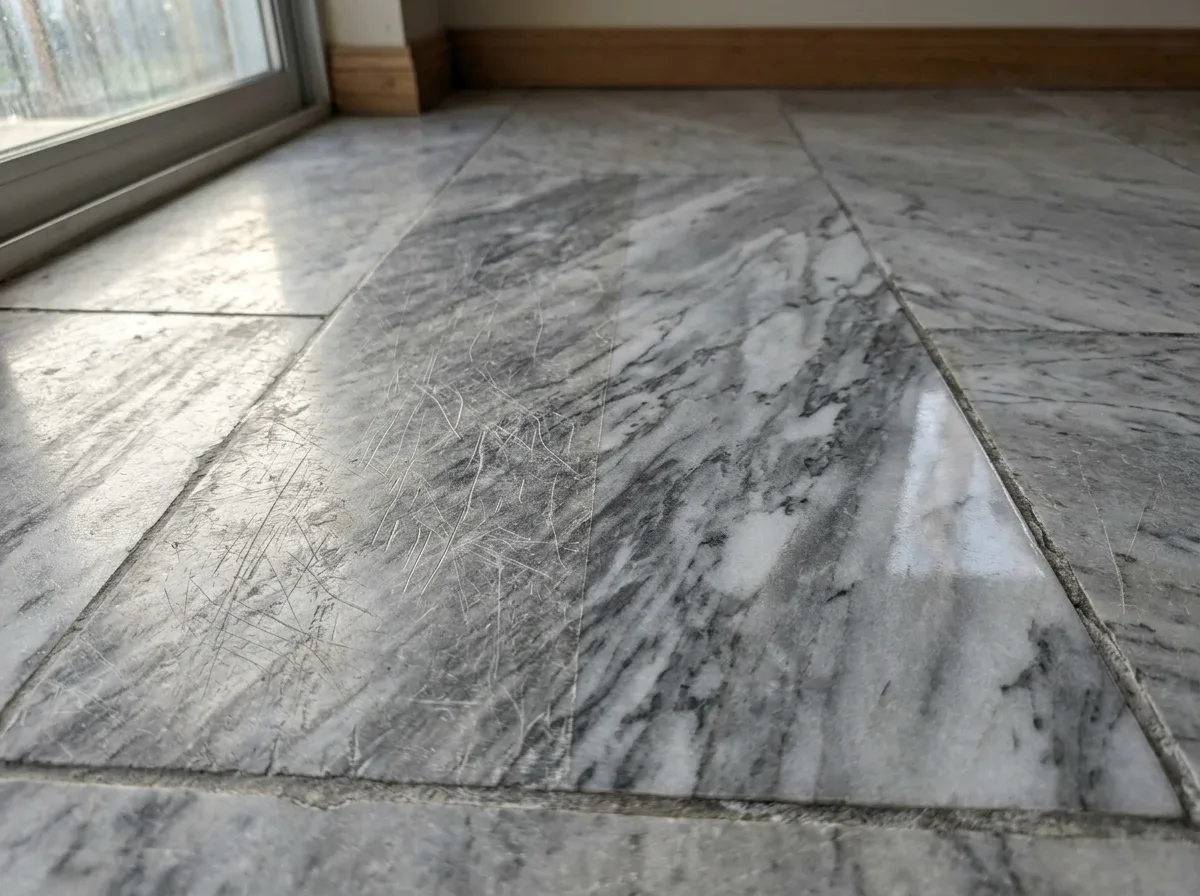
| Effect on scratches | Removes them | Reduces light marks | Only covers them |
| Durability | Long | Medium, extended with maintenance | Short |
| Yellowing | None | Possible with the wrong product | Appears over time |
| Breathability of the stone | Continues | Largely continues | Can be blocked |
| Renewal | The same process is repeated | Periodic repetition | Stripping required |
| Best suited for | Any marble floor | High-traffic areas | Short-term needs |
Mechanical Polishing
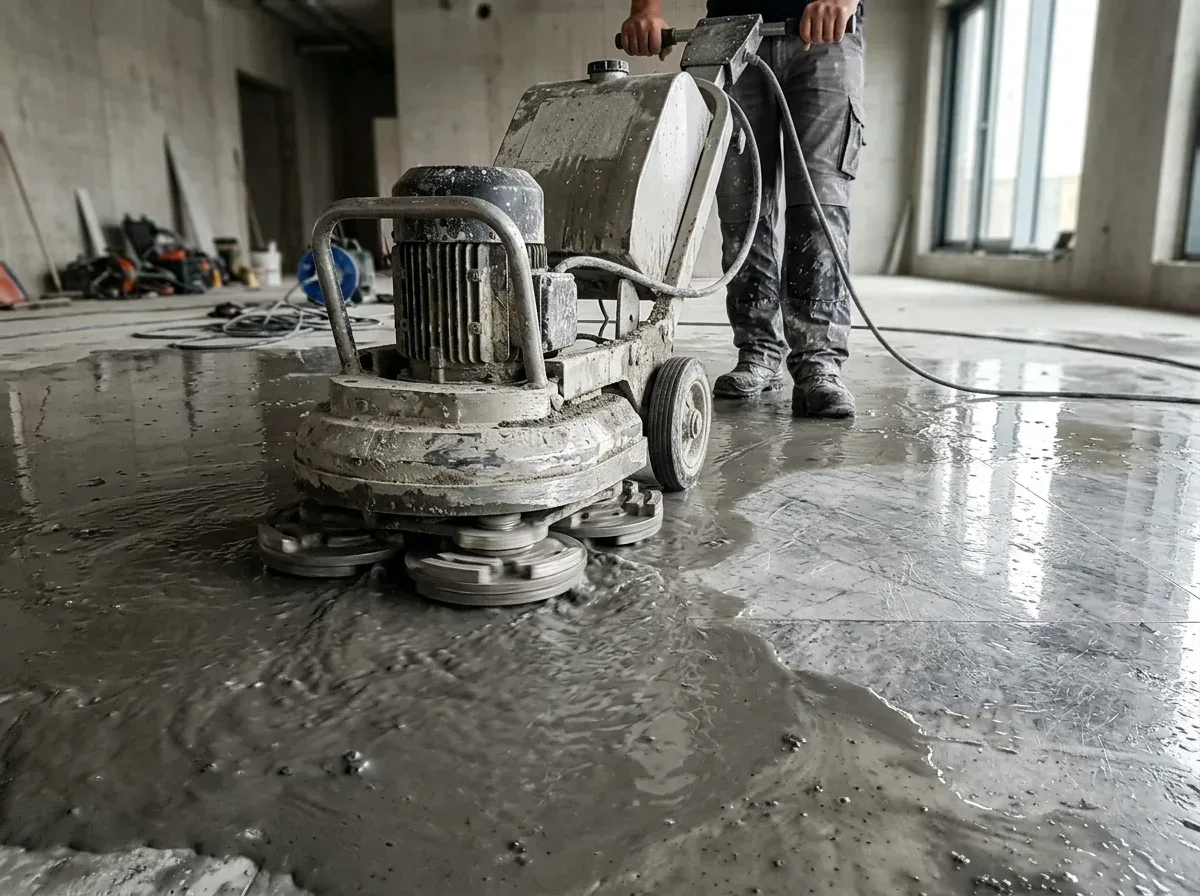
In mechanical polishing, the marble itself is worked on. If scratches and wear are deep, honing is done first, and then the surface is polished with progressively finer diamond pads. In some cases, the shine is enhanced in the final stage with polishing powders or a crystallization treatment.
- The shine belongs to the stone itself; it does not peel or yellow.
- The natural color and veining of the marble are clearly visible.
- The stone continues to breathe; no moisture is trapped underneath.
- When it wears down, it can be renewed by repeating the same process.
It also has its limits: it requires equipment and experience and is not a job that can be done by hand. On some very soft or very porous stones, achieving a mirror shine can be difficult.
Surface Coating
In this method, a liquid polish, acrylic or a similar coating is applied to the floor, and a glossy film forms when it dries. It looks like a quick and cheap solution; it may not require special machinery. But its limits are clear:
- The film is soft; it scratches and dulls quickly under foot traffic.
- Over time it yellows, attracts dirt and looks stained.
- It covers the natural look of the stone with a "plastic" shine.
- The accumulated layers eventually have to be removed, and the removal must be done carefully so as not to damage the stone.
- On floors that draw moisture from below, the film can turn white or blister.
Where Does Crystallization Polish Fit In?
Crystallization polish sits somewhere between the two. A special liquid or powder is applied to the marble surface and worked in with a machine. These products interact chemically with calcite to form a harder, shinier thin layer on the surface. It does not behave like a separate plastic film; it becomes part of the surface.
When applied correctly, crystallization extends the shine, especially in high-traffic areas such as hotel lobbies and shopping mall corridors. However, the wrong product or excessive application can cause staining and slipperiness on the surface. It does not work on stones that do not contain calcite, such as granite.
Which One and When?

On home floors, the healthiest approach is most often to bring out the stone's own shine and then protect it with proper daily care.
Which One Does Your Floor Have? A Simple Check
To tell whether there is a polish layer on your current floor, you can look for the following signs:
- If circular scratches are clearly visible on the floor but the shine looks "plastic," there may be a polish film on top.
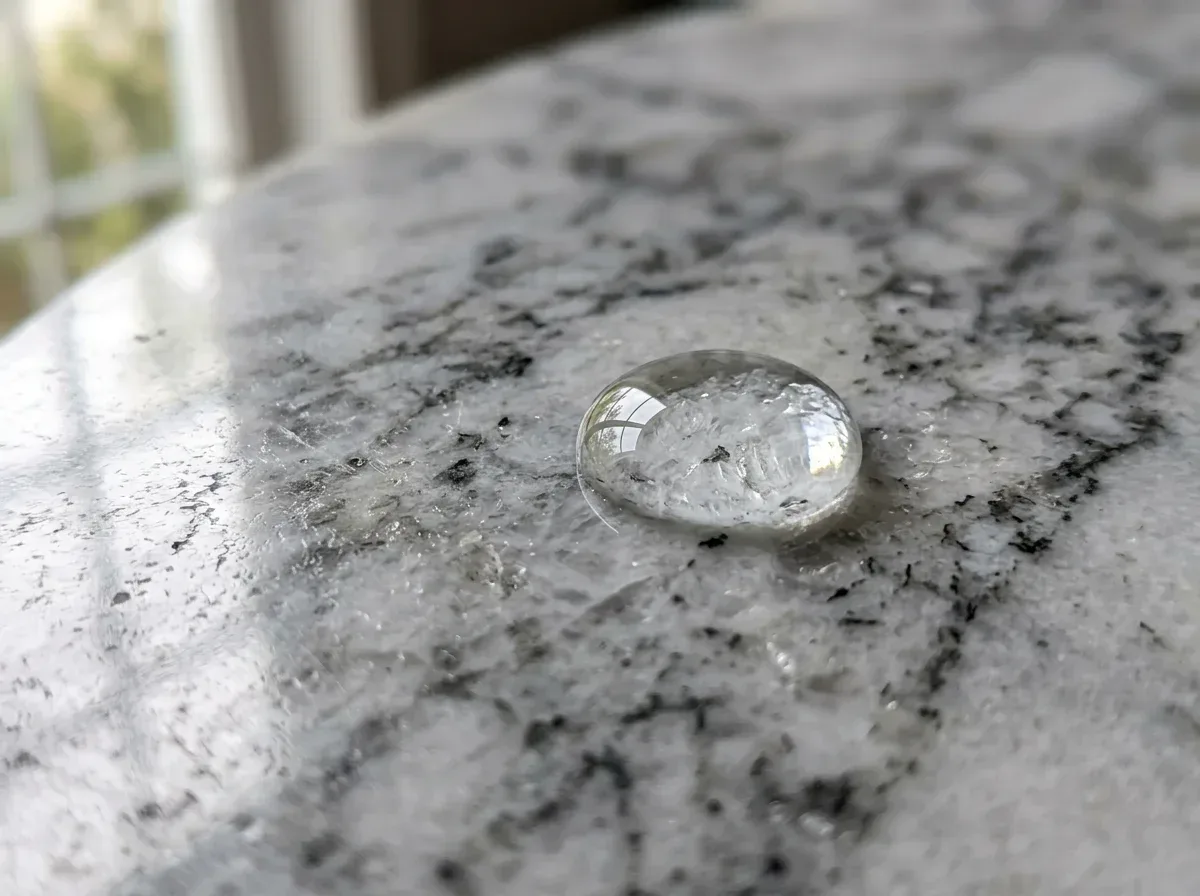
- If water is not absorbed at all in a drop test and the surface feels like a slippery film, there may be a coating on top.
- If the shine has turned yellow in places along the edges and corners and looks stained, old polish has built up.
- If a thin layer lifts from the surface when you lightly scratch it with a fingernail, there is a film.
In this case, rather than applying polish again, removing the old layer and polishing the stone mechanically is a more lasting solution.
Maintaining the Shine for a Long Time
Whichever method is chosen, daily habits determine how long the shine lasts:
- Use doormats at entrances; sand is the biggest enemy of shine.
- Use a pH-neutral stone detergent; acidic products leave dull marks on a shiny surface.
- Stick felt pads on furniture legs.
- In busy areas, plan periodic light polishing or crystallization maintenance.
The Stone's Own Shine

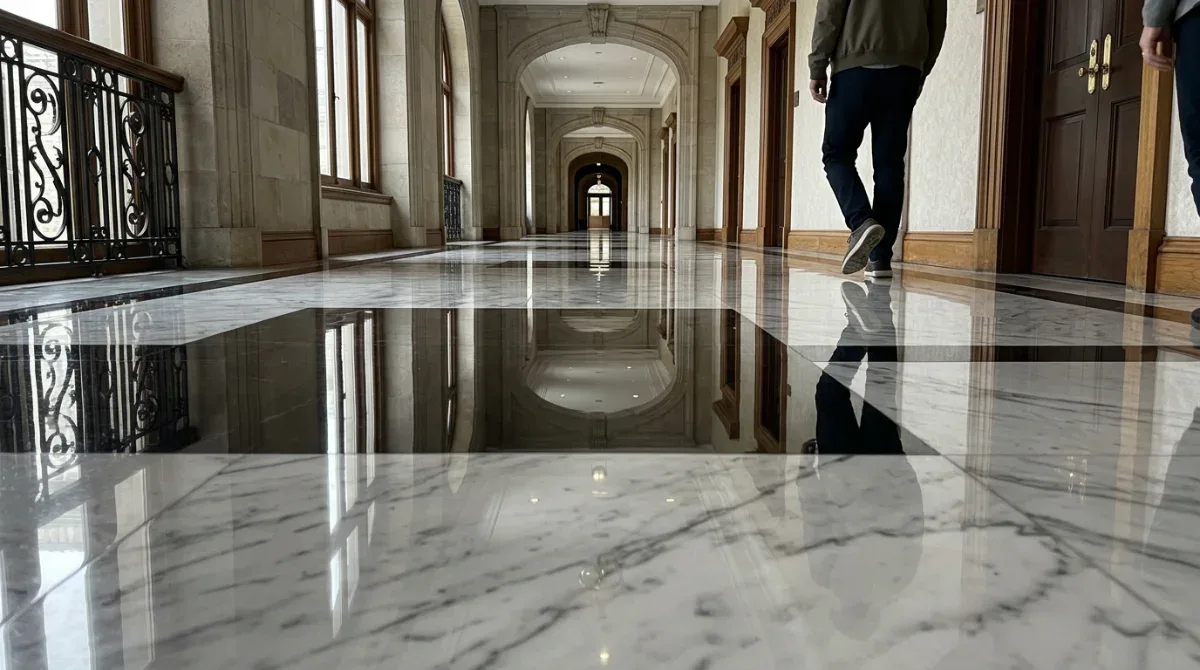
The biggest advantage of mechanical polishing is that it shows the marble's veining and color exactly as they are. Since there is no film on the surface, light is reflected directly from the stone's crystals.
In our work, we prioritize achieving shine from the stone itself. If crystallization is required, we apply it only at the final stage, using a product suited to the stone and in moderation.
Crystallization Maintenance

In high-traffic areas such as hotel lobbies and stores, periodic crystallization maintenance after mechanical polishing noticeably extends the lifespan of the shine.
This maintenance does not wear down the floor; it only refreshes the surface. As a result, the job takes little time and can be completed overnight, so the area is ready for use in the morning.
Removing Yellowed Polish

Over the years, layers of polish applied one on top of another turn yellow, trap dirt and make the floor look stained. Applying new polish over this layer only makes the problem worse.
First, we remove the old polish layers without damaging the stone, then we grind the marble and polish it mechanically. This brings the true color of the stone back to the surface.
Marble Polishing and Buffing Services
A floor whose shine comes from a bottle demands a little more polish every month. A floor whose shine comes from the stone itself only needs proper cleaning. In the long run, the second one is the cheaper option. — Expert Note