Natural Stone Care in Hotels: Lobby, Corridors and Pool Surroundings
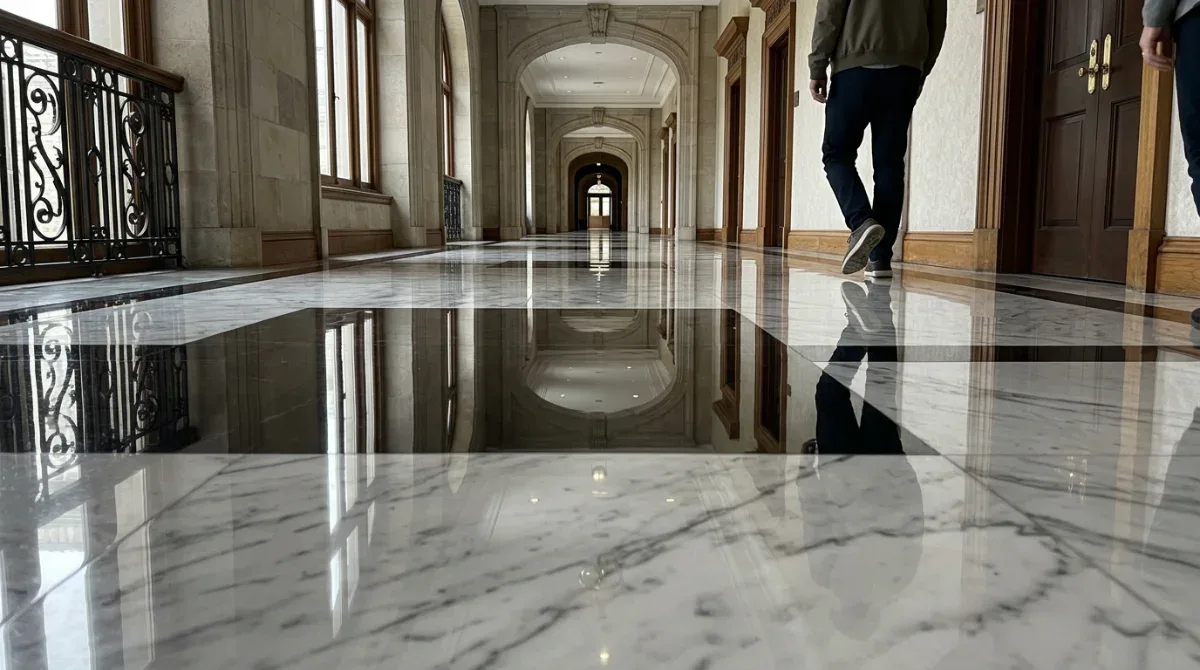
A hotel guest feels the floor the moment they step into the lobby, even if they never look down. Polished, clean marble that feels secure underfoot leaves a positive impression of the rest of the hotel; dulled walkways, darkened grout lines or whitened travertine by the pool can outweigh even the best service. In Alanya, hundreds of hotels host thousands of guests in a short and very busy season. This intensity means natural stone floors take in a few months the load a home floor would see over years. Protecting a hotel floor is possible not through isolated cleaning jobs, but through a program planned throughout the year.
In short: In hotels, natural stone is protected on three levels: daily maintenance (dry mopping, pH-neutral detergent, quick response to spills), periodic maintenance (gloss refreshing in high-traffic areas, grout and silicone checks) and off-season renewal (honing, repair, filling and impregnation). The lobby, corridors, guest bathrooms, restaurant and pool surroundings each have their own specific risks.
Why Is a Hotel Floor Different?
At home, a floor is walked on by a few people a day. In a hotel lobby, the same area is stepped on hundreds of times a day, and thousands of times in peak season. In addition:
- Wheeled loads: Suitcases, housekeeping carts and service trolleys constantly roll across the floor; sand and dirt on the wheels leave fine scratches.
- Beach sand: In coastal hotels, guests carry sand into rooms, corridors and the lobby. The quartz grains in sand are harder than marble.
- Pool water and chlorine: Around the pool and at entrances close to it, the stone is in constant contact with chlorinated and salty water.
- Frequent, fast cleaning: Cleaning is done very often. When the wrong product or the wrong equipment is chosen, damage accumulates just as quickly.
- Uninterrupted use: At home, closing a room for a few days is easy; in a hotel, every job has to be planned without disturbing guests.
Risks and Precautions Area by Area
| Area | Most common problem | Precaution | Periodic work |
|---|---|---|---|
| Entrance and lobby | Dulling on walkways, sand scratches | Long entrance mat system, night maintenance | Gloss refreshing, honing if necessary |
| Corridors and elevator lobbies | Suitcase and cart wheel marks | Wheel cleaning, dry mopping | Intermediate polishing |
| Guest bathroom | Acid marks, limescale, darkening grout | Acid-free products, daily drying | Grout and silicone renewal |
| Restaurant and bar | Grease, wine, sauce stains | Quick response, mopping in passages | Stain removal, impregnation |
| Pool surroundings | Limescale, salt, slipperiness | Fresh water rinsing, matte surface | Anti-slip and filling renewal |
| Spa and hammam | Soap and oil film, humidity | Suitable cleaning, ventilation | Honing and protection |
Entrance and lobby
The lobby is the hotel's showcase and is mostly paved with polished marble or granite.
- Stop the sand at the door: An entrance mat system of sufficient length that is replaced regularly noticeably reduces floor wear. The goal should be for guests to walk at least a few steps on the mat.
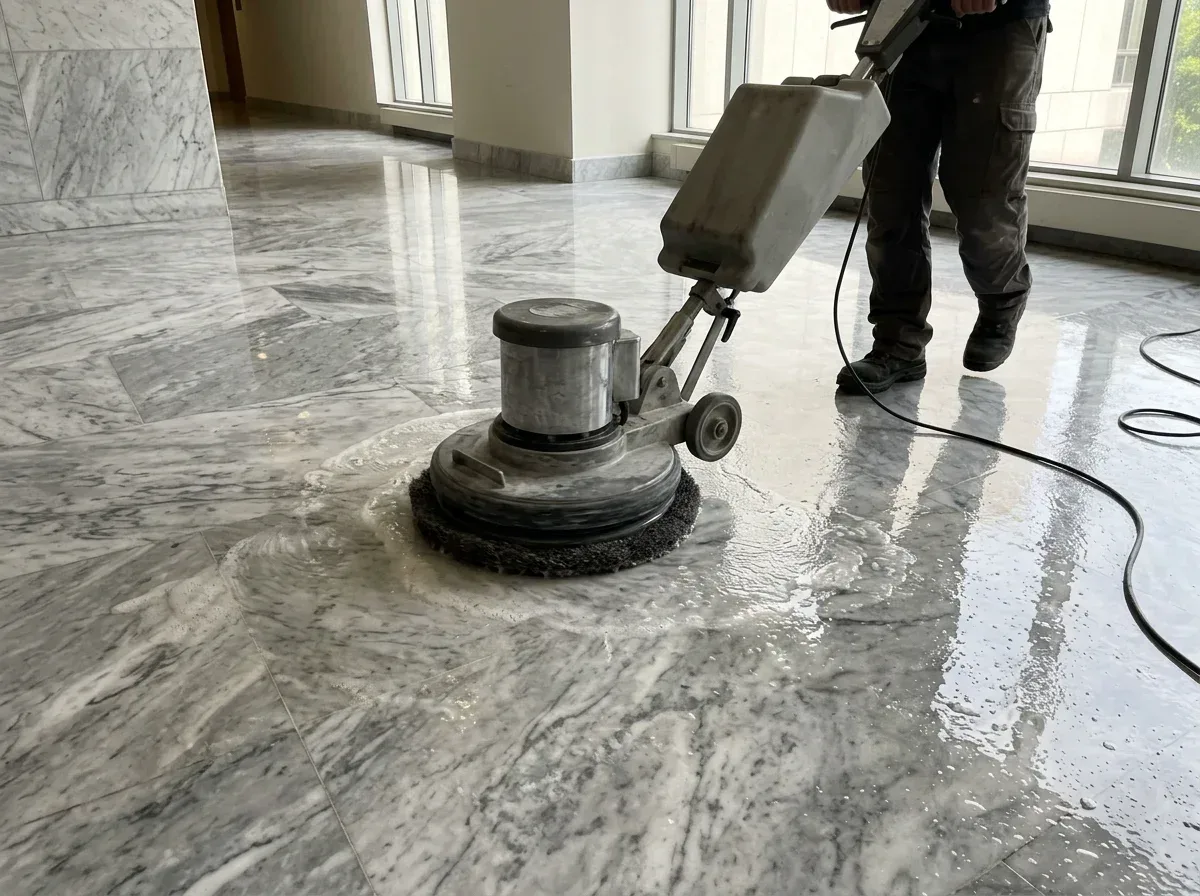
- Night maintenance: Wet cleaning during busy hours creates a slip risk. Dry mopping should be done during the day, while wet cleaning and machine maintenance should be done at night.
- Watch the walkways: The area in front of the reception desk, elevator fronts and door entrances are the zones that dull fastest. These zones may need maintenance before the rest of the floor.
Corridors and Elevator Lobbies
Suitcase wheels and housekeeping carts leave scratches in corridors. It is important to check and clean cart wheels regularly and to replace hardened or cracked wheels. The area in front of room doors is where guests come and go with wet feet; after the pool and beach, soap, cream and sand build up here.
Guest Bathrooms
Marble bathrooms offer a luxurious look, but they are among the most heavily damaged areas.
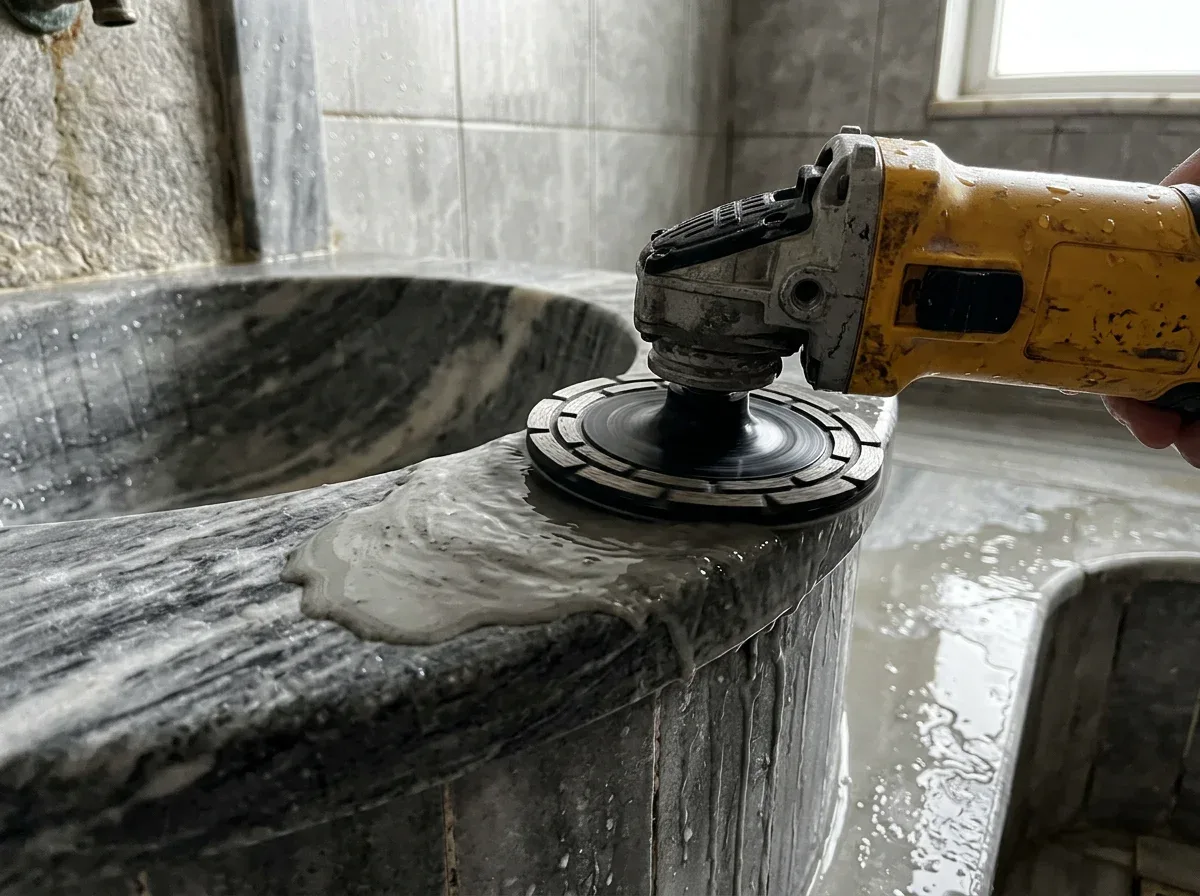
- Bathroom cleaners used by housekeeping staff must not contain acid. Acidic products quickly leave dull marks on marble sinks, shower bases and floors.
- Against limescale buildup, stone-appropriate products and a habit of daily drying should be preferred over acidic products.
- Darkening of silicone and grout lines directly lowers room quality; periodic renewal should be planned.
Restaurant and bar
Oil, wine, fruit juice, and vinegar-based sauces leave stains and dull marks on marble floors. Spills should be wiped up immediately, and service staff should be briefed on this. At the kitchen exit doors, greasy shoe marks are carried onto the floor; suitable mats should be placed at transition points.
Pool surroundings and spa
As pool water evaporates on the stone, it leaves behind limescale and salt; a daily fresh-water rinse slows this buildup. Slipperiness, on the other hand, is both a safety and a liability issue for a hotel. Around the pool, a honed, brushed, or tumbled finish should be preferred over a polished surface; if the surface has become glossy over time, re-roughening should be considered. Oils and soaps used in the spa and hammam leave a slippery film on marble; they should be removed regularly with suitable products.
How to Set Up an Annual Maintenance Program
Thinking of hotel floor maintenance in three layers makes the work easier for both the housekeeping and technical teams.

For seasonal hotels, the best window is between the winter closure and the spring opening. For hotels open year-round, the work is planned area by area and floor by floor so that guests are not affected.
| Period | Seasonal hotel | Year-round hotel |
|---|---|---|
| November – February | Grinding and polishing, repair, filling, impregnation | Floor-by-floor renovation in vacant floors |
| March – April | Poolside and outdoor areas, final checks | Night work in the lobby and restaurant |
| May – October | Daily maintenance, monthly intermediate polishing | Daily maintenance, intermediate polishing |
| Mid-season | Night-time refresh in high-traffic areas | Night-time refresh in high-traffic areas |
Practical Notes for the Maintenance Team
The housekeeping team is the floor's closest guardian. A few simple rules make a big difference:
- Separate the cleaning supplies list by floor type: different products for marble and for ceramic.
- Within the first week, show new staff the damage acidic products cause to marble; if possible, use a small test area.
- Wash mops and mats regularly; a dirty mat carries grit back onto the floor.
- Change the bucket water often; wiping with dirty water dulls the floor.
- Set up a short reporting channel so that spills and stains are reported immediately when seen.
- Record problem areas with photos; this makes it easier to prioritize during periodic maintenance.
When Is External Support Needed?
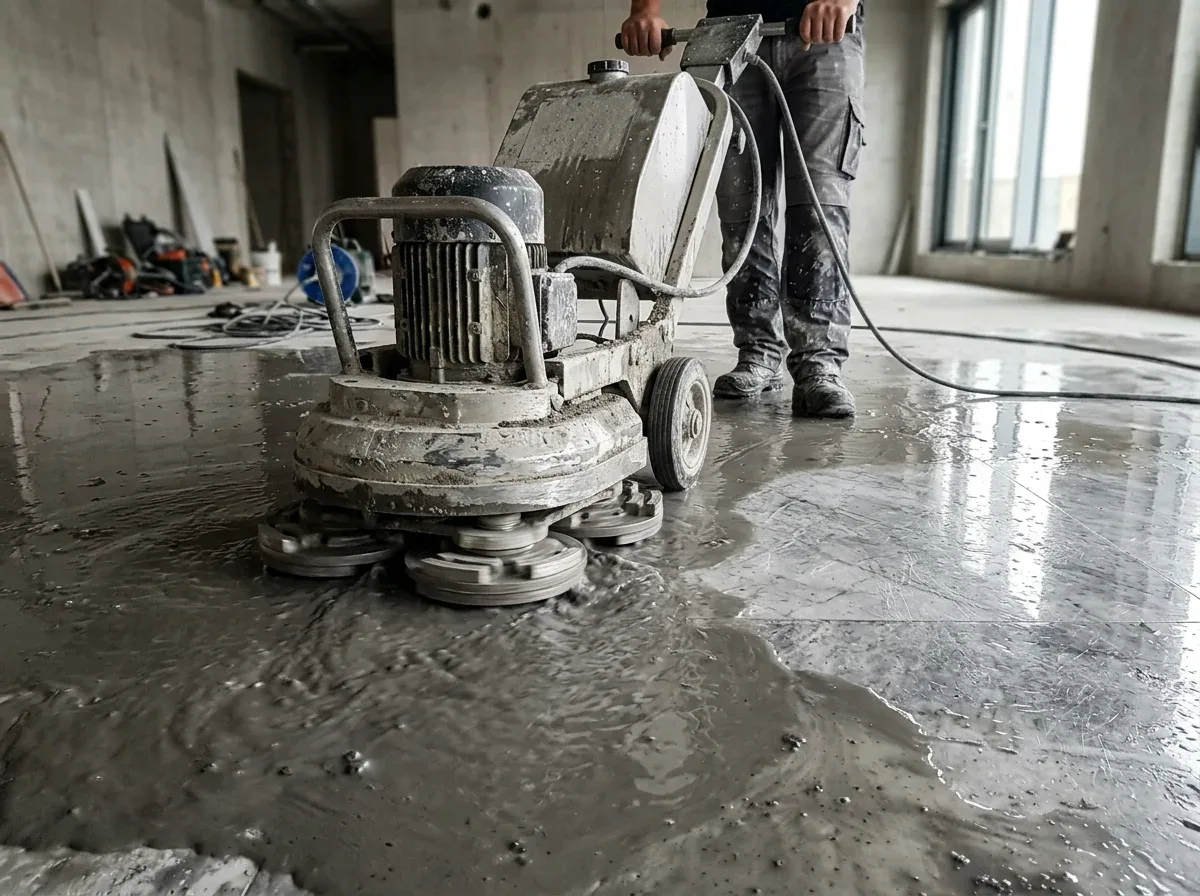
Daily maintenance preserves the shine but does not stop wear. If there is noticeable dullness on walkways, height differences between slabs, cracked and chipped corners, open travertine pores, or slipperiness at the poolside, machine grinding, repair, and protection are needed. For these jobs, it is important to choose a team that fits the hotel's occupancy calendar and can work at night or floor by floor.
Lobby Maintenance Performed at Night

In hotel lobbies, we schedule our work for the late-night hours when guest traffic is at its lowest. By dividing the work area into sections, we ensure that part of the lobby remains usable at all times.
Because we use a wet method, no dust is generated, and machine noise is kept under control in enclosed spaces. By the time the reception desk opens in the morning, the floor is dry and ready for use.
Poolside and Spa Flooring

Poolside and spa areas have the most slippery floors in a hotel, and they are the ones that collect the most limescale. In these areas, safety comes before shine.
We remove limescale and soap film with stone-safe products, hone the surface to a slip-resistant texture, and apply water-resistant protection. This improves both appearance and safety.
Off-Season Renovation Plan

For seasonal hotels, the winter period is the best time to restore floors from scratch. During the site survey, we walk through every area and work out the scope of work and the time needed for each one.
We schedule the honing, repair, filling and protection work so that it does not overlap with the hotel's other maintenance activities, and we hand over all areas before opening.
Marble Honing in a Luxury Hotel
What determines the lifespan of a hotel floor more than anything is the doormat at the entrance and the cleaning product used on each floor. Once you stop the sand coming into the lobby and the acidic product going into the bathroom, the off-season renovation work is cut in half. — Expert Note