Care and Cleaning of Natural Stone: Basic Rules for Marble, Granite and Travertine
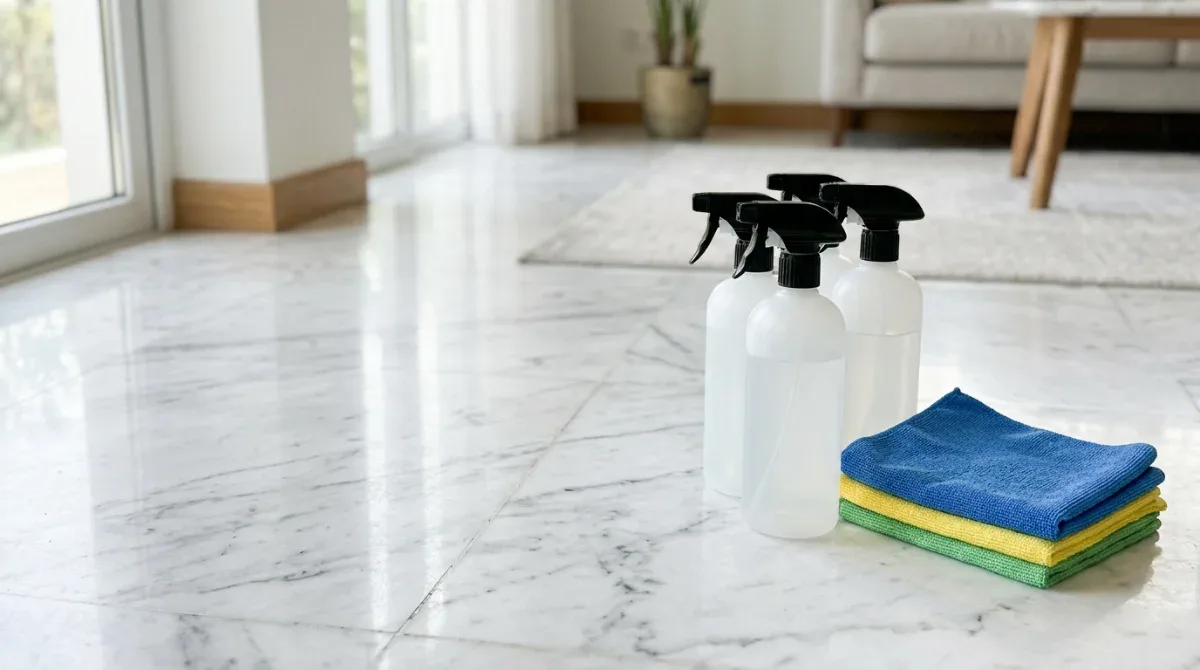
Anyone who has natural stone floors or countertops asks the same question in the first few weeks: What should I wipe this with? The supermarket shelves are full of products labeled "for all surfaces," vinegar and baking soda recipes circulate online, and the cleaner brings the product they are used to. Then one morning you notice a dull ring left by a lemon on the kitchen countertop, or a patch of the bathroom floor that has lost its shine. What determines the lifespan of natural stone is often not the honing or polishing, but the ordinary cleaning done every day. With the right habits, a marble floor stays beautiful for decades; the wrong product can leave marks within a few weeks.
In short: Clean natural stone dry first, then damp; do not use any acidic products; use a small amount of a pH-neutral detergent made specifically for stone; blot spills up rather than wiping them, and check the protection (sealer) regularly with the drop test. Marble and travertine need extra care with acid, granite with oil, and travertine with water.
Get to Know Your Stone First
The three natural stones most commonly found in homes and workplaces are marble, granite and travertine. All three are natural stone, but their structures differ, so they do not react the same way to the same product or the same habit.
| Property | Marble | Granite | Travertine |
|---|---|---|---|
| Main composition | Calcite (calcium carbonate) | Quartz and feldspar | Calcite, porous |
| Against acid | Very sensitive | Resistant | Very sensitive |
| Against scratching | Medium | Very resistant | Medium |
| Stain absorption | High in light colors | Medium in light colors | High, due to pores |
| Most common problem | Dull marks, scratches | Oil stains, dullness | Opened-up holes, dirt |
| Need for protection | Essential in wet areas | Necessary in light colors | Essential almost everywhere |
If you are not sure which stone you have, a simple observation can help: granite usually has a coarse, speckled texture; marble shows distinct veining; travertine has small voids or filled spots scattered across the surface.
Five Basic Rules
Whichever stone you have, the following five rules are the foundation of daily cleaning.

Dry first, then wet
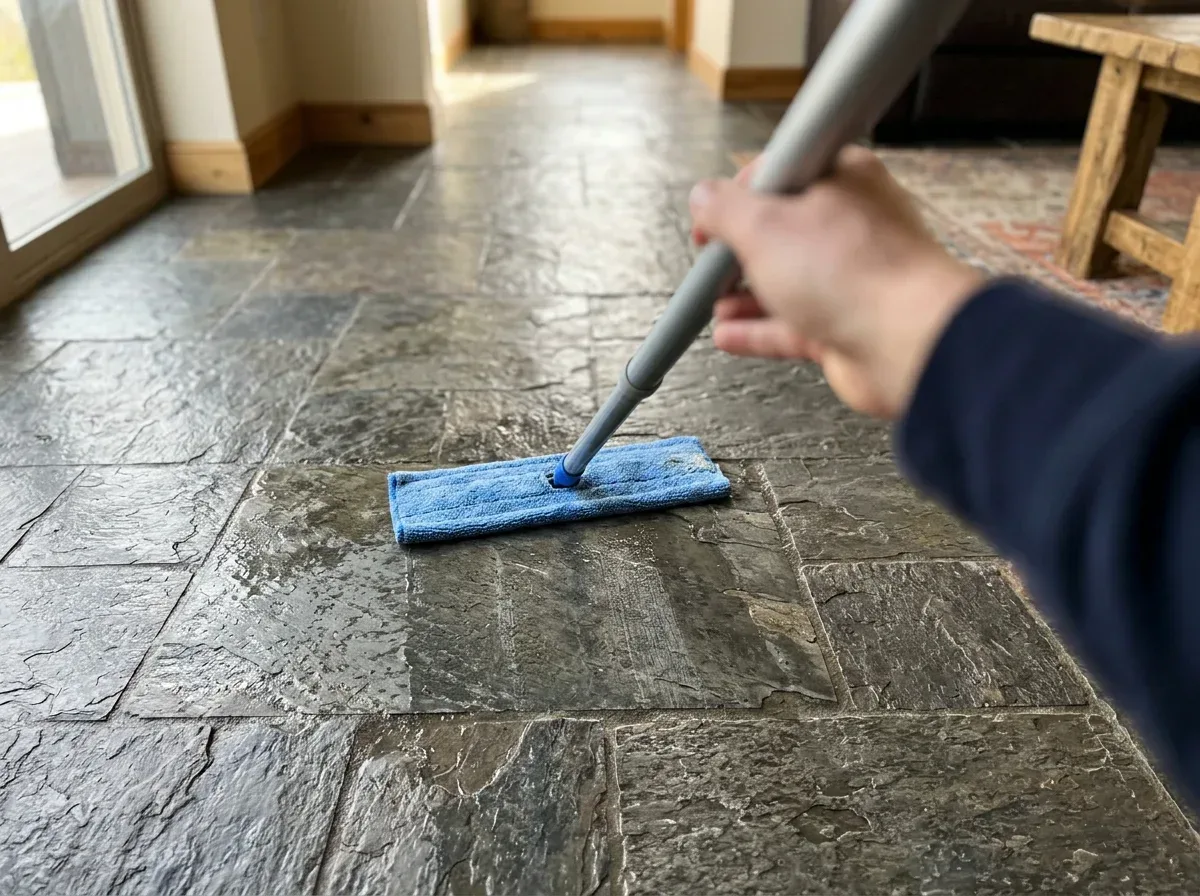
Dust and grit on the floor get dragged across the surface when wiped with a wet cloth or mop and leave fine scratches. Before every wet cleaning, go over the floor with a dry microfiber mop, a soft broom or a vacuum cleaner with a soft head. Make sure the vacuum's wheels are soft; hard plastic wheels can leave marks on marble.
Do not use acidic products
Lemon, vinegar, cola, limescale removers and many products sold as "bathroom polish" contain acid. Because marble and travertine are made of calcium carbonate, acid chemically dissolves the surface wherever it touches and leaves a dull mark. Granite is resistant to acids, but the resin fillers and sealers used on granite countertops can be damaged by acid.
Little product, damp mop
Using too much detergent does not make the floor cleaner; on the contrary, it leaves a film on the surface that becomes slippery and traps dirt. Use a pH-neutral detergent made for stone, at the ratio stated on the label. The mop should be well wrung out; the floor should be wiped damp, not wet. On travertine, too much water seeps into the joints and pores.
Take up spills immediately
Liquids such as coffee, wine, oil and fruit juice can seep into the stone's pores within minutes. Do not wipe up the spill; press an absorbent paper towel onto it to soak it up. Wiping spreads the stain over a larger area.
Do not forget protection
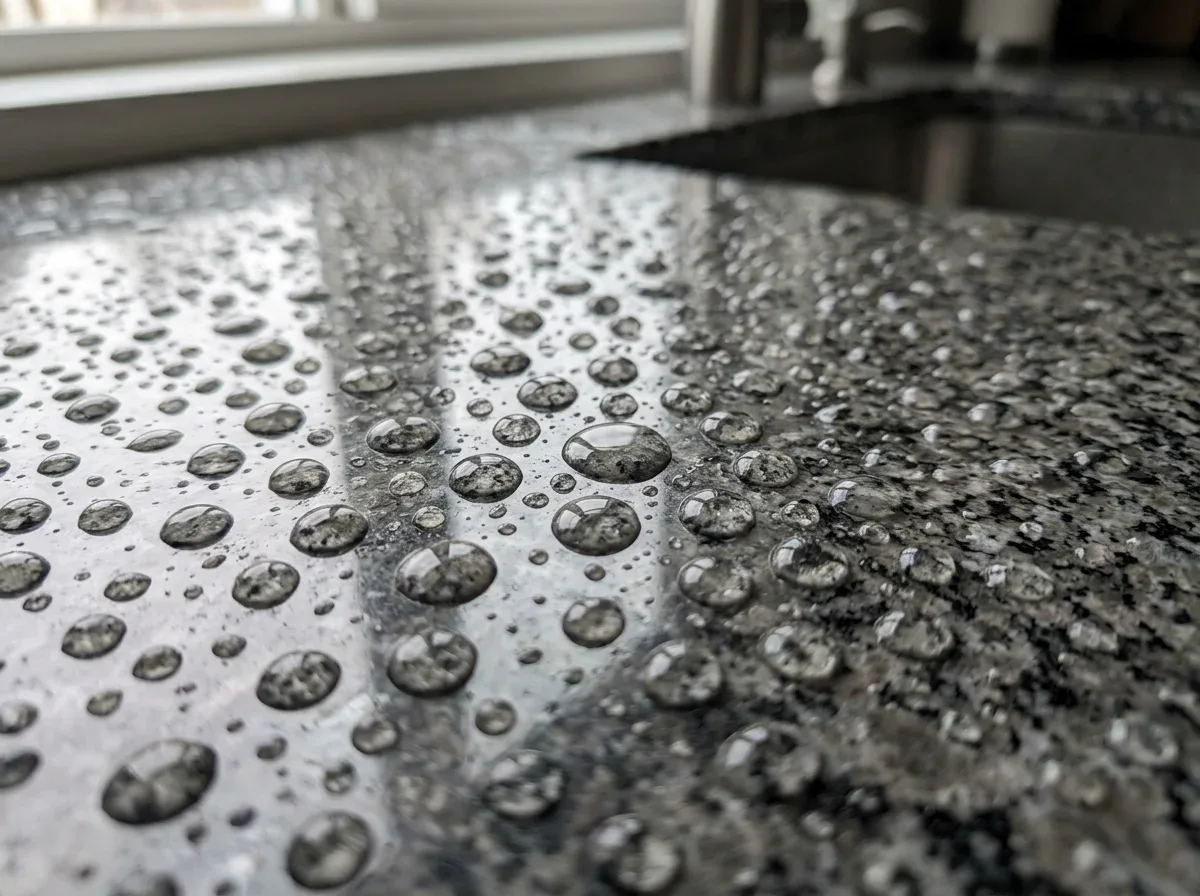
Sealer penetrates the stone's pores and slows the entry of liquids. It is not permanent; it is renewed at regular intervals depending on use. Leaving a few drops of water on the stone and waiting five minutes shows whether the protection is still working: if the water beads up, the protection is good; if the stone darkens, it is time to reapply.
Points to Watch by Stone Type
Marble
Marble is the most loved but also the most delicate stone.
- Against scratching: Put doormats at entrances and felt pads under furniture legs. Do not drag heavy furniture; lift it to move it.
- In the bathroom: Dry the marble with a squeegee after showering; this is the easiest way to prevent limescale marks.
- In the kitchen: Use a cutting board and coasters. Lemon, tomato sauce, vinegar and wine leave marks on a marble countertop.
- Polish products: Polishes applied on marble turn yellow over time and trap dirt. Shine should come from the stone itself; marble that has gone dull should be honed and polished rather than coated with polish.
Granite
Granite is hard and is unaffected by most everyday acids, but it is not maintenance-free.
- Oil stains: Light-colored granites can absorb oil. Around the stove and behind the countertop, the protective sealant should be renewed regularly.
- Harsh chemicals: Prolonged use of bleach and strong alkaline products can dull the surface.
- Outdoors: On granite steps and walkways, a soft brush and a suitable cleaner are enough; a wire brush will scratch the surface.
Travertine
Travertine is the stone that needs the most attention because of its porous structure.
- Fillers: The holes in the floor are closed with filler. Over time the filler wears away or crumbles; the exposed holes collect dirt and must be refilled.
- Water: Excess water seeps into the pores and may leave limescale or algae stains. Sealing is absolutely necessary in wet areas.
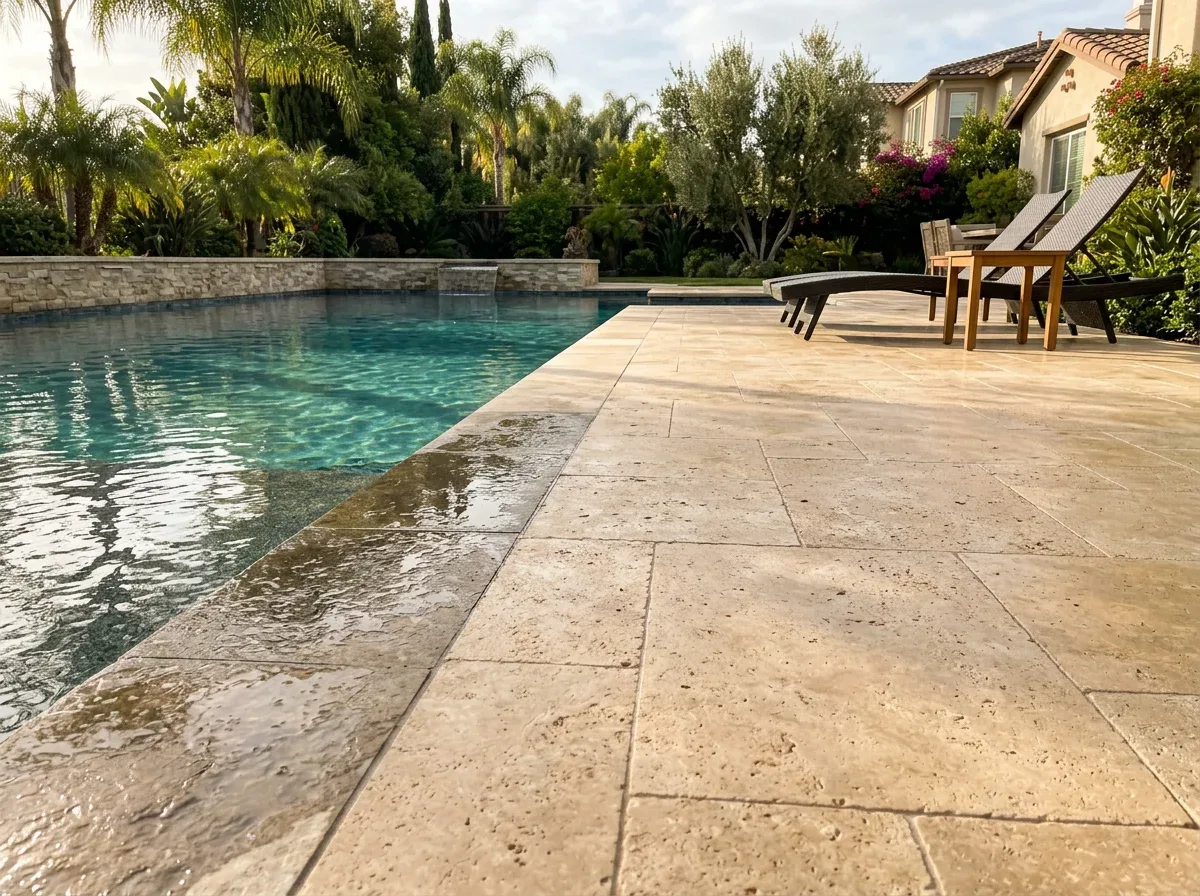
- Outdoors: Rinsing travertine regularly with fresh water by the pool and in the garden reduces salt and chlorine buildup.
Right and Wrong Products
Most products on the shelves are made for ceramic and tile. Seeing the ones that are safe for natural stone and the ones to avoid side by side makes the job easier.
| Product or method | Marble / Travertine | Granite | Note |
|---|---|---|---|
| pH-neutral stone detergent | Suitable | Suitable | The basis of daily cleaning |
| Lukewarm water + microfiber | Suitable | Suitable | Sufficient for light dirt |
| Vinegar, lemon, baking soda recipes | Harmful | Damages the fillers | Leaves dull marks |
| Limescale remover | Harmful | Use with caution | A product specifically for stone should be used |
| Bleach | Avoid | Avoid for long periods | May damage the color and shine |
| Cream and powder abrasives | Harmful | Avoid | Leaves scratches |
| Wire scouring pad, hard brush | Harmful | Harmful | Scratches the surface |
| "For all surfaces" polish | Avoid | Avoid | Leaves a film that traps dirt |
A Simple Maintenance Schedule
Caring for natural stone is not complicated; what matters is consistency.
- Every day: Dry mop in high-traffic areas; deal with spills immediately.
- Once or twice a week: Damp cleaning with a pH-neutral detergent.
- Once a month: Check the bathroom grout lines, shower corners and the area behind the countertop.
- Every six months: Drop test; check the furniture felt pads.
- Once a year or depending on use: Renew the sealant if necessary; expert assessment for areas that have become dull.
When to Consult a Specialist?
Daily cleaning maintains the appearance, but it does not restore a worn surface. In the following cases, cleaning alone will not give results:
- If there is pronounced dullness on walkways and scratches that catch your fingernail.
- If acid marks do not go away when wiped and dull rings remain on the surface.
- If holes have opened up in travertine and the edges have started to chip.
- If there are deep-set oil, rust or ink stains.
- If the stone absorbs water immediately in the drop test and the protection needs to be renewed.
In these cases, honing, stain removal with a poultice, filling or choosing the right sealant is required. Since a wrong intervention can make the problem worse, it is best to see the stone in person first.
Choosing the Right Cleaning Product for Your Stone

In our work, we use only pH-neutral, residue-free products that are suitable for natural stone. Even if acidic or strongly alkaline products give a shiny result in the short term, they wear away the stone's surface in the long term.
After polishing or maintenance, we review the cleaning products used in your home or workplace together with you and recommend the ones that are suitable for your stone.
Drop Test and Impregnation

The easiest way to tell whether an impregnating sealer is doing its job is the drop test. If a water drop stays beaded on the surface for a few minutes, the protection is working.
If the stone absorbs the water quickly and darkens, the protection has weakened. In that case, we apply a water-based or solvent-based impregnating sealer suited to the type of stone and where it is used.
Open Pores in Travertine

The most common problem we see on travertine floors is filler that has crumbled away over the years, leaving pores full of dirt. These pores cannot be cleaned by ordinary cleaning, and they trap a bit more dirt with every wipe.
We seal the open pores with a filler that matches the color of the stone, level the surface by honing it, and then apply a protective treatment. This makes daily cleaning easy again.
Natural Stone Care
Take a look at the labels of the products in your cleaning cabinet just once. Any product that says "removes limescale," "contains acid," or "pH 2-3" is dangerous for marble and travertine. Keeping these products on a shelf away from the stone is the cheapest way to protect it. — Expert Note
Frequently Asked Questions About Natural Stone Cleaning
01Can I wipe a marble floor with vinegar?
02Does bleach damage granite?
03Can a steam cleaner be used on natural stone?
04How often should I damp-mop natural stone?
05How long does impregnation last?
06Can I remove etch marks myself?
07Why does travertine flooring get dirty so quickly?
Related Articles
Choosing a Detergent for Natural Stone: What Does pH Neutral Mean?, Acidic Cleaner Damage on Marble Floors: Lemon, Vinegar, Limescale Remover, What Is Natural Stone Sealing, and Which Stones Need It?, Water Drop Test After Sealing: Is the Protection Working?, Marble, Granite and Travertine: Comparing Maintenance Difficulty