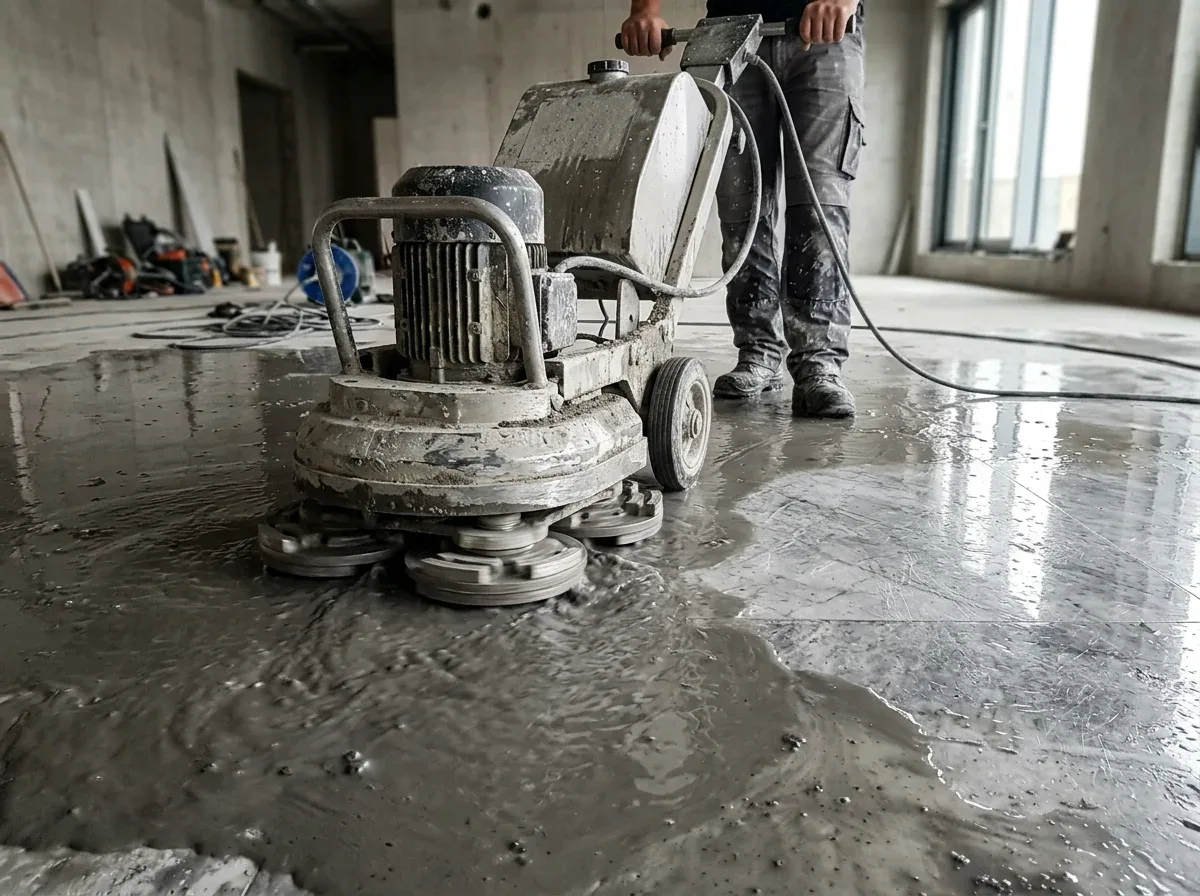
Does Honing Damage the Floor? The Truth About Thickness Loss
In short: The question on the mind of many people considering grinding and polishing is this: "Does the stone get thinner with every grinding? Will the floor be used up after a few treatments?" Grinding does remove material from the stone, but when done correctly the amount removed is very small.
The real risk is unnecessarily aggressive grinding. In this article, we explain the truth about thickness loss.
How Much Material Does Grinding Remove from Stone?
Grinding removes a thin layer from the surface of the stone to eliminate scratches, lippage, and wear. The main factors that determine how much material is removed are:
- Condition of the floor: A floor that has only gone dull is restored with fine grits, while a worn, stained, or damaged floor requires more work.
- Starting grit: Starting with a coarse abrasive removes a thicker layer from the surface; starting with a fine grit minimizes loss.
- Lippage and scratch depth: When the height difference between slabs and deep scratches need to be removed, more material is taken from the highest points of the stone.
- Technique of the craftsman: A craftsman who runs the machine at an even speed with consistent passes does not grind unnecessarily; uneven work, however, causes excess material loss in some areas.
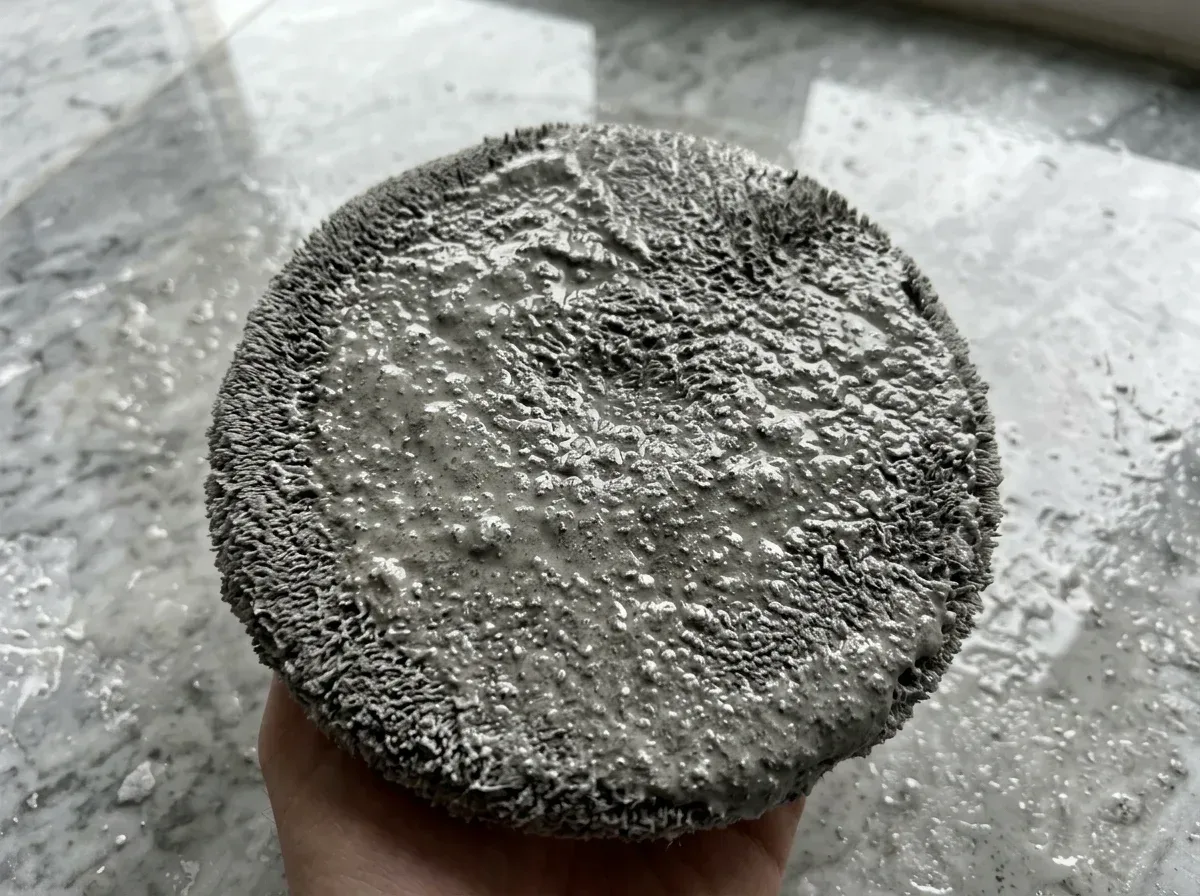
On a flat floor that is only slightly dull, only fine grits are used, and the material removed is negligible.
On a floor with lippage and deep scratches, coarse grits are required; this means removing somewhat more material from the highest points of the tiles. But even this remains small compared to the thickness of the floor tile.
How Many Times Can a Floor Be Ground?
Natural stone floor tiles are usually several centimeters thick. With correctly performed grinding, the material removed each time is very small compared to this thickness, so the floor can be ground many times over its lifetime. In practice, it is rare for a floor to become impossible to grind, except with very thin tiles, overly aggressive grinding, or deep damage.
The Real Risk: Unnecessarily Aggressive Grinding
In some cases, grinding can cause damage:
Coarse Grinding on Light Dullness
Using coarse grinding on a floor that only needs its shine refreshed means unnecessary material loss and unnecessary cost.
Overworking the Same Spot
Keeping the machine in one spot for too long can cause dishing (waviness) in that area. This is seen especially with inexperienced application.
Filled Travertine
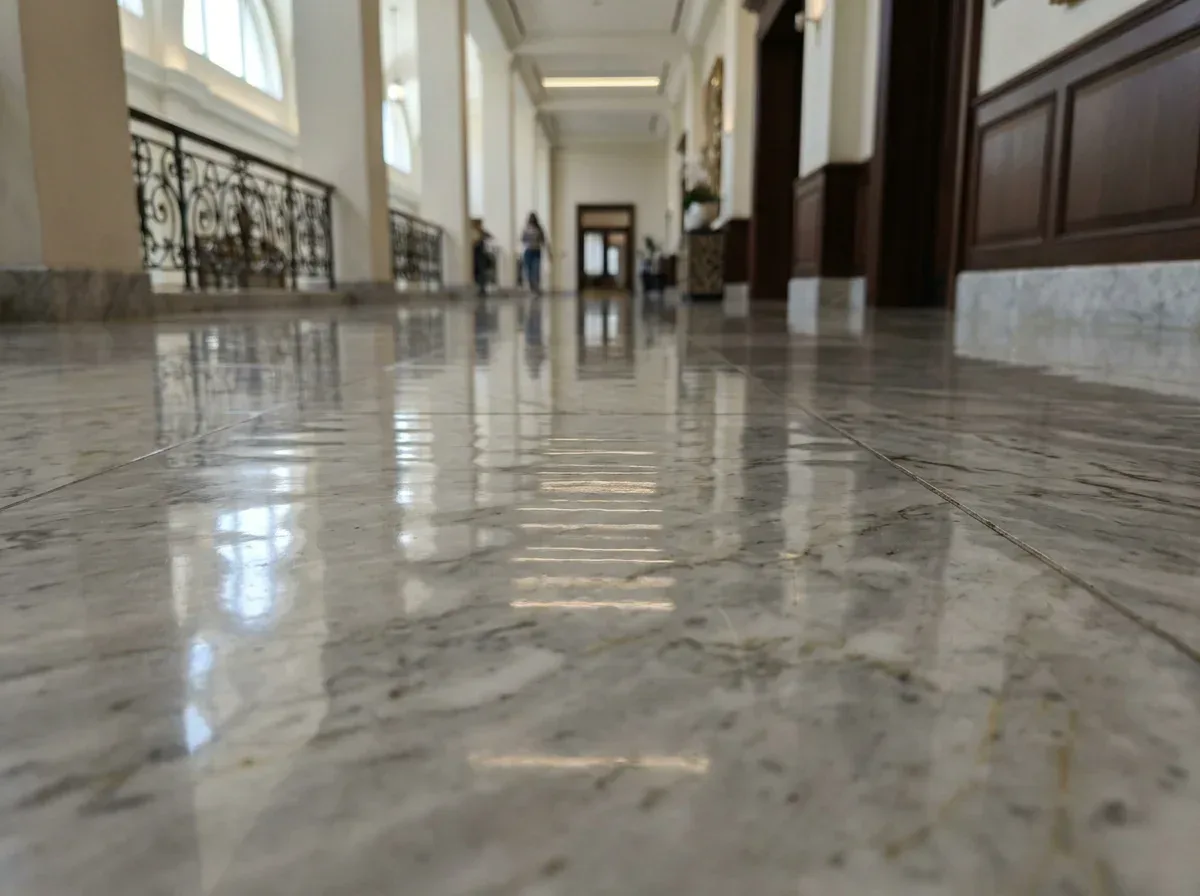
The pores of travertine are sealed with filler at the factory or after installation. This filler is often a thin layer close to the surface. Grinding that is coarser and deeper than necessary can expose the voids beneath the filler again, and the floor looks pitted. For this reason, grinding on filled travertine is done in a controlled manner; the exposed pores are refilled during grinding and the work is finished with fine grits.
Edges and Profiles
Working aggressively on profiled areas such as stair nosings and countertop edges can ruin the profile.
Heat and Chemicals
Wrong speed, dry operation, and unsuitable chemicals can cause burn marks and discoloration on the stone.
What Should Proper Grinding Look Like?
Proper grinding is carried out by determining the floor's needs, with minimal intervention and controlled passes, and then protected with correct maintenance afterwards.
- Diagnosis comes first: What the floor really needs is determined; whether only the shine has faded, or whether there is lippage and deep scratches, is clarified before work begins.
- Minimal intervention: Work starts with the finest grit required; this way, just enough material is removed to fix the problem and the stone is not thinned unnecessarily.
- Even movement: The machine moves with regular, overlapping passes; since it does not stay too long in one spot, no dishing or waviness occurs.
- Inspection: The surface is checked after each grit; the next grit is not started until the marks of the previous one have completely disappeared, and no unnecessary repetition is done.
- Proper maintenance: Proper maintenance after grinding delays the next grinding; using a suitable cleaning product and mop slows down surface wear.

Required Grinding by Floor Condition
| Floor condition | Starting grit | Material loss |
|---|---|---|
| Light dullness | Polishing only or fine grit | Negligible |
| Fine scratches, walking paths | Medium grit | Very little |
| Deep scratches, acid marks | Medium-coarse grit | Little |
| Noticeable lippage | Coarse grit | More at the high edges of the slab |
Checking the Thickness
There are several ways to tell how many times and how aggressively a floor has been ground before. Thickness can be measured from slab sections visible at thresholds, under baseboards, or at edges. If a noticeable level difference has formed between door thresholds and the floor, or if the mortar underneath begins to show at the slab edges, the floor may have become very thin. In that case, work is done only in the areas that need it, using the finest grit stages.
Questions to Ask the Grinding Company
A few good questions asked when requesting a quote show in advance how much the company will intervene in the floor and how it plans the job.
- Starting grit: Which grit stage will you start with, and why? The answer shows whether the company has inspected the floor and how much material it will remove.
- How the level difference is handled: Will you remove the level difference completely, or only soften it? Removing it completely means more material loss, so this choice should be discussed beforehand.
- Treatment of profiles: How will you treat profiles such as stair nosings and countertop edges? Working aggressively in these areas can distort the shape of the profile.
- Test area: Can you do a test area? A treatment carried out on a small area lets you see the result and the required intervention in advance.
- Care after grinding: What care do you recommend after grinding? The recommended cleaning products and impregnation determine how long the new surface will be protected.
Our Grinding Approach in Alanya
Most of the floors we work on in Alanya are structurally sound but regularly worn by sand carried in from the beach. Most of these floors do not need a coarse grit stage; we start with medium or fine stages to keep material loss to a minimum. For floors that truly have a level difference, we show it during the survey and explain clearly how much intervention is required.
Do the Benefits of Polishing Outweigh the Drawbacks?

When done properly, yes:
- Extended floor life: Grinding removes only the thin, worn top layer; the stone stays in place and remains usable for many more years.
- Corrected lippage: The uneven edges between slabs are leveled out, sharp edges prone to chipping disappear, and walking becomes safer.
- Denser surface: With gradual grinding, the surface becomes tighter and absorbs less dirt and liquid, so the floor gets dirty more slowly.
- Avoiding demolition costs: Because the existing floor is restored, there is no need for items such as demolition, debris removal, new stone, and installation labor.
Our Marble Grinding Service in Alanya

We restore marble floors that have become dull, scratched, or developed height differences (lippage) between slabs, using wet grinding that keeps dust under control. We choose every stage, from coarse grinding to polishing, according to the type of stone, and if needed we repair cracks and joints as part of the same job.
We inspect your floor on site and tell you clearly whether it needs grinding or just polishing. Explore our Marble Grinding service.
Marble Polishing and Surface Restoration
You can watch one of our team's on-site projects in the video below.
Excessive honing on travertine can expose voids beneath the factory fillings. In this case, new pores appear and refilling is required. — Expert Note
Frequently Asked Questions
01Does grinding weaken the floor?
02Is it harmful to have grinding done too often?
03My floor became uneven after grinding. Why?
04How can you tell if a floor has already been ground a lot?
05Does crystallization thin the floor?
06Is it necessary to have the floor ground every year?
Related Articles
- How Often Should Marble Be Honed and Polished?
- Marble Grinding and Polishing Stages: Diamond Pad Grits from Rough Grinding to Final Polish
- Questions to Ask When Choosing a Marble Restoration Company
- How Long Does the Shine Last After Marble Polishing?
- What Is Marble Grinding and Polishing and How Is It Done? A Guide for Your Home's Floors