Graying and Darkening of White Marble
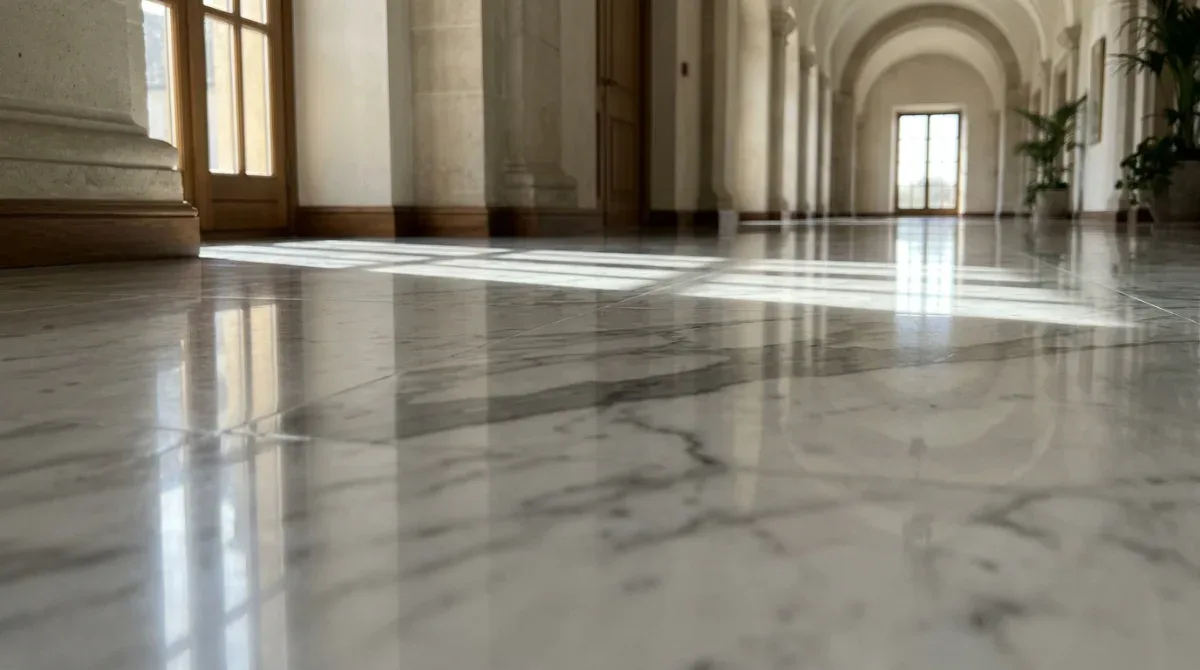
In short: White marble looks bright and clean when first installed; after a few years it can start to look grayish, dull, and dirty.
Most of the time the stone itself has not deteriorated; accumulated surface dirt, the wrong products, and wear cover up the whiteness. In this article we explain the causes of graying and how white marble can be restored.
Why Does It Turn Gray?
Dirt and Detergent Film
Oily or polish-containing cleaning products leave a thin layer with every wipe. This layer traps dirt and over time forms a gray film.
Dirty Mop Water
A mop whose water is not changed often spreads dirt back onto the floor. Darkening occurs especially in grout lines and corners.
Wear
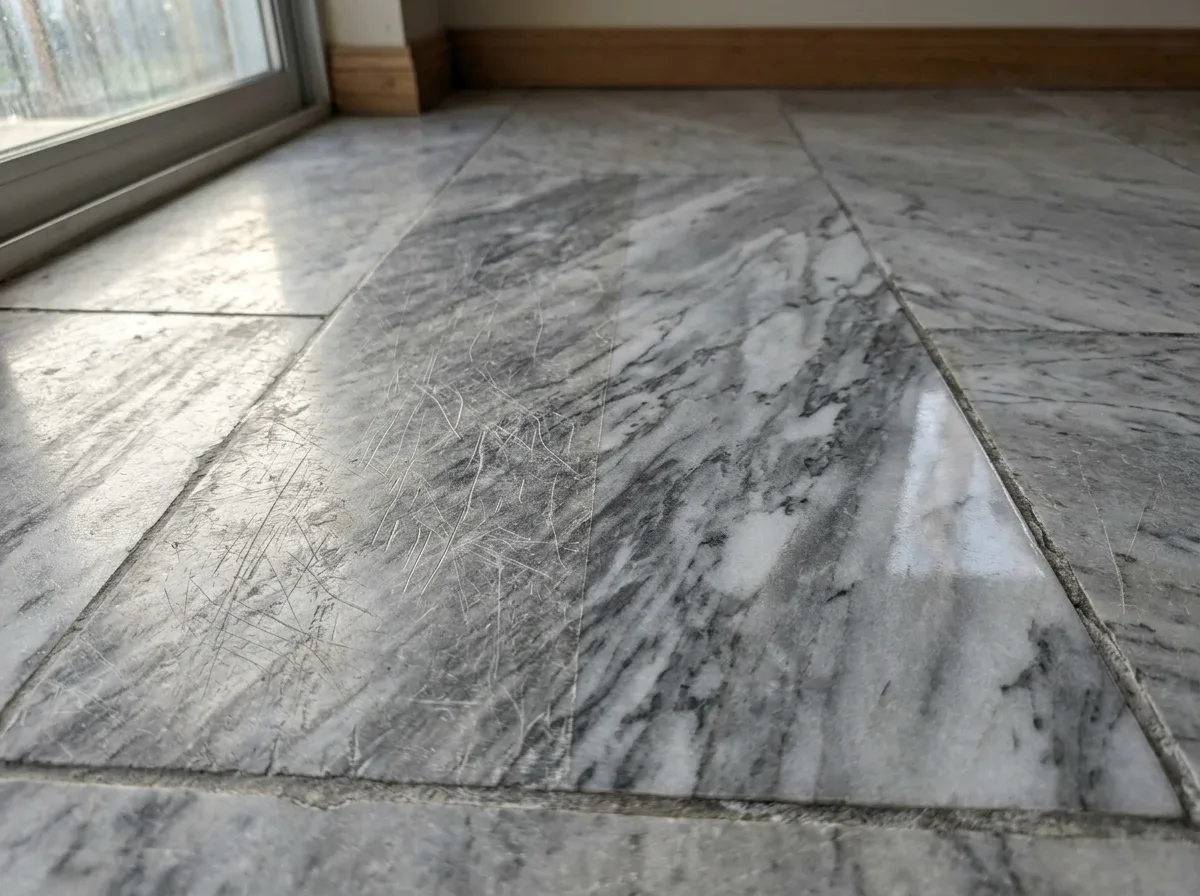
On high-traffic paths the surface gets scratched and dulled. A dull surface scatters light and holds dirt more easily; the floor looks darker.
Old Polish and Varnish
Surface polishes and varnishes that have been applied yellow and scratch over time, and trap dirt inside.
Stains Penetrating the Stone
Water, oil, and dirt that have soaked into the pores look like shadows on white marble.
Moisture and Rust
Moisture coming from below or iron minerals within the stone can cause yellowing and brown stains.
Diagnosis
To choose the right solution, you first need to understand whether the graying is on the surface or inside the stone. The easiest way to do this is a small test area.
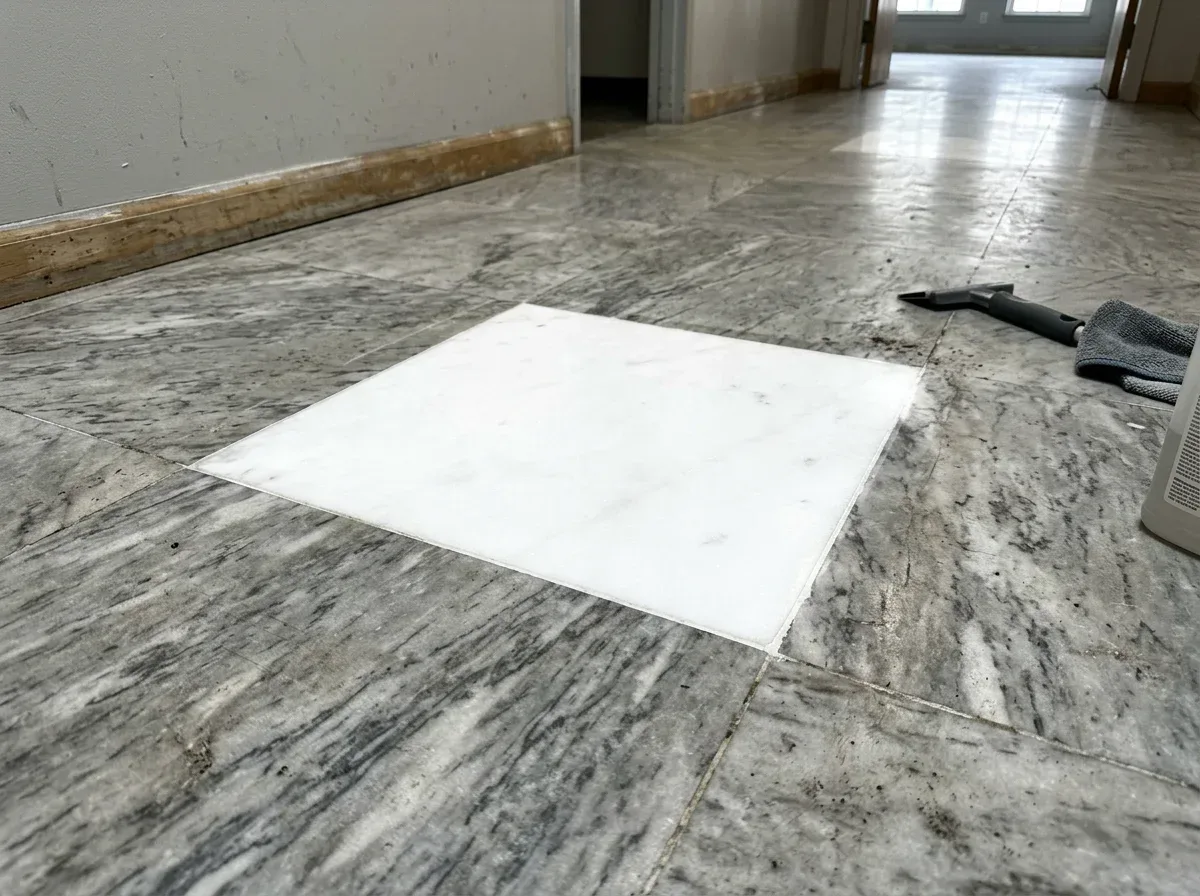
- If the color brightens, it is surface dirt: Clean a corner with a cleaner suitable for stone: if the color brightens, the problem is surface dirt and deep cleaning is enough.
- If it is dull and scratched, it is wear: If the color does not brighten but the surface is dull and scratched, there is wear; scratches that scatter light make the stone look gray, and honing/grinding is needed.
- Dark shadows inside the stone: If there are dark shadows in certain areas, the stain is inside the stone; surface cleaning is not enough, and methods that draw stains out from within, such as poultices, are tried.
- Yellowing in old polish: If the yellowing is in old polish, the polish must be stripped; the stone's own color becomes visible only after this layer is removed.

Solution
Deep Cleaning
If most of the graying is caused by surface dirt and detergent film, the first step is machine deep cleaning with a marble-safe, alkaline cleaner that leaves no film. The product is left to sit for a while, scrubbed with a soft pad, and rinsed with plenty of clean water. The grout lines are brushed separately. This step often brightens the floor far more than expected and clarifies which areas need grinding.
Polish and Varnish Stripping
Old surface coatings are removed with suitable strippers or by grinding.
Poultice
Applied for oil, dirt, and organic stains that have penetrated the stone. On white marble, poultices based on hydrogen peroxide or a suitable solvent are generally used; for yellow-brown stains caused by rust, rust-removing poultices are needed. The poultice is applied before grinding, so that the surface is leveled during grinding.
Grinding and Polishing
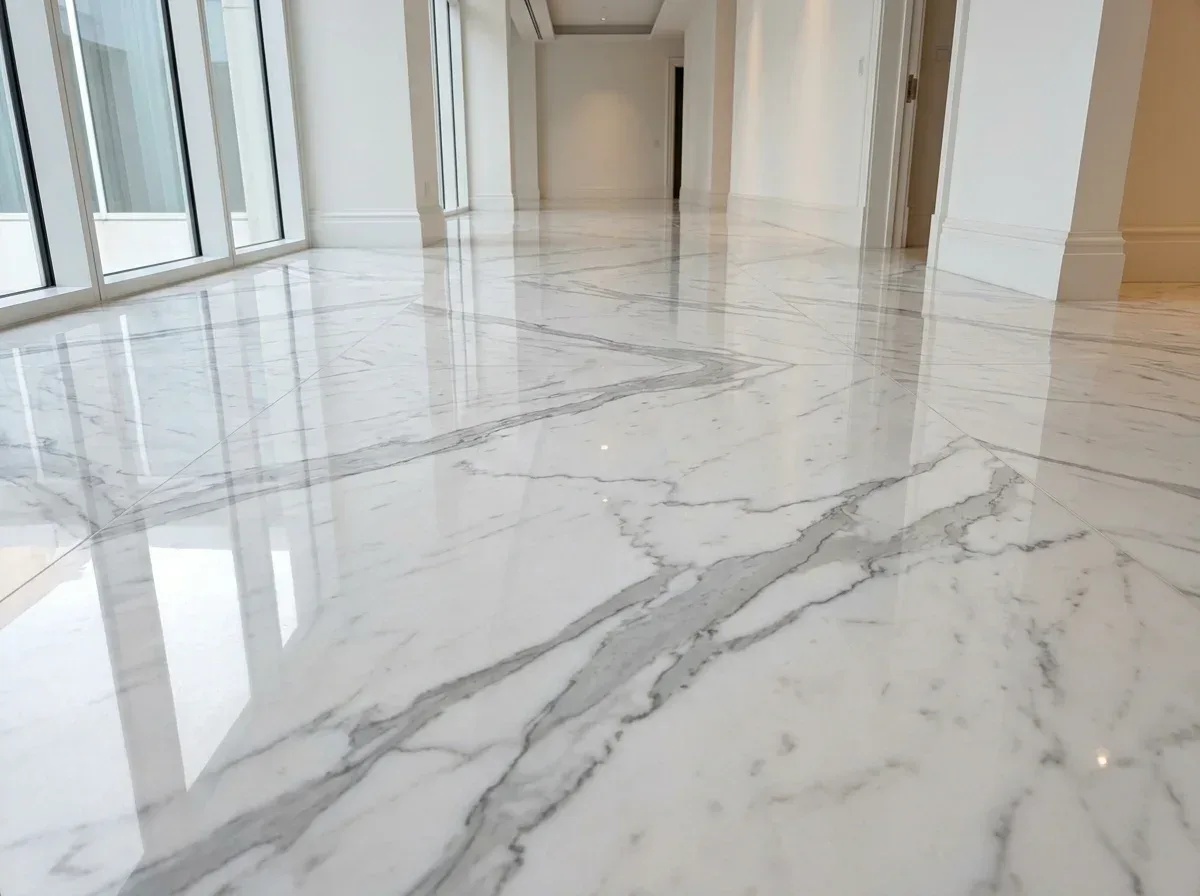
Worn, scratched, and dulled surfaces are renewed with progressive diamond grinding. This process also removes the dirty top layer and reveals the true color of the stone. Polishing and sealing follow.
Summary of Solutions by Cause
| Cause | Symptom | Solution |
|---|---|---|
| Detergent and dirt film | Overall gray tone that brightens with cleaning | Deep cleaning |
| Dirty mop water | Darkening in grout lines and corners | Deep cleaning, proper cleaning habits |
| Wear | Dull and dark along walkways | Grinding and polishing |
| Old polish and varnish | Yellowish, scratched film | Polish stripping, grinding |
| Penetrated stains | Localized shadows | Poultice |
| Moisture and rust | Yellow-brown stains | Eliminating the source, rust poultice |
Why Is Bleach Not a Solution?
Using bleach to lighten white marble is a very common habit. Bleach can temporarily lighten some organic stains, but it does not remove the dirt film, wear, and old polish that are the real causes of graying. With regular use it damages the sealer, weakens the grout, and can cause yellowing in some marbles. When used together with acidic products, dangerous gases are produced. The way to restore whiteness is cleaning, poulticing, or grinding, depending on the source of the problem.
Keeping White Marble White
Preserving the color of white marble depends on regular, correct cleaning habits that prevent film and dirt from building up on the surface.
- Use a pH-neutral cleaner: Use pH-neutral, non-filming cleaners; a detergent film left on the surface traps dirt and gradually turns the stone gray.
- Change the mop water often: Change the mop water often and wash the mop heads regularly; dirty water leaves a thin gray layer on the stone.
- Place mats at entrances: Place mats at entrances to keep sand outside; sand carried in on shoes scratches the surface and dulls it.
- Do not apply polish: Do not apply polish or shine products; over time they yellow, trap dirt, and make white marble look darker.
- Check the impregnation: Check the impregnation regularly with a water drop test; if the water is absorbed quickly, the protection has weakened and stains can easily penetrate the stone.
White Marble Restoration in Alanya
On the white and light-toned marble commonly used in villas and apartments in Alanya, graying is most often caused by detergent film that builds up over the years and by wear from beach sand. In our work, we first show you the source of the problem with a small test area, then bring out the true color of the marble with deep cleaning and, if necessary, poultice and honing. At the end of the job, we apply an impregnating sealer and leave you a short care note to help keep the whiteness.
Preserving the White

- pH-neutral, polish-free, non-filming cleaners,
- Changing the mop water frequently, using a two-bucket system,
- Mats at entrances,
- Impregnation (sealing),
- Periodic polishing.
Our Scratch and Stain Removal Service in Alanya

We remove scratches, acid marks, and stains that have penetrated marble, granite, and travertine surfaces using honing, poultice, or spot repair, depending on the type. We never start work without first identifying the source of the stain.
We tell you honestly, on site, which stains can be removed and which are permanent. Explore our Scratch Removal service.
Dirt and detergent film are removed with deep cleaners suited to the stone and with brush machines. Sometimes this step alone makes a noticeable difference. — Expert Note
Frequently Asked Questions
01Does bleach whiten white marble?
02Will grayed marble return completely to its original color?
03How can I tell whether it needs honing or just cleaning?
04Can yellowing always be cleaned?
05Which cleaning product should be used on white marble?
06Why does graying appear only along walking paths and not across the whole floor?
Related Articles
- How to Remove Yellow Stains, Rust Stains and Water Marks from Marble
- Stripping Polish and Varnish Layers from Old Marble Floors
- Choosing a Detergent for Natural Stone: What Does pH Neutral Mean?
- What Is Marble Honing and How Is It Done? A Guide for Your Home Floors
- Types of Scratches and Stains on Marble: Which Ones Can Be Removed by Honing?