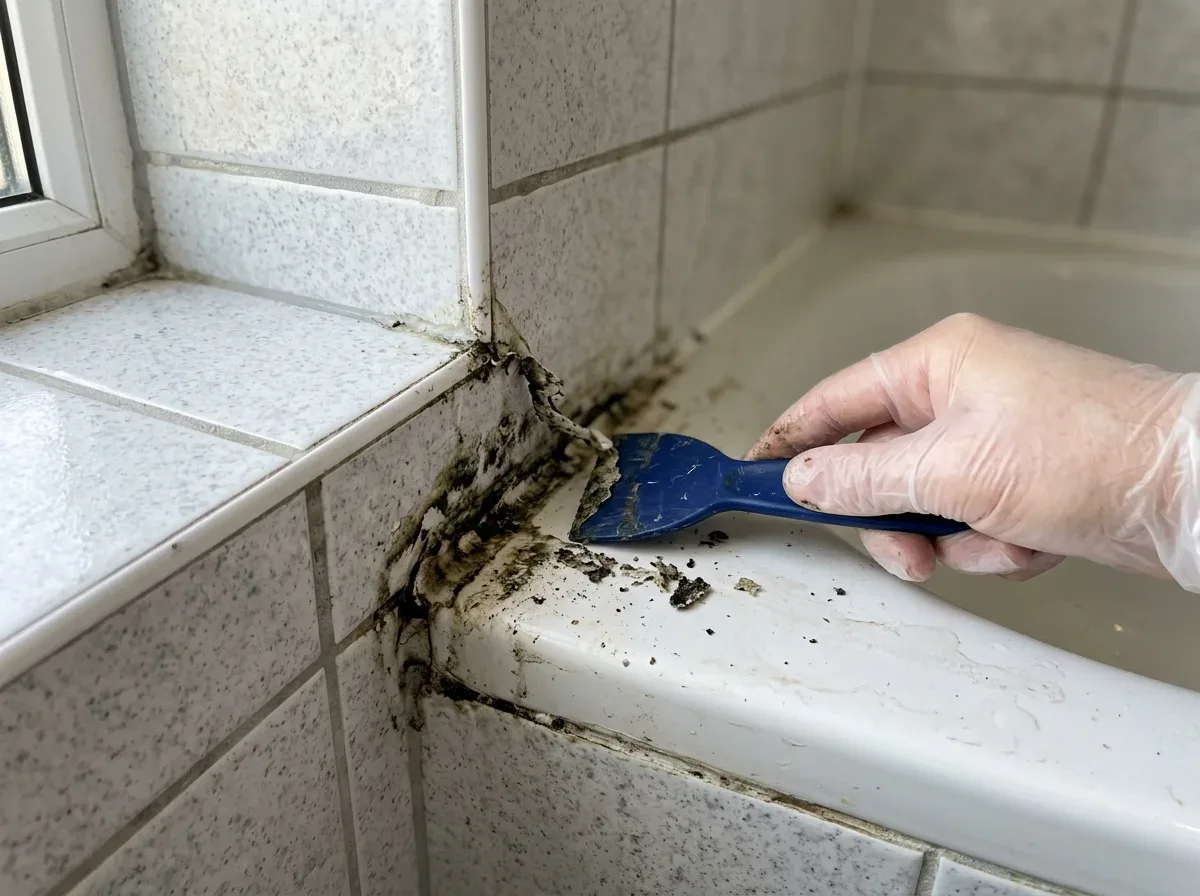
Mold and Grout Darkening on Bathroom Marble
In short: In bathrooms, the marble itself is usually sound; the discoloration mostly starts in the grout lines, corners, and silicone joints.
Mold grows wherever moisture and soap residue come together. In this article, we explain the causes of darkening, cleaning methods that won't harm marble, and grout renewal as a lasting solution.
Where Does the Darkening Come From?
Darkening in a bathroom doesn't come from a single cause; it results from moisture, soap residue, porous grout, and poor ventilation combining.
- Moisture: Surfaces that stay wet for a long time after a shower are an ideal environment for mold; corners and floor edges in particular are the last places to dry.
- Soap and shampoo residue: Soap and shampoo that isn't rinsed off forms a thin layer of organic dirt on the surface; mold feeds on this layer and spreads quickly.
- Porous grout: Cement-based grout absorbs water and dries slowly; mold doesn't stay on the grout surface but settles inside it and reappears after cleaning.
- Poor ventilation: In bathrooms with no window or an inadequate fan, steam can't escape; moisture condensing on walls and grout lines keeps feeding the mold.
- Silicone: Water gets under the edges of aged silicone; mold multiplies inside the silicone and becomes visible from the outside as black spots.

Pink and Orange Stains
The pink-orange film in shower corners is usually a buildup of bacteria, which multiplies on damp, soapy surfaces. It is cleaned in a similar way to mold.
Cleaning Without Harming the Marble
Because marble is sensitive to acids and harsh chemicals, cleaning starts with the gentlest method and ends with plenty of rinsing.
- Pre-cleaning with a neutral cleaner: First, the soap and dirt film is removed with a neutral cleaner; until this layer is gone, the mold cleaner can't sufficiently reach the grout and the stone.
- Mold cleaner suitable for stone: Next, products made for natural stone are preferred; testing the product on the marble first shows in advance whether it spoils the stone's color and shine.
- Soft brush: Work between the grout lines with a soft-bristled brush; a wire brush should not be used, as it scratches both the marble surface and the grout itself.
- Thorough rinsing and drying: Finally, the surface is rinsed with plenty of water and dried; product residue left on the stone can cause stains, and grout left wet invites mold back.
Caution: Although bleach is used in some cases, it can lighten the color of dark marbles and cause staining on stones with metallic veins. Acidic bathroom cleaners, on the other hand, dull marble. Different chemicals must never be mixed.
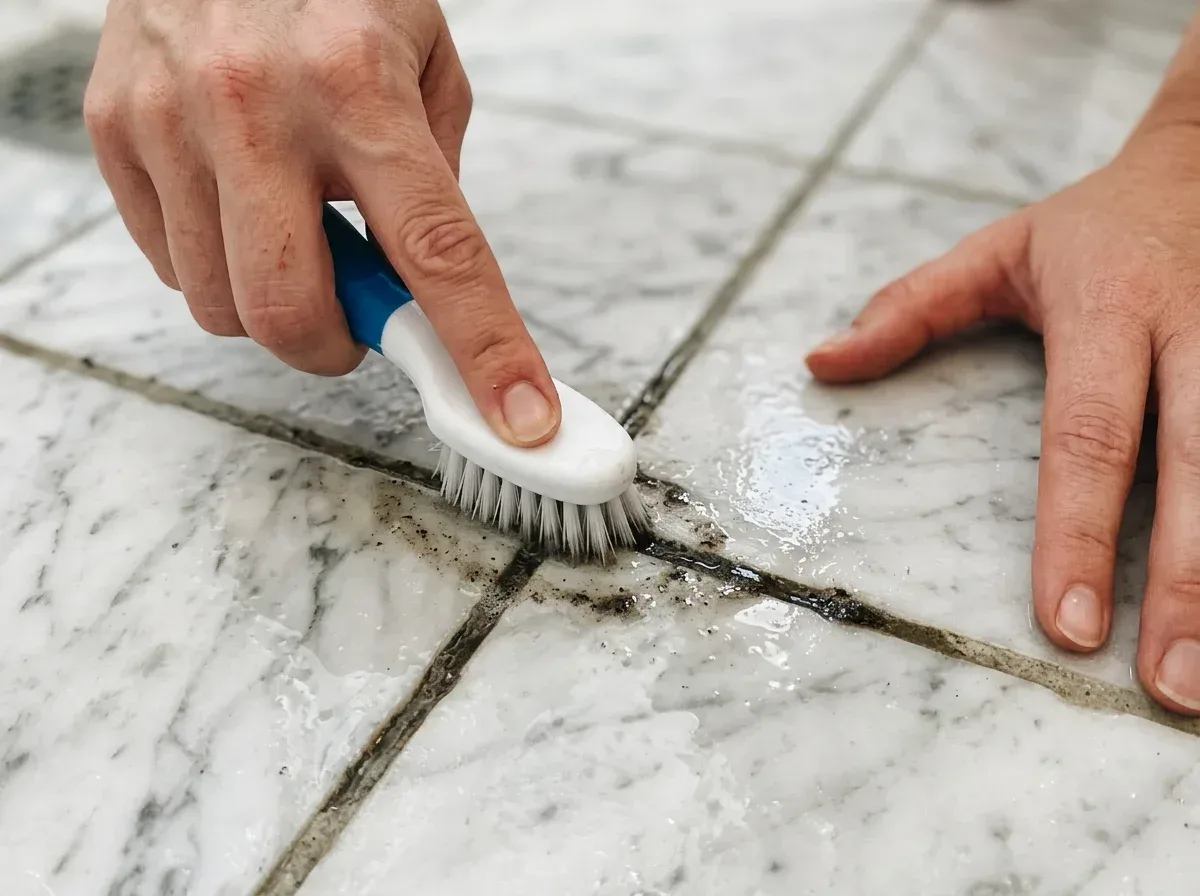
When Cleaning Isn't Enough: Grout Renewal
If the mold has settled deep in the grout, surface cleaning gives only temporary results. The lasting solution is grout renewal, which consists of the following steps:
- Opening the old grout: The old grout is opened in a controlled manner; removing the moldy material from deep down without chipping the marble edges allows the new grout to adhere.
- Cleaning and drying: The gaps are cleaned of dust and mold residue and dried completely; grout filled into a damp gap traps the mold inside.
- Filling in the new grout: The new grout is filled in so that no gaps remain, and its surface is smoothed; a smooth, tight grout doesn't hold water and dirt.
- Material suitable for wet areas: A mold-resistant grout material with low water absorption is chosen for wet areas; ordinary cement-based grout brings the problem back in a short time.
- Protecting the grout and stone: When the work is done, the grout and stone are protected with a suitable product; this reduces water and soap absorption, so the surface stays clean for longer.
Removing grout requires care so as not to damage the edges of the marble.
Silicone Renewal
Darkened silicone isn't cleaned; it is cut and removed, the surface is cleaned and dried, and new silicone is applied.
If the Marble Itself Has Darkened
Sometimes the darkening doesn't stay only in the grout; it spreads to the marble along the grout edges, to corners that stay constantly wet, or to the stone right next to silicone joints. In this case, surface cleaning is done first, followed by a localized application of a mold cleaner suitable for stone. If the darkening has penetrated into the stone, it is drawn out with a suitable poultice. Dulled and stained areas are restored with fine-grade honing and polishing. Since the source of darkening at the marble edges is usually faulty grout or silicone, this process should be carried out together with grout renewal.
Problem and Solution Table
| Observation | Cause | Solution |
|---|---|---|
| Black spots on the surface | Newly starting mold | Mold cleaner suitable for stone |
| Blackness that returns right after cleaning | Mold that has settled inside the grout | Grout renewal |
| Darkening visible through the silicone | Water that has gotten under the silicone | Silicone renewal |
| Pink-orange film | Bacteria buildup | Cleaning, drying, ventilation |
| Dark marble along the grout line | Moisture and dirt absorbed into the stone | Poultice, honing, grout renewal |
Choosing the Grout Color
When renewing grout, the color you choose affects both the appearance and how easy it is to maintain. Very light grout shows dirt and darkening easily; a grout color one shade darker than the marble generally stays clean-looking for longer. However, dark grout does not solve a mold problem, it only makes it less visible. The real solution is to choose a grout material with low water absorption that is resistant to mold, and to ventilate the bathroom well.
Bathroom Grout Renewal in Alanya
In Alanya, high humidity in the summer months and holiday homes left closed up speed up mold growth in bathroom grout. In our bathroom renovation jobs, we carefully remove the old grout without damaging the marble edges, renew it with grout suited to wet areas, strip out darkened silicone and apply mold-resistant silicone. If necessary, we also hone and polish the marble itself, and at the end of the job we protect the stone and grout with a sealer.
Prevention

- Wiping off the water after showering,
- Running the fan for at least half an hour after showering,
- Weekly cleaning with a neutral cleaner,
- Reducing water absorption of the stone and grout with impregnation (sealing),
- Renewing the silicone every few years.
Our Grout, Sealant and Silicone Service in Alanya

We remove and replace grout and silicone that have darkened, moldy or come loose. In wet areas, we choose the right filler and silicone for the type of stone to keep water from seeping underneath it.
If necessary, we plan grout renewal as part of the same job as honing and impregnation. Explore our Sealant and Silicone service.
Mold can sometimes penetrate the pores of the stone as well, especially in light-colored, unsealed marble. In this case, a suitable poultice is applied and, if necessary, light honing is performed. — Expert Note