Limescale and Hard Water Stains on Shower Marble
In short: Marble used in showers gets wet and dries every day.
In Alanya, too, tap water is hard in most areas; when the water evaporates, the minerals in it leave white marks and crusts on the surface. The problem is that most products that dissolve limescale also dissolve marble. In this article, we explain how to manage limescale without damaging the marble.
How Do Limescale Marks Form?
Hard water contains dissolved calcium and magnesium. As water droplets dry, these minerals stay on the surface. A new thin layer is added with every shower; over time:
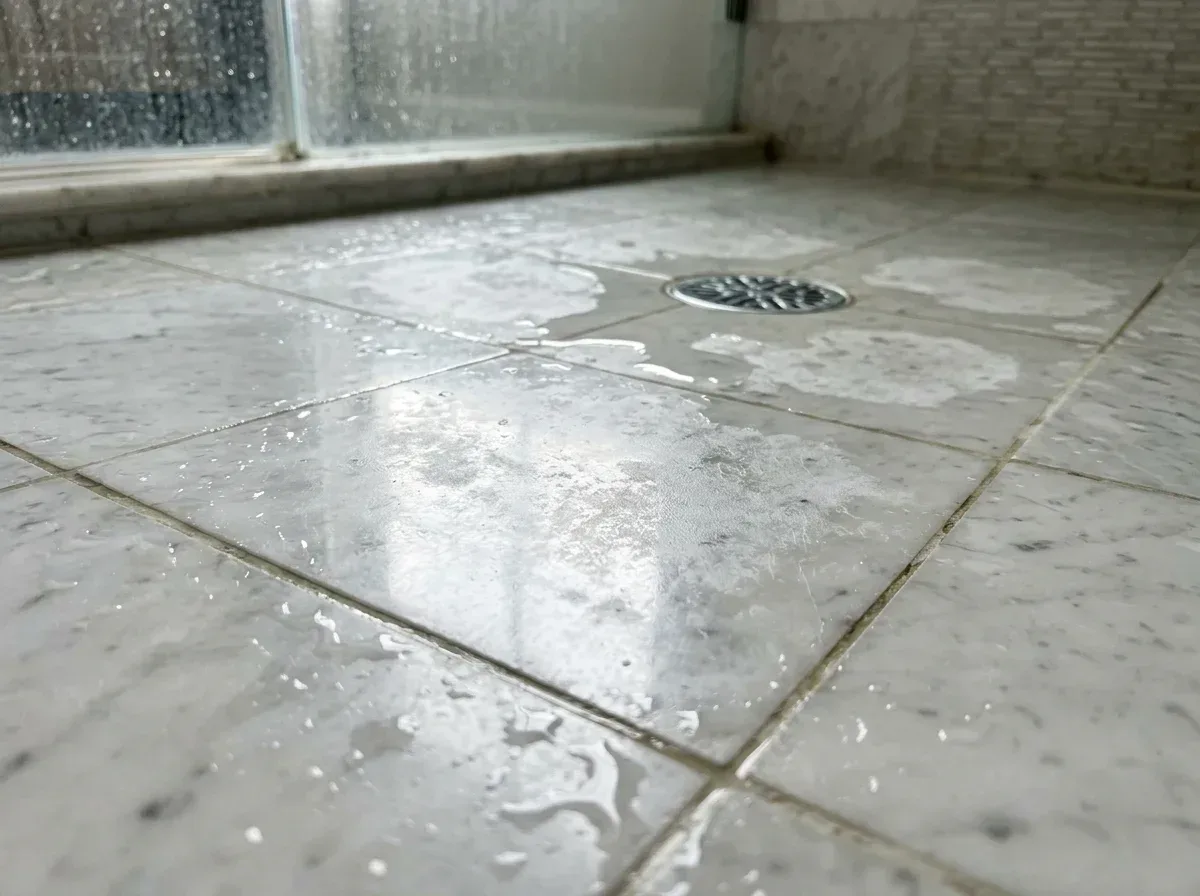
- White rings: Every drop that dries on the wall and floor leaves minerals at its edge; as these build up, distinct white drop-shaped rings appear on the marble.
- Crusting around fixtures: Because the area under the showerhead and around the fixtures is constantly wetted and dried, limescale builds up fastest here and turns into a hard crust you can feel by hand.
- Whitish film on the lower sections: At the base of walls and in corners, where water runs down and dries last, a thin, widespread white layer forms and dulls the stone's color.
- Buildup at the glass panel joint: Water stays for a long time along the line where the glass panel meets the stone; limescale thickens here and forms a visible ridge around the silicone and grout.
The Real Danger: Limescale Removers
Most limescale removers on the market are acidic. Marble is also made of calcium carbonate; in other words, acid dissolves the marble surface together with the limescale. The result:
- Dull stains: Acid dissolves the polished surface of the marble along with the limescale; where the product touches, dull, uneven spots with lost shine remain.
- Roughened surface: A stone surface that has been chemically etched becomes rough enough to feel by hand; these rough spots trap dirt and soap residue, causing the marble to get dirty faster.
- Easier limescale adhesion: New limescale sticks more firmly to a rough surface; this leads to more frequent acid use and the marble deteriorating a little more each time.
In short, cleaning limescale with acid damages the marble a little more each time. Vinegar and lemon have the same effect.
Safe Daily Care
The most effective way to fight limescale is not to give it a chance to form. Simple habits that take a few seconds prevent laborious cleaning months later.
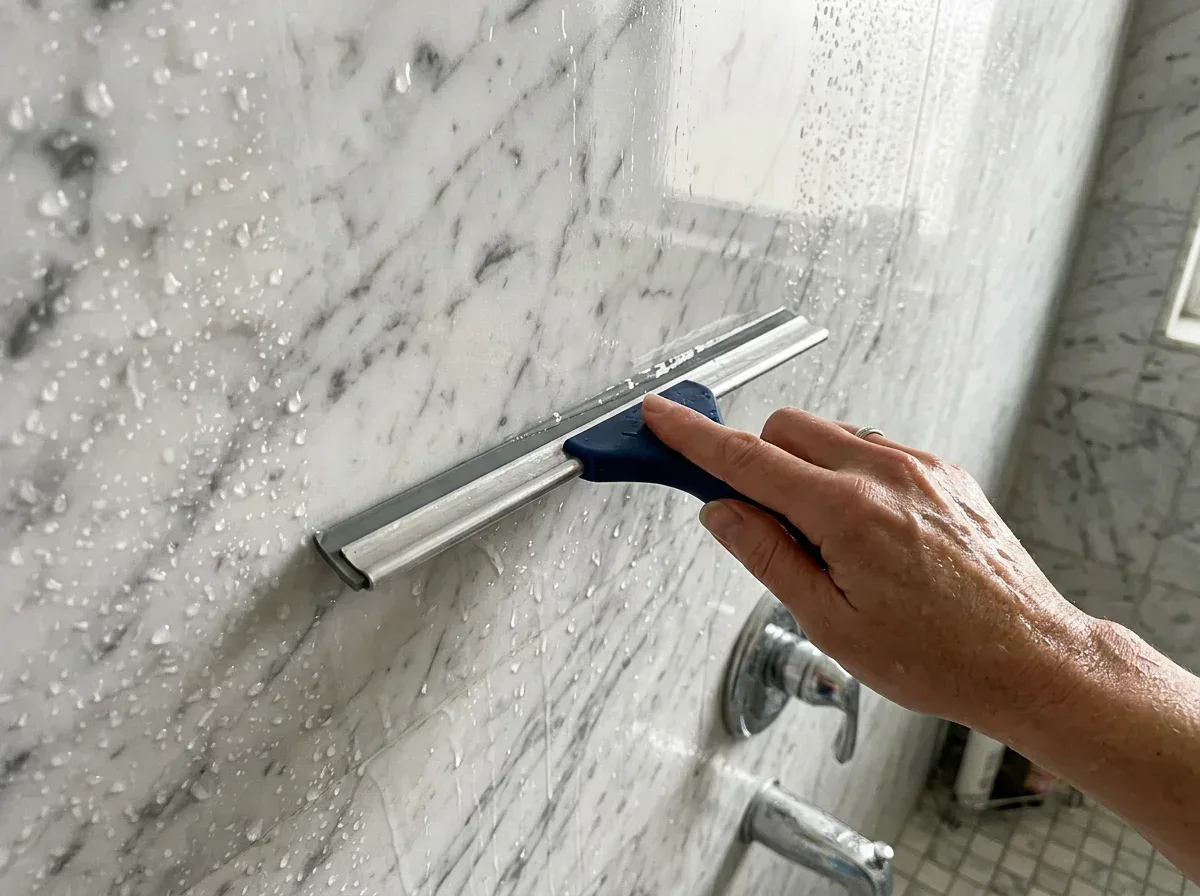
- Remove the water after showering: Removing the water from the walls and floor with a squeegee or microfiber cloth largely prevents limescale buildup.
- pH-neutral cleaner: For weekly cleaning, use neutral products suitable for stone; they remove soap residue without damaging the marble's surface or its impregnation.
- Soft cloth and brush: Do not use wire or abrasive sponges; they create fine scratches on the marble, and limescale attaches to these scratches more easily next time.
- Ventilation: Speed up the drying of the bathroom; with an extractor fan or an open window, moisture does not linger on the surface and fewer limescale marks form.

What to Do About Accumulated Limescale?
For accumulated limescale, the method is chosen according to the thickness of the buildup and whether the marble surface has been damaged.
- Thin film: It is cleaned according to the product instructions with limescale cleaners made for natural stone that do not harm marble; then the surface is rinsed with plenty of water.
- Thick crust: It is carefully scraped off with a plastic spatula; mechanical methods come first, because trying to dissolve a thick crust with chemicals also affects the stone.
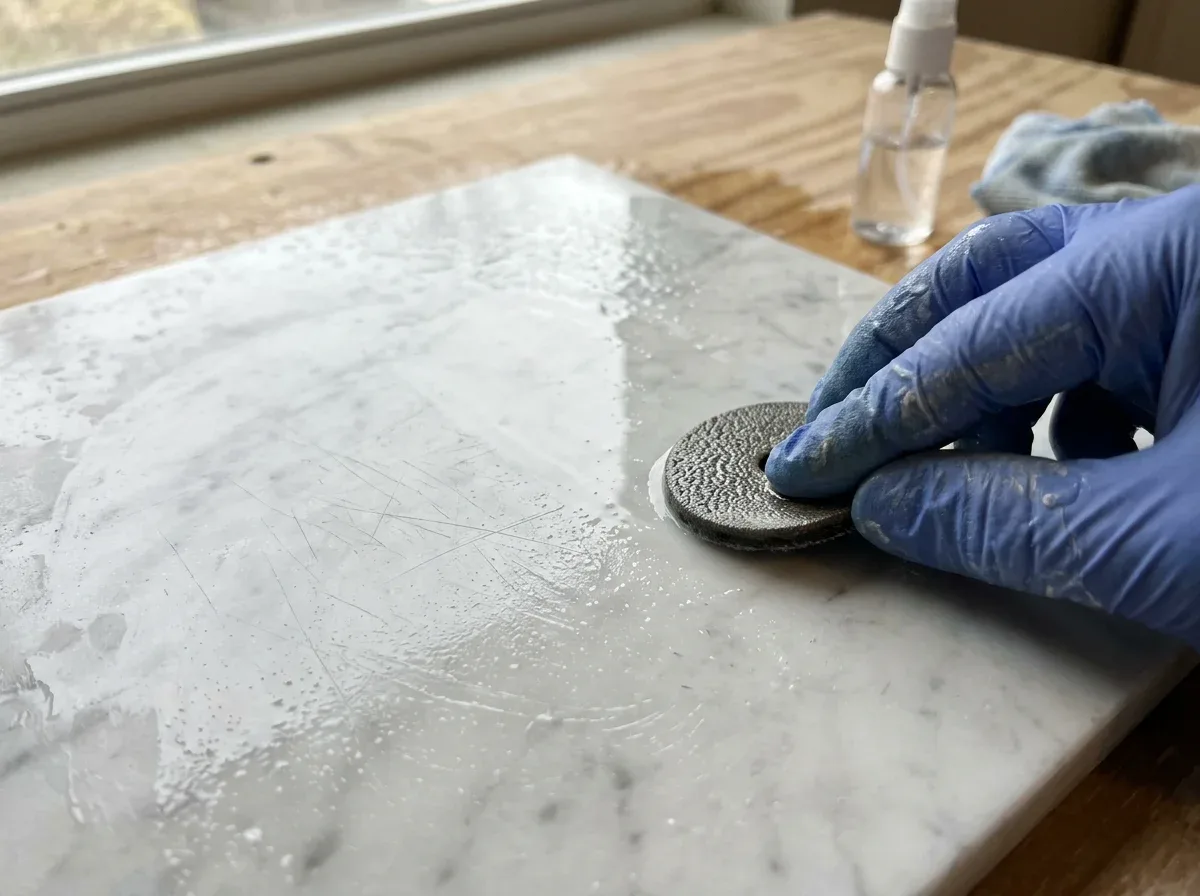
- Dull areas formed along with limescale: The surface is renewed with on-site polishing or light-grade honing; dullness is removed not by cleaning but by correcting the worn stone surface.
A balance is needed between removing limescale completely and protecting the marble surface. For heavy buildup, renewing the surface by honing often gives a better result than struggling with acid.
The Advantage of a Honed Finish
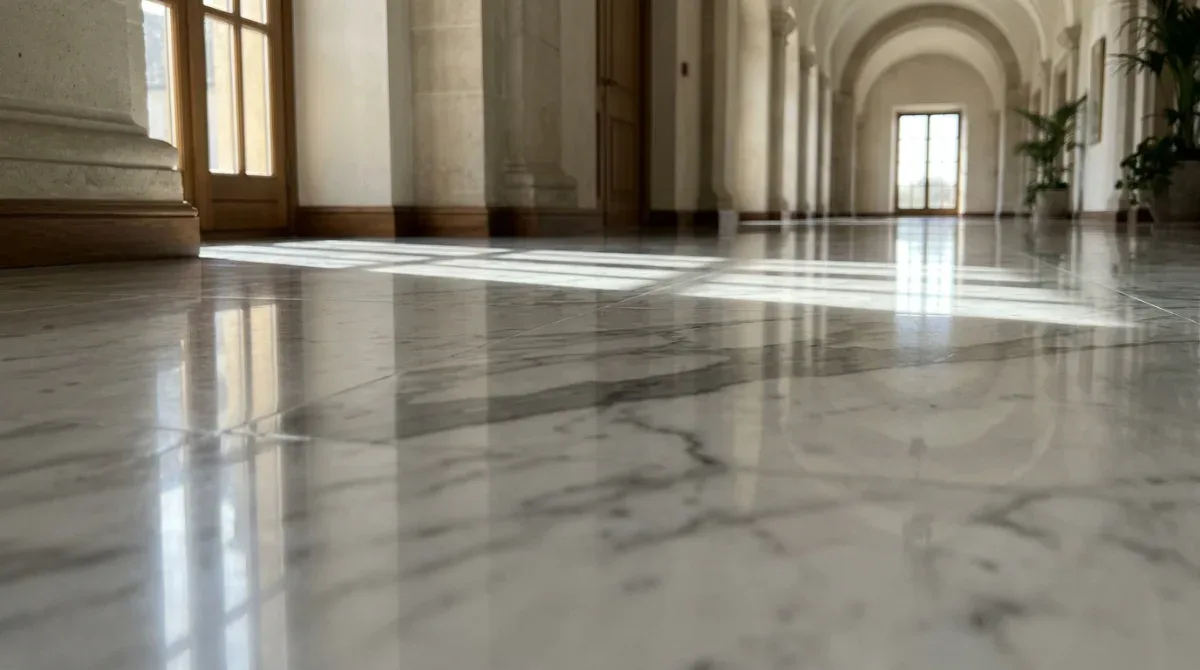
If the shower floor and walls are polished marble, limescale marks and acid stains are very noticeable on the glossy surface. On a honed (matte) surface, the same marks are much less noticeable. A honed surface also provides better grip when wet. That is why switching to a honed finish when renewing shower marble is an easy way both to keep its appearance for a long time and to increase safety. Since a honed surface can be slightly more absorbent, it should be completed with impregnation.
Telling Limescale and Acid Damage Apart
| Appearance | Cause | What should be done? |
|---|---|---|
| White crust you can feel by hand | Limescale buildup | Stone-safe product, plastic spatula |
| White drop rings | Drying hard water | Wiping dry, neutral cleaning |
| Dull, rough areas | Damage from acidic product | Polishing or light honing |
| Both crust and dullness | Limescale and improper cleaning | Mechanical cleaning first, then honing |
Water Softening Systems
The way to reduce limescale at its source is to install a water softening system at the entrance of the home or building. These systems lower the calcium and magnesium in the water, noticeably reducing limescale buildup on showers, sinks and countertops. Even with a system installed, wiping the water off after showering and using the right products still matter; however, cleaning accumulated limescale is needed far less often. Regular maintenance of the system is also essential for it to work effectively.
What You Should Keep in the Bathroom Cabinet
To protect shower marble from limescale, you don't need expensive products, just a few simple, well-chosen supplies.
- Squeegee or microfiber cloth: Used to remove water from the walls and floor after every shower; when the water is removed before it dries, the minerals can't stay on the surface and leave marks.
- pH-neutral stone cleaner: Removes soap and body oil residue during weekly cleaning and does not harm the marble's surface or its impregnating sealer.
- Stone-safe limescale remover: Used only when necessary, against a thin limescale film; check on the label that the product is safe for marble.
- Soft-bristle brush: Used to clean grout lines, corners and the area around fixtures without scratching the stone; use it instead of a wire brush or abrasive sponge.
- Plastic spatula: Used to mechanically scrape off thickened limescale crust without using acid; a metal spatula can scratch marble.
Shower Marble in Alanya
Because tap water is hard in many parts of Alanya, limescale builds up quickly on shower marble; when incorrect cleaning with descalers is added to this, the marble quickly becomes dull and rough. In these bathrooms, we remove limescale with mechanical methods, correct acid damage with fine-grit honing, and generally recommend a honed finish for shower floors. At the end of the job, we apply an impregnating sealer and leave a short note for daily care.
Impregnation

Impregnation slows the penetration of water into the stone and makes cleaning easier. It does not completely prevent limescale buildup, but it reduces the extent to which marks settle into the stone. Because the impregnation lasts for a shorter time in wet areas, it should be renewed regularly.
Our Scratch and Stain Removal Service in Alanya

We remove scratches, acid etching, and stains that have penetrated the stone on marble, granite, and travertine surfaces using honing, poultice, or spot repair, depending on the type of damage. We never start work without identifying the source of the stain.
We tell you honestly on site which stains can be removed and which are permanent. Explore our Scratch Removal service.
In showers, polished marble makes limescale marks and dull stains very noticeable. A honed (matte) finish shows these marks less and is also more suitable in terms of slip resistance. This option can be considered when renewing a shower floor. — Expert Note