Ink, Paint and Nail Polish Stains on Marble
In short: Children's felt-tip pens, nail polish spilled on the bathroom countertop, hair dye, or wall paint dripped during renovation are common stains on marble, but each one calls for a different method.
In this article, we explain the right approach for each type of stain and the mistakes to avoid.
First, Identify the Stain
To choose the right method, you first need to understand where the stain sits in the stone and what base it has.
- On the surface or inside: Dried, raised paint is on the surface and can be scraped off; ink that has colored the stone is inside and requires a poultice.
- Water-based or solvent-based: Water-based paints and felt-tip pens come out more easily; oil paint, nail polish, and permanent markers require a solvent.
Ballpoint and Felt-Tip Pens
For pen stains, the method is chosen from the simplest to the strongest, depending on the type of ink and how deeply it has penetrated the stone.
- If fresh, remove it immediately: Blotting up fresh ink right away with an absorbent cloth, without rubbing, prevents it from penetrating the stone's pores and often removes the stain completely.
- Water-based felt-tip pens: Water-based felt-tip pens usually come out with a damp cloth and neutral detergent; it is then enough to rinse the area with clean water.
- Poultice for permanent markers: For permanent markers and ink that has penetrated the stone, a poultice prepared with a suitable solvent is used; as the poultice dries, it draws the ink out of the pores.
- Bleaching poultice on light-colored marble: On light-colored marble, suitable bleaching poultice applications can be used for some ink stains; a test should be done first in an inconspicuous spot.
Nail Polish
Because nail polish dries quickly and leaves color, the order of your response determines the result.
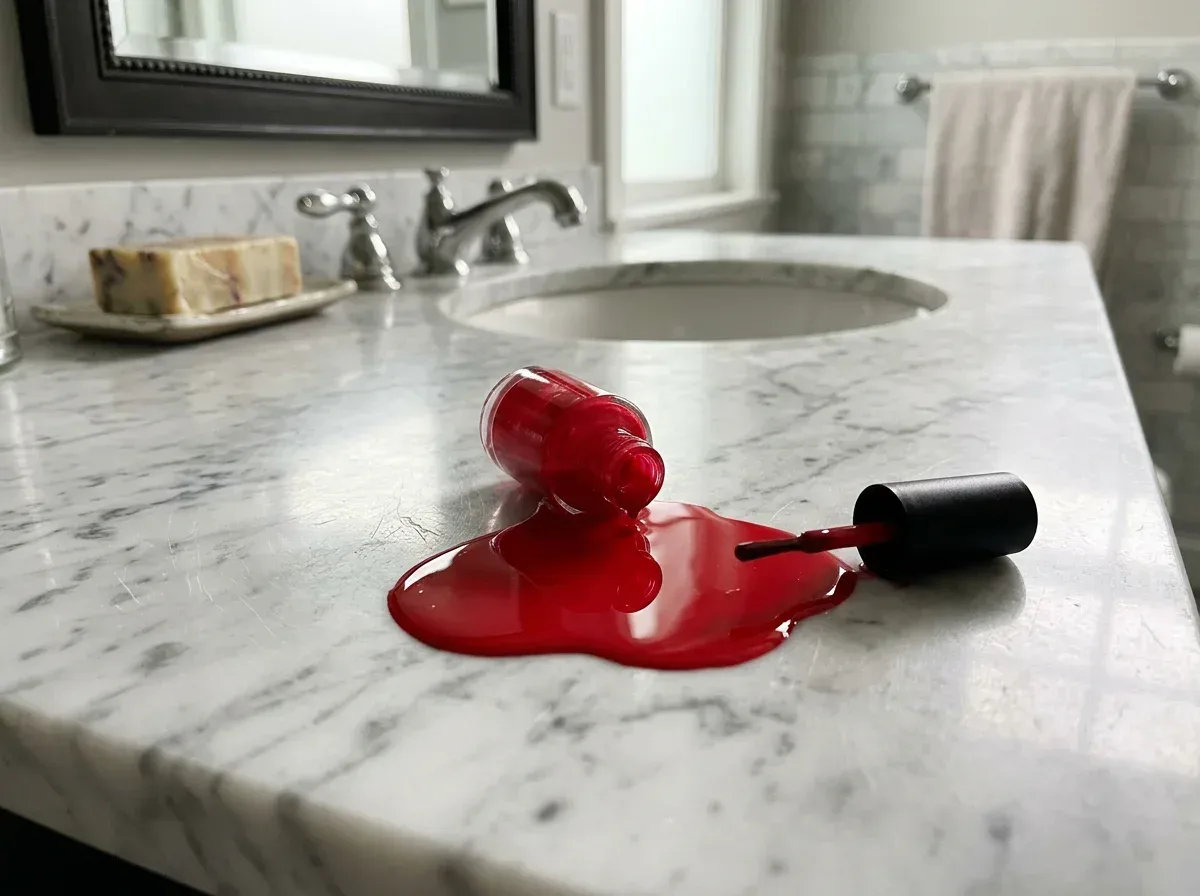
- Blot without rubbing: Blot it up the moment it spills, pressing without rubbing; rubbing spreads the polish and the color penetrates the stone over a wider area.
- Scrape off dried polish: If dried nail polish is on the surface, it is carefully scraped off with a plastic spatula; since no metal tools are used, the stone is not scratched.
- A little solvent for the remaining mark: For any remaining mark, a small amount of suitable solvent is applied with cotton, only on the stain itself; then the area is cleaned.
- Poultice for color that has penetrated the stone: If the color of the polish has seeped into the stone, wiping the surface will not work; a poultice prepared with a suitable solvent draws the color out of the pores.
Caution: Some nail polish removers and solvents can affect the shine of marble; light polishing may be needed after application.
Hair Dye
Hair dye is designed to be permanent and penetrates porous stone quickly. It is one of the hardest stains on bathroom countertops.
- Wipe and rinse immediately: Because hair dye penetrates stone very quickly, a drop should be wiped up the moment it is noticed and the area rinsed with clean water.
- More than one poultice: Permanent stains may require more than one poultice application; with each application the stain lightens a little, and the result is monitored step by step.
- Fine-grade honing if necessary: In some cases it may not come out completely; if the stain is close to the surface, fine-grade honing helps by removing the colored layer.
Wall Paint
Wall paint most often drips onto marble floors or windowsills during renovation, while ceilings and walls are being painted. Knowing the type of paint makes it easier to choose the right method; it helps to ask the painter which paint was used.
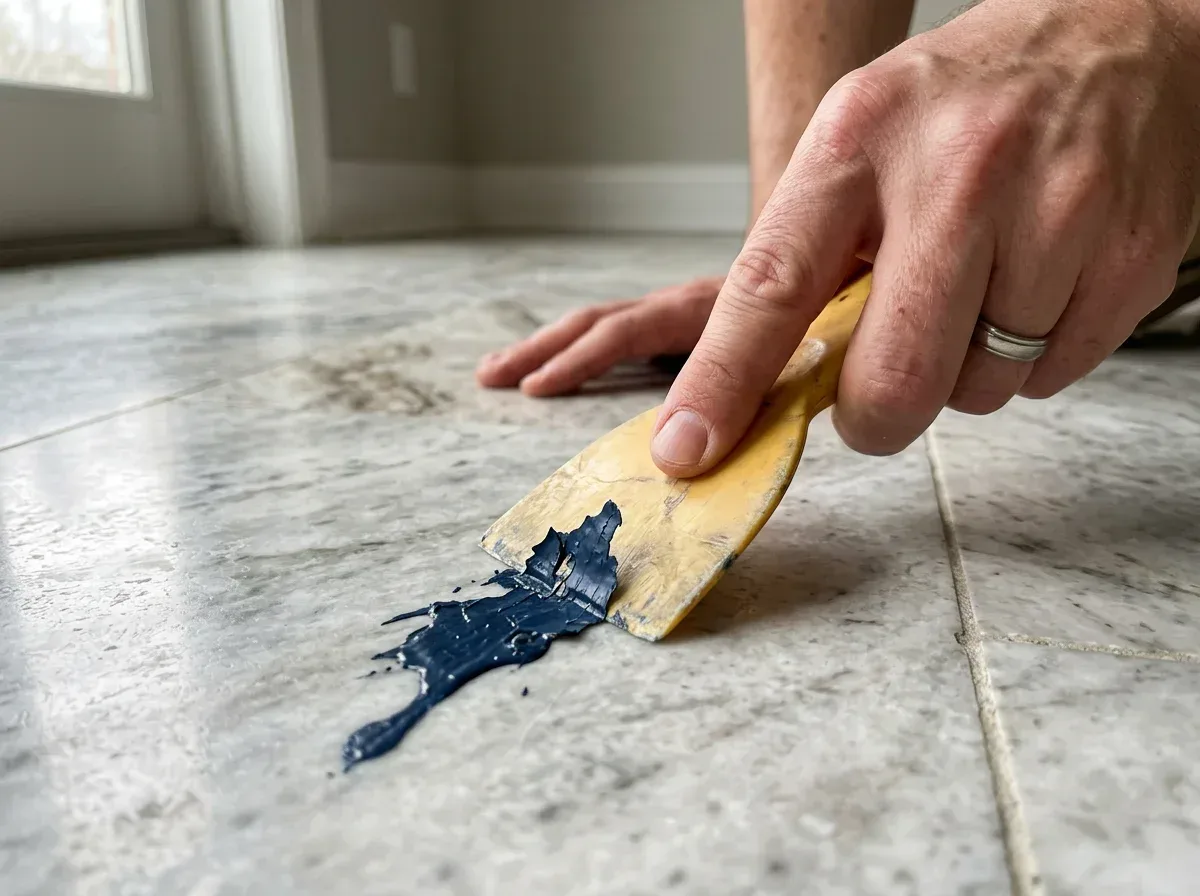
- Water-based (plastic) paint: If fresh, it comes off with water and a cloth. If dried, it is softened and scraped off with a plastic spatula.
- Oil paint and varnish: It is softened with a suitable solvent and scraped off; remaining marks are removed with a poultice or honing.
- Many drops after renovation: If there are many drops, instead of dealing with them one by one, the job is handled for the whole floor as part of post-construction cleaning and, if necessary, honing.

When Is Honing Needed?
Stain cleaning sometimes leaves marks on the stone's surface; in this case, the solution is not more chemicals but renewing the surface.
- Stain spread over a large area: If the stain is close to the surface and has spread over a large area, removing the top layer gives a more even result than applying poultices one by one.
- Dullness left by solvents: If solvents have left dullness on the surface, that area looks different from its surroundings, and the shine can only be restored with fine honing and polishing.
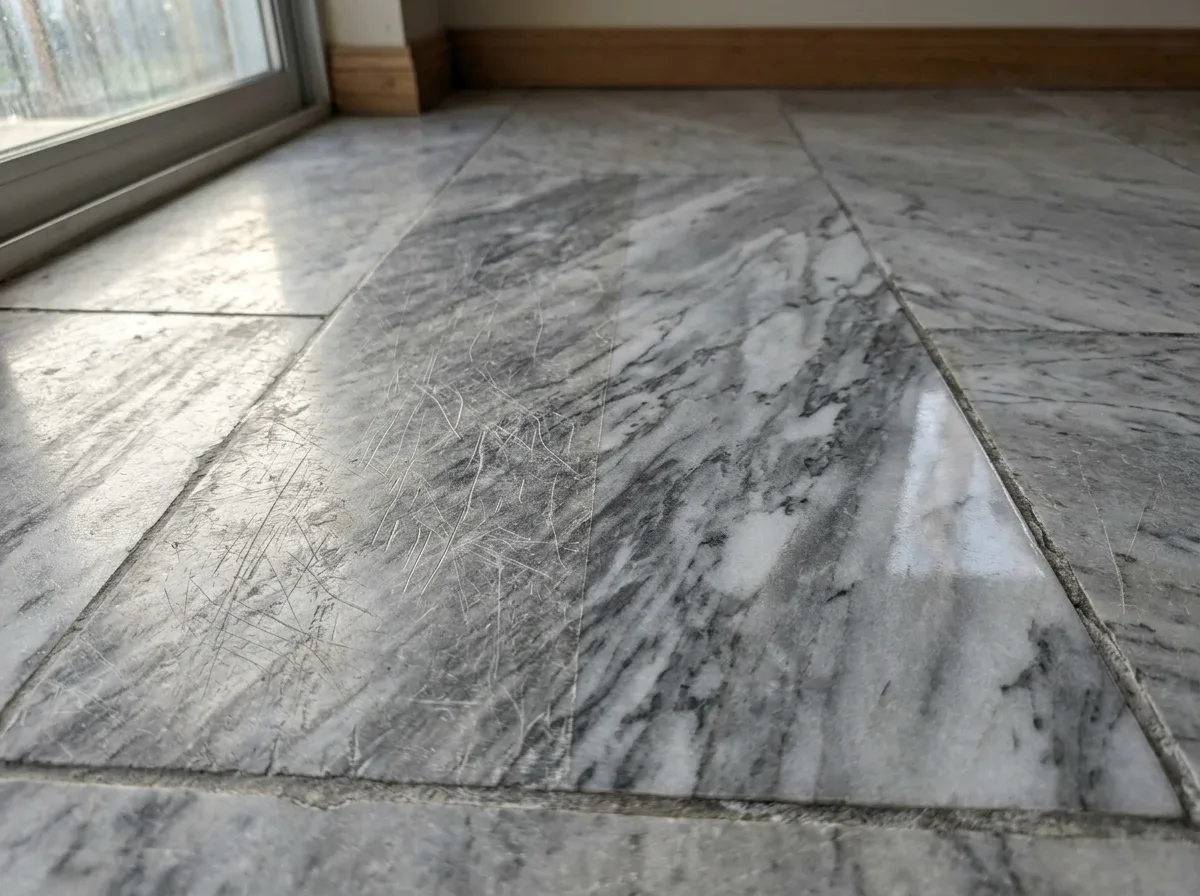
- Scratches left from scraping: If fine scratches formed during scraping, they become noticeable in the light and are removed from the surface with fine-grade honing.
In these cases, the surface is renewed with fine-grade honing and polishing.
Mistakes to Avoid
With paint and ink stains, it is often not the stain itself that makes the problem worse, but the wrong response.
- Metal blade or wire: Scraping with a metal blade or wire scratches the marble; even if the stain is removed, the marks left behind require honing on site.
- Spreading the stain by rubbing: Rubbing carries the paint or ink over a wider area and lets more material penetrate the pores of the stone.
- Pouring on too much solvent: Pouring on too much solvent carries the stain deeper into the stone; it should be applied in a small amount, only on top of the stain.
- Using acidic products: Acidic products erode the calcite structure of marble; even if the stain is gone, a dull, rough acid mark remains in its place.
- Mixing chemicals: Mixing different chemicals can cause unexpected reactions; this can both damage the stone and create a health hazard.
Summary by Stain Type
| Stain | First response | For a permanent mark |
|---|---|---|
| Water-based felt-tip pen | Damp cloth, neutral detergent | Poultice |
| Permanent marker, ink | Blotting | Solvent poultice |
| Nail Polish | Blotting; scraping if dried | Small amount of solvent, poultice, light polishing |
| Hair dye | Wipe immediately, rinse | Several poultices, fine honing if necessary |
| Plastic paint | Water and cloth; scraping if dried | Honing |
| Oil paint, varnish | Soften with solvent and scrape | Poultice or honing |
Precautions Before Renovation
Protecting marble floors and windowsills during renovation is much easier than cleaning stains afterwards. Before painting and whitewashing begin, the floor should be covered with stiff cardboard or a protective sheet, and the edges of the sheet should be taped down; thin plastic sheets slip and tear, letting paint seep underneath. Windowsills and stair nosings should also be taped separately. When the work is finished, paint and plaster residue on the sheet should be swept off before the sheet is removed.
Practical Precautions on the Bathroom Countertop
On a bathroom countertop, most stains can be prevented before they form with a few simple habits.
- Lay a towel or tray on the countertop: Doing nail polish and hair dye work on a countertop with a towel or tray laid down keeps drops from reaching the stone directly.
- Keep bottles in a tray: Keeping cosmetic bottles in a tray ensures that leaks and rings from the bottoms of bottles end up on the tray rather than on the marble.
- Lay a cover under the table: Laying a washable cover under tables where children work with pencils prevents fallen pencils from leaving marks on the floor.
- Blot first with an absorbent cloth: In case of a spill, blotting with an absorbent cloth before reaching for a solvent is the safest way to remove most of the substance before it soaks into the stone.
Paint and Ink Stains in Alanya
In post-renovation cleaning work in Alanya, we often encounter paint drops on marble floors and windowsills, and nail polish and hair dye stains on the bathroom countertops of rental and holiday homes. We scrape surface paint without damaging the stone, apply a suitable poultice to color stains that have penetrated the stone, and remove the dullness left by solvents with local polishing. For floors with many drops, we recommend fine-grade honing.
Safety

When working with solvents, ventilation must be on, gloves must be worn, and chemicals must be kept out of the reach of children.
Our Scratch and Stain Removal Service in Alanya

We remove scratches, acid marks, and stains that have penetrated marble, granite, and travertine surfaces using honing, poultice, or spot repair, depending on the type of damage. We never start work before identifying the source of the stain.
We tell you honestly, on site, which stains can be removed and which are permanent. Explore our Scratch Removal service.
With paint and ink stains, the biggest mistake is to panic and reach for a solvent. Blot it first, then find out what type of stain it is; the right method already solves half the problem.