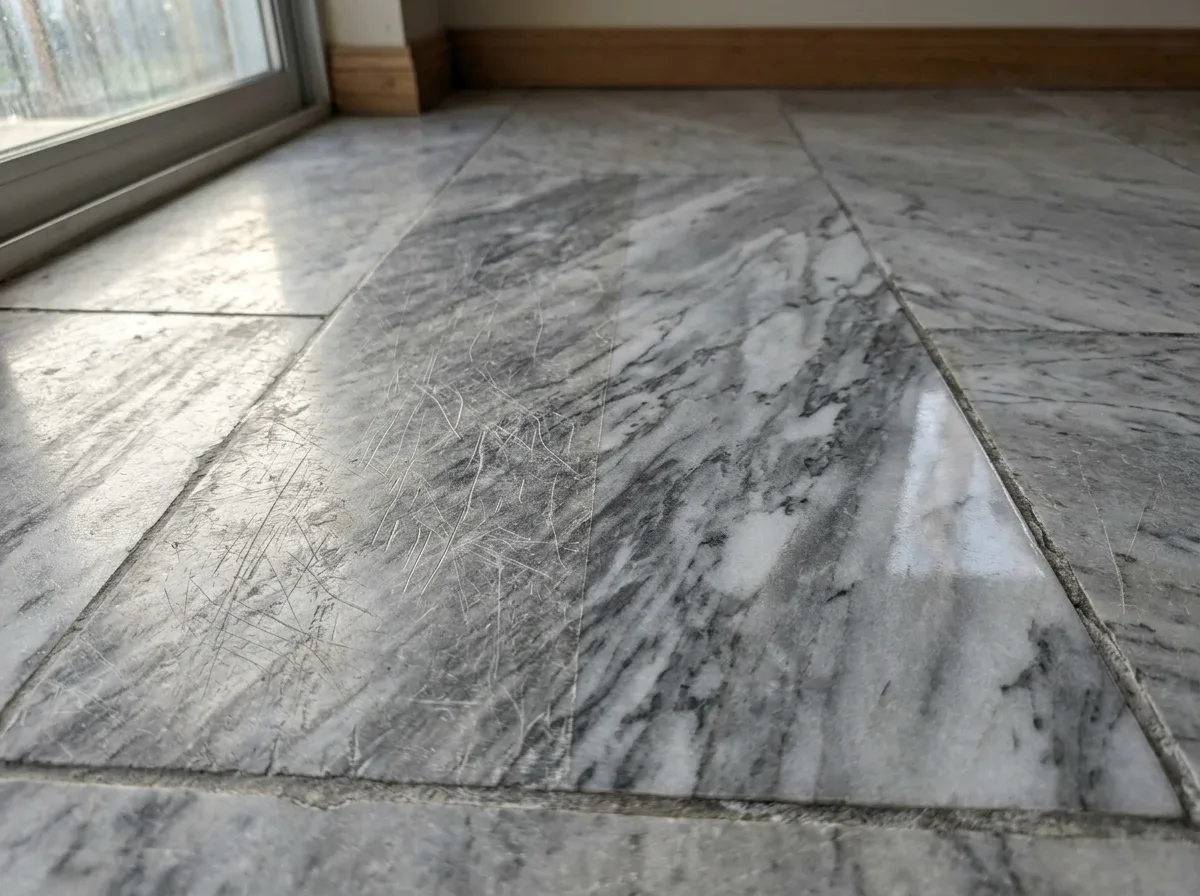
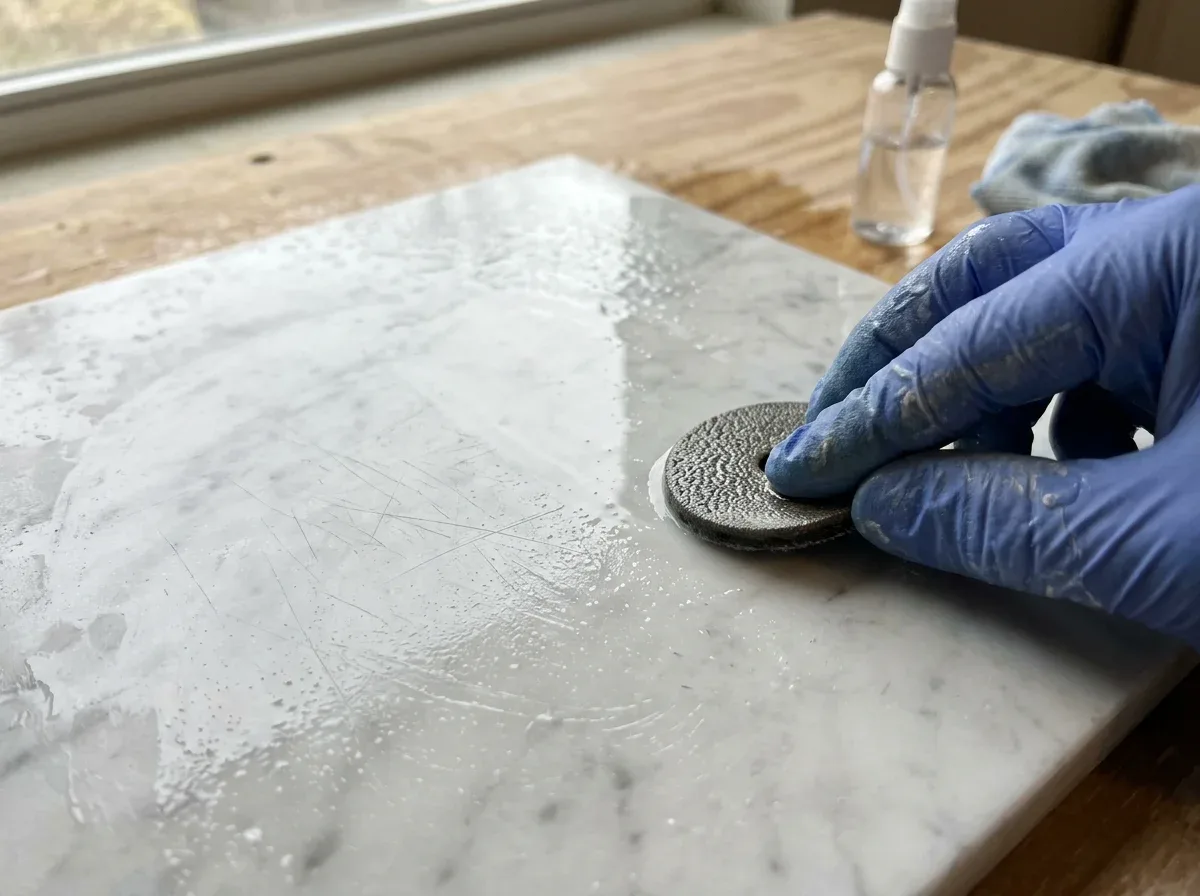
Oil Stains on Marble and Poultice Application
In short: An oil stain on marble is inside the stone, not on the surface.
That is why wiping, scrubbing, or detergent will not remove it. The most effective way to draw oil out of the stone is to apply a poultice. In this article, we explain how a poultice works and how to apply it step by step.
How to Recognize an Oil Stain
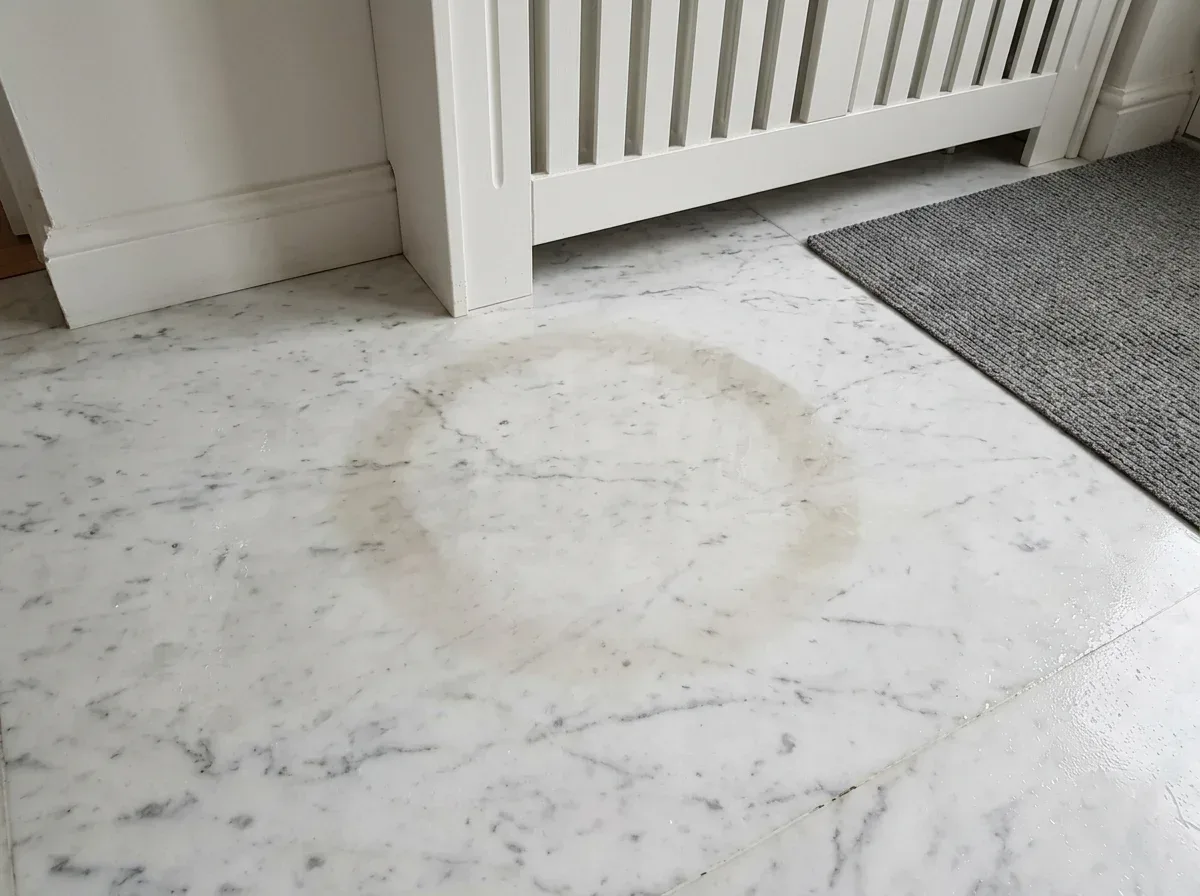
Because an oil stain penetrates the pores of the stone, it differs clearly from dirt and water marks.
- It darkens the stone: Because the oil fills the pores of the stone, the stained area looks darker than its surroundings and appears wet even when it is dry.
- Soft, spread-out edges: Because oil moves slowly through the stone, the stain has no sharp boundary; the edges look like a gradually widening halo.
- It does not lighten as it dries: A water mark disappears as it dries, but an oil stain does not evaporate; even after days it stays equally dark and is permanent.
- It can spread over time: The oil inside the stone keeps spreading through the pores; a stain that is not treated early can cover a larger area over time.
Sources: cooking oils, butter, creams and lotions, sunscreen, massage oils, machine oil.
How Does a Poultice Work?
A poultice is a paste prepared by mixing an absorbent powder with a liquid that will dissolve the stain. The working principle is simple and takes place in four stages:
- The liquid dissolves the oil: First, the liquid part of the poultice enters the pores of the stone and dissolves the oil that has penetrated there, making it able to move.
- The liquid draws back: When the poultice starts to dry, the liquid inside the stone is drawn back into the poultice by the action of the absorbent powder.
- The oil is carried with the liquid: As the liquid returns, it carries the dissolved oil with it; this way the stain moves from inside the stone toward the surface.
- The oil stays in the poultice: In the end, the oil remains inside the dried poultice; when the poultice is scraped off, the part of the stain that was drawn out goes with it.
In other words, the poultice "absorbs" the stain from inside the stone to the surface.
Materials
For a poultice to work, an absorbent powder, a suitable liquid, and auxiliary materials that will not scratch the stone are prepared together.
- Absorbent powder: Poultice powders made for stone, clay-based powders, or absorbent white powders. Colored powders can leave marks on light-colored stone.
- Liquid: For an oil stain, an oil solvent, a solvent suitable for the stone, or a suitable alkaline solution. The choice should be made according to the type of stone and the condition of the stain.
- Plastic film and tape: Used to cover the poultice; the film prevents the liquid from evaporating immediately and gives the poultice time to work inside the stone.
- Plastic spatula: A plastic spatula is used to apply and remove the poultice; a metal spatula can scratch the soft marble surface.

Step-by-Step Application
In poultice application, the result depends on following the steps in order and with patience.
- Cleaning: First, clean the stained area with a pH-neutral product and dry it; dirt and dust on the surface prevent the poultice from making contact with the stone.
- Test: Then do a small test in an inconspicuous spot; this shows whether the mixture leaves a mark on the color or shine of the stone.
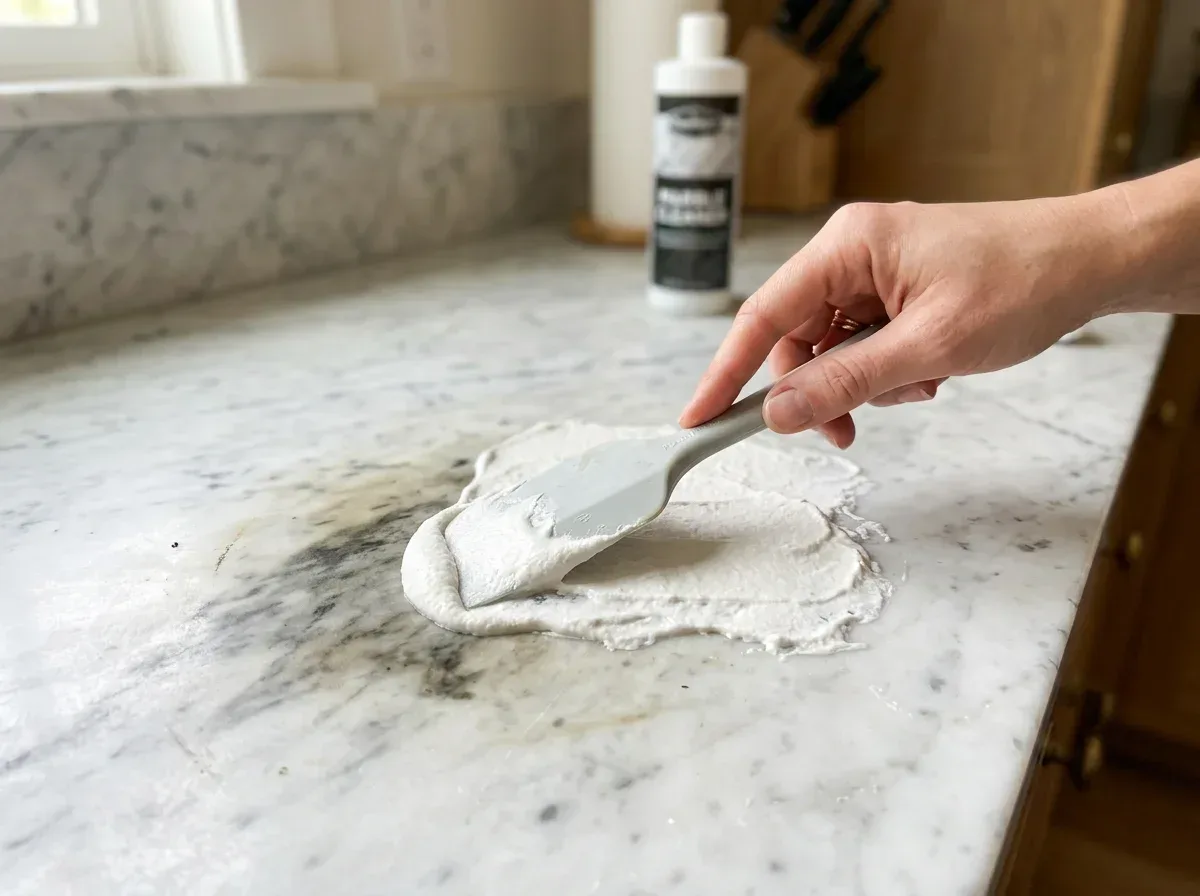
- Preparation: Mix the powder with the liquid to make a paste with the consistency of peanut butter; a mixture that is too runny will flow and may spread the stain.
- Application: Apply it a few millimeters thick over the stain, extending slightly beyond its edges.
- Covering: Cover it with plastic film and tape down the edges. Making a few small holes in the film starts the drying slowly.
- Waiting: Depending on the product, it is usually left for one or two days; during this time the solvent continues to dissolve the oil inside the stone.
- Drying: When the waiting time is over, remove the film and wait for the poultice to dry completely; the oil is drawn into the poultice mainly during this drying.
- Removal: Scrape off the dried poultice with a plastic spatula; since the oil is inside the poultice, the residue must not be rubbed back onto the stone.
- Cleaning: Then wipe the area with clean water and dry it; this way no poultice or solvent residue is left on the surface.
- Check: Look at the stain after the stone has dried completely; since damp stone looks dark, checking too early is misleading. Repeat the process if necessary.
Expectations
How effective a poultice will be depends largely on the age of the stain and how deeply it has penetrated the stone.
- Fresh stains: Fresh oil stains have usually not yet spread deep into the stone, so they often lighten noticeably with a single application.
- Old and deep stains: Old and deep stains may require several applications; each application draws out some of the oil, and the stain lightens step by step.
- Very old stains: With very old stains, the oil may have left a permanent difference in tone in the stone, so a faint mark may remain even after several applications.
Dullness After Poultice
Some solvents or poultice components can leave a slight dullness on the surface. In this case, the area is polished with polishing powders or fine pads.
Choosing the Liquid by the Source of the Stain
| Stain | Suitable liquid type | Note |
|---|---|---|
| Cooking oil, butter | Stone-safe oil solvent or mild alkaline solution | Old stains may need repeat treatment |
| Cream, lotion, sunscreen | Oil solvent | A second poultice if there is color pigment |
| Massage oil | Oil solvent | Common in spas and hotel rooms |
| Machine oil | Strong but stone-safe solvent | Ventilation is essential |
The choice of liquid varies by the type and color of the stone; if you are unsure, test first in an inconspicuous spot or consult a specialist.
When to Call a Specialist?
Small, fresh oil stains can be removed at home with the right material. However, for stains that have spread over a large area, built up over the years, or been tried several times without success, professional help is the better choice. The wrong solvent, leaving a product on for too long, or colored absorbent powders can leave new stains and rings. A specialist assesses the type and depth of the stain, selects the right poultice and, if necessary, evens out the surface with its surroundings through local polishing after the poultice.
Preventing Oil Stains
Most oil stains never form at all with simple precautions taken in places where spills are frequent.
- Put a mat in front of the stove: Placing a washable mat in front of the stove in the kitchen keeps oil that splatters while cooking from reaching the marble directly.
- Lay a rug under the table: Laying a rug or kilim under the dining table prevents dropped food and dripping oil from soaking into the floor.
- Keep bottles on a tray: Keeping cream and lotion bottles on a tray in the bathroom prevents oily products seeping from the bottom of the bottle from leaving a ring on the countertop.
- Check the impregnation: Water- and oil-repellent impregnation weakens over time; checking it regularly and renewing it when necessary gives you time to wipe up a spill before it soaks into the stone.
- Take up spills immediately: Take up spills right away by blotting with absorbent paper; rubbing spreads the oil and lets it soak into a larger area of the stone.
Oil Stain Work in Alanya
In Alanya, we most often encounter oil stains in front of kitchen stoves, in dining areas, in hotel spas and massage rooms, and as sunscreen marks carried in from around the pool. In our on-site work, we prepare the poultice suited to the source of the stain, draw the oil out of the stone with several applications if needed, and finally use local polishing to make the area match its surroundings.
Points to Note

- Poultice does not remove acid marks; it only draws out stains that have been absorbed.
- Choosing the wrong liquid may cause discoloration in some stones.
- When working with solvents, ensure ventilation and wear gloves.
- For large or numerous stains, it is safer to get professional help.
Our Scratch and Stain Removal Service in Alanya

On marble, granite, and travertine surfaces, we remove scratches, acid marks, and stains that have penetrated the stone using honing, poultice, or spot repair, depending on the type. We never start work without identifying the source of the stain.
On site, we tell you honestly which stains can be removed and which are permanent. Explore our Scratch Removal service.
A poultice is a paste-like mixture prepared by combining an absorbent powder with a suitable liquid. It is applied to the stone and then covered: — Expert Note