Coffee, Wine, and Fruit Juice Stains on Marble Floors
In short: Coffee, tea, red wine, and fruit juices are the spills marble floors encounter most often.
These drinks can leave two different kinds of marks: a color stain that sinks into the stone and a dull mark etched into the surface by acid. In this article, we explain what to do the moment a spill happens and how to remove stains that are noticed later.
Two Separate Problems
Color Stain
The pigments in coffee, tea, wine, and fruit juices are absorbed into the pores of the marble and leave brown, red, or yellowish stains. These are called organic stains.
Acid Etching
Wine, fruit juices (especially citrus), cola, and some teas are acidic. They dissolve the surface of the marble and take away its shine, leaving a dull mark.
A glass of red wine or a glass of orange juice can cause both at once.
The Moment It Spills
When coffee, wine, or juice is spilled, doing the right things in the right order during the first few minutes largely prevents the liquid from soaking into the stone and acid etching from forming.
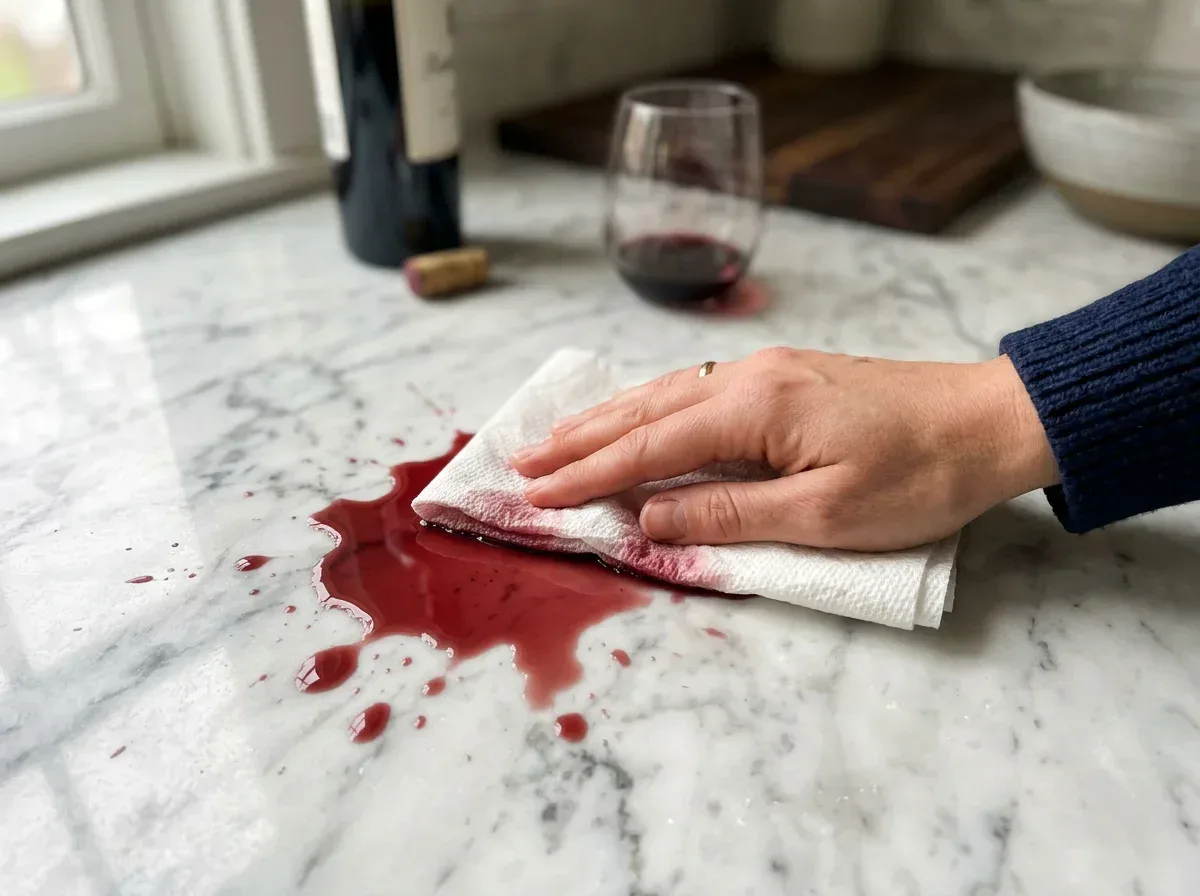
- Blot, don't wipe: First, blot up the liquid with an absorbent paper towel; wiping spreads the stain over a larger area and pushes more liquid into the stone.
- Rinse: Once the liquid has been removed, wipe the area with a cloth dampened with clean water; this dilutes the remaining pigment and acid.
- Dry: Then dry the area thoroughly with a dry cloth so that any moisture left on the surface is not drawn into the pores of the stone.
- Wait and look: Once the stone has dried, look at it at a low angle to the light; if the remaining mark is a color stain, a poultice will be needed, and if it is a dull mark, polishing will be needed.

This intervention in the first few minutes often prevents a permanent mark.
If a Color Stain Remains
Fading on Its Own
Some organic stains fade over time with light and air once the source has been removed. For light stains, waiting a few days can work.
Poultice
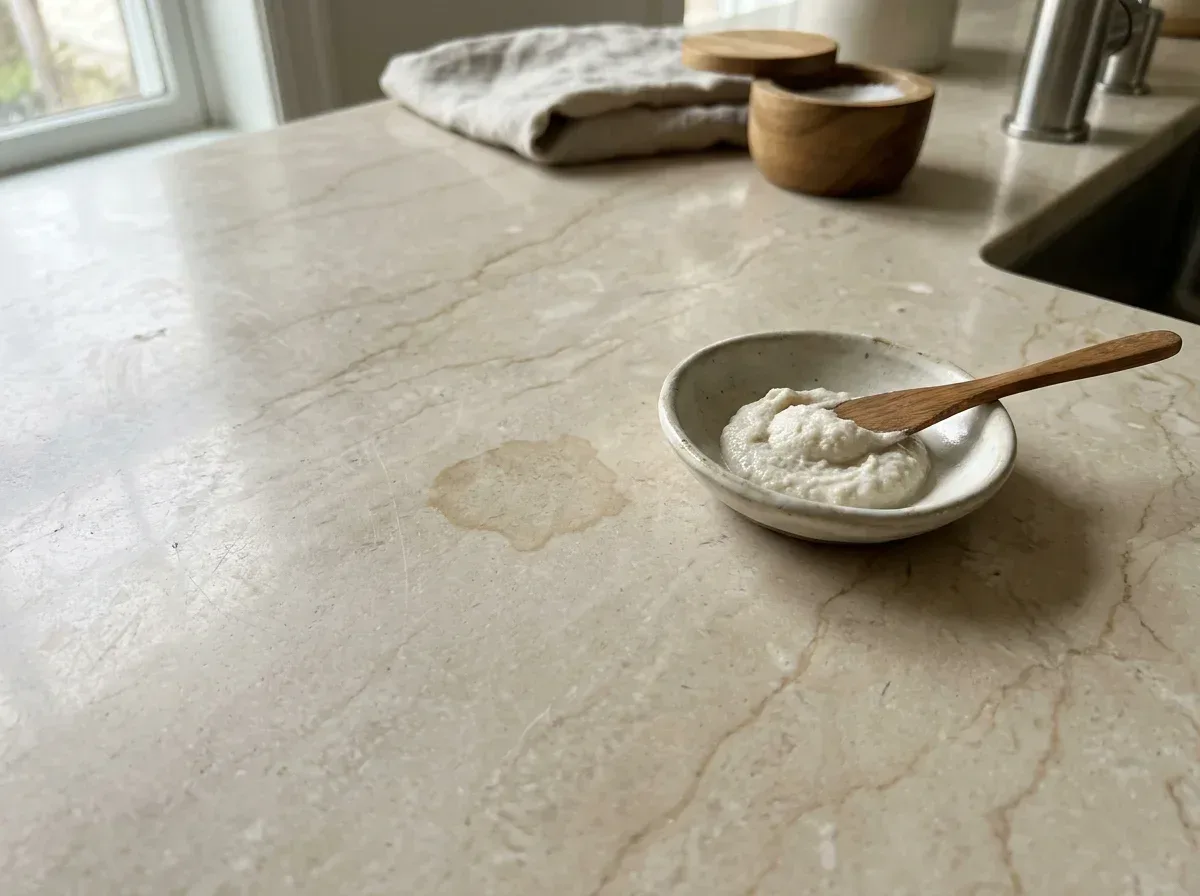
Organic stains that do not fade on their own are drawn out with a poultice. For coffee, tea, and wine stains on light-colored marble, a stone-safe, hydrogen peroxide-based poultice is generally used. The poultice is applied thickly enough to extend slightly beyond the stain, covered with plastic wrap, and left to dry after a few holes are poked around its edges. As it dries, the stain transfers into the poultice; the poultice is then removed, and the area is cleaned and dried. For old and deep stains, the process can be repeated several times.
Caution: Although some bleaching products can be used on light-colored marble, the wrong product or ratio can leave new stains. Test first in an inconspicuous spot and, if possible, consult a specialist.
If an Acid Etch Remains
An acid etch is not a stain but surface damage; it will not come out with a poultice.
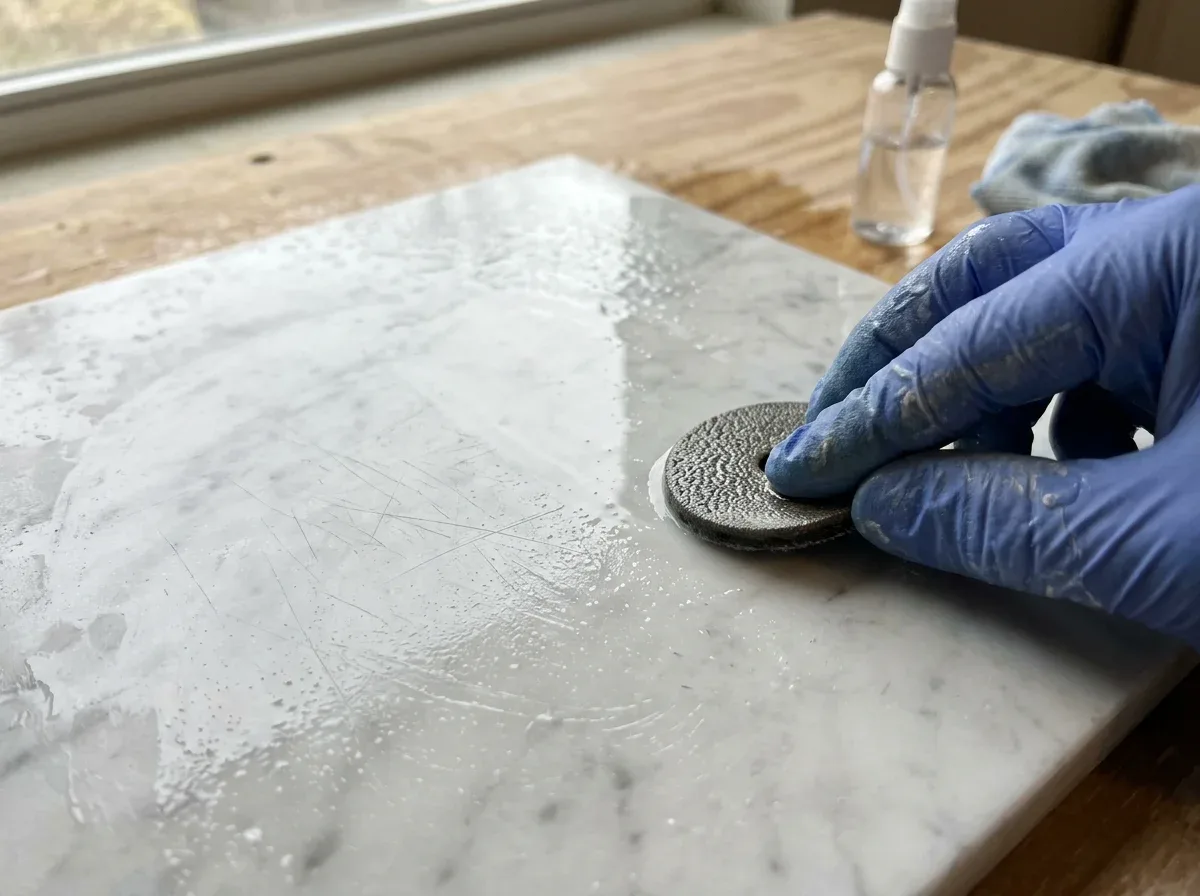
- Light marks: Superficial acid marks are removed on site, without touching the rest of the floor, using polishing powders suited to marble and fine pads.
- Deep and wide marks: For marks that can be felt with a fingernail or that have spread over a large area, fine-grit honing followed by polishing is needed so that no tonal difference remains.
Mistakes to Avoid
Wrong interventions after a spill can turn an easily removable mark into permanent, wider damage.
- Rubbing and spreading the liquid: Rubbing the spill spreads the liquid over a larger area and causes the pigment to penetrate deeper into the pores of the stone.
- Using vinegar or lemon: Applying vinegar or lemon to remove the stain adds an acid etch on top of the color stain and enlarges the existing dull mark.
- Using bleach carelessly: Bleach used undiluted and haphazardly can lighten the tone of the stone and leave a new, noticeable color difference around the stain.
- Scrubbing with an abrasive sponge: Abrasive sponges scratch the polished surface; even if the stain comes out, that area stays duller and scratched compared to its surroundings.
- Confusing a stain with an acid etch: Applying a poultice to an acid etch or polishing to a color stain gives no result; first identify the type of mark and then choose the right method.
What to Expect by Drink
| Drink | Color stain | Acid etch | Solution |
|---|---|---|---|
| Coffee | Yes | Light | Poultice, polishing if necessary |
| Tea | Yes | Light | Poultice |
| Red wine | Pronounced | Yes | Poultice first, then polishing |
| White wine | Little | Yes | Polishing |
| Orange, lemon juice | Little | Pronounced | Polishing |
| Cola | Light | Yes | Cleaning, polishing |
Caution with Dark-Colored Marble
On dark and black marble, color stains are barely visible, but acid marks are very noticeable; the dull mark looks like a whitish ring on the dark surface. Peroxide-based poultices can lighten the tone of these stones, so they should be used with care. Acid marks are removed with polishing powders or by local fine honing. Experience is needed to make the polish on dark stone match the shine of the surrounding surface.
Preparing for a Spill
A few simple preparations make it easier to act quickly when a spill happens and extend the time before the stain penetrates the stone.
- Keep absorbent paper towels at hand: If absorbent paper towels are kept somewhere easy to reach in the kitchen and living room, the liquid can be blotted up within seconds before it soaks into the stone.
- Put a rug under the table: A washable rug or kilim laid under the dining table keeps liquid from reaching the stone in the area where spills happen most often.
- Use coasters: Using coasters under glasses and tumblers prevents drops running down the sides and wet glass rings from leaving marks on the marble.
- Keep the marble sealed: Because sealing slows the stone's absorption of liquids, you gain time to clean up when a spill is noticed.
Stain Removal in Alanya
In Alanya, we frequently encounter marks from coffee, wine and citrus on marble floors, especially in holiday and rental homes, hotel restaurants and cafés. During our on-site inspection, we determine whether the stain is a color stain, an acid mark, or both; first we draw out the color with a poultice, then we even out the surface by polishing. If necessary, we finish the job by applying a sealer, buying you time against new spills.
Protection

- Impregnation slows the penetration of color stains into the stone, but it does not prevent acid etching.
- Using rugs or carpets in dining and living areas
- A honed surface shows acid etching less than a polished surface.
Our Scratch and Stain Removal Service in Alanya

We remove scratches, acid marks and stains that have penetrated the stone on marble, granite and travertine surfaces using honing, poultice or spot repair, depending on the type. We never start work before identifying the source of the stain.
We tell you honestly on site which stains can be removed and which are permanent. Explore our Scratch Removal service.
For pronounced, set-in stains, a poultice suited to organic stains is applied. As the poultice dries, it draws the stain out of the stone. If necessary, the process is repeated. — Expert Note
Frequently Asked Questions
01Can coffee stains be removed from marble?
02Why does a wine stain look both colored and dull?
03Can impregnated marble stain too?
04Can I remove the stain at home with a poultice?
05Does pouring salt on a wine stain help?
06Will the area look different after the stain is lifted?
Related Articles
- Types of Scratches and Stains on Marble: Which Can Be Removed by Honing?
- Oil Stains on Marble and Poultice Application
- A Solution for Permanent Stains on Marble Countertops
- Acidic Cleaner Damage on Marble Floors: Lemon, Vinegar, Limescale Remover
- How to Remove Yellow Stains, Rust Stains and Water Marks from Marble