Slip Resistance and Wear on Parking Ramps
In short: Parking garage ramps are the most heavily stressed concrete surfaces in a building.
Vehicles load the floor here through the slope as well as through braking and acceleration. Over time, the ramp surface becomes glossy, gets covered with tire marks and oil, and turns slippery, especially on rainy days. In this article, we explain ramp problems and their solutions.
Why Does a Ramp Become Slippery?
Surface Polishing
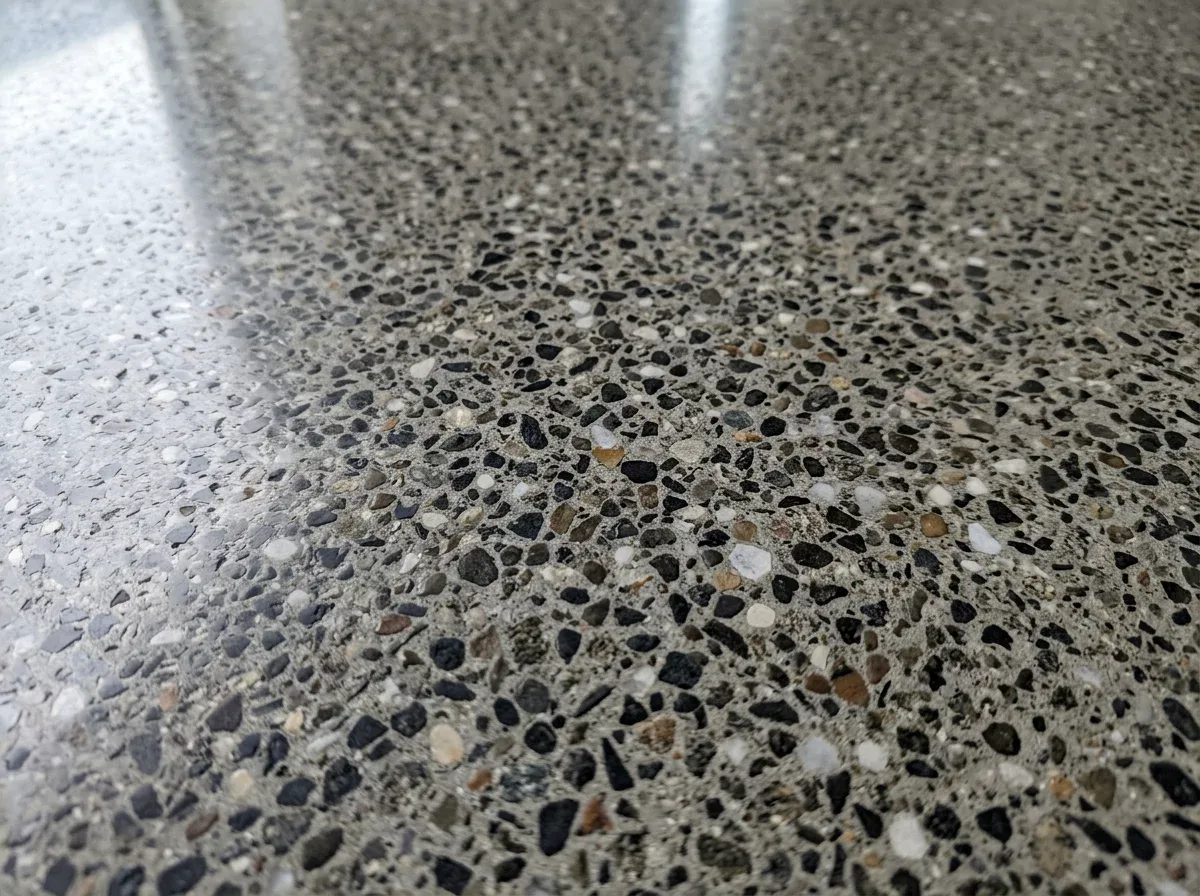
Over the years, vehicle tires wear down the concrete surface as if polishing it. The rough texture of the early days disappears, and the surface becomes flat and glossy.
Rubber and Oil Buildup
Rubber particles, engine oil, and leaks form a thin film on the surface; this film is very slippery when wet.
Water
Rainwater entering the ramp increases slipperiness by flowing or pooling on it if drainage is inadequate.
Dust and Sand
On a dry ramp, fine dust and sand also reduce traction.
Wear and Cracking
Wear and cracking on a ramp start mostly at the points where the slope changes and the concrete directly takes the impact of vehicles.
- Ramp top and bottom: At points where the slope changes, the vehicle suspension strikes the floor; these repeated impacts gradually break the concrete and open up potholes.
- Joints: The joints where the ramp meets the flat floor are opened up by constant wheel passage, their edges break, and water seeps into the concrete through these gaps.
- Surface spalling: The weak or dusting top concrete layer breaks away piece by piece under braking and acceleration loads, leaving rough pits on the surface.

Solutions
1. Deep Cleaning
The first step of the solution is to remove the film of rubber, oil, and dirt from the ramp surface. Alkaline cleaners suitable for concrete are applied along the ramp, left to dwell for a while, and scrubbed with a brush machine; then the surface is rinsed with plenty of water. Often, this cleaning alone noticeably improves the ramp's traction. Wastewater and chemicals must not go into stormwater drains but should be collected and disposed of properly.
2. Roughening the Surface
The way to restore traction to a polished ramp surface is to create a rough texture in the concrete.
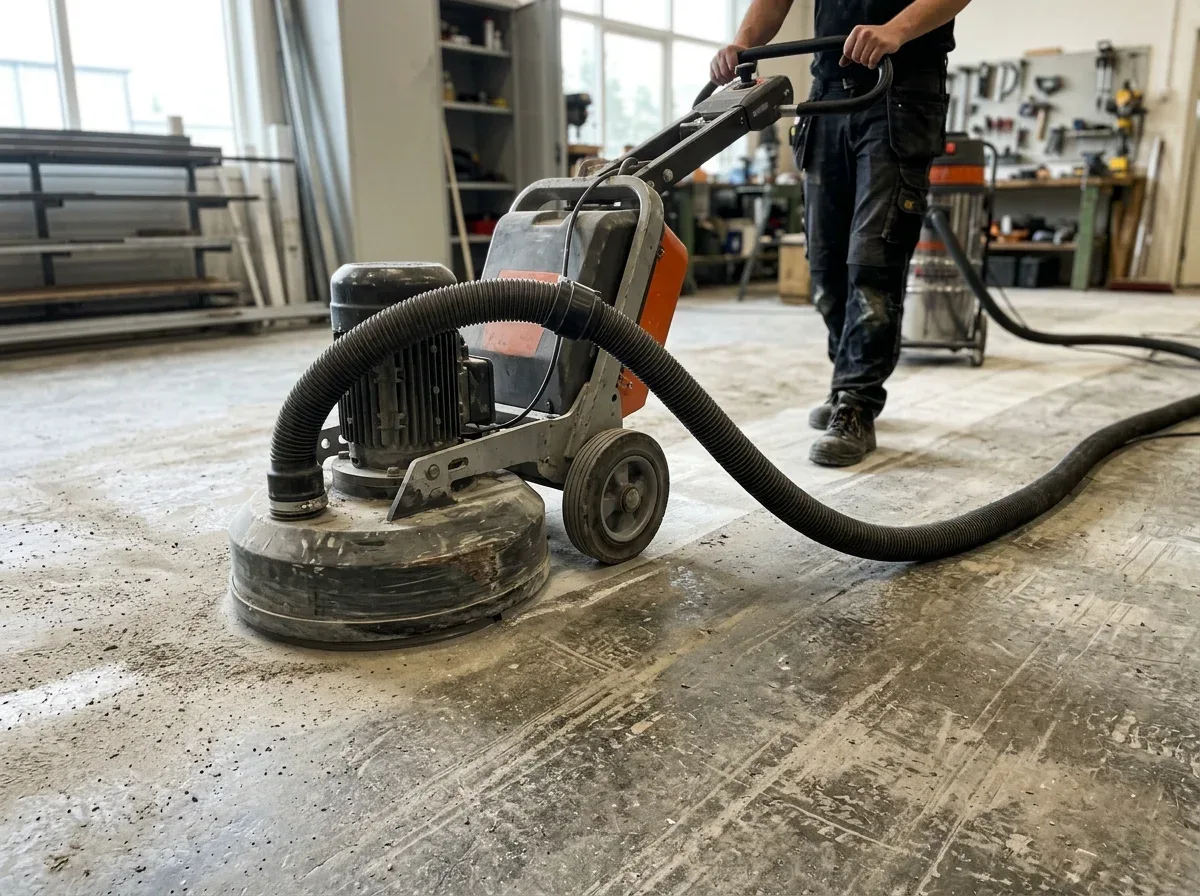
- Coarse grinding: The polished top layer is removed with metal-bond diamonds, recreating a rough texture that the tire can grip.
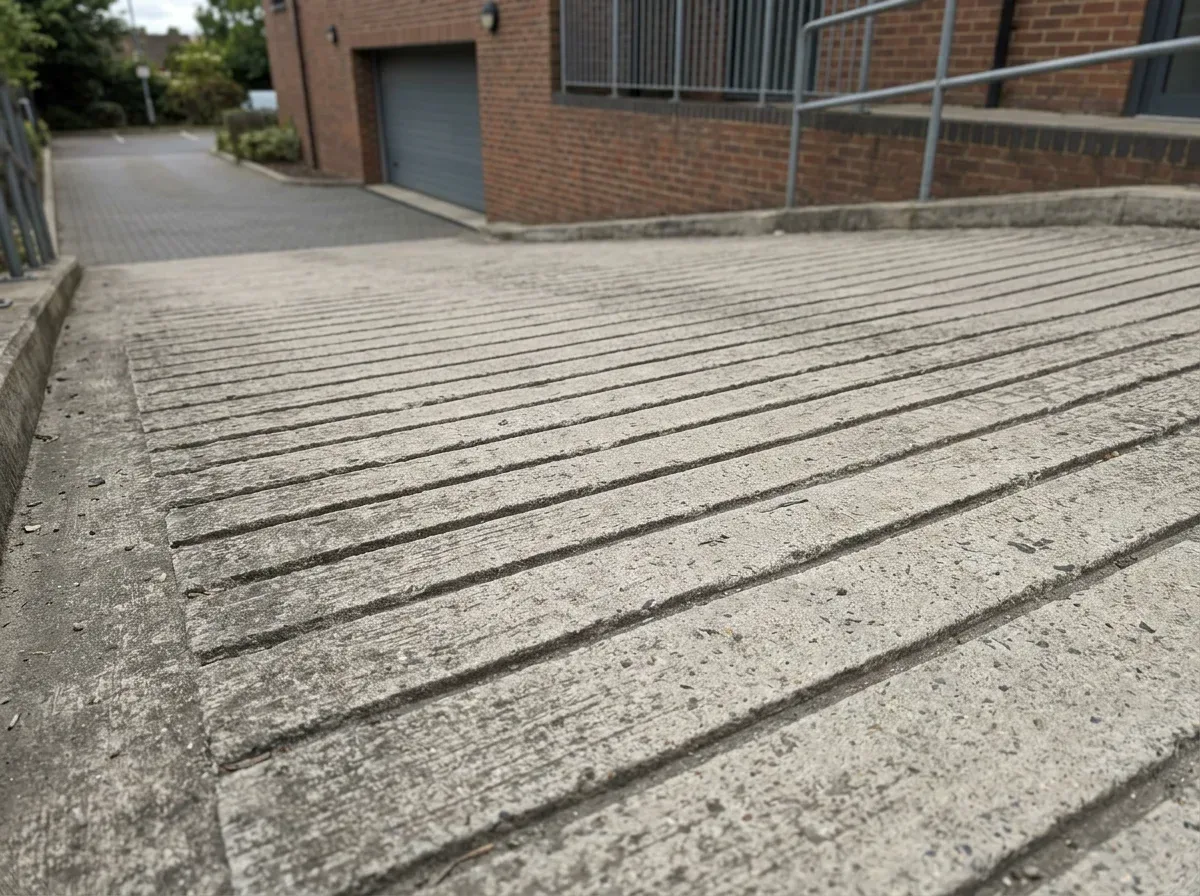
- Grooving: Shallow grooves cut along the ramp or perpendicular to the slope can improve both tire grip and rainwater drainage.
Polishing is not done on ramps; the goal is traction, not shine.
3. Repair
Repairing broken and opened areas before roughening keeps the surface intact and durable.
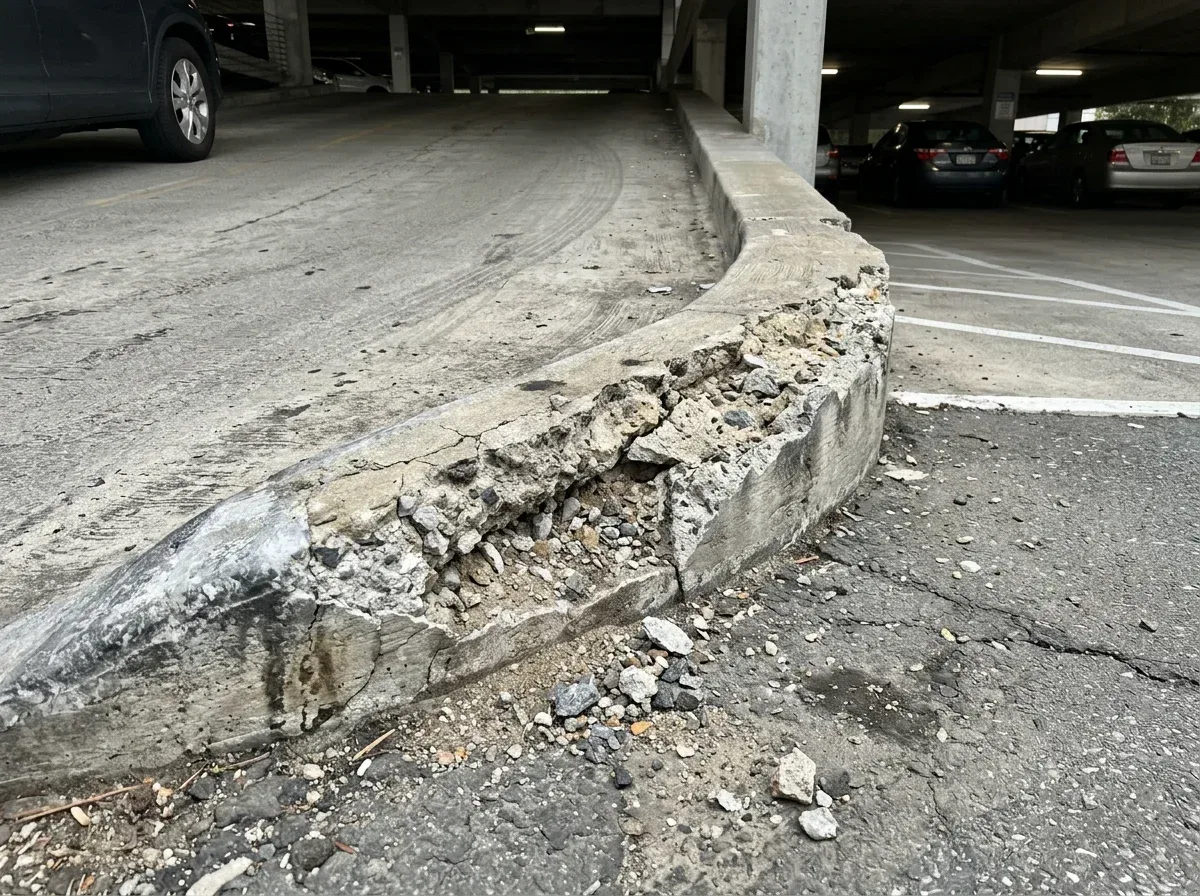
- Cracks at the ramp top and bottom: The ramp top and bottom, broken by vehicle impact, are filled with traffic-resistant repair mortars and brought level with the surrounding surface.
- Opened joints: Opened joints are cleaned and filled; this stops edge breakage and prevents water from seeping into the concrete.
- Spalled surfaces: Spalled areas are repaired and the pits are closed, preventing wheels from hitting these spots and causing new spalling.
4. Hardener
A hardener applied to the roughened concrete strengthens the surface and stops dusting.
5. Water Drainage
The grates and drains at the top and bottom of the ramp must be cleaned; water must not flow onto the ramp and into the parking area.
When to Consider a Coating?
On very steep, constantly wet, or heavily trafficked ramps, roughening the concrete may not be enough. In this case, special ramp coatings with anti-slip properties can be considered. These coatings are a separate field of expertise.
Summary of Problems and Solutions
| Problem | Solution |
|---|---|
| Polished surface | Roughening by coarse grinding |
| Rubber and oil film | Alkaline cleaner, brush machine |
| Slipperiness when wet | Grooving, drainage improvement |
| Cracks at ramp top and bottom | Correction with repair mortar |
| Opened joints | Cleaning and refilling |
| Dusting | Hardener |
Work Plan
Since the ramp is the only entrance and exit of the parking garage, the work must be planned carefully. The ramp is usually divided lengthwise into two lanes; while work is carried out in one lane, controlled passage is maintained through the other. Where repair mortars need time to cure, the relevant section is marked and closed to vehicle traffic. Whenever possible, the work is done at night or during the hours when the garage is least used, and residents are notified in advance.
Regular Checks in Ramp Maintenance
Regular, simple checks catch a ramp becoming slippery again and small cracks growing larger at an early stage.
- Check for standing water after rain: If water collects at the bottom of the ramp after rain, drainage is insufficient; standing water both creates slipperiness and wears down the concrete.
- Clean the grates and drains: If grates and drains are cleaned every month, leaves and mud will not clog them, and rainwater will not flow onto the ramp and into the parking garage.
- Visually inspect the joints: If joint opening or edge chipping at the top and bottom of the ramp is noticed early, a small repair prevents it from getting worse.
- Plan machine cleaning: When tire marks build up, a slippery film has begun to form on the surface; machine cleaning removes this film and restores traction.
- Set a rule for reporting leaks: Having vehicle leaks reported to management ensures that oil dripping onto the ramp is cleaned up before it accumulates and turns into a slippery layer.
Parking Garage Ramps in Alanya
In many parking garages of housing complexes and hotels in Alanya, the ramps have become polished over the years and turn slippery during the rainy winter months. On these ramps, we carry out deep cleaning, roughening by coarse grinding, and, where necessary, anti-slip grooves and hardener application. We plan the work together with the complex management, at times that will least affect residents' vehicle entry and exit.
Maintenance

- Weekly sweeping and periodic washing,
- Early action on oil and leaks,
- Pre-winter drainage check,
- Monitoring of cracks and joints.
Our Concrete Grinding Service in Alanya

We grind concrete floors in warehouses, factories, car parks, shops and homes, then strengthen them with a hardener to create a dust-free surface that is easy to clean. Depending on the look you want, we apply a matte, satin or glossy finish.
We inspect the age and condition of your floor on site and decide on the right method together with you. Explore our Concrete Grinding service.
Tire marks, oil film and dirt are removed with suitable cleaners and brush machines. Sometimes most of the slipperiness is reduced even at this step. — Expert Note